What car should you buy if you're looking for an affordable PHEV in 2026
 Iván Navarro
29 March 2026
8 min.
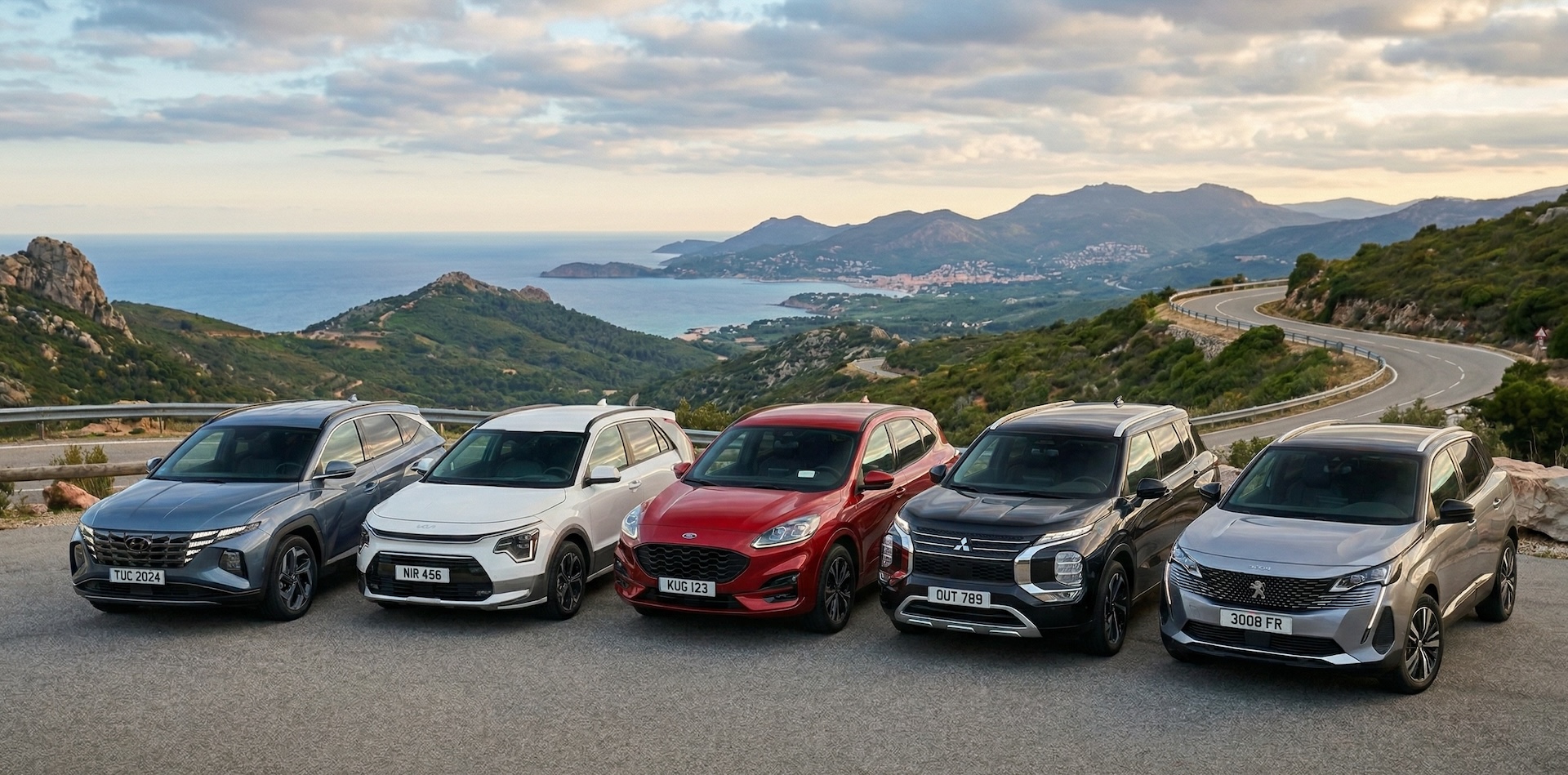
The plug-in hybrid market is, today, very broad and there is no shortage of options to choose from. In this article we have selected some of the ones we consider most interesting.
Affordable PHEV remains an attractive alternative for anyone looking to reduce running costs without giving up the versatility of a car with a combustion engine. In 2025 the European market consolidated the presence of plug-in hybrids as an intermediate solution between pure electric and conventional models: according to ANFAC, electrified vehicles continued to gain share compared with previous years, driven by demand from consumers who value range and savings in daily use. The average profile of an affordable PHEV buyer seeks a balance between purchase price, sufficient electric range for everyday use and low consumption on mixed routes.
Affordable PHEVs usually fit into compact and compact SUV segments, with starting prices at reasonable levels for families and professional mobility. The average entry price for an affordable PHEV in Spain sits in the lower-to-middle band of the C-SUV segment, and 2025 trends show the offer diversifying with lower-power versions and batteries optimised to reduce cost. This type of car combines a petrol engine with an electric motor and a moderately sized battery, sufficient for daily urban journeys and interurban trips without worrying about total range.
These are the most balanced models if you are looking for range and efficiency.
If you are looking for a plug-in car with a modest cost, it is generally advisable to prioritise models with a battery between 10 and 20 kWh WLTP that offer more than 40 km of real electric range, versions with essential equipment and proven mechanical units that reduce maintenance costs.
What a car needs to have for this purpose
An affordable PHEV must above all offer sufficient electric range to take daily use off combustion consumption: around 40–60 km WLTP allows most urban journeys to be covered without using petrol. The battery does not need to be very large; good energy efficiency and effective regenerative braking modes matter more. As for the powertrain, the petrol + electric combination should be smooth and deliver convincing responses when overtaking, but without seeking extreme power outputs that make the product more expensive.
It is also worth looking at:
- Combined consumption in real use (not just the WLTP figure).
- Load capacity and living space if you have a family.
- Charging times on a domestic socket and wallbox.
- Starting price of the base version and maintenance cost.
Model selection
Hyundai Tucson PHEV
Why it is a good choice
- Living space and boot among the best in the compact SUV segment.
- Good electric range for daily use.
- Proven platform and extensive official service network in Spain.
Ideal if you are looking for
A spacious SUV with a CERO label (depending on the PHEV version with sufficient electric range) that serves for family use and occasional long journeys.
| Data | Value |
|---|---|
| Powertrain | PHEV (Petrol + electric) |
| Environmental label | CERO |
| Power | 265 CV |
| Range | ≈ 50–60 km WLTP |
| Consumption | 1.2–1.8 l/100 km (estimated combined) |
| Starting price | ≈ 37,000 € |
Kia Niro PHEV
Why it is a good choice
- Designed as a plug-in hybrid from the outset, very efficient in town.
- Compact size and agile handling in urban environments.
- Low running costs and reasonable maintenance.
Ideal if you are looking for
A practical, affordable model for those making daily urban journeys who want an ECO or CERO label depending on the version.
| Data | Value |
|---|---|
| Powertrain | PHEV (Petrol + electric) |
| Environmental label | ECO / CERO (depending on version) |
| Power | 141 CV |
| Range | ≈ 50–60 km WLTP |
| Consumption | 1.1–1.6 l/100 km (estimated combined) |
| Starting price | ≈ 31,000 € |
Ford Kuga PHEV
Why it is a good choice
- A balance between dynamics and comfort; a good option for mixed city/motorway use.
- Acceptable recovery and smooth automatic gearbox.
- Wide range of versions and equipment.
Ideal if you are looking for
An SUV with stable motorway behaviour and an ECO or CERO label depending on electric range.
| Data | Value |
|---|---|
| Powertrain | PHEV (Petrol + electric) |
| Environmental label | ECO / CERO |
| Power | 225 CV |
| Range | ≈ 50 km WLTP |
| Consumption | 1.3–1.9 l/100 km (estimated combined) |
| Starting price | ≈ 36,000 € |
Mitsubishi Outlander PHEV
Why it is a good choice
- One of the PHEVs with the most experience on the market; outstanding load capacity and space.
- Solid traction and behaviour in mixed environments.
- An interesting price-to-functionality ratio for families.
Ideal if you are looking for
A practical alternative for families who need boot space and an ECO or CERO label depending on version and electric range.
| Data | Value |
|---|---|
| Powertrain | PHEV (Petrol + electric) |
| Environmental label | ECO / CERO |
| Power | 224 CV |
| Range | ≈ 45–55 km WLTP |
| Consumption | 1.4–2.0 l/100 km (estimated combined) |
| Starting price | ≈ 39,000 € |
Peugeot 3008 Hybrid4 (PHEV)
Why it is a good choice
- Design and tuning oriented towards comfort; option with all-wheel drive in Hybrid4 versions.
- Well-finished interior and advanced driver assistance for the price.
- Good electric range for urban use.
Ideal if you are looking for
A compact SUV with a premium touch and a CERO label in versions with sufficient range.
| Data | Value |
|---|---|
| Powertrain | PHEV (Petrol + electric) |
| Environmental label | CERO |
| Power | 300 CV (Hybrid4) |
| Range | ≈ 50–60 km WLTP |
| Consumption | 1.2–1.7 l/100 km (estimated combined) |
| Starting price | ≈ 41,000 € |
Which car to choose based on your case
If you do a lot of city driving
Choose a PHEV with a real electric range of at least 40 km and good efficiency: models such as the Kia Niro PHEV or the Hyundai Tucson PHEV let you cover most urban journeys without using petrol and with reduced running costs.
If you do a lot of mileage
Prioritise combined consumption and comfort on long journeys: the Ford Kuga PHEV and the Mitsubishi Outlander PHEV offer a balance between electric range and combustion performance on interurban trips.
If you want to save money
Look for basic versions with a sufficient battery and a low purchase cost; the Kia Niro PHEV is usually one of the most affordable options in its segment and has low running costs in urban use.
If you want technology
Models such as the Peugeot 3008 Hybrid4 combine advanced equipment with good behaviour for those who value driver assistance and more refined finishes.
Interesting alternatives within the same budget
Other options to consider for price and balance are the Renault Captur E-Tech PHEV for urban use, the Skoda Superb iV if you need a spacious saloon with a plug-in version, and the Seat Leon e-HYBRID for those who prioritise compact dynamism. Models such as the Hyundai Kona Hybrid also complement the offer in the consumption and price range.
FAQ – FREQUENTLY ASKED QUESTIONS
What is the difference between a PHEV and a conventional hybrid?
A PHEV (plug-in hybrid) has a larger battery and can be charged from the mains to drive dozens of kilometres in 100% electric mode; a conventional hybrid cannot be charged externally and relies more on the combustion engine and recharging through regenerative braking.
How many real electric kilometres can I expect?
In affordable PHEVs it is typically between 40 and 60 km WLTP; in real use this means many urban users complete their day without starting the petrol engine.
Do I need to install a wallbox to make the most of it?
It is not mandatory, but a wallbox reduces charging time compared with a domestic socket and makes daily charging easier, which maximises electric use and savings.
Do PHEVs always get a CERO label?
No; the label depends on electric range and other characteristics. Some PHEVs obtain CERO if they reach the minimum required range; other versions receive ECO. Check the specific technical data sheet.
Are they worth it compared with a pure electric car?
If you drive many kilometres daily exclusively in town, a pure electric car usually works out cheaper in the long run. If you need flexibility for long trips without worrying about the charging network, an affordable PHEV is a more affordable intermediate solution at the outset.
What extra maintenance do they require?
Maintenance is similar to that of a combustion car with the addition of the electrical system and battery; servicing usually focuses on software, battery condition and the charging system, with no major habitual extra costs if the brand has a service network.
Expert opinion
Beyond the official figures, choosing a PHEV depends on real use. For those who combine daily urban journeys with weekend trips, a plug-in hybrid offers the best balance between cost and versatility. If the budget is tight, models such as the Kia Niro PHEV or more modest versions of the Hyundai Tucson PHEV provide access to a favourable environmental label, useful electric range and a competitive total cost.
For drivers covering many motorway kilometres who need comfort on long journeys, the Ford Kuga PHEV and the Mitsubishi Outlander PHEV strike a robust balance between electric range and combustion performance. If the priority is technology and a more refined interior, the Peugeot 3008 Hybrid4 adds character and equipment in exchange for a slightly higher price.
In short: if your goal is to save on daily use without giving up the freedom of a combustion engine for long trips, choose a PHEV with a real electric range above 40 km, moderate power outputs and basic versions that reduce the starting price. Adjust your choice according to annual mileage: more city → prioritise battery; more road → look for lower combined consumption and comfort.


 Peugeot E-208 GTi: a battery-powered toy that revives the spirit of the 1980s sports cars
 New Lexus ES: luxury grows and goes electric
 First contact with the Dacia Sandero Hybrid 155: power and efficiency from €19,890
Deja un comentario