Which hybrid car should I buy in 2026 if I want a vehicle for urban use?
 Carlos Romero
23 February 2026
6 min.

In 2026 the urban hybrid market has become established as the practical alternative for those who prioritise manoeuvrability, low consumption on short journeys and reduced emissions in the city. The range combines light solutions —mild hybrids and conventional hybrids— with plug-in hybrids of lower power aimed at mixed journeys. Manoeuvrability is key in urban environments. Consumption on short trips defines the real cost. Compact size makes parking and getting around easier. These premises clarify why the choice between models does not depend only on the engine: equipment, ergonomics and recurring costs determine the daily city experience.
This buying guide is for…
For drivers who make most of their journeys in urban and peri-urban environments: trips of less than 30 km a day, limited parking and frequent manoeuvres. It makes sense if you are looking for a vehicle that combines fuel flexibility and moderate consumption without giving up basic comfort and assistance systems that help in urban traffic. It is not the most suitable option if your journeys are mostly motorway driving at high speed or if you need a lot of load space: in those cases urban hybrids offer less efficiency at high speeds and a driving position less oriented to long-distance travel.
Common options within the segment
Within the urban segment there are different approaches: models designed as compacts with mild hybrid engines for minimum consumption in the city; small crossovers that prioritise height and visibility; and hybrid city cars that optimise interior space without increasing exterior dimensions. The usual trade-offs involve sacrificing part of the boot to accommodate light batteries, accepting an equipment load that raises the base price, and dealing with a weight generally higher than that of equivalent petrol versions. Daily usage planning and access to charging points or refuelling are factors that condition the choice.
Key criteria for choosing well
Real-world range versus homologated range: in the city the WLTP figure may fall short or be reasonably predictive depending on the cycle type; ask for measured real urban consumption or independent test results. Power and charging speed: although urban hybrids rarely need fast charging, the ability to recover energy in stop-and-go traffic influences efficiency. Stability and comfort on the road: suspensions oriented to urban traffic must filter out irregularities without sacrificing safety in manoeuvres. Genuinely useful technology: parking assistants, 360º camera and urban emergency braking systems are more valuable than luxury features. Total cost of purchase and use: include maintenance, insurance and depreciation; a hybrid with a poorer equipment package may end up being more expensive overall.
It depends on how you drive
If you are mostly urban, with short journeys and a lot of low-speed driving, a hybrid that maximises energy regeneration and offers good manoeuvrability will suit you. If you make mixed journeys with frequent trips on the open road, prioritise models with better performance at steady speeds and lower weight. Climate matters: in cold areas the battery performs less well and consumption rises, so the warmth and efficiency of the heating system are relevant. The practical profile includes ease of parking, visibility and ergonomics in the city environment.
Real price: what you should know
The difference between financed and cash price can be significant: offers with financial linking reduce the initial figure but usually include conditions that raise the final cost. Equipment alters the base price: safety packages and driving aids noticeably increase the “from” figure. Interpreting the “from” price correctly: it is the price of the basic version without options or public aid. That is why the final price can vary depending on trims, taxes and options, and it is advisable to compare concrete examples with the same level of equipment to assess the real cost.
Reference models on the market
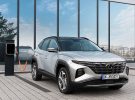
Hyundai Kona Hybrid (from 27,500 €*)
The Kona Hybrid offers a compact urban alternative with high manoeuvrability and a chassis designed for the city and occasional trips on the open road. It suits drivers who want a high driving position without giving up contained exterior dimensions.
The best
Good response in urban cycles and an efficient hybrid system that reduces consumption on short journeys; high visibility and favourable turning radius.
The room for improvement
Boot somewhat reduced compared with non-hybrid equivalents, and the extra weight affects dynamics on winding roads.
Kia Niro Hybrid (from 27,000 €*)
The Niro Hybrid offers a practical alternative focused on efficiency and comfort, aimed at users who prioritise moderate consumption and interior space in a compact crossover format.
The best
Balance between real consumption and interior space; assistance systems oriented to urban safety.
The room for improvement
Entry price and equipment may place it above cheaper city cars for equal performance.
Toyota Yaris Hybrid (from 21,200 €*)
The Yaris Hybrid is a city car designed for the city: reduced dimensions, low consumption on short journeys and a reputation for reliability in lightweight hybrid systems.
The best
Very moderate urban consumption and ease of parking thanks to its size and manoeuvrability.
The room for improvement
Limited rear seats and boot for users who regularly need more space.
Renault Clio E-Tech Hybrid (from 23,000 €*)
The Clio E-Tech combines the agility of a city car with a hybrid system designed to optimise urban journeys and reduce consumption in daily driving.
The best
Agile urban behaviour and ergonomics designed for city environments; competitive consumption/price ratio.
The room for improvement
The engine feel under hard acceleration is less refined compared with some alternatives, and the boot loses space because of the battery.
Honda Jazz e:HEV (from 22,500 €*)
The hybrid Jazz prioritises interior space and modularity with a platform oriented to urban driving and constant manoeuvres.
The best
Notable habitability in a compact format and practical solutions for everyday urban use.
The room for improvement
Design and interior finish less premium than direct rivals in the same price range.
Purchase aid
The Plan Auto+ 2026 in Spain continues to offer aid subject to emissions and scrappage, with amounts and requirements that vary by region and vehicle category. This aid is not included in the prices shown and can reduce the acquisition cost or make versions with better equipment possible within the same budget. To benefit, it is advisable to confirm scrappage requirements, income limits, delivery time and compatibility with other commercial promotions.
Common buying mistakes
Buying based only on the “from” price without comparing actual equipment and total cost of ownership.
Underestimating the influence of climate and journey type on battery performance and final consumption.
Forgetting to check interior space and ergonomics for daily use, favouring technical specifications over practicality.
With these elements clear, the urban buyer has precise criteria to filter options and prioritise what really influences everyday use. The natural next step is to review technical analyses and updated comparisons for the models that fit your budget and driving habits.

 Kia offers an electric range of 10 models, 50 versions and 400 possible combinations
 The seven finalists for the 2027 European Car of the Year (COTY) are exclusively electric
 Peugeot E-208 GTi: a battery-powered toy that revives the spirit of the 1980s sports cars
Deja un comentario