Which is the most complete luxury urban SUV?
 Iván Navarro
2 May 2026
12 min.
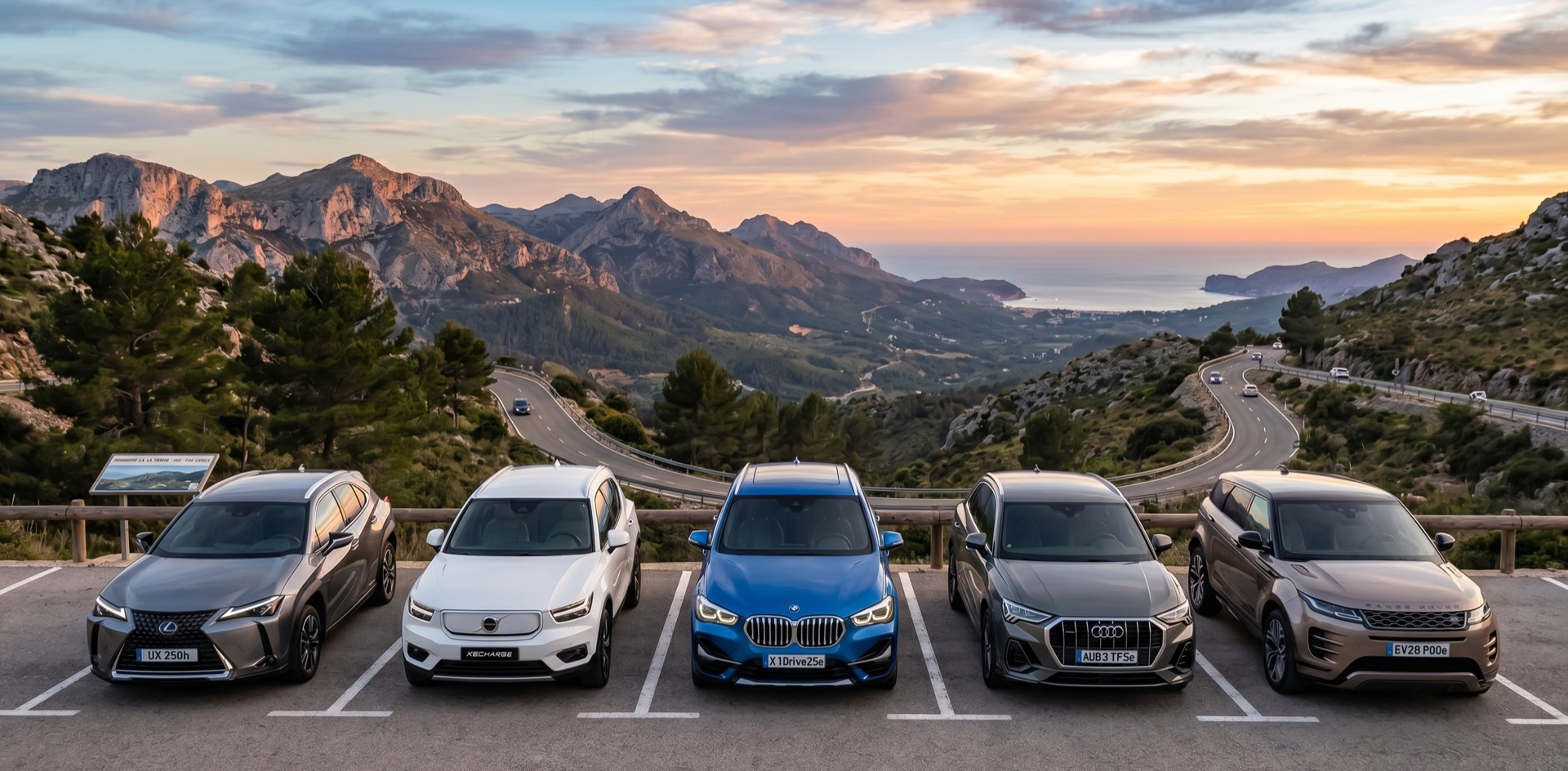
Today, electric mobility and luxury converge exceptionally in the premium compact SUV segment. In this article we analyse in detail five models that redefine the market by combining design, cutting-edge technology and environmental responsibility.
Today’s market calls for proposals that combine comfort, efficiency and a restrained presence: the luxury urban SUV is the premium brands’ answer for users who live in the city but do not want to give up a product with technological strengths, high-quality interiors and good performance. In a context where compact SUV sales remain strong and electrified versions are gaining ground, choosing the right luxury urban SUV means assessing electric range (where applicable), real-world consumption, interior ergonomics and the true cost of ownership. According to official registrations and established technical data sheets, the average buyer looks for vehicles priced above generalist alternatives but which offer a clear step up in equipment and finish.
The premium urban segment has shown sustained growth: compact saloons have given way to elevated bodies that offer better visibility and presence. Registration data and powertrain trends show that plug-in hybrids and self-charging full hybrids remain relevant options for those who mainly drive in metropolitan environments. The average starting price in Spain for these alternatives sits above the most affordable ranges, with prices from a level that varies according to trim and degree of electrification; the final decision depends on the balance between consumption, performance and real running costs.
The most balanced models in the segment in 2026
The selection we propose prioritises the balance between WLTP range in PHEVs (where applicable), real-world efficiency, build quality and the relationship between performance and starting price. We have also weighed urban practicality—boot space and manoeuvrability—and the technology offered in driver assistance and connectivity. These criteria allow us to identify five representative proposals of compact luxury for urban use.
Lexus UX 250h
The Lexus UX 250h represents the most classic approach to hybridisation within the premium urban offer. Its hybrid system makes it an interesting alternative for those who want to avoid regular charging without giving up modest consumption in city driving. It stands out for its comfortable tuning, carefully finished interior and real-world efficiency in dense traffic, which usually sits below the segment average. We recommend the light hybrid engine with 184 CV for its balance between performance and consumption.
In the city it is especially competent: the powertrain favours electric operation at low speeds and regeneration is smooth. In homologated combined consumption it sits at modest values according to the official data sheet; in urban practice is where it shows its best face against PHEV rivals that need charging to match its real efficiency. The UX maintains a competitive position in finish and perceived quality against alternatives such as the Volvo XC40 or the BMW X1.
Pros
• Hybrid operation without the need to charge.
• Interior quality and finish.
• Favourable real-world consumption in the city.
Cons
• Boot space is limited compared with some rivals.
• Performance is somewhat restrained during long recoveries.
The choice that leads the Lexus UX
The Lexus UX 250h stands out for its low real-world consumption and mechanical reliability, which makes it a very coherent option for mostly urban use.
| Feature | Data | Score |
|---|---|---|
| power | 184 CV | 8.5 |
| WLTP range | N/A (self-charging hybrid) | 8.0 |
| Top speed | Approx. 180 km/h | 7.5 |
| Boot space | 367 litres (per data sheet) | 7.0 |
| starting price | ≈ €36,900 | 8.2 |
score out of 10 based on the criteria analysed in this article
Volvo XC40 Recharge T5 Twin Engine
The Volvo XC40 Recharge T5 Twin Engine is one of the most complete PHEV alternatives: it combines a petrol engine with an electric motor that delivers real urban electric range sufficient to cover daily journeys without consumption. Its balance between electric WLTP range and ride comfort makes it suitable for those seeking a premium experience and versatility in charging. Volvo has taken care over integration, so battery packaging and interior space do not unduly penalise boot volume.
In performance it is capable, and its finish and driver aids are in line with what is expected in the segment. Its direct rivals include the BMW X1 plug-in and the Audi Q3 PHEV; against them, the XC40 tends to stand out for perceived quality and overall dynamism.
Pros
• Interior design and material quality.
• Good electric range for urban use.
• Comfortable driving.
Cons
• Somewhat high price in the best-equipped versions.
• Extra battery weight reduces agility.
The Volvo XC40 Recharge T5 Twin Engine is convincing for its practical electric WLTP range and an interior finish above the average, ideal for urban use with occasional longer trips.
| Feature | Data | Score |
|---|---|---|
| power | ≈ 262 CV combined | 9.0 |
| WLTP range | ≈ 50–55 km (electric) | 9.0 |
| Top speed | ~180–200 km/h | 8.0 |
| Boot space | ≈ 410 litres | 8.0 |
| starting price | ≈ €49,500 | 8.6 |
score out of 10 based on the criteria analysed in this article
BMW X1 xDrive25e
The BMW X1 xDrive25e blends practicality with dynamics that usually place it near the top of its category. Its PHEV configuration offers a good balance between performance and economy when charged regularly. In urban settings it benefits from a compact structure and a well-tuned chassis that conveys a more sporty feel than many rivals.
We recommend the xDrive25e version for its balance between power and electric range; on metropolitan routes it can cover daily journeys without using petrol. Its strong points are the responsiveness of the drivetrain and a good compromise between boot space and interior room. The Audi Q3 TFSIe or the Volvo XC40 are its most direct comparables.
Pros
• Dynamic handling.
• Competitive electric range for daily use.
• Good technology integration.
Cons
• Price in the top versions.
• Rear space is somewhat tight compared with taller rivals.
The BMW X1 xDrive25e is the choice for those who want more dynamic driving without giving up the ability to drive around the city in electric mode.
| Feature | Data | Score |
|---|---|---|
| power | ≈ 245 CV combined | 9.1 |
| WLTP range | ≈ 50–57 km (electric) | 9.0 |
| Top speed | ~200 km/h | 8.5 |
| Boot space | ≈ 450 litres | 8.6 |
| starting price | ≈ €44,000 | 8.8 |
score out of 10 based on the criteria analysed in this article
Audi Q3 TFSIe
The Audi Q3 TFSIe keeps the successful Q3 formula, now with a plug-in option that provides enough electric range for city driving and modest consumption if charged frequently. The Q3 stands out for its balance of ride quality, interior ergonomics and onboard technology. Although it is not the cheapest on the list, its sense of finish and refined behaviour justify the investment for many buyers who prioritise comfort and connectivity.
In comparison with the BMW X1 and the Volvo XC40, the Q3 tends to offer a body and dynamics geared more towards comfort and the road experience, while maintaining useful electric range for daily urban journeys.
Pros
• Ride quality and interior finish.
• Functional electric range in the city.
• Well-integrated infotainment and driver aids.
Cons
• Price and equipment cost if options are added.
• Boot volume somewhat limited depending on version.
The Audi Q3 TFSIe is a balanced proposal for those who value a carefully finished interior and comfortable driving in the urban environment.
| Feature | Data | Score |
|---|---|---|
| power | ≈ 245 CV combined | 8.8 |
| WLTP range | ≈ 45–50 km (electric) | 8.7 |
| Top speed | ~200 km/h | 8.0 |
| Boot space | ≈ 380 litres | 7.8 |
| starting price | ≈ €46,000 | 8.3 |
score out of 10 based on the criteria analysed in this article
Range Rover Evoque P300e
The Range Rover Evoque P300e brings a clearly premium and sophisticated approach within the urban segment: high-quality materials, an ambitious technological layout and an overall feel of a high-end car. Its plug-in version offers a more generous electric range than the segment average, making it easier to cover urban journeys with zero emissions. It is a purchase aimed at those who prioritise prestige and comfort over cost-per-space value.
The Evoque suits a profile that values design and presence; however, its entry price and running costs place it in a less competitive position if the absolute priority is economy of use or greater load space.
Pros
• Very premium performance and finish.
• High electric range for the segment.
• Brand image and comfort.
Cons
• High purchase price.
• Associated costs and consumption above some rivals once the battery is depleted.
The Range Rover Evoque P300e is the most exclusive and comfortable proposal in the group, designed for those seeking a luxury urban SUV with strong presence and real electric capability for the city.
| Feature | Data | Score |
|---|---|---|
| power | ≈ 309 CV combined | 8.6 |
| WLTP range | ≈ 60–66 km (electric) | 9.2 |
| Top speed | ~230 km/h | 8.5 |
| Boot space | ≈ 410 litres | 8.0 |
| starting price | ≈ €59,000 | 8.0 |
score out of 10 based on the criteria analysed in this article
Technical comparison
Overall, the models stand out for offering different solutions to premium urban mobility: from the self-charging hybrid that avoids frequent charging to PHEVs with electric ranges useful for everyday driving. The main differentiators are the electric WLTP range, combined power and starting price. The Volvo and the Evoque sit at the upper end for quality and electric range; the Lexus excels in urban efficiency without needing to plug in; the BMW and the Audi balance performance and comfort.
| Model | Power | Range | Price | Score |
|---|---|---|---|---|
| Lexus UX 250h | 184 CV | N/A (HEV) | ≈ €36,900 | 8.5 |
| Volvo XC40 Recharge T5 | ≈ 262 CV | ≈ 50–55 km | ≈ €49,500 | 9.0 |
| BMW X1 xDrive25e | ≈ 245 CV | ≈ 50–57 km | ≈ €44,000 | 9.1 |
| Audi Q3 TFSIe | ≈ 245 CV | ≈ 45–50 km | ≈ €46,000 | 8.7 |
| Range Rover Evoque P300e | ≈ 309 CV | ≈ 60–66 km | ≈ €59,000 | 8.6 |
score out of 10 based on the criteria analysed in this article
Which car to buy according to your profile
If you do a lot of city driving
If your driving is mostly urban and you want economy without worrying about frequent charging, the Lexus UX 250h is the logical choice for its real-world efficiency and self-charging hybrid philosophy.
If you travel often
For those who alternate between city and intercity routes and want electric capability for daily journeys, the Volvo XC40 Recharge T5 or the BMW X1 xDrive25e offer a better balance between range and performance.
If you are looking for the best price
The BMW X1 xDrive25e usually offers an attractive value-for-money ratio in its category, with good electric range and competitive dynamic behaviour.
If you prioritise technology
The Range Rover Evoque P300e and the Volvo XC40 Recharge T5 are the options that pay the most attention to the luxury experience and to assistance and connectivity systems, though at a higher cost.
FAQ – FREQUENTLY ASKED QUESTIONS
Which of these luxury urban SUVs consumes the least in the city?
In regular urban use without recharging, the Lexus UX 250h usually records the lowest consumption thanks to its self-charging hybrid system.
Which PHEV offers the greatest real-world electric range in the city?
The Range Rover Evoque P300e and the Volvo XC40 Recharge T5 are among the most generous in WLTP electric range, making them practical for exclusively electric daily journeys.
Is a self-charging hybrid or a PHEV better for urban use?
If you do not want to manage charging and your use is exclusively urban, a self-charging hybrid such as the Lexus UX 250h offers greater simplicity; if you can charge daily, a PHEV can significantly reduce fuel consumption.
Which models offer the best boot space for occasional family use?
The BMW X1 xDrive25e and the Volvo XC40 Recharge T5 usually offer more generous load volumes within the segment, making them more versatile for weekend getaways.
What initial cost should I expect for a luxury urban SUV?
Starting prices in Spain for this type of proposal usually range between €36,000 and €60,000 depending on engine and equipment; the final cost depends largely on the version and the options chosen.
Expert opinion
Beyond the official figures, choosing the right luxury urban SUV is defined by real use. For a driver who prioritises practicality in the city and does not want to manage charging, a hybrid such as the Lexus UX 250h offers the most direct combination of efficiency and comfort without excessive technological compromises. If the usage pattern allows regular charging, the plug-in alternatives (Volvo XC40, BMW X1, Audi Q3 and Range Rover Evoque) provide a tangible advantage in consumption and emissions in urban cycles, as well as a more flexible driving experience on mixed routes. The Volvo XC40 excels in perceived quality and reasonable electric range; the BMW X1 in its dynamics; the Audi Q3 in its interior balance, and the Evoque in its premium approach and greater electric range.
In terms of overall value, the balance between starting price, efficiency and practicality places the BMW X1 xDrive25e and the Volvo XC40 Recharge T5 in a privileged position for most buyers; for those who prioritise simplicity and low running costs without charging, the Lexus UX 250h is the most coherent alternative. Finally, the Range Rover Evoque P300e caters to a profile that values status and comfort above operating cost. Also consider rivals such as the Hyundai Kona or the Kia Niro in premium versions if your priority is value for money: all of them form part of the ecosystem that makes up the offer of luxury urban SUVs in these segments.
But not all of them offer the same balance. The best advice is to prioritise the type of use (pure city, mixed or frequent long trips), assess the real cost of use and test electric or hybrid performance under real conditions before deciding.


 Peugeot E-208 GTi: a battery-powered toy that revives the spirit of the 1980s sports cars
 New Lexus ES: luxury grows and goes electric
 First contact with the Dacia Sandero Hybrid 155: power and efficiency from €19,890
Deja un comentario