Born Cupra Electric Cars Compact ECO Review
CUPRA Born 2026: new exterior and interior design, more technology and the VZ version with 326 CV for the most sporty electric compact
 Antonio Roncero @roncero_antonio
2 May 2026
9 min.
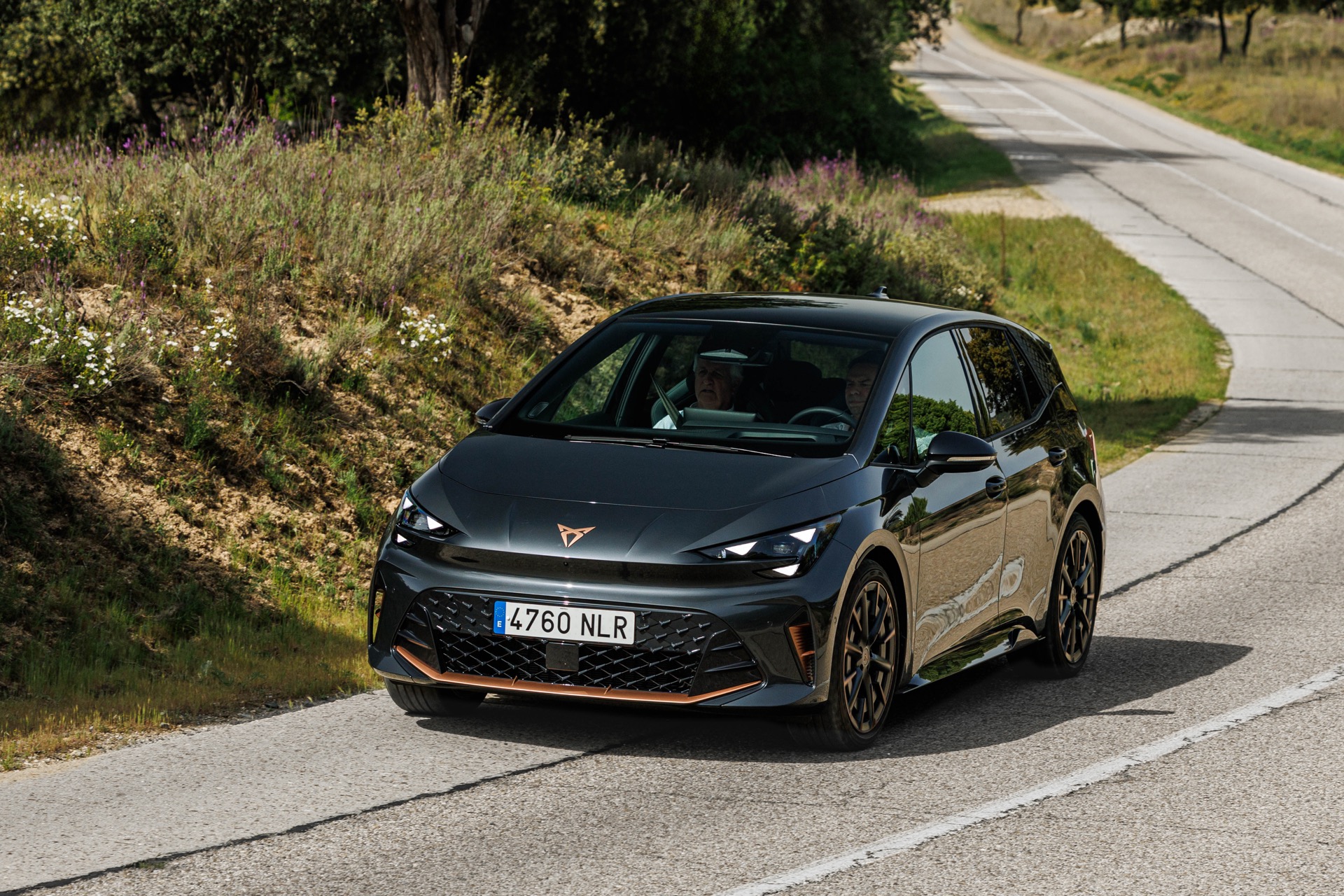
The most interesting thing about the new CUPRA Born is not what has changed inside and out, but the way the brand has approached this update. CUPRA says it has listened to those who already drive a Born -and to those of us who do this for a living and have been writing reviews since the model launched back in 2021- and has corrected or modified what customers were asking for. The result is a car that keeps all its qualities intact, but is now even more comfortable to drive and, if anything, even more desirable.
The brand’s first electric car is built, as before, at the Zwickau plant (Germany), although it’s worth remembering that it was designed and developed in Barcelona. Production of this new CUPRA Born 2026 starts in May 2026 and market launch is scheduled for the summer. Let’s look at what changes and, above all, I’ll tell you how the top-of-the-range version, the Born VZ, performed, as I’ve already had the chance to drive it.
New exterior design: the triangular signature arrives
The new CUPRA Born gets the shark-shaped front end recognisable on the brand’s latest models, along with new headlights -now with triangular daytime running lights- that unify the light signature across the entire range. As an option they can be specified with Matrix LED technology, which adapts the light beam to avoid dazzling other drivers without giving up maximum illumination. The rear also gains character. The new bumper features a more prominent diffuser, and the LED lights replicate the motif of three triangles connected by a horizontal strip that integrates the backlit logo with a 3D effect. At night, the Born is unmistakable. The front and rear door handles are now illuminated, a minor detail but a very attractive one from an aesthetic point of view.
As a result of the new bumpers, the Born grows slightly: 12 millimetres longer than the previous model, reaching 4,336 mm. The wheelbase (2,766 mm), width (1,809 mm) and height (1,543 mm) remain the same. The boot keeps its 385 litres of capacity. A new colour joins the palette, Timanfaya Grey, alongside the existing Glacial White, Midnight Black, Aurora Blue, Vapour Grey and Dark Forest tones. The wheels are 19 or 20 inches, with the novelty that the wider 235 mm tyres -previously exclusive to the 20-inch wheels- are now also available on the 19-inch ones.
Interior: less touch-based, more intelligent
As I mentioned at the start, CUPRA has listened to its customers; had they listened to us earlier, there would have been no need to wait so long. The new steering wheel now has physical buttons, much easier to use on the move without taking your eyes off the road. And on the driver’s door there are four independent window switches, one per window, versus the two shared switches of the previous model. These are small changes, but they are appreciated.
But I find the digital instrumentation much more interesting, with a screen that goes from 5.3 to 10.25 inches and can therefore finally be called by its proper name: instrumentation. Driving information can now be checked without having to wear glasses. The central infotainment screen keeps its 12.9-inch size but debuts an operating system based on Android Automotive with an integrated App Store, bringing the logic of the smartphone to the car’s ecosystem. You don’t need to fiddle much with the system to realise straight away that it runs more smoothly and its handling has improved considerably. Above the instrumentation, projected onto the windscreen, the Head-up Display with augmented reality can optionally be fitted, completing a truly digital cockpit.
Perceived quality also takes a leap forward. The door panels, front and rear, have been redesigned, and the characteristic copper-coloured details run through the cabin from the steering wheel to the door handles. The materials embrace sustainability without sacrificing refinement, with a high proportion of recycled materials. The bucket seats of the VZ version also incorporate backrests with 33% linen fibre, reducing weight by up to 50% compared with conventional seats. The look is magnificent and the feel is better than before, although if you start “investigating” you’ll discover that many materials that look soft are actually hard plastics very well “camouflaged”. Rear passengers also benefit: they now have their own air vents.
Engine range: three options, each with a clear purpose
The new Born family is built around three configurations, now with more engine and battery combinations:
- The Born Plus delivers 140 kW (190 CV) with a 58 kWh LFP chemistry battery, which is homologated for up to 484 km of WLTP range. It can be DC charged at 105 kW, going from 10 to 80% in 26 minutes. It is the entry version, but it gives up nothing essential and offers very reasonable performance for any kind of use.
- The Endurance rises to 170 kW (231 CV) and debuts a 79 kWh NMC chemistry battery, pushing range up to 627 km. DC charging reaches 183 kW, with charging times of just 29 minutes from 10 to 80%. A very serious version indeed.
- The Born VZ shares the Endurance’s battery (79 kWh) but fits a 240 kW (326 CV) motor delivering 545 Nm of instant torque. Range is still up to 631 km. We’ll go into detail about it later in the driving section.
Prices start at 39,500 euros (29,500 euros with the Auto+ plan and brand financing) for the Plus, from 43,500 euros for the Endurance and from 50,500 euros for the Born VZ.
Technology, safety and comfort
All versions feature the new One Pedal Driving system, which allows you to manage deceleration and bring the vehicle to a complete stop by lifting off the accelerator, without needing to touch the brake. A feature that is useful in very specific driving situations, such as in town. The VZ and Endurance versions also add the e-Launch system, a Launch Control function that makes the most of acceleration from a standstill. The DCC Sport adaptive suspension system, with up to 15 adjustment levels, is available across the entire range.
The new CUPRA Born also debuts a battery of improved safety systems. Travel Assist 3.0 integrates cloud data to recognise speed bumps, traffic lights and pedestrian crossings, and adjusts speed when approaching bends. Crossroad Assist can brake autonomously in the event of a collision risk at junctions. Front Assist detects up to two vehicles ahead and issues progressive warnings before activating automatic braking. And Pre-crash now includes rear detection, activating the seatbelt pretensioners, closing the windows and switching on the hazard lights in the event of an imminent collision.
Among the comfort novelties, notable features include the Mobile Device Key digital key, which lets you lock, unlock and start the car with your phone using ultra-wideband technology; the Vehicle-to-Load (V2L) function, which turns the car’s battery into a power outlet for powering external devices; and, for the first time on the Born, an optional towbar for bicycle racks.
The audio system has also been improved. The 10-speaker setup incorporates Sennheiser’s Contrabass technology, with techniques for reproducing deep, powerful bass frequencies. CUPRA has also developed its own interior sound signature, available in Performance and CUPRA modes, which responds to the accelerator, speed and selected mode to amplify the sensation of performance without being intrusive. It is inspired by the sound of Formula E single-seaters… although, when I floored the accelerator in the Born VZ, it reminded me more of the noise you hear while waiting for the metro at a station.
Behind the wheel of the CUPRA Born VZ
The first contact with the Born VZ began in Madrid, with the capital’s traffic as the first scenario. With Comfort mode engaged, the Born VZ is a very “friendly” car. This is where, as I mentioned, you can make use of the new One Pedal Driving function: as soon as you lift your foot, the car slows down smoothly until it comes to a complete stop, without any abruptness. Dense traffic is managed almost entirely with the accelerator, making the car brake by “accelerating less”. But once you leave the city and switch to Performance or CUPRA driving modes, the transformation is radical. The response to the accelerator is far more direct and forceful, and the way the car hugs the tarmac invites you to play with the pedal. The 545 Nm of torque is always available, and you need to dose it carefully when leaving corners.
The DCC Sport suspension, with its 15 adjustment levels, lets you find the perfect balance between comfort and dynamism depending on the type of road. At the firmer settings the car flattens out, reduces body roll and gains agility. At the softer ones, it absorbs imperfections in the road surface without sacrificing the feeling of control. The braking is firm and progressive, without the “step” between regenerative and mechanical braking that sometimes bothers drivers of other electric cars. And the steering-wheel paddles let you adjust the level of regeneration, one more aid for modulating your pace without always having to resort to the brake.
With Launch Control, acceleration from 0 to 100 km/h takes 5.6 seconds. A figure in line with the 240 kW (326 CV) its motor delivers and which, let us remember, until the democratisation of power and performance brought by electric cars, was not so long ago the exclusive domain of engines with many cylinders and large displacement… or well-pressed turbochargers. Average consumption during the test drive, with a lively driving style and the more active modes almost always on, was around 19.5 kWh/100 km. Yes, the Cupra Born VZ can also be much more efficient. But if you’re looking for everyday efficiency, that’s what the other two versions are for.
CUPRA Born VZ – Image gallery
Technical specifications of this car

 Kia offers an electric range of 10 models, 50 versions and 400 possible combinations
 The seven finalists for the 2027 European Car of the Year (COTY) are exclusively electric
 Peugeot E-208 GTi: a battery-powered toy that revives the spirit of the 1980s sports cars
Deja un comentario