Which SUV should you choose in 2026 if you prioritise range for daily use?
 Iván Navarro
20 April 2026
7 min.
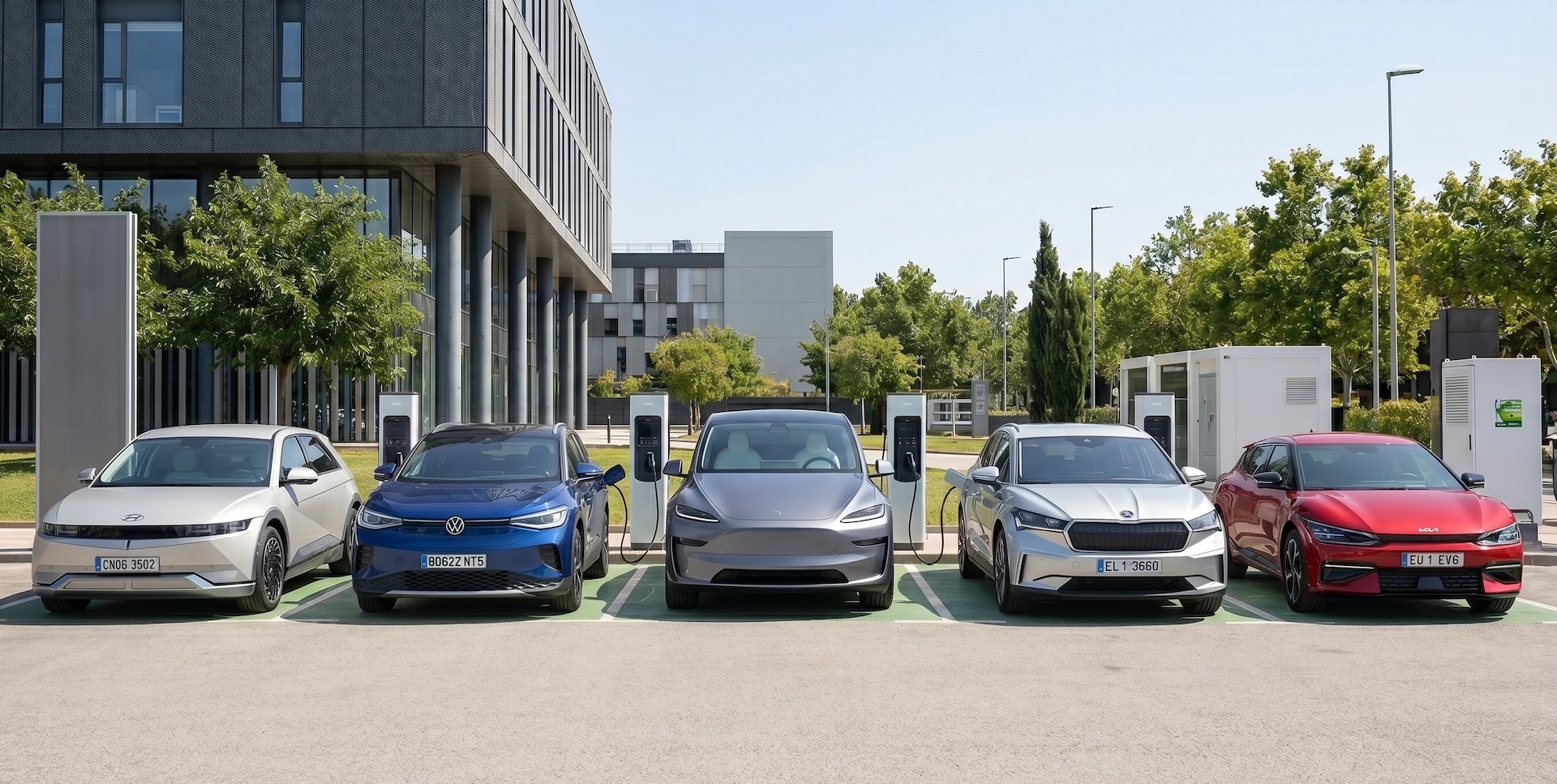
Below you will find a detailed analysis of the range and performance of 5 electric SUVs worth considering.
In 2026 the offer of SUVs with good range for daily use has consolidated: denser batteries, aerodynamic optimisation and thermal management define the models that generate the most interest. This text brings together practical options for those looking to reduce visits to charging points without giving up interior space and comfort. You will find alternatives of different sizes and technical strategies, from platforms designed for efficiency to solutions more oriented to performance with competitive range. The comparison helps to distinguish positioning, entry price and suitability for everyday use in town and on the road.
Who is this ranking for?
This ranking is based on market data, official specifications and published tests. It is aimed at buyers who see range as the decisive criterion when buying an SUV in 2026.
If you drive many kilometres every day and want less dependence on public charging, this analysis is for you. If you prioritise regular motorway trips, or need family space without sacrificing good range, you will find models suited to different usage habits.
What details have we analysed?
We have considered market positioning, official technical data such as battery capacity and WLTP homologation, range and consumption in mixed conditions, useful power and performance, size and practical interior space, and the value-for-money relationship for daily use.
Ranking of the SUVs with the best range for daily use in 2026
Tesla Model Y (from 54,990 €*)
Indicative price without applying public aid or the brand’s commercial discounts.
Why it is here: The Long Range version offers a high WLTP range and competitive real-world efficiency thanks to the electric architecture and thermal management. Its charging network and optimised electronics favour long journeys with fewer stops.
Ideal for: Users who drive mixed routes, long distances, and want integrated fast-charging network access.
Pros:
- High WLTP range for its segment.
- Supercharger network and efficient management software.
- Versatile interior space and boot.
Cons:
- High entry price compared with generalist alternatives.
- Finishes that have received criticism for fit and materials on some units.
Hyundai Ioniq 5 (from 44,000 €*)
Indicative price without applying public aid or the brand’s commercial discounts.
Why it is here: Platform designed for efficiency and fast charging, with battery versions reaching competitive WLTP ranges and low consumption. Its balance between size and economy makes it relevant for daily use.
Ideal for: Those seeking an SUV with good range, comfort and fast charging without sacrificing a moderate price.
Pros:
- Good energy efficiency on real-world routes.
- High-power charging system available.
- Generous interior space for its size.
Cons:
- Weight penalises consumption in very dynamic driving.
- Some all-wheel-drive versions reduce range noticeably.
Volkswagen ID.4 (from 42,500 €*)
Indicative price without applying public aid or the brand’s commercial discounts.
Why it is here: It offers solid WLTP ranges in rear-wheel-drive versions with a good balance between price and range. Generalist positioning that makes access and maintenance easier.
Ideal for: Users seeking a balance between entry cost and usable range for daily journeys and occasional getaways.
Pros:
- Attractive price/range ratio in basic configurations.
- Comfortable driving and good technology integration.
- Established service and parts network in Europe.
Cons:
- More powerful versions reduce range.
- Design less focused on extreme efficiency than some rivals.
Škoda Enyaq iV (from 41,300 €*)
Indicative price without applying public aid or the brand’s commercial discounts.
Why it is here: A practical and efficient variant within the Volkswagen group, with versions reaching high WLTP ranges and a focus on interior space and cost per kilometre.
Ideal for: Families who need a generous boot and range for daily commutes and weekends.
Pros:
- Good range in large-battery versions.
- Interior space and ergonomics geared to real use.
- Competitive price within the European segment.
Cons:
- More conservative design and material options.
- Some versions have longer charging times than rivals with higher charging power.
Kia EV6 (from 44,990 €*)
Indicative price without applying public aid or the brand’s commercial discounts.
Why it is here: Shared platform with good efficiency and variants with competitive WLTP; it combines dynamic performance with useful range for day-to-day driving.
Ideal for: Drivers who want a balance between real-world range and a dynamic driving experience.
Pros:
- Good range in long-distance RWD versions.
- Fast charging and notable dynamic behaviour.
- Complete technology equipment.
Cons:
- Price of some versions raises the cost/range ratio.
- Models with higher power significantly reduce range.
The prices shown in this ranking are indicative and do not apply public aid or the brands’ commercial discounts.
Technical comparison
| Model | Range | Power | Consumption | Top speed | Price (€*) |
|---|---|---|---|---|---|
| Tesla Model Y | 533 km (WLTP) | 384 CV | 16.3 kWh/100 km | 217 km/h | 54,990 €* |
| Hyundai Ioniq 5 | 507 km (WLTP) | 218 CV | 15.5 kWh/100 km | 185 km/h | 44,000 €* |
| Volkswagen ID.4 | 522 km (WLTP) | 204 CV | 16.1 kWh/100 km | 160 km/h | 42,500 €* |
| Škoda Enyaq iV | 537 km (WLTP) | 204 CV | 16.0 kWh/100 km | 180 km/h | 41,300 €* |
| Kia EV6 | 528 km (WLTP) | 229 CV | 16.5 kWh/100 km | 185 km/h | 44,990 €* |
These data are official and taken from the brands’ official websites.
FAQ · The 5 questions everyone asks
Does the WLTP range match the real-world range?
WLTP provides an approved reference, but real-world range varies with driving style, temperature, load and use of climate control. In town consumption usually improves; at high speed on the motorway the real range is reduced.
What influences range more: weight or aerodynamics?
Both have an influence, but on routes at sustained speed aerodynamics has the greater impact. In urban cycles, weight and the efficiency of regenerative braking are decisive.
Is rear-wheel drive better for more range?
RWD versions usually offer better range due to lower mechanical losses than AWD. If you do not need extra traction for snow or rough terrain, RWD maximises range per charge.
How does fast charging affect battery lifespan?
Manufacturers design batteries to withstand fast charging, but intensive and constant use at maximum power can accelerate some wear. Moderating how often you use ultra-fast charging helps preserve capacity.
What range margin is recommended for daily use?
For daily use it is advisable to keep a 20–30% margin over expected demand: avoid running down to 0% and minimise urgent visits to the public network. This reduces range anxiety and manages the battery better.
Expert conclusion
This set of models shows that in 2026 it is possible to find SUVs with real-world ranges sufficient for most daily journeys. The ranking helps to understand that range depends as much on technical configuration as on use: some models prioritise efficiency and cost per kilometre, others balance performance with good range. For the buyer, this means choosing according to their usage pattern rather than the abstract WLTP figure.
If you want to get the most for your money, first look at the real entry price and what comes as standard. If the model is in high demand, it is normally also easier to sell later. And if you cover many kilometres, energy cost and efficiency matter more than the power figure. If you will not charge often, do not buy from the catalogue: buy according to your routine. If you prefer to play it safe within the list, models with an established service network and a good price/range ratio usually minimise surprises in daily use.


 Peugeot E-208 GTi: a battery-powered toy that revives the spirit of the 1980s sports cars
 New Lexus ES: luxury grows and goes electric
 First contact with the Dacia Sandero Hybrid 155: power and efficiency from €19,890
Deja un comentario