Hyundai Skoda Electric Cars Buying Guides Rankings
2026 Ranking: The 6 Best Compact Electric SUVs for Range-to-Price Ratio in the Spanish Market
 Dani Montesinos
6 August 2026
7 min.
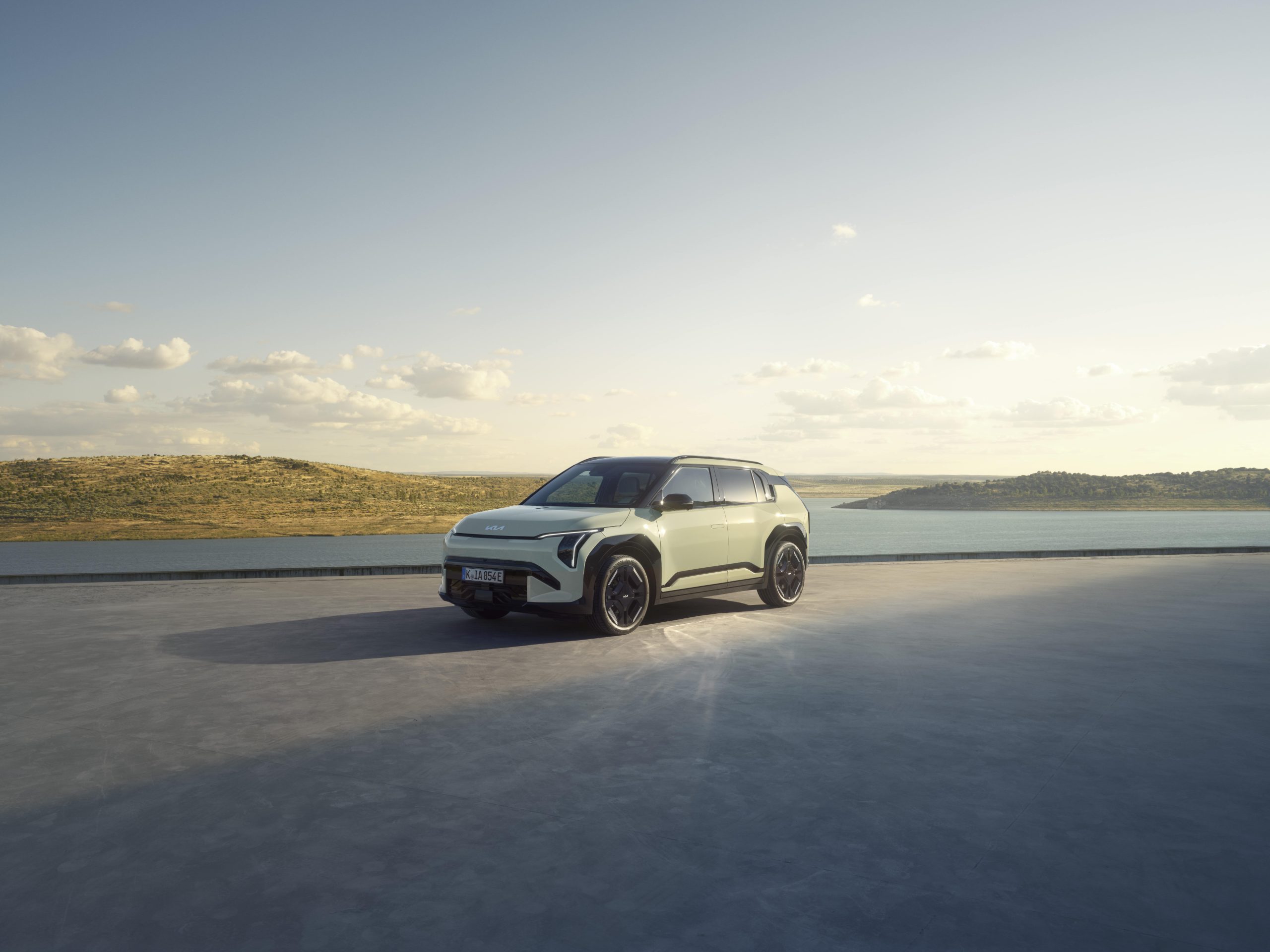
We analyse six electric SUVs that offer the best balance between WLTP range and final price in Spain. With data, cost per kilometre and MOVES III subsidies
The compact electric SUV has become the real battleground of the electric car in Spain. Not in the premium segment, where margins hide inefficiencies, but here: between €30,000 and €45,000, where every WLTP kilometre has to justify its price. And in 2026, with Korean competition sharpened, the French playing hard and Skoda entering with a product that surprises, the picture has changed.
We have taken six models currently sold in Spanish dealerships, crossed WLTP range with list price applying MOVES III where applicable, and calculated the cost per kilometre of range. The result is an uncomfortable ranking for some favourites.
How we measured the range-to-price ratio
The indicator is simple: euros per WLTP kilometre. The final price (with MOVES III of €7,000 for scrapping, applicable to most of these models as they fall below the €45,000 ceiling excluding VAT) is divided by the homologated range of the highest reasonable battery version. A good ratio hovers around 55–65 €/km. Above 75 €/km, on paper, each homologated kilometre is expensive.
That said — and here comes the nuance that is often forgotten — WLTP range is not real range. Motorway consumption can deviate upwards by 20–25%, especially with sub-zero temperatures. That is why we complement the ratio with homologated consumption, which is the best comparable proxy between brands.
Kia EV3 — from €24,530 with subsidies
The Korean has earned its place as the reference, and not by chance. The 81.4 kWh Long Range version homologates 605 km WLTP with a consumption of 14.9 kWh/100 km, figures very few rivals match at this price. In daily use — the 40 km commute with a stop in a ZBE, the weekend Madrid–Valencia trip on a single charge — the EV3 performs without drama.
The interior feels a step above what is expected in the segment, with finishes that do not imitate premium: they are premium, within their class. Its ratio hovers around 59 €/km, an excellent figure. We have already analysed this Korean proposal in depth in the full EV3 review, and the impression is confirmed on paper.
| Power kW | Power CV | Top speed | WLTP range | Consumption | Label | Fuel |
|---|---|---|---|---|---|---|
| 150 kW | 204 CV | 170 km/h | 605 km | 14.9 kWh/100 km | ZERO | Electric |
Hyundai KonaHyundai Kona Electric — from €27,490 with subsidies
The Kona in its 65.4 kWh version offers 510 km WLTP with 14.7 kWh/100 km. It is not the longest in the group, but its price with subsidies pushes its ratio to around 64 €/km, keeping it competitive. Sober interior, classic ergonomics, and charging at 100 kW DC which, on long journeys, feels less agile than an EV3, it must be said.
For the urban driver who only needs to charge at home once or twice a week, it is a sensible purchase. For someone doing 25,000 km a year on the road, it falls short compared with the Kia.
| Power kW | Power CV | Top speed | WLTP range | Consumption | Label | Fuel |
|---|---|---|---|---|---|---|
| 150 kW | 204 CV | 172 km/h | 510 km | 14.7 kWh/100 km | ZERO | Electric |
Renault ScenicRenault Scenic E-Tech — from €41,160 with subsidies
The Scenic reinvented as an electric car has been one of the surprises of the period. With its 87 kWh battery it homologates 623 km WLTP, the highest figure in this ranking, although the price also rises. Its ratio sits around 63 €/km. Very well-resolved interior, CMF-EV platform shared with the Megane but with a genuinely family-minded approach — the 545-litre boot is a strong argument.
The drawback? The steering demands more weight than that of a Kia, and charging at 150 kW falls short of what 800 V rivals offer. It is debatable whether it justifies the premium over the EV3, although in pure range it is the king of the non-premium segment.
| Power kW | Power CV | Top speed | WLTP range | Consumption | Label | Fuel |
|---|---|---|---|---|---|---|
| 160 kW | 220 CV | 170 km/h | 623 km | 16.8 kWh/100 km | ZERO | Electric |
Peugeot E-3008Peugeot E-3008 — from €42,650 with subsidies
The French bet on design and presence. The 73 kWh Long Range version homologates 525 km WLTP, with a consumption of 16.8 kWh/100 km. Aesthetically it plays in another league — the curved 21-inch panoramic i-Cockpit is as divisive as it is spectacular — but in euros per kilometre it lands around 79 €/km, one of the highest ratios in the group.
Even so, it makes sense for the buyer who values the object above the spec sheet. Not everything is WLTP range: there is a sensory component that the Peugeot covers better than almost any rival.
| Power kW | Power CV | Top speed | WLTP range | Consumption | Label | Fuel |
|---|---|---|---|---|---|---|
| 157 kW | 210 CV | 170 km/h | 525 km | 16.8 kWh/100 km | ZERO | Electric |
Skoda Elroq — from €35,775 with subsidies
The surprise of the season. The Elroq uses the VW Group’s MEB platform in a more compact format than the Enyaq, and in its 82 version (77 kWh usable) it homologates 576 km WLTP with 17.0 kWh/100 km. Its ratio sits around 63 €/km. Skoda has understood something that other brands in the group miss: sobriety is not at odds with perceived quality.
Rational interior, up-to-date ADAS, charging at 175 kW and the typical Czech pragmatism. In my view, it is the direct rival of the EV3 in this ranking, and at some dealerships they let it go for a better price than the official list suggests.
| Power kW | Power CV | Top speed | WLTP range | Consumption | Label | Fuel |
|---|---|---|---|---|---|---|
| 210 kW | 286 CV | 180 km/h | 576 km | 17.0 kWh/100 km | ZERO | Electric |
MGS5 EV — from €28,590 with subsidies
The outsider on price. The MG S5 EV, with its 64 kWh battery, homologates 480 km WLTP and a consumption of 15.3 kWh/100 km. Its ratio drops sharply to around 62 €/km, and that is the decisive argument of this British-Chinese model: it is by far the cheapest in the group. The interior sits a step below the Korean’s in feel and detail, no question, but the technology package has improved greatly over previous generations.
For a second family car, or for anyone seeking access to electric without exceeding €30,000 final, it is the most rational option on the market today.
| Power kW | Power CV | Top speed | WLTP range | Consumption | Label | Fuel |
|---|---|---|---|---|---|---|
| 170 kW | 231 CV | 170 km/h | 480 km | 15.3 kWh/100 km | ZERO | Electric |
Summary table and score
| Model | Price from | WLTP range | €/km | Consumption | Score /10 |
|---|---|---|---|---|---|
| Kia EV3 | €24,530 | 605 km | 59 €/km | 14.9 kWh | 9.2 |
| Skoda Elroq 85 | €35,775 | 576 km | 63 €/km | 17.0 kWh | 8.8 |
| MG S5 EV | €28,590 | 480 km | 62 €/km | 15.3 kWh | 8.3 |
| Renault Scenic E-Tech | €41,160 | 623 km | 63 €/km | 16.8 kWh | 8.2 |
| Hyundai Kona Electric | €27,490 | 510 km | 64 €/km | 14.7 kWh | 8.0 |
| Peugeot E-3008 | €42,650 | 525 km | 79 €/km | 16.8 kWh | 7.4 |
The EV3 takes the ranking by a very small margin over the Elroq, and both leave the French in a second tier that only the Scenic contests on absolute range. If the criterion is purely range-to-price, the podium is Korean–Czech–British. Whoever prioritises design and image will have to accept a worse ratio. That is fair.
FAQ
Which is the compact electric SUV with the best range-to-price ratio in Spain in 2026?
The Kia EV3 Long Range, with 605 km WLTP and a price from €24,530 with MOVES III, offers the best ratio (around 59 €/km) in the non-premium segment.
Does the MOVES III subsidy apply to all these models?
Yes. All six models in the ranking fall below the €45,000 ceiling excluding VAT set by the MOVES III plan, so they can benefit from up to €7,000 in aid if a vehicle over seven years old is scrapped.
Does WLTP range correspond to real-world range on the road?
Not exactly. On the motorway at 120 km/h and in adverse weather, real consumption can rise between 20% and 25% compared with the homologated figure. Models with 800 V architecture and efficient heat pumps tend to deviate less.
Is it worth waiting for the 2026–2027 models or buying now?
The six models analysed already incorporate the most recent platforms available in the compact segment. Except for specific cases such as the upcoming Hyundai IONIQ 3, waiting does not bring major technical leaps in the short term — though it will in the upper tier.

 Peugeot E-208 GTi: a battery-powered toy that revives the spirit of the 1980s sports cars
 New Lexus ES: luxury grows and goes electric
 First contact with the Dacia Sandero Hybrid 155: power and efficiency from €19,890
Deja un comentario