Volvo EX40 road test: why the Swedish electric SUV is still a benchmark in 2026
 Dani Montesinos
6 August 2026
6 min.
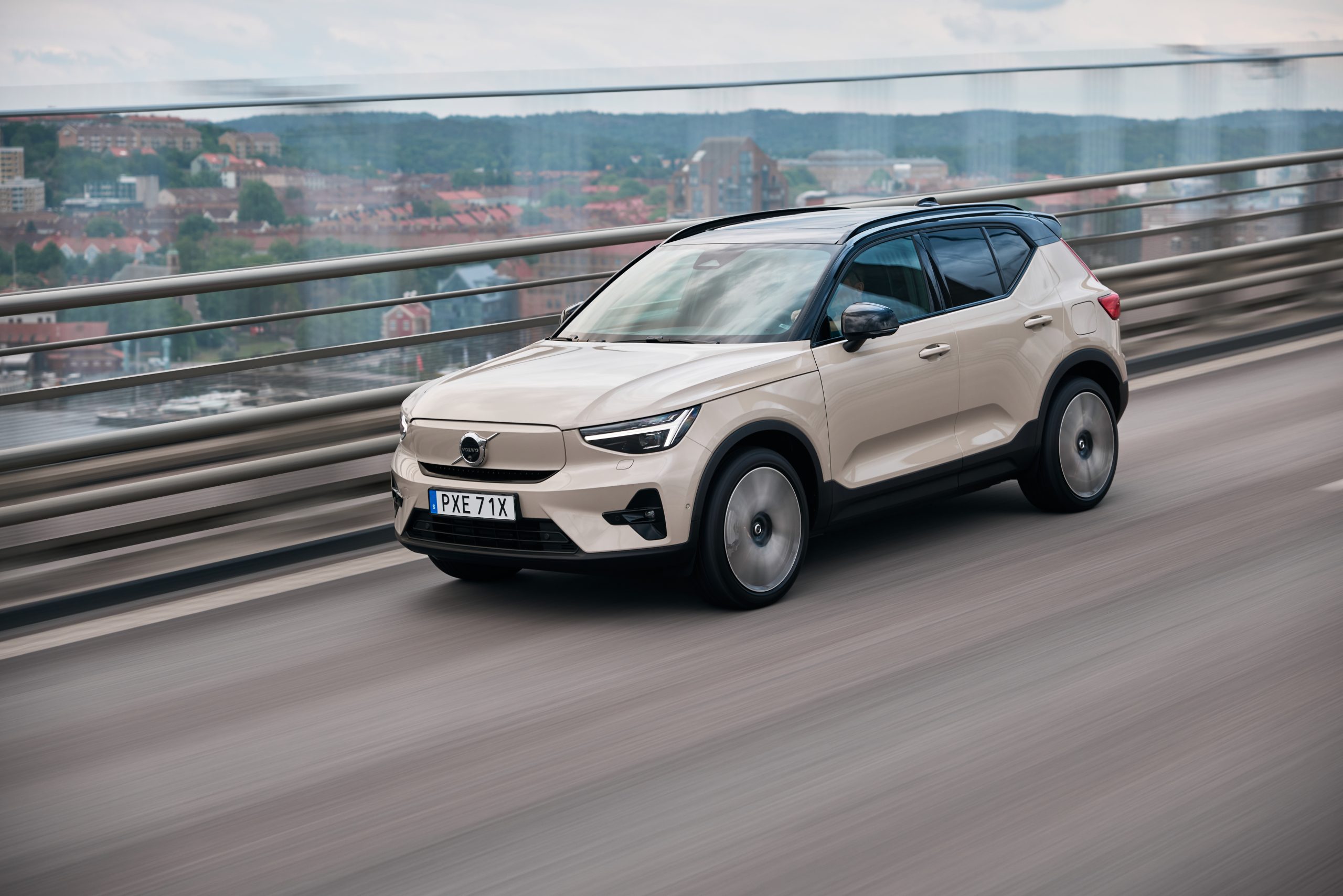
We tested the Volvo EX40 Single Motor 2026, the compact premium electric SUV that balances a 480 km range, Swedish safety and Google integration.
Some cars age badly as soon as the next generation of rivals arrives. And then there is the Volvo EX40. Rebranded after the farewell to the XC40 Recharge name, the Swedish electric SUV enters 2026 as one of those products that survive the cycle because its foundations were well built from the start. We have tested it again in Single Motor configuration, with 238 CV and a 70 kWh battery, to answer the question that reaches us week after week: is it still worth it against the new wave of compact premium electric cars?
A discreet redesign that ages well
The EX40 has not been reinvented; it has refined details. The blind grille in body colour, the refined Thor’s Hammer headlights and that almost square line of pronounced shoulders keep it recognisable from a hundred metres away. It does not seek to surprise —that role is left to its big brother, the EX60— but to consolidate an image that still works in the compact premium segment.
In my view, it remains the electric premium car with the cleanest silhouette in the segment. No Chinese flourishes or excess German creases.
Scandinavian interior: when less is more
You get in, close the door and everything makes sense. Recycled materials that don’t look like bargain-bin recycled materials, the Orrefors crystal gear lever (optional) that remains a brand nod, and that horizontal dashboard that breathes. The driver’s seat —a house signature— is among the best in the segment on long journeys.
That said, the rear centre seat remains tight and the intrusive tunnel is noticeable if you travel five.
Integrated Google: the software that Volvo got right before anyone else
Here the EX40 breaks away from the pack. Native Android Automotive, with Google Maps, Assistant and Play Store integrated from the factory without depending on your phone. It plans routes with charging stops, understands complex voice commands and receives OTA updates regularly.
Compared with the MBUX of a Mercedes EQA or the iDrive of the BMW iX1, it is more intuitive day to day. It is not a matter of the system’s raw power: it is a matter of whom you can ask for something by voice without feeling ridiculous.
Real-world range and consumption: the chapter every buyer wants to read
The WLTP figure points to around 477 km with the 70 kWh usable battery. In practice, and with mixed motorway and city use, a driver covering 15,000 km a year will comfortably manage between 380 and 420 real km. On a Madrid–Valencia drive without pushing the pace, a single charging stop is enough.
Measured consumption hovers around 17.2 kWh/100 km on flat roads, somewhat more if you abuse the motorway at 130. Nothing exceptional, nor disappointing — it sits in the upper range of the premium segment.
Fast charging: sufficient, without leading
Up to 200 kW on direct current. 10–80% in about 28 minutes if you find an HPC charger in good condition. It is no record —the Kia EV3 or the Model Y beat it on sustained charging curves— but it solidly covers the real use case: stop 25 minutes, coffee, carry on.
Dynamics and driving: Swedish solidity, not German sportiness
238 CV, rear-wheel drive in this Single Motor version and 0–100 in about 7.3 seconds. Sufficient. The steering asks for a little more weight than that of an iX1, and the chassis prioritises composure over agility. It is a comfortable car, not a toy.
Even so, the accelerator response is well calibrated and the one-pedal regenerative braking is among the finest on the market.
Volvo safety: the argument that does not expire
Five stars at EuroNCAP, complete ADAS as standard (Pilot Assist, autonomous emergency braking with cyclist detection, cross-traffic alert) and that tangible sense that Volvo treats safety as brand identity, not as a checklist. Something we already highlighted in the 2026 ranking of the best-rated family SUVs in EuroNCAP.
Price and positioning: from €46,950 RRP
The Single Motor Essential version starts at around €46,950 (recommended RRP, excluding dealer discounts, promotions and Moves aid). It sits below an equivalent BMW iX1 and above the top-spec Kia EV3. Textbook compact premium territory.
Volvo EX40 Single Motor technical specifications
| Power kW | Power CV | Top speed | Range | Consumption | Label | Fuel |
|---|---|---|---|---|---|---|
| 180 kW | 238 CV | 180 km/h | 480 km | 17.2 kWh/100 km | ZERO | Electric |
Direct rivals: how the EX40 compares
Against the BMW iX1 it wins on software and loses a little on dynamics. Against the Audi Q4 e-tron it offers a fresher interior. The Mercedes EQA is starting to show its age. The Tesla Model Y remains the king of efficiency and the charging network, but the Swede hits back on materials and refinement. And the Kia EV3 presses from below with more range for less money, though without the premium aura.
Summary table and score
| Model | Range | Power | Price from | Score /10 |
|---|---|---|---|---|
| Volvo EX40 Single Motor | 477 km | 238 CV | €46,950 | 8.7 |
| BMW iX1 | 514 km | 204 CV | €50,300 | 8.5 |
| Audi Q4 e-tron | 440 km | 204 CV | €49,970 | 8.2 |
| Tesla Model Y | 534 km | 256 CV | €40,790 | 8.6 |
| Kia EV3 | 605 km | 204 CV | €29,310 | 8.4 |
Editorial scores based on overall balance: design, technology, range, dynamics and price-to-product ratio. Indicative RRP prices, excluding discounts and aid.
Verdict: why it remains a benchmark
The EX40 is not the fastest, nor the one that charges the most, nor the cheapest. And yet, in our view, it remains the best-balanced purchase in the compact electric premium segment in Spain. That balance —so Scandinavian, so unspectacular— is exactly what lets it age well against newer rivals that are less rounded.
Is there reason to wait for the EX60? If you need more size and budget, yes. If you want a compact premium car that works from day one without asking for strange concessions, the EX40 is still there.
Frequently asked questions
What is the real-world range of the Volvo EX40 in 2026?
The official WLTP figure is around 480 km with the 70 kWh battery. In real mixed use you can expect between 380 and 420 km, depending on the share of motorway, ambient temperature and driving style.
How much does the Volvo EX40 Single Motor cost?
It starts at around €47,000 in Essential trim (RRP recommended by the manufacturer, excluding dealer discounts, occasional promotions or applicable Moves aid).
What sets the Volvo EX40 apart from the EX60?
The EX40 is a compact premium SUV on the CMA platform, while the EX60 debuts the new SPA3 architecture with greater size, longer range and an 800 V electrical system. Different segments and prices.
Is the Volvo EX40 worth it over the Tesla Model Y?
It depends on priorities. The Model Y wins on efficiency, Supercharger network and price-performance. The EX40 offers better perceived quality, integrated Google software and the Volvo safety philosophy. For premium urban and suburban use, the Swede is more convincing.


 Peugeot E-208 GTi: a battery-powered toy that revives the spirit of the 1980s sports cars
 New Lexus ES: luxury grows and goes electric
 First contact with the Dacia Sandero Hybrid 155: power and efficiency from €19,890
Deja un comentario