Buying Guide 2026: The best petrol city cars with ECO label
 Dani Montesinos
9 March 2026
8 min.
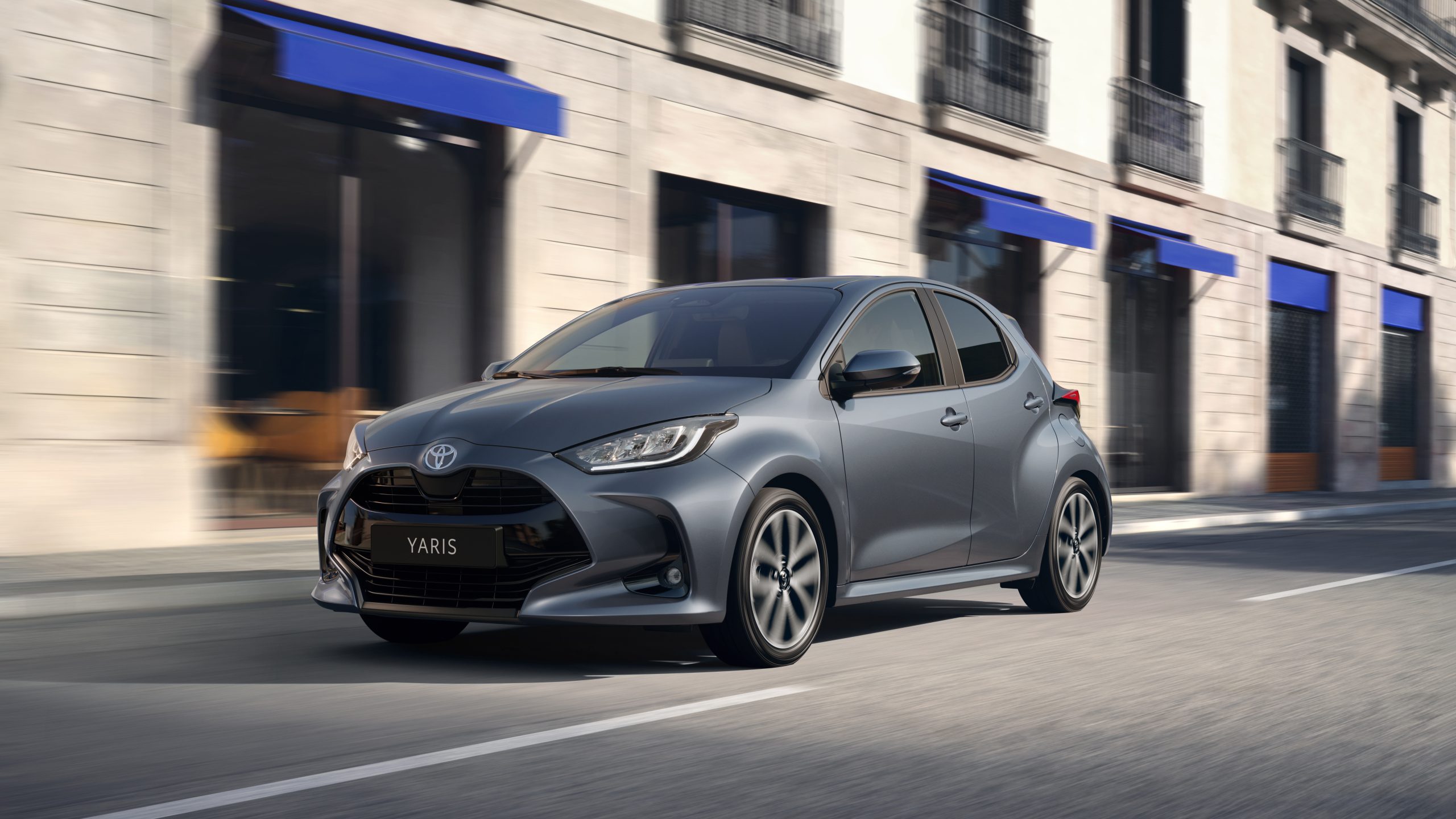
If you’re looking for a petrol city car with an ECO label, here are five models we recommend for the first quarter of 2026
The 2026 urban market features a growing range of petrol cars with ECO labels that combine low consumption with stricter regulatory requirements. Given the density of the city and the need for agile mobility, these vehicles aim to reduce real-world emissions without sacrificing everyday practicality. For buyers in Spain, the decision is complicated by differences between official approval figures and real-world use, equipment variations, and the influence of public aid packages. Two points sum up the decision: real urban range and real cost of use weigh more heavily than the published WLTP figure; and the choice between a mild-hybrid system and a light hybrid affects maintenance and behaviour in the city.
This buying guide is for…
This type of car appeals to drivers who prioritise mobility in urban and peri-urban environments: short daily journeys, easy parking, and lower priority on sporty performance. They suit those who value low consumption in dense traffic, frequent starts and stops, and reasonable running costs. They are not the best choice if you make frequent long intercity trips or need high load capacity; for those cases, a compact or an SUV with greater interior space is usually more convenient. In Spain, real use typically involves journeys of 10–30 km per day, so performance in urban cycles and efficiency at low speeds are key.
Common options within the segment
Within the urban ECO-labelled segment there are several approaches: micro-urban platforms with three-cylinder engines and a 48 V mild-hybrid system; compact cars with light hybrids that prioritise savings in the city; and small models with micro-hybrids that keep the purchase cost low. The usual trade-off lies between low weight (to consume less) and limited sound insulation; charging or refuelling planning is unnecessary since they run on petrol, but thermal management of the auxiliary battery in hybrids should be considered. Prices tend to rise with greater electrification, while mechanical simplicity reduces maintenance costs.
Key criteria for choosing well
Realistic versus homologated range: in ECO cars, the urban WLTP figure can differ from the actual average consumption if traffic is dense or use is mostly fast. Compare it with independent tests and owner data.
Power and regeneration: this is not about fast-charging large batteries, but about regenerative capacity and the response of the hybrid system during urban acceleration.
Stability and comfort on the road: the bodywork should balance agility in the city with comfort on fast roads; a chassis that is too soft hurts precision, one that is too firm hurts comfort.
Genuinely useful technology: driver assistance systems for urban traffic, practical connectivity, and efficient climate control matter more than rarely used premium assistants.
Total cost of purchase and use: consider purchase price, real consumption, servicing, and possible insurance impact; the ECO label may reduce some tax or local parking costs.
It depends on how you drive
If you mostly drive in the city with frequent stops, a light hybrid can optimise consumption and reduce emissions in urban cycles. For drivers who alternate between city and motorway daily, look for an engine with sufficient energy recovery and gear ratios suited to journeys at 120 km/h. Climate matters: in cold areas, thermal range and the auxiliary battery’s capacity to support heating reduce efficiency in urban traffic. Intensive urban use also demands durable interior finishes and real consumption figures that users can verify.
Real price: what you should know
The “from” price reflects the base trim without options or discounts; in practice, typical equipment raises the cost. The difference between financing and paying in cash usually adds interest and fees that increase the total cost; check the APR and conditions. Equipment also affects the label and the calculation of public aid: better-equipped versions may exceed price thresholds that reduce the subsidy. Always treat the “from” price as a commercial reference, not as the average final selling price.
Reference models on the market
Toyota Yaris 1.5 Hybrid (from €21,900*)
The Yaris offers a compact hybrid with smooth response in the city and low consumption in dense traffic; it suits those seeking reliability and low running costs without giving up agile urban driving.
Pros
Very competitive real-world city consumption and a fluid driving experience with the Toyota hybrid system, known for its robustness.
Cons
Tight rear space and boot capacity for users who need more room on occasional family journeys.
Renault Clio E-Tech Hybrid (from €22,200*)
The Clio E-Tech combines a hybrid approach geared to urban comfort and efficiency on mixed routes; it is suited to those who want a balance between dynamism and economy.
Pros
Smooth integration of the hybrid system and comfort on the move, with ergonomics designed for daily use.
Cons
The system’s initial response under hard acceleration can be less immediate than alternatives with greater electrical recovery.
Hyundai Bayon 1.0 T-GDi MHEV (from €18,450*)
The Bayon offers the versatility of an urban crossover with mild-hybrid technology; aimed at those who want a raised driving position and low consumption in the city.
Pros
Elevated driving position and an attractive price-to-equipment ratio for urban users.
Cons
Suspension and insulation on fast roads can feel modest compared with saloons in the higher segment.
Volkswagen Polo 1.0 eTSI (from €20,300*)
The Polo offers a traditional European approach: refined chassis, three-cylinder mild-hybrid engine and good road manners; suited to those who want an urban car capable of regular longer trips.
Pros
Balanced dynamic behaviour and interior perceived quality above the segment average.
Cons
The final price rises quickly with trims and options, which can raise the cost compared with more basic alternatives.
Fiat 500 Hybrid 1.0 Mild-Hybrid (from €15,900*)
The 500 Hybrid is a clearly urban option: compact, agile to drive and with low consumption in the city; it suits those who prioritise manoeuvrability and compact styling.
Pros
Genuinely urban size and low consumption on city routes; easy parking.
Cons
Limited interior space and load capacity for those who need versatility on long journeys.
Purchase aid
Purchase aid in 2026: Plan Auto+ and tax benefits. The 2026 Plan Auto+ replaces previous programmes and establishes a new system of direct aid for the purchase of electrified vehicles in Spain.
Main amounts of the 2026 Plan Auto+
– Direct aid of up to €4,500 for electric passenger cars.
– Up to €5,000 for light N1 category vans.
– Retroactive effect from 1 January 2026.
– Approximate budget allocation of €400 million.
Who can benefit and priority criteria
Beneficiaries: private individuals, self-employed workers and companies. The EEE criterion (Electric, Economic and European) is applied to prioritise aid. The incentive favours battery electric vehicles (BEV) over plug-in hybrids (PHEV); however, light hybrids and models with an ECO label may also access reduced support. Vehicles priced below €35,000 receive higher aid; between €35,000 and €45,000 the amount is reduced. An additional incentive exists if the final assembly or the batteries come from the European Union.
Additional requirements and tax advantages
A mandatory minimum discount of €1,000 from the dealer is required. In addition, a 15% deduction in personal income tax (IRPF) is established, up to a maximum of €3,000. The tax validity runs until 31 December 2026.
Management and possible regional aid
Management is coordinated by the Ministry of Industry together with the Autonomous Communities. Additional regional programmes may exist; for example, the Plan Cambia 360 in the Community of Madrid. At the time of writing, it has not been officially confirmed whether these regional aids are fully compatible with the 2026 Plan Auto+.
Common buying mistakes
Buying based only on the “from” price without calculating the real cost of use is common and leads to surprises in financing and equipment. Ignoring urban consumption tests and relying solely on WLTP can give overly optimistic figures. Failing to check whether the vehicle complies with local traffic restrictions or areas with specific regulations is another frequent error. Finally, choosing a version that is too basic and then needing to add many options increases the final cost and reduces resale value.
With the information above, the reader has clear criteria for comparing offers and choosing an urban petrol ECO car suited to their real use; the logical next step is to check these models against independent test data and up-to-date commercial offers to decide with precision.


 Peugeot E-208 GTi: a battery-powered toy that revives the spirit of the 1980s sports cars
 New Lexus ES: luxury grows and goes electric
 First contact with the Dacia Sandero Hybrid 155: power and efficiency from €19,890
Deja un comentario