Cylinder deactivation systems: we explain how they work, whether they cause problems and how much fuel they save
 Antonio Roncero @roncero_antonio
5 January 2022
6 min.
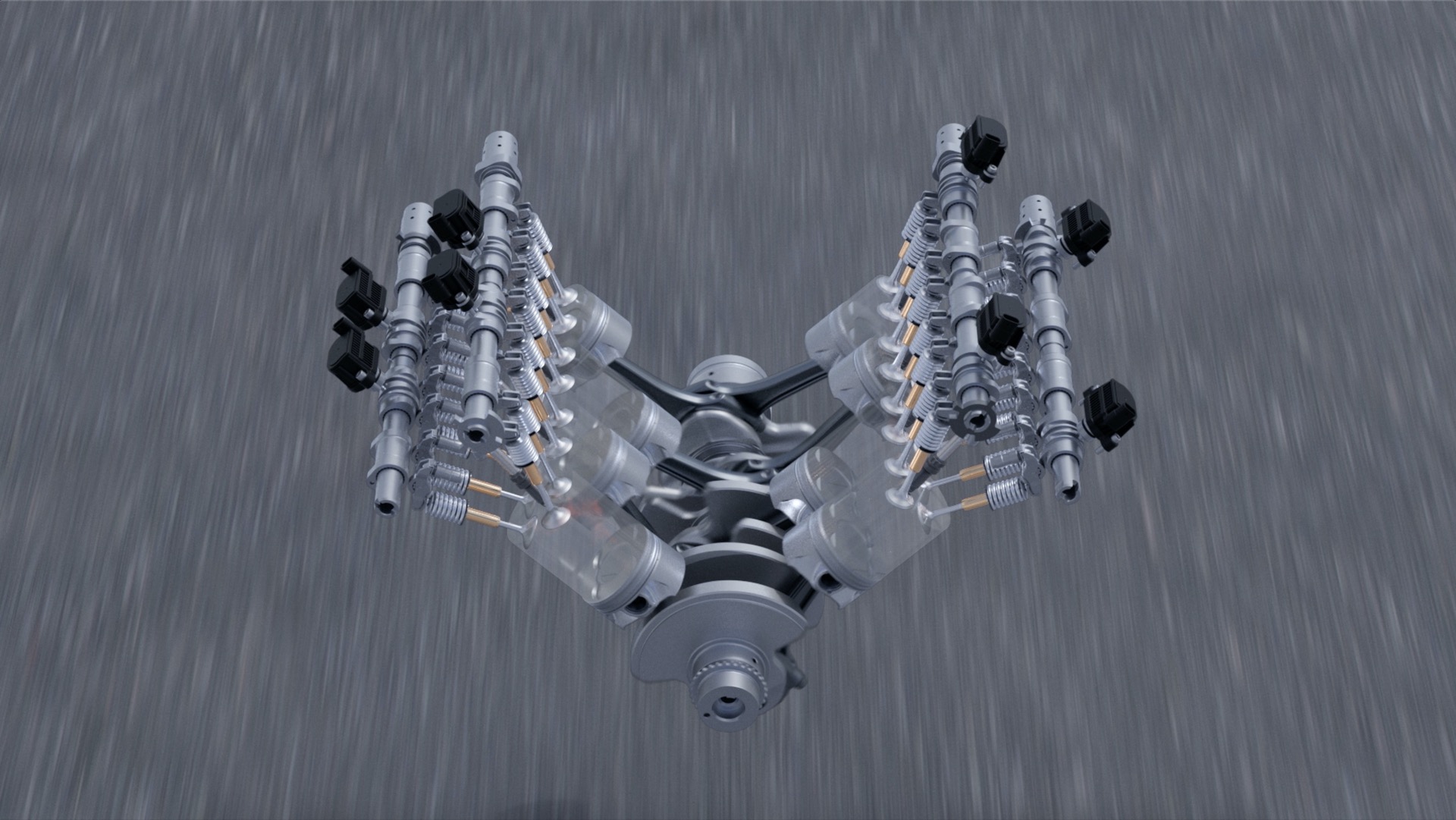
Many petrol engines use cylinder deactivation systems to reduce emissions and fuel consumption. We explain how this technology works and whether it’s really worth it.
With increasingly strict emissions regulations, every drop of fuel saved, or every gram of CO2 emissions prevented from entering the atmosphere, is worth its weight in gold. For this reason, car manufacturers have spent years researching, developing and applying technologies to their combustion engines that reduce fuel consumption and polluting emissions without sacrificing performance, feel or responsiveness. In short, without compromising the car’s performance and driving enjoyment.
The idea is by no means new, although today this technology is used in all kinds of cars: from luxury saloons and sports cars with multi-cylinder, large-capacity engines to city cars with small three- or four-cylinder engines. The first application in a car is attributed to General Motors, which introduced it in the V8 used in its Cadillac range as early as the 1980s. A kind of temporary “downsizing”.
Today we find them in engines of models such as Porsche, Mercedes, Honda… Although it was the Volkswagen Group Volkswagen that popularised this technology, being the first to incorporate it as standard in a four-cylinder engine, the 1.4 TSI, back in 2011. It is currently used in the 1.5 four-cylinder engine fitted to many of the group’s models.
Normally, for balance reasons (so the engine keeps running smoothly), half of the cylinders are deactivated. But there are also engines with an odd number of cylinders, such as the evolution of the 1.0 Ecoboost that Ford debuted in the Fiesta in 2016, which in this case deactivates just one of its three cylinders. This technology can therefore be found in small everyday cars such as the Seat Ibiza… or in sports cars such as the Audi R8 V10.
How an engine with cylinder deactivation works
The aim, as we have already noted, is to reduce emissions and consumption by making the engine work, in certain situations, as if it were a smaller one. Deactivating the cylinders does not mean they stop their reciprocating movement. Simply put, a mechanism in the valve train prevents the intake and exhaust valves of the cylinders being deactivated from opening, so no combustion takes place in them. There are also a few cases where fuel injection into those cylinders is simply switched off, but these are the exception (the 6.5-litre V12 engine of the Volkswagen Group Volkswagen, for example).
In the most common systems, the ones that close the valves, while the cylinders are deactivated the pistons move compressing the gases left inside them, which may be the product of the last combustion before deactivation or fresh air from a final intake stroke. This minimises the effort on the piston as it moves up and down from then on, without petrol being injected into the chamber. You can see how it works in this very illustrative video:
https://www.youtube.com/watch?v=uRCCFIT_m5w
Cylinder deactivation is only activated occasionally, taking advantage of moments when the car is driven with light throttle load. In these situations the engine’s so-called “pumping losses” are high, since the engine struggles to draw the right amount of air into the combustion chamber because of the vacuum created in the intake manifold. By deactivating some cylinders, the remaining ones work more efficiently and under greater load.
Can you notice the cylinder deactivation system while driving?
These systems are designed so that the driver does not notice them coming into action, which only happens in very specific situations — medium engine speeds and low loads — and for very short periods of time.
For example, in a 4-cylinder engine from the Volkswagen Group, it usually only operates between about 1,400–1,500 rpm and up to 4,000 rpm, always with very low torque demand (between 25 and 100 Nm) and under specific conditions of temperature, speed, etc. In fact, on some models you can tell you are driving with some cylinders deactivated from an indication on the instrument cluster.
Logically, with cylinders deactivated the engine does not deliver the same power. But that is the key: the system only acts when little acceleration is demanded. As soon as you accelerate and need the engine to respond, the system lets all the cylinders work again in just a few milliseconds.
And what about engine balance? Doesn’t running on fewer cylinders increase noise or vibration? In fact it does, but manufacturers manage to counteract this “collateral damage” also with technology. In a 3-cylinder engine such as the Ecoboost from Ford, for example, through the optimisation of the dual-mass flywheel and a reinforced clutch. In V8 engines the 2-3-5 and 8 cylinders are usually deactivated, leaving the firing sequence of a V4 for cylinders 1-4-7 and 6… and relying on active engine mounts that take care of eliminating vibrations.
How much can you save with a cylinder deactivation system?
Firstly, it depends greatly on the engine, but also on the type of driving. And then there is the fact that, as with homologated and real-world consumption figures, the numbers manufacturers give do not usually match what users notice in their wallets.
Porsche, for example, talks about fuel savings of up to 30% in the 4-litre V8 Turbo engines. Audi has always cited consumption savings of between half a litre and one litre per 100 km depending on driving style and traffic conditions.
General Motors, a pioneer of this technology, has already developed a variable cylinder deactivation system, capable of changing the number of cylinders deactivated according to engine load in real time, with even greater benefits in terms of emissions and consumption reduction. The idea is to implement this technology in large-displacement engines (pick-ups or “vans”, trucks), even in diesel engines. If you are curious, you can see how this system would work here.
https://www.youtube.com/watch?v=ei1NyfgY5Ds
What I can tell you is that, at least in our experience, an engine with cylinder deactivation does not necessarily consume less than another engine that does not use this system. In other words: there are very efficient engines that use very little fuel without needing this technology.
Can cylinder deactivation cause breakdowns or problems?
If you are one of those who thinks that the less technology an engine has, the lower the risk of possible breakdowns, and you have set your sights on a car equipped with cylinder deactivation, you can rest easy.
There are many cars with these systems in operation, which have covered millions of kilometres in all kinds of situations, and no faults or problems related to their operation are known.
Related information of interest


 Peugeot E-208 GTi: a battery-powered toy that revives the spirit of the 1980s sports cars
 New Lexus ES: luxury grows and goes electric
 First contact with the Dacia Sandero Hybrid 155: power and efficiency from €19,890
Deja un comentario