Engine types and their architecture
 JL Arboledas
20 January 2012
5 min.
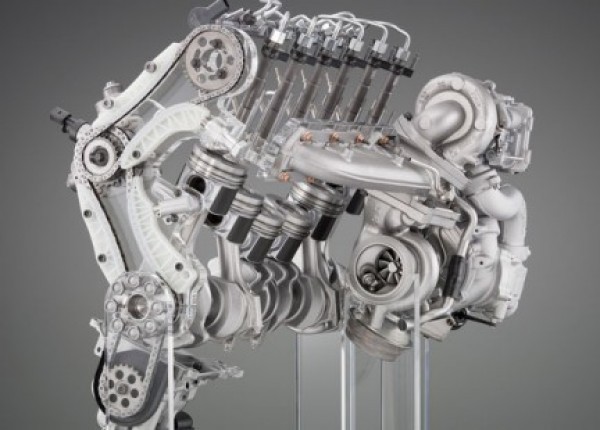
New entry where I will try to explain the differences between engine types and, above all, between the best-known and most popular architectures today
Today I would like to tell you about the differences between engines. For many people everything is the same and they only differ by the type of fuel used, petrol or diesel, but this topic can go a long way, since there are many architectures, each with its own design peculiarities and applications.
Because of this, and although faster than I would like, today I want to offer you a short summary discussing the different types of architectures and engines, since, although it may not seem so, a petrol engine is not built the same way as a diesel one, a two-stroke is not the same as a four-stroke, nor a natural gas engine the same as an electric one…
As you can see, things get quite complicated, so I am going to try to summarise this topic a little so that it becomes much clearer. To begin with, as it could not be otherwise, we cannot do it without taking a look at a little bit of history, a subject that many find boring but that I am sure you will find interesting thanks to certain curiosities.
Curiously, the first engines to see the light were electric units, but they were finally set aside because petrol-powered engines were much more performant and easier to develop. Among those that first appeared, the ones built almost simultaneously by Karl Benz and Gottlieb Daimler stand out, as they laid the foundations for the mechanics we see today.
Thanks to these first units, we find really different mechanics depending, for example, on their location within the car or on their architecture. Depending on their location, in most cases, except in high-end sports cars that place the engine in a mid-rear position, we find units mounted at the front, either transversely or longitudinally.
This means that our unit can be installed transversely, the most widely used method today due to the trend of making car noses as short as possible and offering the most spacious interior possible, whereas when we talk about longitudinal engines, we are referring to engines normally used in rear-wheel-drive vehicles, although they have also been used in front-wheel-drive vehicles.
Once we know the typology of the most common engines, it is time to talk about their architecture, which today is basically classified into inline-cylinder engines, V-cylinder engines and horizontally opposed cylinder engines. As you can see, the range is wide.
Inline engine: this type of engine is characterised by having its cylinders arranged in a vertical line. These units can be offered with anywhere from two up to eight cylinders, although the four-cylinder block is the most widely used today. Curiously, this is the easiest architecture to build and repair, so it is no surprise that it is the most common.
V engine: the cylinders are split across two banks joined by a single base or crankcase, forming an angle that can vary in degrees (60 degrees, 90 degrees, …). It is normally used for six-cylinder blocks and above. Thanks to this architecture we find much more compact blocks, which results in certain parts, such as a much shorter crankshaft, which in turn is an advantage. Unfortunately, it also has some disadvantages, such as needing twice as many camshafts as an inline engine, which complicates its development, construction and maintenance.
Horizontally opposed cylinder engine: This is a very particular case of a V engine whose two banks are arranged at an angle of 180 degrees. To begin with, it is worth noting that it has been called a boxer engine, and it is the one that models such as the 911 from Porsche or Subaru use in their most performance-oriented versions. Its main advantage is that the height of the engine is reduced, which makes it easier to install in all kinds of vehicles that are very wide but do not have the necessary height.
Wankel engine: Finally, I cannot say goodbye without talking about the Wankel engine, a unit named after its creator, the engineer Félix Wankel, who designed a revolutionary concept for its time that uses a triangular-lobed rotor inside an oval chamber instead of the well-known cylinders and pistons.
It is a very unconventional engine that, with a very small displacement, is capable of delivering the same performance as its six-cylinder counterpart, whether V or inline. In this type of engine, the mixture of fuel and air is drawn in through an intake port and trapped between one face of the rotor and the wall of the chamber. The rotation of the rotor compresses the mixture, which is ignited by a spark plug. The gases are expelled through an exhaust port as the rotor moves. The cycle takes place once on each face of the rotor, producing three power phases per revolution.
Unfortunately, new technologies have ultimately put an end to this type of engine, except for certain models that, to date, the last one, if I am not mistaken, being the Mazda RX8, fitted this type of engine. One of its drawbacks is perhaps worth mentioning: its durability problems.


 Peugeot E-208 GTi: a battery-powered toy that revives the spirit of the 1980s sports cars
 New Lexus ES: luxury grows and goes electric
 First contact with the Dacia Sandero Hybrid 155: power and efficiency from €19,890
4 comentarios
Deja un comentario
El motor Wankel se denomina también como “motor rotatorio”, y ciertamente no son motores duraderos, tampoco son muy confiables.
Perdón Juan C peroyo tengo entendido que los motores Wankel son más fiables, lo que pasa es que su mantenimiento es más costoso y hay que realizarlo con más frecuencia. En el caso particular del RX8 su principal problema era (y es) que consumía demasiado aceite según tengo entendido, y a mí también me consta como la última “lavadora”.
Sobre los motores de cilindros opuestos hay un detalle, y es que por el texto quizás podría entenderse que todos los motores de cilindros opuestos son bóxer.
Hola, esta bien el post, pero en los tiempos q estamos quizas te ha faltado hablar un poco sobre los motores electricos, ya q son el futuro frente a la conbustion, por su menor mantenimiento y sus mayores prestaciones…y mas cuando las petroleras den el si al hidrogeno.
Los motores Wankel, tienen problemas d estanqueidad, x el gran rozamiento q sufre…
Hay un error, no es lo mismo un motor bóxer que un motor en V de 180º.