Geely E5: The range and power you need in an electric car
 Iván Navarro
30 April 2026
8 min.
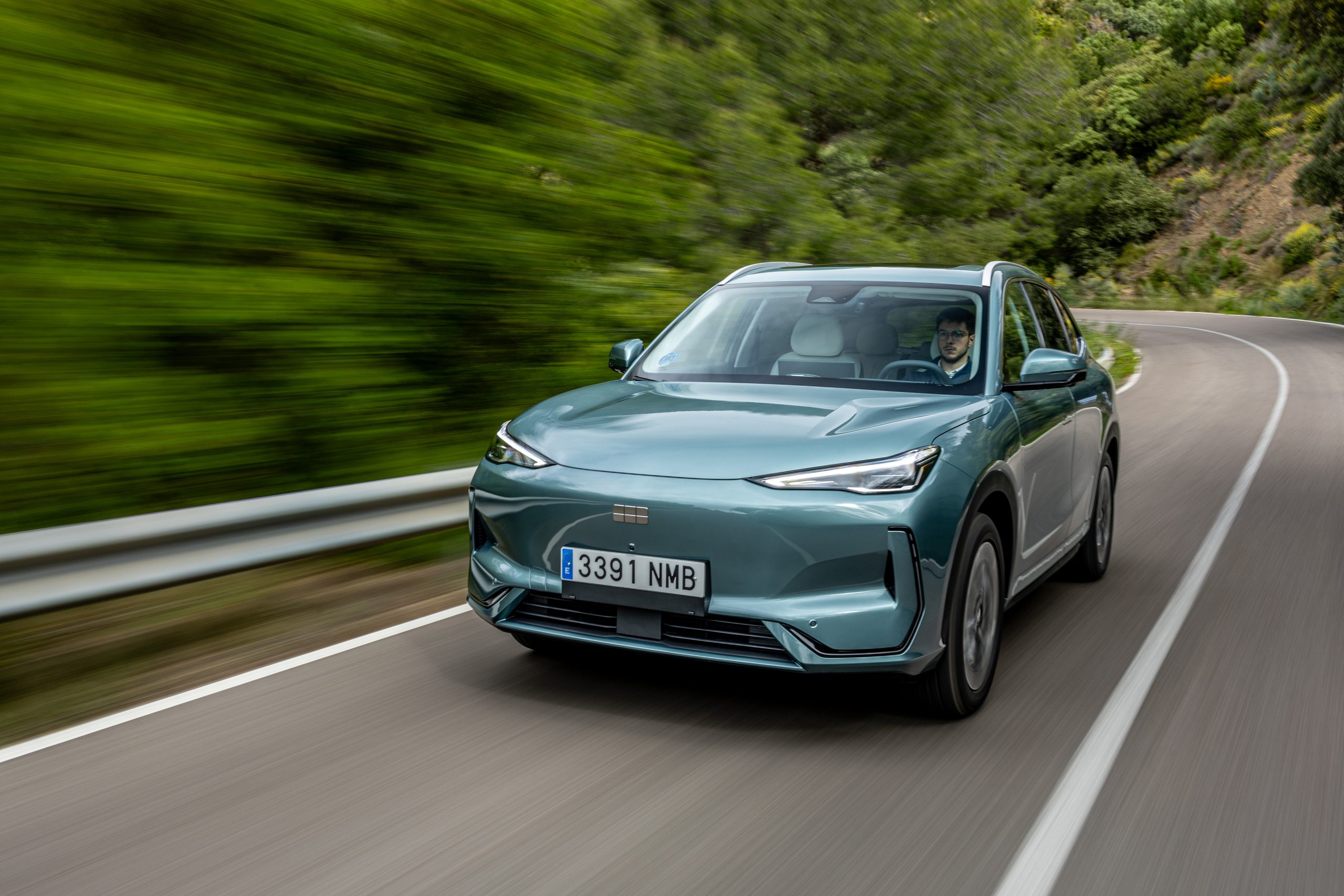
The Geely E5 is presented as a global electric SUV built on the advanced GEA intelligent architecture, which allows it to offer a WLTP range of up to 430 km.
The Geely E5 is the manufacturer’s bet on a compact electric car that combines power and an outstanding range. It is worth considering because it offers a balanced proposition of performance, comfort and technology at a competitive price in the Spanish market. In this test we analyse its line-up, on-road behaviour, real-world consumption compared with the official figure, interior space, and driver-assistance and connectivity equipment. We also compare its technical figures with direct rivals to help buyers decide whether the Geely E5 is the right choice.
What kind of car the Geely E5 is and where it sits
The Geely E5 sits in the compact electric segment, aimed at buyers looking for a city car with the capacity for long journeys thanks to a large-capacity battery. Its main rivals are other compact and family electric cars with extended-range versions, from both European and Asian brands. Its entry price in Spain places it in the mid-range of the segment, aimed at buyers who prioritise value for money and range over premium badges.
The Geely E5’s value proposition lies in offering a WLTP range above the segment average without giving up a comfortable cabin, advanced technology equipment and a set-up geared towards comfort. It is an attractive option for small families and users who make frequent long journeys without relying too heavily on intermediate charging stops.
Geely E5 in detail: complete technical analysis
Range and engines: the E5 is sold as 100% electric in a single architecture with a front-axle motor. The most relevant version combines a 150 kW motor (approx. 204 CV) with a battery of around 82 kWh (gross capacity), designed to maximise range without compromising performance. It is the configuration we analysed because it is the most logical choice for the average buyer in Spain.
Performance and handling: the official figures put the 0-100 km/h acceleration at around 7.8 s and a top speed limited to 180 km/h, data that confirm a practical rather than sporty approach. On the road the E5 stands out for a suspension tuned for comfort and electric power steering that favours relaxed driving. The chassis prioritises stability and energy efficiency on the motorway.
Consumption and range: WLTP homologation gives a range of close to 560 km in the combined cycle for the 82 kWh version. The homologated electricity consumption is 13.5 kWh/100 km; in real use, with a mixed city and motorway pace and air conditioning, it usually comes to around 16.0 kWh/100 km. In practical terms, these numbers place the E5 among the most efficient electric cars in its category.
Platform and technology: the E5 uses a dedicated electric-car platform with the battery in the floor, which allows a low centre of gravity and a flat floor that improves interior space. In electronics and connectivity it provides a clear digital instrument display, a central touchscreen with smartphone integration and over-the-air updates. The ADAS systems include adaptive cruise control, lane-keeping assist and autonomous emergency braking with pedestrian detection.
Interior and ergonomics: the quality of materials has improved over previous generations; soft plastics in contact areas, comfortable seats and good sound insulation. The layout of the controls is logical and the main screen responds quickly. For long journeys, the seats and climate control are effective, although for very tall users the rear seats lose some legroom.
Interior space and boot: the boot is around 410 litres, enough for day-to-day use and family trips with moderate luggage. The interior capacity is good for four adults, with a fifth passenger comfortable on short journeys. Access ergonomics and visibility are adequate, and the sense of space is helped by the roof design and the driving position.
Recommended version: for the Spanish market the 82 kWh, 150 kW configuration is the most balanced in terms of range and price; it offers the best balance between daily use and the capacity for long journeys without frequent charging.
The best
- High efficiency and WLTP range compared with the segment
- Competitive technology and ADAS equipment
- Value for money in its category
To improve
- Somewhat tight longitudinal space for very tall occupants in the rear seats
- Eager dynamics, but more geared to comfort than to sporty feel
Who this model is for
The Geely E5 is ideal for small families and drivers who make mixed journeys and frequent intercity trips. It is also attractive to buyers who value real range above the brand premium, and to those who prioritise a comfortable interior and technology at the wheel without entering the price range of premium brands.
Main technical data
| Feature | Figure | Score |
|---|---|---|
| Power | 204 CV | 9.0 |
| Consumption | 13.5 kWh/100 km (WLTP) — real ~16.0 kWh/100 km | 8.8 |
| Top speed | 180 km/h | 7.5 |
| Electric range | ≈ 560 km (WLTP) | 9.4 |
| Battery | ≈ 82 kWh | 9.2 |
| Boot | 410 litres | 8.2 |
| Length | 4,430 mm | 8.0 |
| Starting price | ≈ €38,900 (Spain) | 8.6 |
score out of 10 based on the criteria analysed in this article
Alternatives to the Geely E5
Hyundai IONIQ 5 (Long Range version): with a stronger market presence and a proven platform, the equivalent version offers up to 600 km WLTP in its most optimised configuration, power close to 217 CV and a more technology-focused cabin. Price somewhat higher; more premium positioning within the segment.
Volkswagen ID.3 (extended-range version): more compact, with a lower homologated range (around 420–450 km depending on version) and a more urban set-up. Power around 204 CV in the top variant and a competitive entry price; a good balance for those who prioritise size and service network.
Renault Mégane E-Tech (220 CV version): combines a specific design with an average WLTP range (≈ 450–470 km) and agile road behaviour. Price and equipment comparable; aimed at those seeking a dynamic feel without giving up range for regular journeys.
Quick technical comparison against its rivals
| Model | Power | Consumption / range | Top speed | Price | Score |
|---|---|---|---|---|---|
| Geely E5 | 204 CV | ≈ 560 km (WLTP) | 180 km/h | ≈ €38,900 | 9.3 |
| Hyundai Ioniq 5 | 217 CV | ≈ 530–600 km | 185 km/h | ≈ €42,000 | 9.1 |
| Volkswagen ID.3 | 204 CV | ≈ 420–450 km | 160 km/h | ≈ €36,000 | 8.6 |
| Renault Mégane E-Tech | 220 CV | ≈ 450–470 km | 180 km/h | ≈ €39,000 | 8.4 |
score out of 10 based on the criteria analysed in this article
In this comparison the Geely E5 stands out for its balance of range and price, making it the most interesting option for those who prioritise real kilometres between charges. The Ioniq 5 offers greater technological sophistication and a competitive range, while the ID.3 is the more compact and accessible alternative.
Geely E5 sales and its position against rivals
In European markets and particularly in Spain, the brand has increased its commercial presence with electric models that are competitive in terms of price and equipment. The growth in sales reflects a combination of a solid technical offer (range and performance) and an expanded after-sales network, factors that explain the interest in models like the E5 compared with established alternatives.
Frequently asked questions
What is the real range of the Geely E5?
The WLTP range is approximately 560 km; in real use, with air conditioning and mixed speeds, it is reasonable to expect around 400–460 km on a single charge depending on conditions and driving style.
What electricity consumption does the Geely E5 have?
The homologated consumption is 13.5 kWh/100 km; in real use it usually comes close to 16.0 kWh/100 km, depending on speed and climate control use.
Is the Geely E5 comfortable for long journeys?
Yes. The suspension and seats are geared towards comfort; in addition, the high range makes long trips easier with fewer charging stops.
Which version of the Geely E5 is the most recommended?
The version with a battery of ~82 kWh and a 150 kW (≈204 CV) motor is the most balanced for the Spanish market in terms of range and running cost.
How does the Geely E5 compare with rivals such as the Ioniq 5 or the ID.3?
The Geely E5 competes on range and price; the Ioniq 5 offers a more premium and technology-focused approach, while the ID.3 is more compact and accessible. The E5 stands out for balancing range and cost.
Final verdict: why choose the Geely E5
Reasons to choose it:
- Technical reason: high WLTP range and competitive real-world efficiency.
- Practical reason: sufficient interior space, practical boot and comfort on long journeys.
- Economic reason: starting price that is well matched to the battery capacity and equipment offered.
If you are looking for a compact electric car with plenty of range without entering the premium segment, the Geely E5 is a solid alternative: it offers decent performance, a modern technology level and a value proposition centred on efficiency and comfort. It is especially suitable for those who make long journeys frequently and want to minimise charging stops without giving up a well-finished interior and advanced driver aids.


 Peugeot E-208 GTi: a battery-powered toy that revives the spirit of the 1980s sports cars
 New Lexus ES: luxury grows and goes electric
 First contact with the Dacia Sandero Hybrid 155: power and efficiency from €19,890
Deja un comentario