Guide 2026: The best PHEV SUVs for those who value range and technology
 Iván Navarro
5 May 2026
9 min.
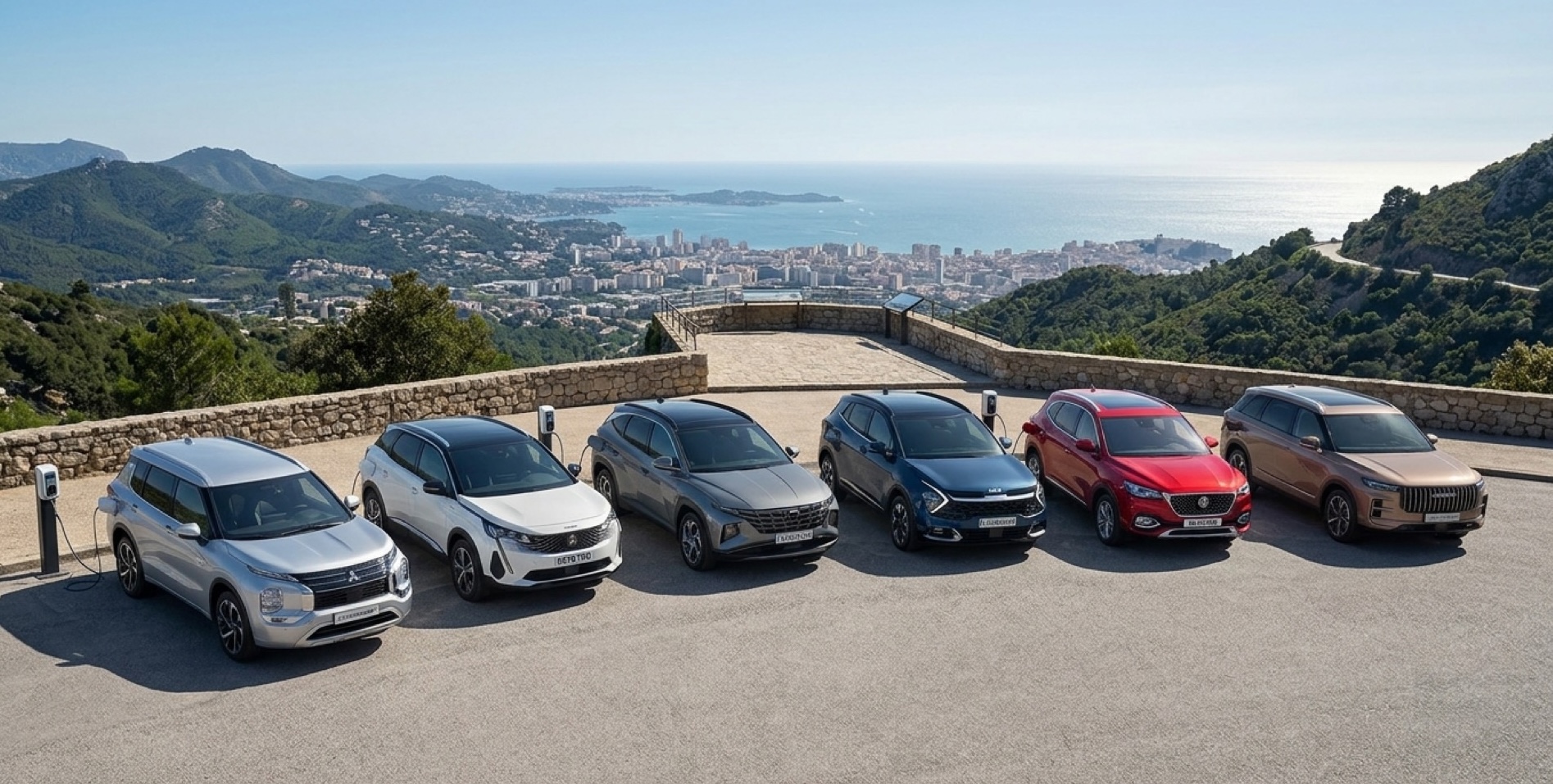
This article offers an in-depth analysis of the most relevant models in the C-SUV segment, paying particular attention to energy efficiency and range in fully electric mode.
PHEV SUVs that combine reasonable electric range with advanced technology are today a logical choice for many buyers in Spain: they allow urban journeys without using petrol and offer the versatility of a combustion engine for long trips. In 2025 the market continued to be dominated by crossovers; according to ANFAC, in 2025 SUVs accounted for more than 55% of the market, and much of the demand has shifted toward electrified solutions that reduce the cost per kilometre without giving up space or performance. The average buyer in this segment looks for roominess, safety equipment and driver-assistance systems, as well as an electric range that covers daily journeys of between 40 and 70 km. The average entry price for a PHEV SUV in Spain currently ranges from €36,000 to €48,000 in base versions, depending on the brand and size.
The 2026 offer combines proposals from mainstream manufacturers and new players who have gained a foothold. Plug-in hybrid systems allow different approaches: some prioritise electric range for the city, others overall performance and towing capacity. These are the most balanced models if you are looking for range and technology.
If you want good electric range and technology equipment, choose a PHEV with a battery of at least 15–20 kWh and advanced driver assistance. If your use is mostly urban, prioritise WLTP range and charging at 7–11 kW; for high mileage, look at combined consumption and travel ergonomics.
What a PHEV SUV needs to have for this purpose
An effective PHEV SUV for those who value range and technology must meet three essential requirements: a battery large enough to cover daily use (40–70 km WLTP), electronic management that favours electric driving in town, and a package of assistants that improves comfort and safety on the motorway. Technologies such as improved energy recuperation, dedicated driving modes and AC charging at 6–11 kW make the difference in real-world use.
As for prices, expect to pay from around €36,000 for an entry-level model up to more than €47,000 for premium versions; the range includes both affordable alternatives and options with higher-level technology equipment.
Model selection
Mitsubishi Outlander PHEV
The Mitsubishi Outlander PHEV remains one of the benchmarks thanks to its combination of space and hybrid focus. Its battery capacity and architecture are designed for mixed use: covering daily driving on electric power while maintaining a large total range for long journeys. It is a solid proposition if you want a large SUV with a real chance of running on electric power for much of the week.
Why is it a good choice?
- Generous boot and family-sized roominess.
- Electric range sufficient for frequent urban journeys.
- Good driving experience on the road thanks to its hybrid configuration.
Ideal for families who need space and want to reduce daily fuel use without giving up long trips.
| Data | Value |
|---|---|
| Engine | Petrol + Electric (PHEV) |
| Environmental label | CERO |
| Power | 305 CV |
| Range | 75 km |
| Consumption | 1.1 l/100 km |
| Price from | €44,900 |
Peugeot 3008 Hybrid4
The Peugeot 3008 Hybrid4 offers a balance between dynamism and efficiency, with a layout that favours electric use in town without sacrificing performance. Its hybrid system with several electric motors gives it agile behaviour and competitive electric range for daily journeys.
Why is it a good choice?
- Driver-focused finish and ergonomics.
- 100% electric mode useful for urban mobility.
- Good dynamic set-up for the road.
Ideal for drivers who want a compact SUV with careful design and real capability for everyday electric use.
| Data | Value |
|---|---|
| Engine | Petrol + Electric (PHEV) |
| Environmental label | CERO |
| Power | 300 CV |
| Range | 59 km |
| Consumption | 1.3 l/100 km |
| Price from | €47,200 |
Hyundai Tucson PHEV
The Hyundai Tucson PHEV combines practicality with a good dose of active technology: driver assistance, handling ergonomics and a battery that allows daily journeys without combustion use. It is a recommended option for those who frequently alternate between city and motorway driving.
Why is it a good choice?
- Complete technology package and updated active assistance.
- Comfortable behaviour on long trips.
- Balance between consumption and performance.
A versatile SUV with good equipment and moderate consumption on mixed routes.
| Data | Value |
|---|---|
| Engine | Petrol + Electric (PHEV) |
| Environmental label | CERO |
| Power | 265 CV |
| Range | 65 km |
| Consumption | 1.4 l/100 km |
| Price from | €45,500 |
Kia Sportage PHEV
The Kia Sportage PHEV offers a good balance between price, technology and electric range. It shares its platform and technical solutions with other models in the group, which translates into a refined experience and a broad safety package.
Why is it a good choice?
- Good equipment-to-price ratio.
- Balanced and efficient driving.
- Relatively low running costs compared with premium segments.
An SUV with a practical focus and moderate running costs, without giving up cabin technology.
| Data | Value |
|---|---|
| Engine | Petrol + Electric (PHEV) |
| Environmental label | CERO |
| Power | 265 CV |
| Range | 64 km |
| Consumption | 1.4 l/100 km |
| Price from | €44,900 |
MG HS PHEV
The MG HS PHEV is the most affordable alternative in this selection, with a competitive technology package and practical electric range for the city. Its attractive entry price makes it a logical option for those who prioritise cost and connected equipment.
Why is it a good choice?
- Entry price more modest than average.
- Generous technology equipment and connectivity.
- Good electric range for daily journeys.
A PHEV with a good balance of cost and technology for mostly urban use.
| Data | Value |
|---|---|
| Engine | Petrol + Electric (PHEV) |
| Environmental label | CERO |
| Power | 258 CV |
| Range | 51 km |
| Consumption | 1.6 l/100 km |
| Price from | €36,900 |
Jaecoo 7 PHEV
The Jaecoo 7 PHEV represents the arrival of new players with well-equipped proposals and aggressive prices. Its approach combines a battery with real capacity for urban use and a technology package that includes advanced assistants and good-level connectivity.
Why is it a good choice?
- Attractive technology equipment for the price.
- Electric range geared to daily use.
- Good roominess for its size.
A novel alternative balancing technology and cost, appealing to buyers who value equipment over the “traditional brand”.
| Data | Value |
|---|---|
| Engine | Petrol + Electric (PHEV) |
| Environmental label | CERO |
| Power | 272 CV |
| Range | 70 km |
| Consumption | 1.2 l/100 km |
| Price from | €39,900 |
Which car to choose according to your needs
If you do a lot of city driving
Look for a PHEV with a real electric range of more than 40 km and onboard charging sufficient to recharge daily. Models such as the MG HS PHEV or the Peugeot 3008 Hybrid4 allow you to cover urban journeys without using petrol.
If you do high mileage
Prioritise combined consumption efficiency, travel comfort and larger fuel tanks. The Mitsubishi Outlander PHEV and the Hyundai Tucson PHEV are good options for their balance between range and comfort on the road.
If you want to save money
Choose variants with a better price-to-equipment ratio and moderate maintenance costs, such as the MG HS PHEV or some versions of the Kia Sportage PHEV. Also check electricity tariffs and charging habits.
If you want technology
Focus on models with advanced assistants (semi-autonomous driving, lane keeping, automated emergency braking) and connectivity. The Peugeot 3008 Hybrid4 and the Jaecoo 7 PHEV stand out for their electronic equipment.
Interesting alternatives within the same budget
If you want to widen your options without exceeding your budget, also consider the BMW X1 xDrive25e, the Volkswagen Tiguan eHybrid or the Mercedes GLA 250 e (depending on offer and versions). Electric models such as the Hyundai Kona Electric or the Tesla Model Y are alternatives if you prioritise pure electric range.
FAQ – Frequently asked questions
What extra maintenance does a PHEV SUV require?
Maintenance is similar to that of a combustion-engine car, with checks for the hybrid system, the battery and charging connections. PHEVs usually have service intervals similar to conventional models, although running costs can fall if you prioritise electric charging.
How much electric range do I really need?
To cover most daily urban journeys, a WLTP range of between 40 and 70 km is sufficient. If your day regularly exceeds that figure, consider a pure electric car or a PHEV with a larger battery.
Can I use a PHEV as my main car if I do a lot of mileage?
Yes, especially if you combine electric stretches in town with long trips in combustion mode. Prioritise models with low combined consumption and good comfort on the road.
What DGT label do PHEVs usually have?
PHEVs usually receive the CERO or ECO label depending on electric range and applicable regulations; in this guide the selected models have CERO thanks to their significant electric range.
How does total power affect real consumption?
More power offers superior performance, but consumption depends on use: in electric mode consumption is measured in kWh/100 km; in combined use, efficient driving and frequent recharging reduce petrol consumption even at high power levels.
Expert opinion
Beyond official figures, the choice depends on real use. If your day includes frequent urban journeys, a PHEV SUV with an electric range of more than 40 km significantly reduces fuel spending and lets you drive with fewer emissions in town. For families who make long trips, models such as the Mitsubishi Outlander PHEV or the Hyundai Tucson PHEV offer a balance between space, comfort and total range.
Price is the deciding factor: if your budget is tight, the MG HS PHEV offers the most economical option with competitive equipment; if you want technology and advanced assistants, the Peugeot 3008 Hybrid4 or the Jaecoo 7 PHEV combine modern features with good electric range. For those who do high mileage, the key lies in combined consumption and travel ergonomics; in these cases, a higher initial investment in a more efficient model can pay off in the medium term.
In short: first define your real use (daily kilometres, mixed or mostly urban journeys), then prioritise WLTP range, charging capacity and the assistant package. But not all of them offer the same balance. Models such as the Peugeot 3008 Hybrid4, the Hyundai Tucson PHEV or the Mitsubishi Outlander PHEV are complete solutions; more affordable alternatives such as the MG HS PHEV or new brands such as the Jaecoo 7 PHEV widen the options for different budgets and priorities.
Before deciding, test them in real conditions and compare consumption on your typical routes: that practical test is usually the best guide.


 Peugeot E-208 GTi: a battery-powered toy that revives the spirit of the 1980s sports cars
 New Lexus ES: luxury grows and goes electric
 First contact with the Dacia Sandero Hybrid 155: power and efficiency from €19,890
Deja un comentario