Hybrid Cars Comparisons Buying Guides SUV
How to Choose a Compact Hybrid SUV for the City in 2026: Real-World Consumption and Interior Space
 Carlos Romero
20 July 2026
7 min.
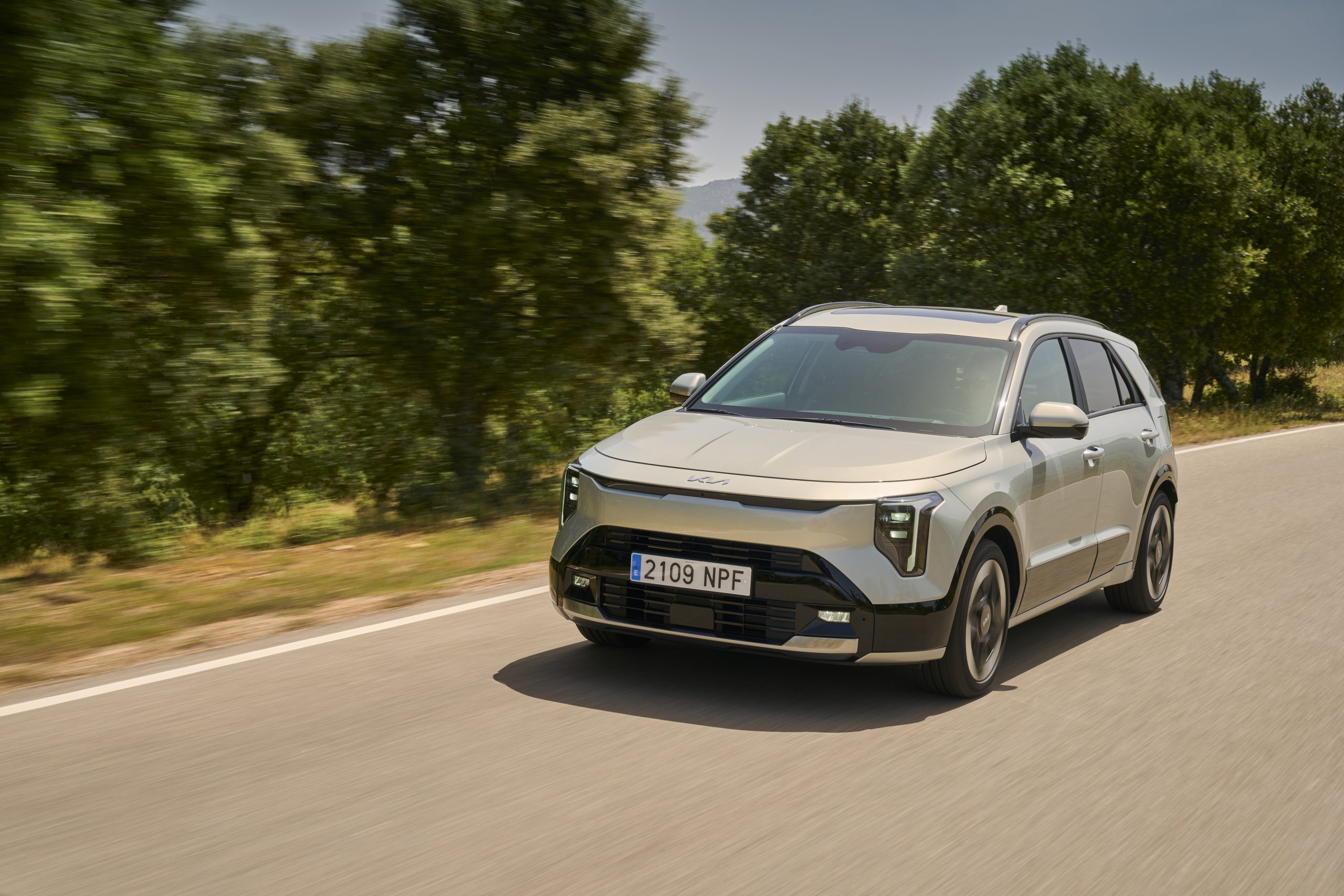
A practical guide to choosing the best compact hybrid SUV for the city in Spain in 2026: real-world consumption, interior space, urban dimensions, and five references analysed with editorial judgement.
The compact hybrid SUV has become the default city car in Spain. ECO label, moderate consumption, a driving position people enjoy, and a size that—with caveats—still fits in the average city parking space. But in 2026 the range has multiplied, and choosing well means looking beyond the brochure.
Before getting into it, a note of editorial transparency. We have left out of the analysis the hybrids from BYD. In our view, other Asian-origin proposals now offer more refined propulsion systems, with power delivery better suited to European taste and more competitive efficiency in real urban driving. This is not a criticism of the manufacturer—it is a judgement call for this specific comparison, focused on five references we consider the most solid for the Spanish urban driver.
Why a compact hybrid SUV makes sense in the city in 2026
Urban traffic punishes the pure combustion engine and rewards the hybrid. Starts, stops, traffic lights: exactly where a well-engineered HEV recovers energy and runs on electric power for a good part of the journey. Add the DGT ECO label, unrestricted access to the ZBEs of Madrid, Barcelona or Valencia, and real savings at the fuel pump. The equation adds up.
What a “compact hybrid SUV” really is (and what it isn’t)
We are talking about vehicles between 4.20 and 4.45 metres long, with a non-plug-in hybrid architecture—the well-known full hybrid or HEV—and an SUV-style driving position. Neither a pure B-SUV (too small for a family), nor a 4.60 m C-SUV (it starts to suffer in urban car parks).
The criteria that really matter
Real urban consumption, not the WLTP cycle
WLTP is a reference, but real consumption on Gran Vía at eight in the evening is another story. The best HEVs in the segment range between 4.3 and 5.2 l/100 km in the city as measured by users. Below 5 litres, a pass. Above 5.8, something doesn’t add up.
Interior space and boot
A compact hybrid SUV useful for the city should offer around 400 litres of boot space. Fewer than 350 becomes tight for a family with a pushchair.
Exterior dimensions for urban parking
Below 4.35 m, parking is comfortable. Between 4.35 and 4.45, acceptable. Beyond that, parallel parking on a Madrid neighbourhood street starts to hurt.
Hybrid architecture: series, parallel or mixed
Toyota and Honda favour very refined series-parallel layouts. Hyundai-Kia use a parallel HEV with a DCT gearbox. Renault breaks the mould with its E-Tech dog-clutch system. Each solution has its own feel.
DGT label and ZBE access
All the models analysed here carry the ECO label. An essential starting point.
Toyota C-HR — from €32,500
The second-generation C-HR is, to my taste, the most rounded of the group in urban driving. Its fourth-generation hybrid produces 140 CV with a very smooth feel and real consumption that drops below 4.8 l/100 km effortlessly. Daring design—whether you like it or not—and an interior that finally matches what Toyota charges. That said, the boot (388 l) is somewhat short, and rear visibility really calls for a camera.
| Power kW | Power CV | Top speed | Range | Consumption | Label | Fuel |
|---|---|---|---|---|---|---|
| 103 kW | 140 CV | 170 km/h | ~950 km | 4.7 l/100 km | ECO | Hybrid |
Hyundai Kona Hybrid — from €27,900
The Kona hybrid plays in a different league when it comes to interior space. At 4.35 m long, it offers a 466-litre boot—one of the best in the segment—and generous rear legroom. Its 141 CV HEV with a six-speed DCT gearbox feels more “conventional” than the Toyota: it pulls well on motorways, although in dense traffic it doesn’t reach the refinement of the Japanese model. Real urban consumption around 5.1 l/100 km. A good car, with finishes that have clearly taken a step forward.
| Power kW | Power CV | Top speed | Range | Consumption | Label | Fuel |
|---|---|---|---|---|---|---|
| 104 kW | 141 CV | 165 km/h | ~900 km | 5.0 l/100 km | ECO | Hybrid |
Kia Niro Hybrid — from €28,400
The Niro shares its mechanics with the Kona but follows a different philosophy: a more functional, more practical shape, with a 451-litre boot and outstanding efficiency. It is probably the compact hybrid that burns the least petrol on mixed urban journeys—we have seen 4.4 l/100 km in real use without driving in “granny mode”. Sober, well-resolved interior. It doesn’t excite, but it delivers almost everything asked of it.
| Power kW | Power CV | Top speed | Range | Consumption | Label | Fuel |
|---|---|---|---|---|---|---|
| 104 kW | 141 CV | 165 km/h | ~1,000 km | 4.6 l/100 km | ECO | Hybrid |
Renault Captur E-Tech Full Hybrid — from €26,800
The Captur E-Tech is the group’s most “purely urban” proposal. At 4.24 m, it parks where others already start to struggle. Its 145 CV hybrid, borrowing clutch philosophy from Formula 1, always starts in electric mode and runs up to 80% of the time in town without using petrol. Urban consumption below 4.5 l/100 km. On the motorway it loses some sparkle, but for a 90%-city user it is a logical choice.
| Power kW | Power CV | Top speed | Range | Consumption | Label | Fuel |
|---|---|---|---|---|---|---|
| 107 kW | 145 CV | 170 km/h | ~900 km | 4.7 l/100 km | ECO | Hybrid |
Honda HR-V e:HEV — from €31,900
The HR-V e:HEV works like a series electric vehicle almost all the time: the combustion engine acts mostly as a generator. The result? Very smooth, silent power delivery with a carefully tuned pedal feel. 131 CV, a 335-litre boot—its clear weak point—and real consumption of 5.2 l/100 km in town. Textbook ergonomic interior and “Magic Seats” that remain a reference for versatility.
| Power kW | Power CV | Top speed | Range | Consumption | Label | Fuel |
|---|---|---|---|---|---|---|
| 96 kW | 131 CV | 170 km/h | ~850 km | 5.2 l/100 km | ECO | Hybrid |
Comparison and editorial ranking
Score from 1 to 10, weighting real consumption, space, urban refinement, dimensions and value for money.
| Model | Length | Boot | Real city consumption | CV | Price from | Score |
|---|---|---|---|---|---|---|
| Toyota C-HR | 4.36 m | 388 l | 4.7 l | 140 | €32,500 | 8.8 |
| Hyundai Kona Hybrid | 4.35 m | 466 l | 5.0 l | 141 | €27,900 | 8.4 |
| Kia Niro Hybrid | 4.42 m | 451 l | 4.6 l | 141 | €28,400 | 8.6 |
| Renault Captur E-Tech | 4.24 m | 422 l | 4.7 l | 145 | €26,800 | 8.5 |
| Honda HR-V e:HEV | 4.34 m | 335 l | 5.2 l | 131 | €31,900 | 7.9 |
Our recommendation by profile
- Pure city, difficult parking: Renault Captur E-Tech.
- Family with boot space as priority: Hyundai Kona Hybrid.
- Maximum efficiency and low running cost: Kia Niro Hybrid.
- Mechanical refinement and finish: Toyota C-HR.
- Electric-style smoothness: Honda HR-V e:HEV.
Frequently asked questions
What is the best compact hybrid SUV for the city in 2026?
It depends on the profile, but the Toyota C-HR tops our ranking for mechanical refinement and real urban consumption below 4.8 l/100 km. For those who prioritise price and space, the Hyundai Kona Hybrid is the most balanced alternative.
What real consumption can I expect in the city with a compact hybrid SUV?
Between 4.4 and 5.2 l/100 km on real urban journeys, depending on the model and driving style. The series-parallel systems of Toyota and Honda and the E-Tech of Renault tend to be the most efficient in dense traffic.
Does a compact hybrid SUV have an ECO label and access to ZBEs?
Yes. All the HEVs analysed carry the DGT ECO label, which allows unrestricted access to the Low Emission Zones of Madrid, Barcelona, Valencia and the rest of Spanish cities with an active ZBE.
Is a plug-in hybrid worth it over an HEV for urban use?
Only if it can be charged daily at home or at work. Without regular plugging in, the PHEV loses its advantage and carries more weight and price. For the average Spanish urban driver, the HEV is the more logical choice.


 Peugeot E-208 GTi: a battery-powered toy that revives the spirit of the 1980s sports cars
 New Lexus ES: luxury grows and goes electric
 First contact with the Dacia Sandero Hybrid 155: power and efficiency from €19,890
Deja un comentario