C-HR Hyundai KIA Niro Nissan Qashqai S-Cross Suzuki Toyota Tucson Hybrid Cars Buying Guides SUV
How to Choose a Family Compact Hybrid SUV Under €35,000 in 2026: Space, Consumption and Equipment
 Iván Navarro
22 November 2026
6 min.
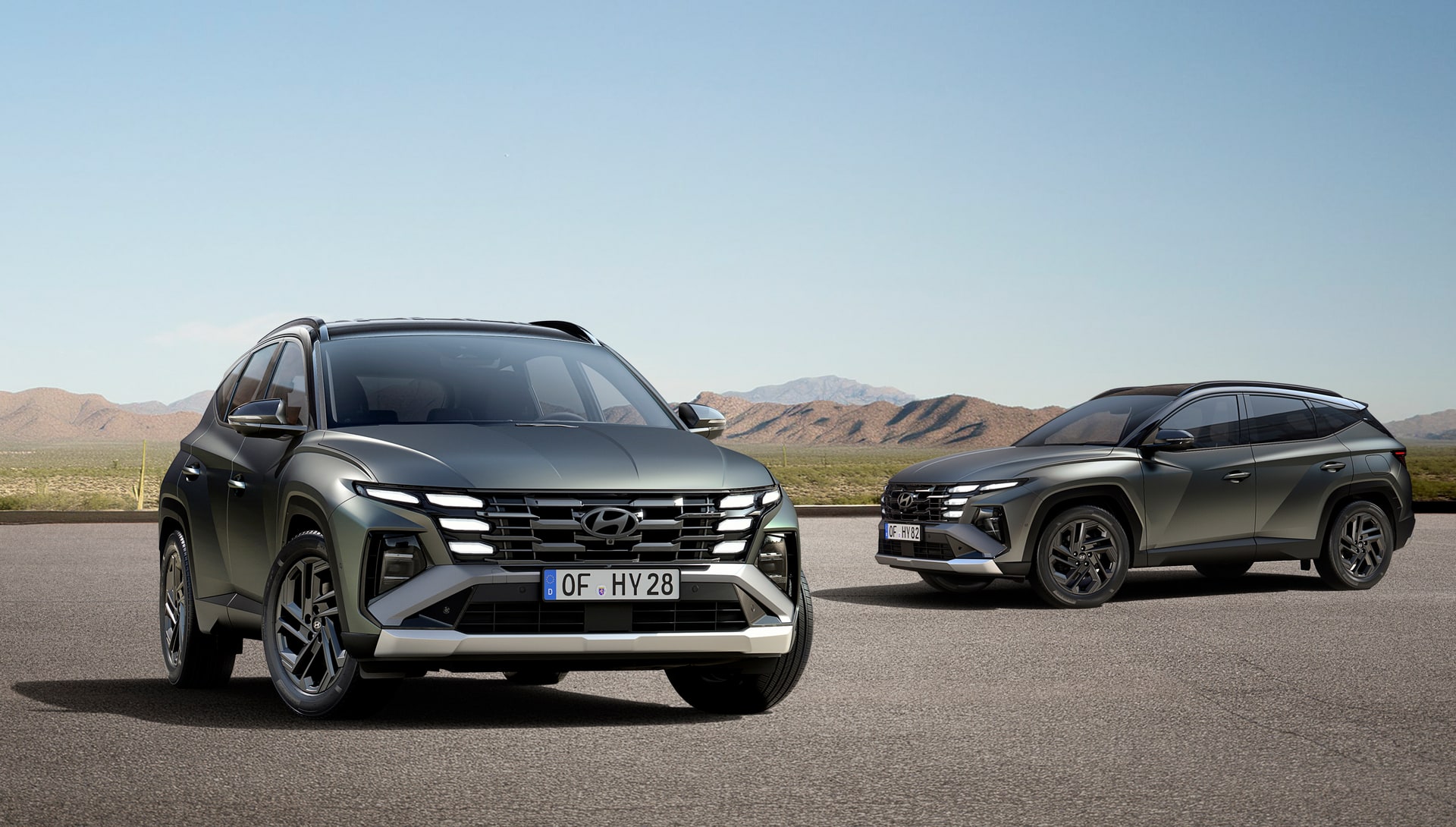
Buying a family compact hybrid SUV for less than €35,000 in 2026 no longer means giving up almost anything. Three years ago, that budget ruled out half a dozen interesting models. Today, Japanese and Korean proposals with safety equipment that was once reserved for higher trims are in the running. The challenge is not finding one that works, but choosing the one that best fits how each family actually lives : small children and child seats, 600-kilometre trips in summer, or simply the daily commute to school and work.
What to look for in a family hybrid SUV under €35,000
Not all “hybrids” are the same, and that is where misunderstandings begin. For a family comparing options, it is worth looking at four things before considering the colour of the upholstery.
Boot space and real interior room for the family
Catalogue litres are misleading if they are not measured with a flat floor and a baby stroller loaded in. A difference of 150 litres between two direct rivals is noticeable every weekend with luggage for four people.
WLTP consumption and environmental label
The WLTP cycle remains the official reference, but it should be qualified with a real-use figure: in the city, conventional hybrids come very close to their homologated figure; on motorways, they fall considerably further behind. The ECO label, common to all the models in this article, grants parking and traffic advantages in much of Spain’s cities.
Standard ADAS and warranty years
Emergency braking, lane change warning and adaptive cruise control already come as standard across the entry-level range of these six models. The real difference lies in the warranty: it ranges from the usual 3 years up to the 5 or 7 years that the Korean brands continue to set as a benchmark, something we already analysed when comparing the Hyundai Tucson and KIA Sportage hybrid.
Toyota C-HR — from €30,750
The C-HR is the most eye-catching of the group and probably the one that looks least like a family car from the outside. Inside it does the job, although its 388-litre boot is one of the tightest in this comparison: with two child seats installed, the free space is noticeably reduced. In return it offers one of the lowest WLTP consumption figures in the group, which we already detailed when comparing it with the Honda ZR-V.
| Power | WLTP consumption | Boot | Label | Fuel |
|---|---|---|---|---|
| 103 kW / 140 CV | 4.7 l/100 km | 388 litres | ECO | Hybrid |
Hyundai Tucson HEV — from €34,900
Here is the hybrid SUV with the best boot in the comparison: 616 litres, well ahead of any rival in this segment and price range. It is by far the most practical option for a family of four with holiday luggage. Consumption is slightly higher than the C-HR’s, which is logical given its size and its 215 CV of power, but the brand’s financing campaigns make it possible to get close to the €35,000 barrier with a 5-year warranty and unlimited mileage.
| Power | WLTP consumption | Boot | Label | Fuel |
|---|---|---|---|---|
| 158 kW / 215 CV | 5.7 l/100 km | 616 litres | ECO | Hybrid |
Kia Niro HEV — from €31,300
The Niro plays another card: efficiency. Its homologated 4.4 l/100 km is the best consumption figure in this entire group, and in real urban use it stays very close to that figure, something we confirmed in our ranking of hybrid SUVs with the best urban consumption. The 451-litre boot sits at an honest middle ground: it is not the largest, but it is not disappointing either, and it adds the brand’s 7-year warranty.
| Power | WLTP consumption | Boot | Label | Fuel |
|---|---|---|---|---|
| 95 kW / 129 CV | 4.4 l/100 km | 451 litres | ECO | Hybrid |
Honda HR-V e:HEV — from €31,360
The HR-V is the most understated on the list, and that works against it when compared cold with the rest. Its 335-litre boot is the smallest in the group, which weighs on its aspiration to be a “family” car if there are regularly more than two passengers. What does convince is its smooth urban ride, the versatility of its Magic Seats rear seats and restrained consumption despite not being the most powerful.
| Power | WLTP consumption | Boot | Label | Fuel |
|---|---|---|---|---|
| 96 kW / 131 CV | 5.4 l/100 km | 335 litres | ECO | Hybrid |
Suzuki S-Cross Hybrid — from €26,795
The cheapest of all, with brand discount margin that keeps it clearly below €27,000. It is not the most sophisticated full hybrid SUV on the market: its 48V mild-hybrid system recovers less energy than the full hybrid systems of the rest. That said, with optional all-wheel drive, it is one of the few on this list also designed for those who live in mountainous areas.
| Power | WLTP consumption | Boot | Label | Fuel |
|---|---|---|---|---|
| 95 kW / 129 CV | 5.3 l/100 km | 430 litres | ECO | Hybrid |
Nissan Qashqai e-POWER — from €34,850
The Qashqai e-POWER works like an electric car with a petrol engine acting solely as a generator, a solution that differs from its rivals. The result is noticeable behind the wheel: smooth traction, immediate delivery and up to 205 CV in Sport mode (190 CV in normal mode), the most forceful torque figure in the group. With the current promotional discounts it sits right at the €35,000 limit, while notably improving its homologated efficiency to 4.5 l/100 km.
| Power | WLTP consumption | Boot | Label | Fuel |
|---|---|---|---|---|
| 151 kW / 205 CV | 4.5 l/100 km | 504 litres | ECO | Hybrid |
Comparison: which family hybrid SUV offers the most for the price
| Model | Price from | Boot | WLTP consumption | Score |
|---|---|---|---|---|
| Toyota C-HR | €30,750 | 388 litres | 4.7 l/100 km | 7.5/10 |
| Hyundai Tucson HEV | €34,900 | 616 litres | 5.7 l/100 km | 9/10 |
| Kia Niro HEV | €31,300 | 451 litres | 4.4 l/100 km | 8.5/10 |
| Honda HR-V e:HEV | €31,360 | 335 litres | 5.4 l/100 km | 7/10 |
| Suzuki S-Cross Hybrid | €26,795 | 430 litres | 5.3 l/100 km | 7.5/10 |
| Nissan Qashqai e-POWER | €34,850 | 504 litres | 4.5 l/100 km | 8/10 |
Which SUV to choose based on family profile
Family with small children and child seats
The Hyundai Tucson HEV wins on boot space and rear width. If the budget is tight, the Kia Niro HEV offers almost the same practicality with better consumption and the longest warranty in the group (7 years).
Frequent motorway travellers
For those who cover many kilometres on the motorway, the balance between efficiency and stability of the Kia Niro HEV and the Toyota C-HR remains very consistent. The Nissan Qashqai e-POWER and the Hyundai Tucson HEV make up with greater power what they lose in consumption at sustained high speeds.
Tight budget
The Suzuki S-Cross Hybrid is the cheapest entry point into the segment, and it is worth checking the current brand financing campaigns to further reduce the initial outlay, since state purchase aid does not apply to hybrids with an ECO label.
Frequently asked questions
What is the best family hybrid SUV in 2026 for less than €35,000?
There is no single winner for every case: the Hyundai Tucson HEV stands out for space, the Kia Niro HEV for consumption and warranty, and the Suzuki S-Cross Hybrid for entry price.
Which compact hybrid SUV has the largest boot?
The Hyundai Tucson HEV, with 616 litres, clearly surpasses the other models analysed in this comparison.
Do self-charging hybrid SUVs come with ADAS as standard in 2026?
Yes. Emergency braking, lane change warning and adaptive cruise control are standard on the entry versions of all six models mentioned.
Can these hybrid SUVs qualify for the state aid under the Plan Auto+?
No. The public aid currently in force in Spain is reserved for vehicles with a ZERO label (pure electric and plug-in hybrids), so these models with an ECO label can only benefit from each brand’s or dealership’s direct discounts.
Technical specifications of the cars in this article

 Kia offers an electric range of 10 models, 50 versions and 400 possible combinations
 The seven finalists for the 2027 European Car of the Year (COTY) are exclusively electric
 Peugeot E-208 GTi: a battery-powered toy that revives the spirit of the 1980s sports cars
Deja un comentario