Enyaq EV6 Hyundai IONIQ Ioniq 5 KIA Renault Scénic Skoda Electric Cars Comparisons Family Buying Guides SUV
How to Choose a Family Electric SUV for Under €50,000 in 2026: Usable Range, Space and Key Equipment
 Iván Navarro
30 October 2026
7 min.
Buying a family electric SUV in Spain is no longer a leap of faith. There is enough choice, chargers across the road network and, above all, cars that finally solve the real problem of any family: space, a range that doesn’t force you to plan every trip like an expedition, and a price that doesn’t inflate the monthly payment. The question is no longer whether it’s worth it, but which one to choose under €50,000. And that’s where things get complicated, because the market has filled up with nuances.
What a family electric SUV must offer in 2026 to be worth it
Not every electric SUV is designed for the same use. Before looking at spec sheets, it’s worth establishing three criteria that, in our view, separate the wheat from the chaff in this segment.
Usable range, not just WLTP
The WLTP figure is a starting point, not a promise. In practice, a family SUV should deliver roughly 75% to 85% of its homologated range in real mixed use, with cold weather or motorway driving at 120 km/h penalising it considerably more than the paperwork suggests. For family use with weekend trips, it’s sensible not to fall below 400 real km if you don’t want to depend on charging stops every few hours.
Real space for the family and the boot
This is where something comes into play that spec sheets don’t always account for well: the electric platform allows flat floors and batteries under the floor, but that doesn’t guarantee a generous boot if the design prioritises aesthetics over practicality. Look at the load capacity with the rear seats in use, not just the maximum figure with the rear bench folded down.
Equipment that makes the difference
Heat-pump climate control, programmable battery preconditioning, DC fast charging above 150 kW and well-calibrated level 2 driver assistance systems. These are the extras that, over time, are felt more than engine power.
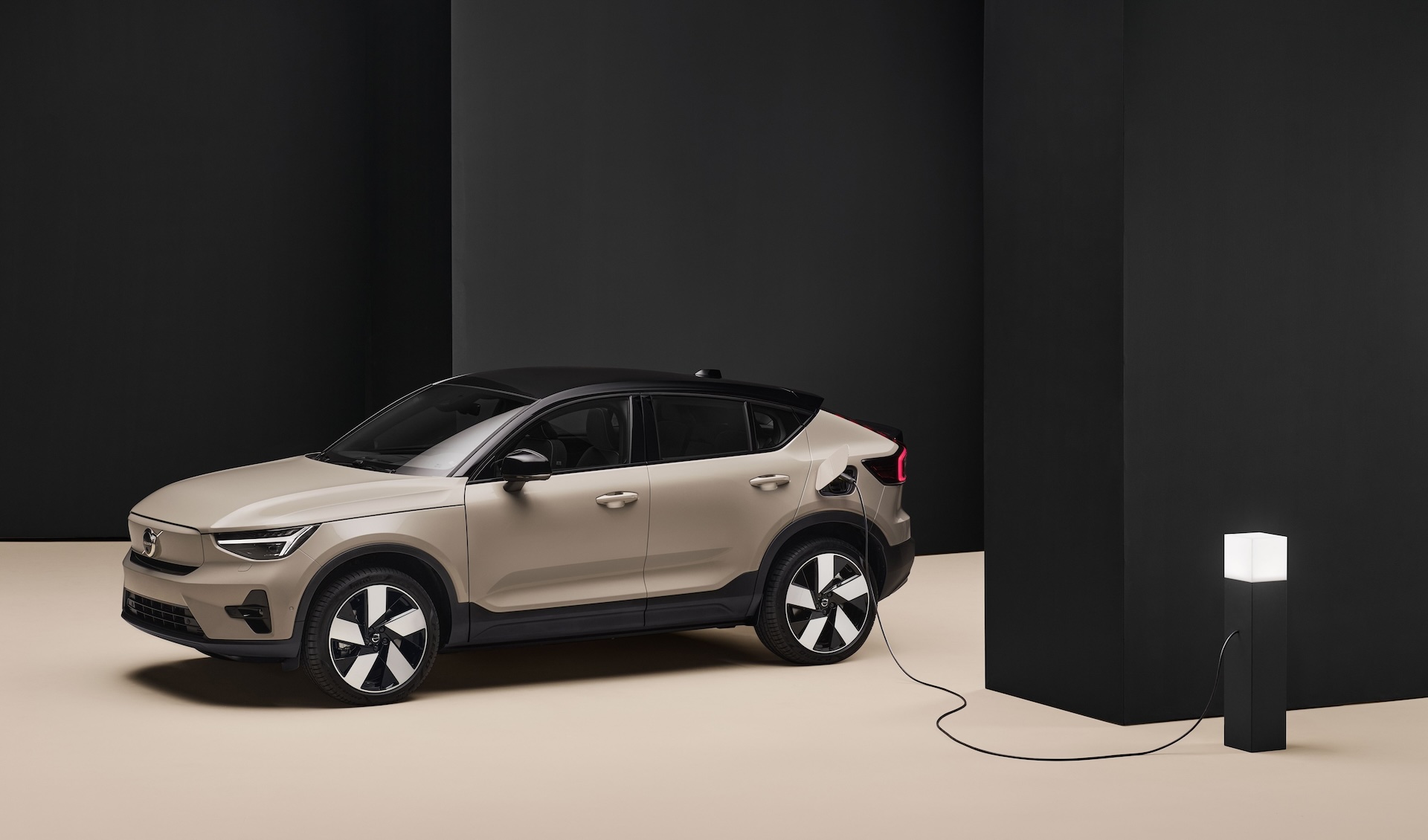
The Volvo EC40, the accessible premium option from around €50,450
If one model well illustrates the “premium but affordable” dilemma in 2026, it’s the Volvo EC40. The entry version, the EC40 P5 / Single Core (≈70 kWh), starts at around €50,450 RRP and delivers 175 kW (238 CV) with roughly 486 km WLTP. It is not the cheapest car in the segment, and that should be said, but it makes up for it with an interior finish and perceived quality that, in my opinion, sit a step above many of its mainstream rivals.
| Version | Power | WLTP range | Battery | Drive | Price from |
|---|---|---|---|---|---|
| EC40 P5 / Single Core | 175 kW (238 CV) | ≈486 km | ≈70 kWh | Rear | \~€50,450 |
| EC40 P5 Long Range / Extended Range Core | 185 kW (252 CV) | ≈585 km | 82 kWh | Rear | \~€52,900 |
Those who want more range between charges have the Extended Range / Long Range variant, which rises to around 585 km WLTP for roughly €2,450 more. Whether that jump is worth it for purely urban use is debatable, but on long journeys it is very welcome.
Mainstream alternatives under €50,000
Compared with the EC40, the mainstream market offers proposals that, without the premium veneer, more than meet the needs of a family that prioritises space and total cost of ownership over the badge on the boot.
The Kia EV6 remains a benchmark in the segment, priced at around €48,500–49,000 in its entry versions, with rear accommodation that competes head-to-head with larger SUVs. The Hyundai Ioniq 5, its platform sibling, sits at similar figures, around €44,500–44,800, and offers the design that for many remains the boldest — and freshest — in the segment.
Peugeot has done its homework with the e-3008, which starts around €47,000–47,400 and offers one of the most striking screens on the market, although its small-steering-wheel ergonomics don’t convince everyone. Renault bets on the Scenic E-Tech, at around €39,900 in the comfort-range entry version, with a strong focus on efficiency and a boot that surprises for its external size. And Skoda, faithful to its practical philosophy, places the Enyaq at around €45,000, with the best rear legroom in this group, according to our experience of using it.
On affordable 7-seat electric SUVs, the reality is scarcer than one would like: below €50,000 there are practically no pure electric options with a functional third row for adults, something we already analysed in detail in our guide to seven-seat family SUVs. Anyone who needs that configuration will, for now, have to look at plug-in hybrids or raise the budget.
| Model | Price from (approx.) | Highmotor score (1-10) |
|---|---|---|
| Volvo EC40 (Single/P5 Core) | \~€50,450 | 8.7 |
| Kia EV6 | \~€48,500 | 8.3 |
| Hyundai Ioniq 5 | \~€44,500 | 8.2 |
| Peugeot e-3008 | \~€47,000 | 7.8 |
| Renault Scenic E-Tech | \~€39,900 | 7.9 |
| Skoda Enyaq | \~€45,000 | 8.0 |
Indicative RRP prices, excluding dealer discounts, one-off campaigns and purchase incentives.
Public incentives and total cost of ownership
Before making a decision, it’s worth checking the Plan Auto+, the current framework of public incentives for buying electrified vehicles in Spain. Amounts and requirements change fairly often, so the most honest approach is to refer the reader to the plan’s official website for the updated amount at the time of purchase, rather than venturing figures that could be outdated within weeks.
Beyond the one-off aid, the total cost of running a family electric car depends above all on where and how it is charged. Those with a wallbox at home or a community garage with a charging point will see a notable difference compared with those who rely solely on public fast charging, with considerably higher prices per kWh.
Which to choose based on your family profile
If the budget is close to the limit but you want a step up in materials and technology, the Volvo EC40 justifies its price. If the priority is to maximise space and range per euro invested, Kia, Hyundai or Skoda offer a balance that is hard to dispute. And if use is mostly urban with the occasional weekend getaway, both the Renault Scenic E-Tech and the Peugeot e-3008 manage without fuss. There is no single answer, only the one that best fits the real kilometres each family drives.
For those who want to explore more options around this price threshold, our ranking of electric SUVs with the best range-to-price ratio under €45,000 rounds out this comparison well.
Frequently asked questions
What is the best family electric SUV in 2026 under €50,000?
There is no single “best” for every case: the Volvo EC40 stands out for quality and technology from around €50,450 RRP, while Kia EV6, Hyundai Ioniq 5 or Skoda Enyaq offer more space per euro invested at somewhat lower prices.
What real range can I expect from a family electric SUV?
In real mixed use, you typically obtain between 75% and 85% of the homologated WLTP figure, with cold weather and motorway driving as the main penalising factors.
Are there affordable 7-seat electric SUVs in Spain in 2026?
The pure electric offer with a functional third row under €50,000 is very limited; most alternatives with 7 real seats are in the plug-in hybrid segment or exceed that budget.
What incentives exist for buying an electric car in 2026?
Plan Auto+ is the current framework of public incentives in Spain; its amounts and conditions are updated periodically, so it is worth consulting the official website before completing the purchase.
Technical specifications of the cars in this article


 The seven finalists for the 2027 European Car of the Year (COTY) are exclusively electric
 Peugeot E-208 GTi: a battery-powered toy that revives the spirit of the 1980s sports cars
 New Lexus ES: luxury grows and goes electric
Deja un comentario