Astra Born Cupra E-308 Hyundai ID.3 Kona Opel Peugeot Volkswagen Electric Cars Compact Comparisons Family
How to Choose a Family Compact Electric Car in 2026: Real-World Range, Rear Space and Charging Cost
 Iván Navarro
30 October 2026
6 min.
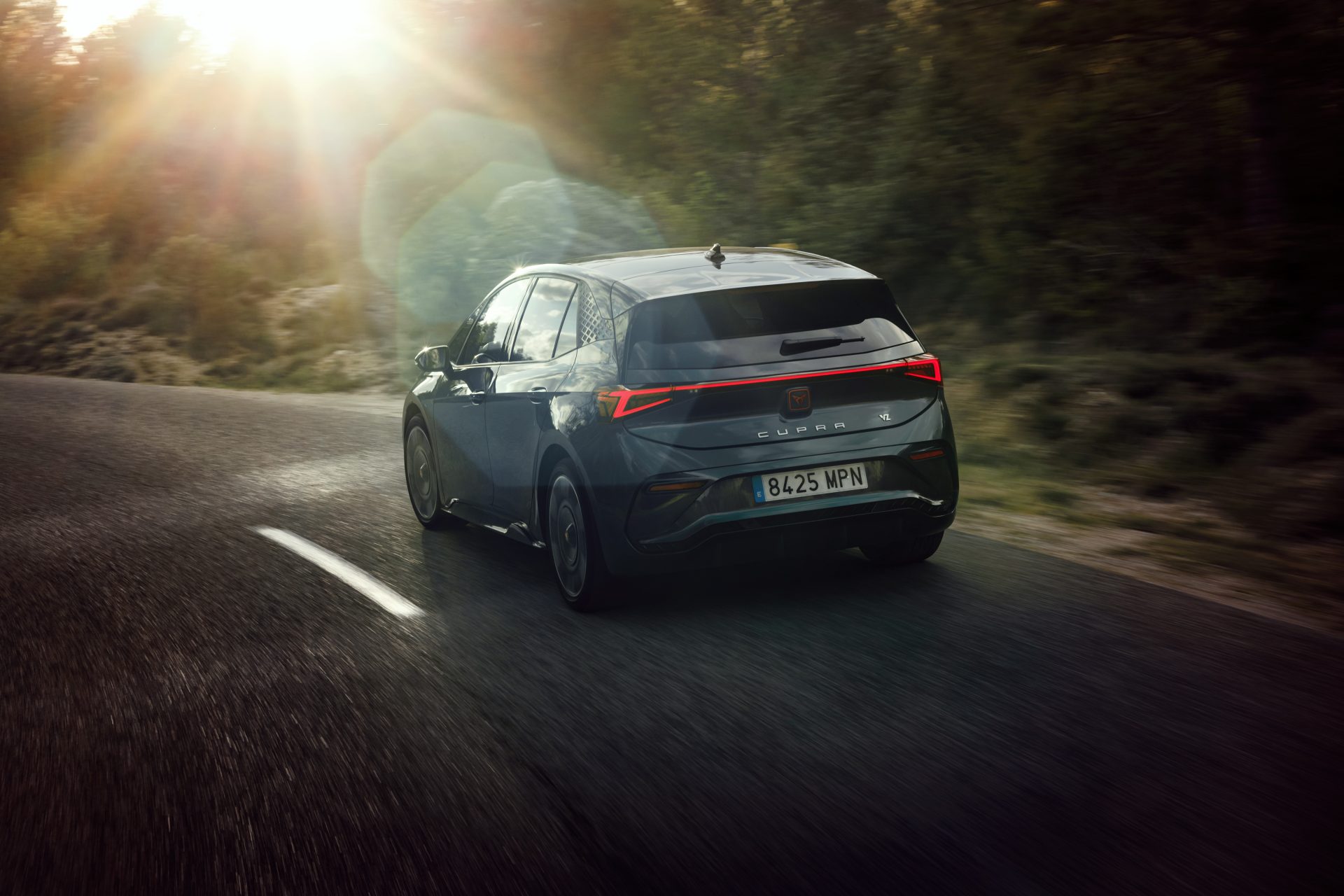
A practical guide to choosing a family compact electric car in 2026 using measurable criteria: real-world range versus WLTP, boot capacity in litres, and charging cost in €/100 km.
Buying your first family electric car is not like switching from petrol to diesel. Variables we never used to look at come into play here: how much real range you have left on a January day with the heating on, how much boot space survives after packing two suitcases and a child’s car seat, and how much it really costs to charge the battery in an ordinary month. At Highmotor we wanted to put numbers on the table, not brochure promises.
What a family compact electric car is in 2026 and why real-world data matters
We are talking about saloons and compact cars between 4.3 and 4.4 metres long, with batteries of between 50 and 65 kWh, designed for a family of four who drive around town during the week and take trips at weekends. The usual trap: looking only at the WLTP figure in the brochure. That figure is a laboratory result, not a road with a headwind and 3 degrees of cold.
Real-world range vs. WLTP: how to read the spec sheet
The difference between the homologated figure and what the on-board computer shows on a motorway at 120 km/h is usually around 15-25%, more in cold or rainy weather. An electric car claiming 450 km WLTP can drop to 340-380 real km in winter. This is not a manufacturer fault; it is battery physics: at low temperatures the chemistry loses efficiency, and the heating consumes energy that a combustion engine used to give off as waste heat. Our practical recommendation: always subtract 20% from the official figure to estimate your dependable range on a normal day of mixed use.
Rear space and boot: the figures families actually use
Here the compact electric car has a trick: since it has no combustion engine, some make better use of the space under the bonnet, but the battery under the floor usually takes away some rear ground clearance. In practice we look for three things: a boot equal to or larger than 350 litres, space under the seats for a portable charger cable, and rear seats where a child seat fits without fighting the front seatback. Not every model solves this equally well, and that is a large part of the decision.
Home and public charging cost: methodology and calculation in €/100 km
Charging at home: the cheapest scenario
With a home wallbox and a time-of-use tariff (around €0.10-0.15/kWh during off-peak hours), charging a compact car with a real consumption of 17 kWh/100 km costs €1.7-2.5/100 km. By far the most cost-effective scenario, and the one that should weigh most in your purchase decision if you have your own garage.
Charging on the road: the cost that inflates the bill
At a fast public charger (50-150 kW), the average price in Spain is around €0.45-0.55/kWh. That pushes the cost to €7.5-9.5/100 km, almost four times the home scenario. If your use includes frequent long journeys, this figure completely changes which model makes sense.
2026 shortlist: the family compact electric cars you can buy in Spain today
Peugeot e-308 — from €38,420
The lion’s compact electric car goes for a mature design and a driving position that remains its signature.
| Power | WLTP range | Consumption | Fuel |
|---|---|---|---|
| 115 kW (156 hp) | 450 km | 14.4 kWh/100 km | Electric |
We compare it in depth with its sibling Opel in our duel Peugeot e-308 versus Opel Astra Electric.
Opel Astra Electric — from €39,900
It shares its platform with the e-308, but its approach is somewhat more technology-focused, with an interior finish that in our view wins on ambience details.
| Power | WLTP range | Consumption | Fuel |
|---|---|---|---|
| 115 kW (156 hp) | 454 km | 14.8 kWh/100 km | Electric |
Volkswagen ID.3 — from €34,900
Probably the most “family-friendly” on the list for rear space, thanks to a platform designed from scratch for electric drive.
| Power | WLTP range | Consumption | Fuel |
|---|---|---|---|
| 150 kW (204 hp) | 426 km | 15.4 kWh/100 km | Electric |
Cupra Born — from €37,990
The same technical DNA as the ID.3, but with a sportier character that, to my taste, suits the segment well without penalising family comfort too much.
| Power | WLTP range | Consumption | Fuel |
|---|---|---|---|
| 140 kW (190 hp) | 482 km | 15.5 kWh/100 km | Electric |
MG4 — from €30,450
The most aggressive entry price on the list, with equipment that no longer feels “low cost”.
| Power | WLTP range | Consumption | Fuel |
|---|---|---|---|
| 125 kW (170 hp) | 350 km | 16.8 kWh/100 km | Electric |
BYD Dolphin — from €29,990
The Chinese rival that is making the most noise in Spanish dealerships, with an LFP battery that, in theory, ages better over time.
| Power | WLTP range | Consumption | Fuel |
|---|---|---|---|
| 150 kW (204 hp) | 427 km | 15.8 kWh/100 km | Electric |
Hyundai Kona Electric — from €35,850
The most “SUV” in format, but with boot and rear seat dimensions that place it squarely in this family comparison.
| Power | WLTP range | Consumption | Fuel |
|---|---|---|---|
| 150 kW (204 hp) | 510 km | 14.7 kWh/100 km | Electric |
Comparative summary table and score
| Model | Price from | WLTP range | Estimated real-world range | Score (1-10) |
|---|---|---|---|---|
| Peugeot e-308 | €38,420 | 450 km | \~360 km | 7.5 |
| Opel Astra Electric | €39,900 | 454 km | \~363 km | 7.3 |
| Volkswagen ID.3 | €34,900 | 426 km | \~341 km | 8.2 |
| Cupra Born | €37,990 | 482 km | \~386 km | 8.0 |
| MG4 | €30,450 | 350 km | \~280 km | 7.8 |
| BYD Dolphin | €29,990 | 427 km | \~342 km | 8.1 |
| Hyundai Kona Electric | €35,850 | 510 km | \~408 km | 8.6 |
Which model makes sense for your type of use
City and short trips
Here the entry price rules: the BYD Dolphin or the MG4 pay off quickly, since you will barely use paid fast charging.
Mixed use (most families)
The Volkswagen ID.3 and the Cupra Born balance space, real-world range and road behaviour. In practice, this is the safest option if you want to avoid making a mistake.
Long journeys and motorway driving
The Hyundai Kona Electric has a clear advantage in real-world range, the figure that matters most if you are covering holiday distances without stopping every 250 km. You may also want to check our ranking of compact electric cars with the most real-world range before deciding.
Public grants and total cost of ownership
The Plan Auto+ remains the reference for state aid for buying electric cars in Spain. The amounts change frequently, so it is worth checking the official website before signing the order rather than relying on figures from a few months ago.
Frequently asked questions
How much real-world range does a family compact electric car have in winter?
Between 15% and 25% less than the WLTP figure, depending on temperature and heating use. A model rated at 450 homologated km may manage around 340-380 real km.
How much does it cost to charge at home compared with a public charger?
Charging at home on an off-peak tariff costs €1.7-2.5/100 km. At a fast public charger, the cost rises to €7.5-9.5/100 km.
Which family compact electric car has the largest boot in 2026?
The Volkswagen ID.3 and the Hyundai Kona Electric stand out for a comfortable rear space thanks to their platform, designed for electric drive from the outset.
Is it worth paying more for more range?
It depends on use: if you drive fewer than 300 km a week, there is no point paying extra for range you will never need. If you travel long distances often, yes.
Technical specifications of the cars in this article

 Kia offers an electric range of 10 models, 50 versions and 400 possible combinations
 The seven finalists for the 2027 European Car of the Year (COTY) are exclusively electric
 Peugeot E-208 GTi: a battery-powered toy that revives the spirit of the 1980s sports cars
Deja un comentario