Austral Cupra Hyundai KIA RAV4 Renault Santa Fe Sorento Terramar Toyota Hybrid Cars Family Buying Guides SUV
How to Choose a Family Hybrid SUV in 2026: Interior Space, Real-World Consumption and Running Costs
 Iván Navarro
23 September 2026
8 min.
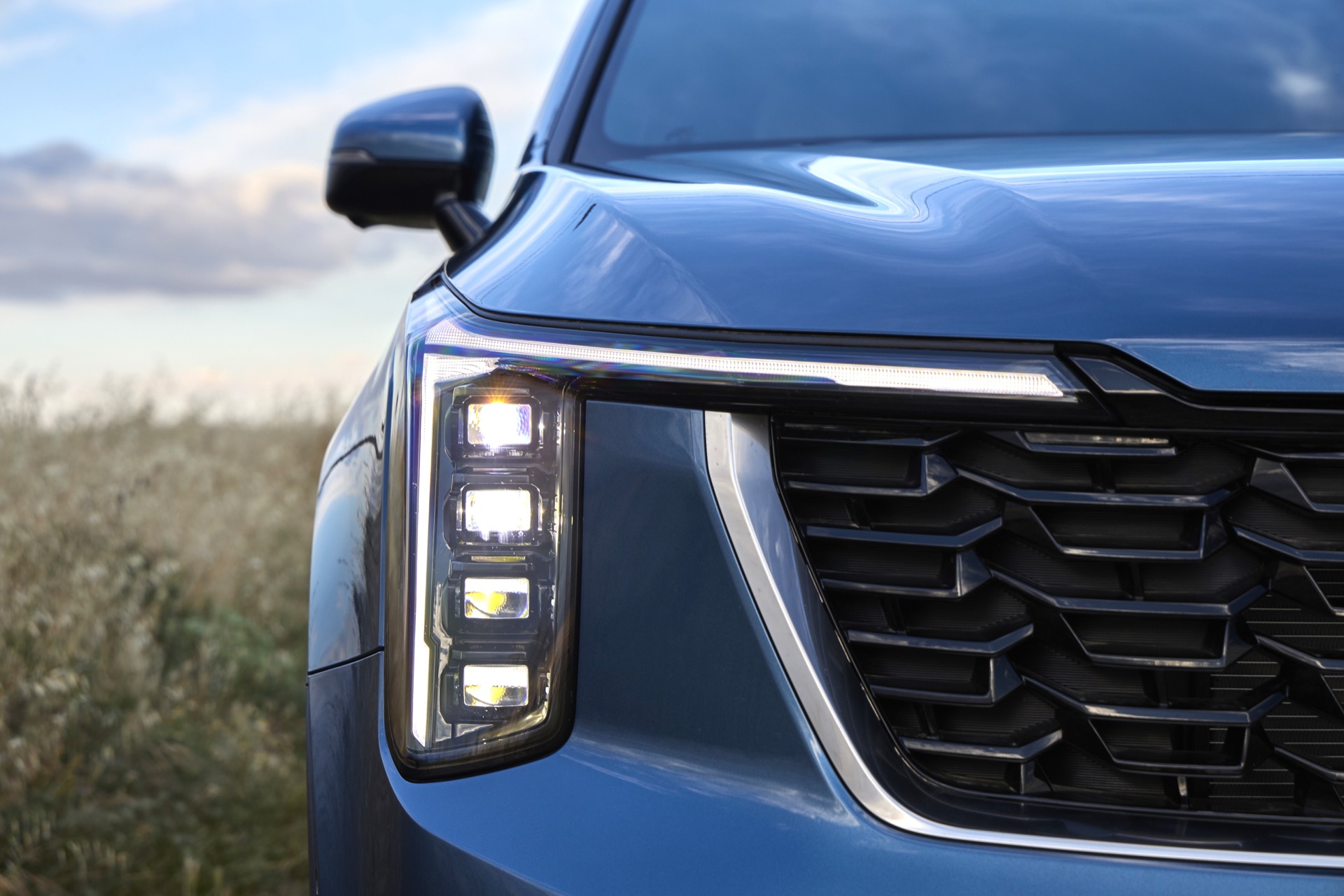
Buyer’s guide to getting it right with a family hybrid SUV in 2026: what to check in boot space and dimensions, how much they really consume compared with the WLTP cycle, and the true cost you’ll face over the first five years.
Choosing a 2026 family hybrid SUV is no longer just a matter of looking at the price and the DGT environmental label. The range has widened, hybrid systems now coexist with increasingly capable plug-in models, and total cost — insurance, maintenance, residual value — weighs as much as the spec sheet. This guide crosses three axes: usable real-world space, homologated versus real-world consumption, and five-year running costs, with recommendations by family profile.
From the initial list of candidates we have deliberately ruled out two names. The Nissan X-Trail e-Power is out because, in our view, other rivals in the segment currently offer a better balance between perceived quality and price. And the BYD Seal U DM-i doesn’t make the cut either: we consider that this range has options with a finish and product maturity a step above. With that clarified, let’s move on to the ones that do qualify.
What defines a family hybrid SUV today
A 2026 family hybrid SUV should measure between 4.55 and 4.90 metres, offer five comfortable seats — seven optionally on the larger ones — and exceed 550 litres of boot space. Below that figure you start to notice it every time you load two large suitcases and a pushchair. Then there’s the powertrain: hybrid (HEV) or plug-in (PHEV), with ECO or CERO labels respectively. The difference affects daily use far more than the power output does.
HEV versus PHEV: what pays off depending on your use
If you drive fewer than 40 km a day and can charge at home, a PHEV will run on electric power for almost the whole week. If you live in a flat without a charger or do most of your driving on motorways, the HEV wins on common sense: lower weight, lower price and very modest urban consumption. Paying 8,000 euros more for a plug-in you’ll never plug in is throwing money away.
Interior space: beyond the boot figure
Litres are only part of the story. What matters is the height of the opening, the width between the wheel arches, whether there is a false floor and how far the rear seat backrest slides forward. A 580-litre boot with a square shape is more useful than a 620-litre one shaped like a pear.
The trap of homologated dimensions
Manufacturers measure up to the roof. In practice, with the parcel shelf in place and the real load that fits without blocking rear visibility, you lose between 20% and 25%. It’s a figure almost nobody publishes, and it’s worth checking at the dealership with your own suitcase.
Second and third rows: when a 7-seater hybrid SUV makes sense
A genuine seven-seater — with decent access to the third row and not a symbolic bench — needs at least 4.80 metres. Below that, the third row is for children on short trips. If you usually travel five and occasionally need seven, a large C-SUV with a sliding rear bench is the better choice; if you are permanently six, you need to move up to the D segment.
Real-world consumption versus WLTP: what to really expect
The real-world consumption of a hybrid SUV rarely matches the homologated figure. HEVs typically deviate upwards by between 10% and 20%; PHEVs, when running without battery charge, can triple the official figure. A fact worth bearing in mind before signing.
How to read a WLTP sheet without being misled
Look at urban and extra-urban consumption separately, not just the combined figure. And check the combined power output, not just the combustion engine’s: a 180 hp combined hybrid may have a combustion engine of barely 150 hp, meaning that on the motorway at 130 km/h it burns more fuel than promised.
Running cost: the figure almost nobody calculates properly
The running cost of a hybrid SUV over five years includes fuel, insurance, maintenance, taxes and — above all — depreciation. On a 40,000-euro family SUV, the loss in value frequently exceeds 15,000 euros over that period. It is the largest item, even bigger than fuel.
DGT label, insurance and maintenance
The ECO label covers HEVs; CERO covers PHEVs with more than 40 km of homologated electric range. In cities with low-emission zones (ZBE), that difference pays for itself. Insurance for a hybrid is 5–10% more expensive than its petrol equivalent, and maintenance is usually slightly cheaper (brakes last longer thanks to regeneration, and in many cases there is no timing belt).
Residual value at 5 years
Japanese and Korean HEVs hold their value better than European PHEVs, with premium exceptions. A five-year-old RAV4 retains over 55% of its value; a mainstream PHEV rarely exceeds 45%.
The six candidates we analysed
Toyota RAV4 — from 43,500 €
The HEV benchmark of the segment. Proven mechanics, proven reliability and real-world consumption of around 5.8 l/100 km. A sober interior, perhaps too sober for what the price asks, but the whole works as few others do. It remains the yardstick against which everything else is measured.
| Power hp | WLTP consumption | Label | Fuel |
|---|---|---|---|
| 185 hp | 4.9 l/100 km | ECO | Hybrid |
Kia Sorento PHEV — from 57,900 €
The most sensible seven-seater plug-in in the mainstream segment. Homologated electric range of around 57 km, a genuinely usable third row and seven years of warranty. It is heavy, and on the motorway consumption climbs sharply without battery charge, but as a complete family car it is hard to beat.
| Power hp | Label | Fuel |
|---|---|---|
| 265 hp | CERO | PHEV |
Hyundai Santa Fe — from 56,020 €
Bold design, a huge cabin and an HEV version that performs at a level that surprises. In practice the Santa Fe feels bigger than its 4.83 metres suggest — something appreciated in a family car. Its HEV is a serious alternative to the RAV4 with more usable space.
| Power hp | Label | Fuel |
|---|---|---|
| 239 hp | ECO | Hybrid |
Renault Austral — from 36,522 €
The most affordable in this selection and the most “European car” to drive. Its E-Tech Full Hybrid system works smoothly in town, with consumption below 5 l/100 km on purely urban journeys. Boot space is tight for the segment (430 litres with the rear bench fully forward), but it improves considerably when the bench is slid back.
| Power hp | WLTP consumption | Label | Fuel |
|---|---|---|---|
| 200 hp | 4.7 l/100 km | ECO | Hybrid |
Peugeot 3008 Hybrid — from 38,900 €
Tall coupé-style design, a renewed i-Cockpit and a 48V hybridisation that doesn’t play in the same league as the full HEVs of Toyota or Hyundai, but brings real-world consumption down to reasonable figures. For those who prioritise styling and European feel over maximum efficiency, it fits. For those seeking the lowest consumption, there are more refined options.
| Power hp | Label | Fuel |
|---|---|---|
| 136 hp / 145 hp | ECO | Hybrid |
Cupra Terramar — from 44,314 €
The new Cupra C-SUV puts its weight behind the e-Hybrid PHEV version, with a homologated electric range exceeding 100 km. On paper, it is the most ambitious plug-in proposal in this comparison. How it ages in terms of reliability remains to be seen, but the specification is impressive.
| Power hp | Label | Fuel |
|---|---|---|
| 204 hp (entry) / 272 hp (VZ) | CERO | PHEV |
Summary table and editorial score
Score from 1 to 10 weighing space, real-world consumption, running cost and product maturity. This is the publication’s reading, not an absolute ranking.
| Model | Price from | Type | Label | Score |
|---|---|---|---|---|
| Toyota RAV4 | 43,500 € | HEV | ECO | 9.0 |
| Hyundai Santa Fe | 56,020 € | HEV | ECO | 8.5 |
| Kia Sorento PHEV | 57,900 € | PHEV 7 seats | CERO | 8.3 |
| Renault Austral | 36,522 € | HEV | ECO | 8.0 |
| Cupra Terramar | 44,314 € | PHEV | CERO | 7.8 |
| Peugeot 3008 Hybrid | 38,900 € | MHEV | ECO | 7.3 |
Recommendation by family profile
Family of 4 with mixed use and no charger at home: Toyota RAV4 or Renault Austral. ECO label, low real-world consumption and no need for a plug.
Family of 4–5 with a private garage and short weekday trips: Cupra Terramar or Peugeot 3008 (if you care more about design than efficiency). CERO label and almost zero marginal cost if you make use of the battery.
Large family or with grandparents often joining: Kia Sorento PHEV or Hyundai Santa Fe. The first, if you value the CERO label and the third row; the second, if you prefer a straightforward HEV with better long-term running costs.
If your decision is between a hybrid and a pure plug-in, the comparison between the BMW X5 and the Volvo XC90 PHEV offers a complementary reading in the premium bracket. And for those starting to look beyond hybrids, the ranking of family electric SUVs under 55,000 euros provides the obligatory reference point.
Frequently asked questions
Which is the best 2026 family hybrid SUV for value for money?
The Renault Austral E-Tech is the most balanced under 40,000 euros: low real-world consumption, ECO label and generous equipment. If the budget stretches to 41,000, the Toyota RAV4 is the more solid long-term choice thanks to its reliability and residual value.
Is a plug-in hybrid SUV worth it if I can’t charge at home?
No. A PHEV without regular access to a charger becomes a heavy hybrid, with consumption higher than an equivalent HEV and a purchase premium you won’t recover. An HEV with an ECO label is the better option.
How much does real-world hybrid consumption deviate from WLTP?
Between 10% and 20% upwards for HEVs in mixed use. On the motorway at 120–130 km/h the deviation can reach 30%. A PHEV running without battery charge can see real consumption double the homologated figure.
Which 7-seat hybrid SUV offers the most usable space in the third row?
Among mainstream models, the Kia Sorento and the Hyundai Santa Fe are the options with a third row genuinely usable by adults on short journeys, thanks to their 4.80–4.83 metre length and a sliding second bench that lets you trade legroom between rows.
Technical specifications of the cars in this article


 Peugeot E-208 GTi: a battery-powered toy that revives the spirit of the 1980s sports cars
 New Lexus ES: luxury grows and goes electric
 First contact with the Dacia Sandero Hybrid 155: power and efficiency from €19,890
Deja un comentario