e-3008 EV3 ID.4 KIA MG Model Y Peugeot S5 Tesla Volkswagen Electric Cars Comparisons SUV
How to Choose an Electric SUV with the Best Value for Money in 2026: Range, Charging and Warranty
 Dani Montesinos
23 September 2026
8 min.
A practical guide to buying an electric SUV in Spain in 2026: what real-world range to expect, how to read the DC charging curve and which warranties to check
The electric SUV has become the default choice for anyone making the switch to battery power in Spain. It makes sense: an elevated driving position, a reasonable boot, ranges that now allow long trips without drama, and an offering that in 2026 is finally maturing. The problem is not finding candidates, but knowing what to look at before signing.
A clarification before we get into the analysis: this guide deliberately leaves out the proposals from Nissan and BYD. Not for lack of technical arguments—they have them—but because, in our view, within the price range we cover here there are alternatives with a more balanced combination of equipment, technology, range and perceived quality for a similar outlay. It is an editorial decision, not an overall verdict.
What defines the best value for money in an electric SUV today
The list price matters little if the car forces you to stop every 200 real km or if the battery loses health after three years. A good purchase in 2026 combines four things: a credible WLTP range with a low homologated consumption, a DC charging curve that sustains power up to 70-80% SoC, a decent vehicle warranty and a battery covered for at least eight years. Everything else—screens, colours, driving modes—is accessory.
Real-world range vs WLTP: how to read the spec sheet
The WLTP cycle has become more honest than its predecessor, but it remains optimistic. On the motorway at 120 km/h with climate control running, an average electric SUV loses between 20 and 30% against the homologated figure. A car rated at 500 km WLTP usually drops to 370-400 real km in summer and below 320 km in winter. That is the useful number.
Look less at the headline and more at the homologated consumption: below 16 kWh/100 km, the car is efficient; above 19, it starts to be a problem on long journeys.
DC fast charging: peak power, curve and kWh per minute
Peak power is marketing. What counts is how many minutes the car holds close to that peak and how much energy it adds between 10% and 80%. An SUV that promises 150 kW but drops to 70 kW past 50% charges worse than one that advertises 130 kW and keeps 110 kW up to 70%. On a 600 km journey, the difference is 15-20 minutes of stops. It is more useful to compare average kWh per minute than absolute peaks, something we have already analysed in detail when comparing ultra-fast charging in compact electric cars.
Vehicle and battery warranty: what to check in the small print
In Spain, the standard vehicle warranty ranges from 3 to 7 years depending on the brand, and the battery warranty is practically standardised at 8 years or 160,000 km with a retention threshold (usually 70% of original capacity). Kia and MG stretch the vehicle umbrella to 7 years; the rest sit between 3 and 5. This is real money: a long warranty translates into better resale value.
Grants and total cost: the Plan Auto+ and five-year TCO
The Plan Auto+ is the current framework of purchase incentives for electric vehicles in Spain. The amounts change, so it is worth checking the official website before buying, but the electric car still enjoys that advantage over combustion models. On a five-year TCO basis, a well-chosen electric SUV beats its petrol equivalent if you charge mostly at home; if you depend on public charging, the margin narrows.
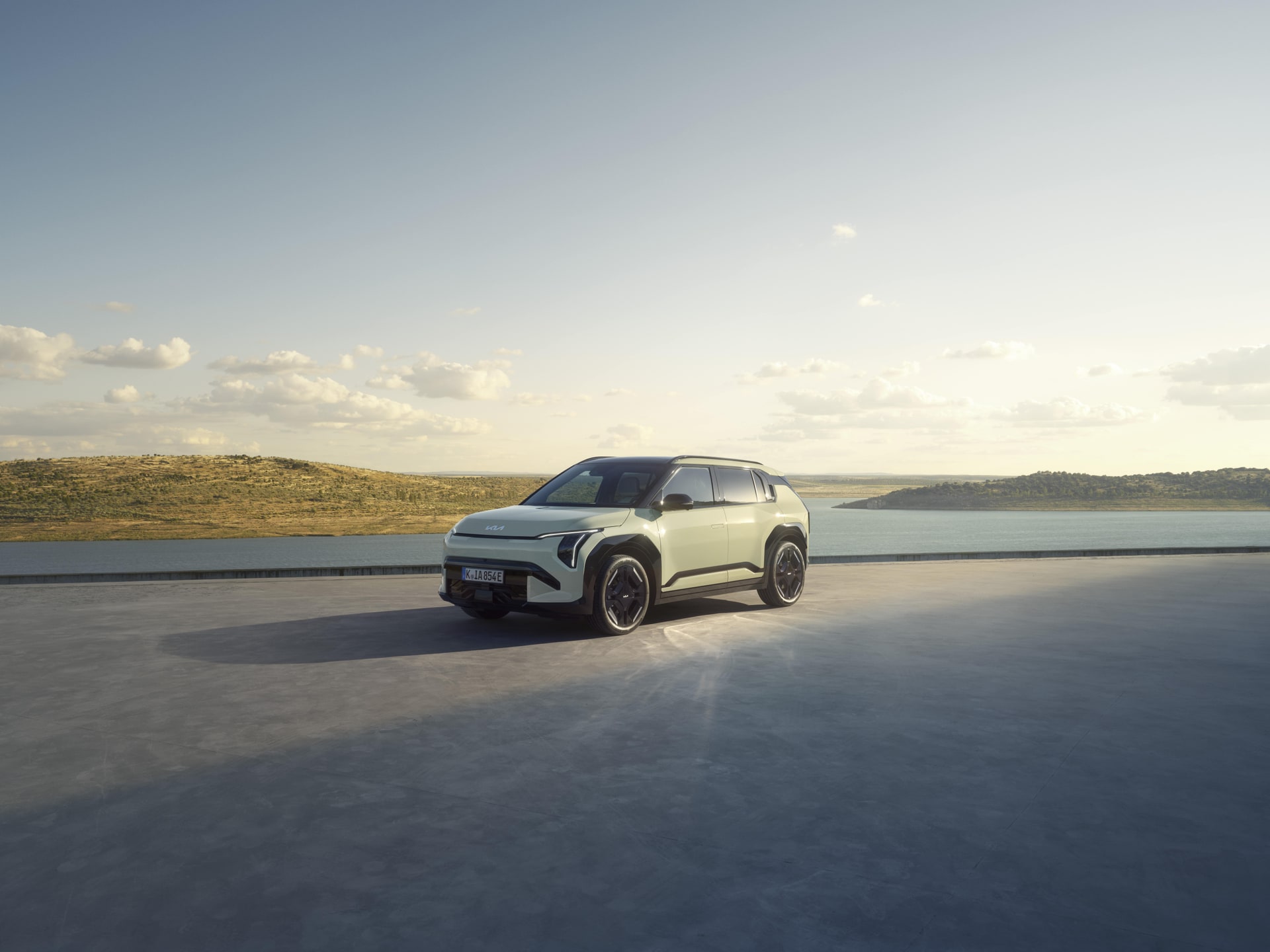
Kia EV3 — from €31,715
The smallest member of Kia’s electric family is, in my view, one of the year’s most accomplished debuts. A cabin above what is expected in the segment, an honest charging curve and a 7-year warranty that removes any mid-term doubts for the buyer. The Long Range version approaches 600 km WLTP with restrained consumption.
| Power | WLTP range | Consumption | Label | Fuel |
|---|---|---|---|---|
| 150 kW / 204 CV | 605 km | 14.9 kWh/100 km | ZERO | Electric |
Renault Scenic E-Tech — from €41,160
Renault has recycled a family name to put forward an electric SUV aimed at doing everything. Its Long Range is rated at around 620 km WLTP and the homologated consumption sits at very reasonable figures. A mature interior, well-worked ergonomics and an infotainment integration with Google that works without friction.
| Power | WLTP range | Consumption | Label | Fuel |
|---|---|---|---|---|
| 160 kW / 220 CV | 625 km | 16.3 kWh/100 km | ZERO | Electric |
Peugeot E-3008 — from €47,100
Stellantis’s STLA Medium platform is starting to pay off, and the E-3008 is its best card so far. Bold design, a curved i-Cockpit panel that some like and others don’t—we’re convinced—and the Long Range version aims for over 500 km WLTP on the official spec sheet.
| Power | WLTP range | Consumption | Label | Fuel |
|---|---|---|---|---|
| 157 kW / 210 CV | 524 km | 16.8 kWh/100 km | ZERO | Electric |
Volkswagen ID.4 — from €42,370
The ID.4 has been smoothing out its early flaws through software updates. Today it is a coherent, sober car with a perceived quality that is on the rise. It doesn’t excite, though. The Pro version with the large battery offers competitive ranges and DC charging that has improved noticeably.
| Power | WLTP range | Consumption | Label | Fuel |
|---|---|---|---|---|
| 210 kW / 286 CV | 563 km | 15.8 kWh/100 km | ZERO | Electric |
Tesla Model Y — from €50,990
The refreshed Model Y keeps what made the car great—efficiency, the Supercharger network, software—and fixes what held it back: acoustic insulation, suspension and tactile quality. It remains the benchmark for real-world motorway efficiency in the segment.
| Power | WLTP range | Consumption | Label | Fuel |
|---|---|---|---|---|
| 255 kW / 347 CV | 603 km | 14.0 kWh/100 km | ZERO | Electric |
Skoda Enyaq — from €47,880
The Czech cousin of the ID.4 offers, with the same mechanicals, a better-resolved cabin and Simply Clever details that are appreciated day to day. The recent update has trimmed consumption and improved the charging curve. A very family-oriented car, without flamboyance.
| Power | WLTP range | Consumption | Label | Fuel |
|---|---|---|---|---|
| 210 kW / 286 CV | 585 km | 15.8 kWh/100 km | ZERO | Electric |
MG S5 EV — from €32,715
The successor to the ZS EV, the S5 sits in a price bracket that remains its main commercial weapon. Decent finish, enough range for most people and a seven-year warranty. It is not the most refined in the group, but for what it costs, its place is hard to dispute.
| Power | WLTP range | Consumption | Label | Fuel |
|---|---|---|---|---|
| 170 kW / 231 CV | 480 km | 15.5 kWh/100 km | ZERO | Electric |
Citroën ë-C4 — from €31,740
Less SUV and more crossover, the ë-C4 plays the comfort card in true Citroën fashion: suspension with hydraulic bump stops, Advanced Comfort seats and a ride free of jolts. Its range is modest compared with the heavyweights, but it is a very honest product for mixed urban and road use.
| Power | WLTP range | Consumption | Label | Fuel |
|---|---|---|---|---|
| 115 kW / 156 CV | 420 km | 15.3 kWh/100 km | ZERO | Electric |
Comparison table and editorial score
Score from 1 to 10 according to Highmotor’s editorial view, weighing real-world range, charging curve, warranty, perceived quality and starting price.
| Model | Price from | WLTP range | Vehicle warranty | Score |
|---|---|---|---|---|
| Kia EV3 | €31,715 | 605 km | 7 years | 9.0 |
| Renault Scenic E-Tech | €41,160 | 625 km | 3 years | 8.5 |
| Peugeot E-3008 | €47,100 | 524 km | 3 years | 8.3 |
| Volkswagen ID.4 | €42,370 | 563 km | 3 years | 7.8 |
| Tesla Model Y | €50,990 | 603 km | 4 years | 8.7 |
| Skoda Enyaq | €47,880 | 585 km | 3 years | 8.2 |
| MG S5 EV | €32,715 | 480 km | 7 years | 8.4 |
| Citroën ë-C4 | €31,740 | 420 km | 3 years | 7.3 |
Verdict: our recommendation by usage profile
For a mixed urban buyer who wants to get it right without complications, the Kia EV3 is today the most balanced purchase on the Spanish market. If the focus is long journeys and real-world efficiency, the Tesla Model Y still leads. If the budget is tight, the MG S5 EV offers a long warranty at a price that is hard to match. And for those seeking refinement and a family car without giving up range, the Renault Scenic E-Tech and the Peugeot E-3008 are the two most mature bets of the year.
Anyone widening the scope to other formats can complete the reading with our ranking of family electric SUVs under 55,000 euros.
Frequently asked questions
Which electric SUV offers the best value for money in Spain today in 2026?
The Kia EV3 is our choice: it combines a 7-year warranty, a range above 600 km WLTP in its Long Range version and a cabin above the segment, all for under €40,000 in balanced configurations.
How much real-world range can I expect compared with the WLTP figure?
On the motorway at 120 km/h, expect 20-30% less than the WLTP figure. An SUV rated at 500 homologated km drops to 370-400 real km in summer and below 320 km in winter with climate control running.
Is peak charging power or the full curve more important?
The curve. A car that sustains 110 kW between 20 and 70% SoC adds more usable energy than one that peaks at 150 kW and drops off quickly. Look at the kWh added between 10 and 80% and the minutes it takes to do so.
What does the battery warranty on an electric SUV cover?
The standard in Spain is 8 years or 160,000 km with a capacity retention threshold, usually 70%. Below that threshold within the covered period, the manufacturer repairs or replaces modules. Kia and MG also extend the vehicle warranty to 7 years.
Technical specifications of the cars in this article
 Peugeot E-208 GTi: a battery-powered toy that revives the spirit of the 1980s sports cars
 New Lexus ES: luxury grows and goes electric
 First contact with the Dacia Sandero Hybrid 155: power and efficiency from €19,890
Deja un comentario