Austral Hyundai KIA Nissan RAV4 Renault Sportage Toyota Tucson X-Trail Hybrid Cars Buying Guides SUV
How to Choose a Family Hybrid SUV in 2026: Real Hybrid Range, Motorway Consumption and Total Cost of Ownership
 Dani Montesinos
13 November 2026
7 min.
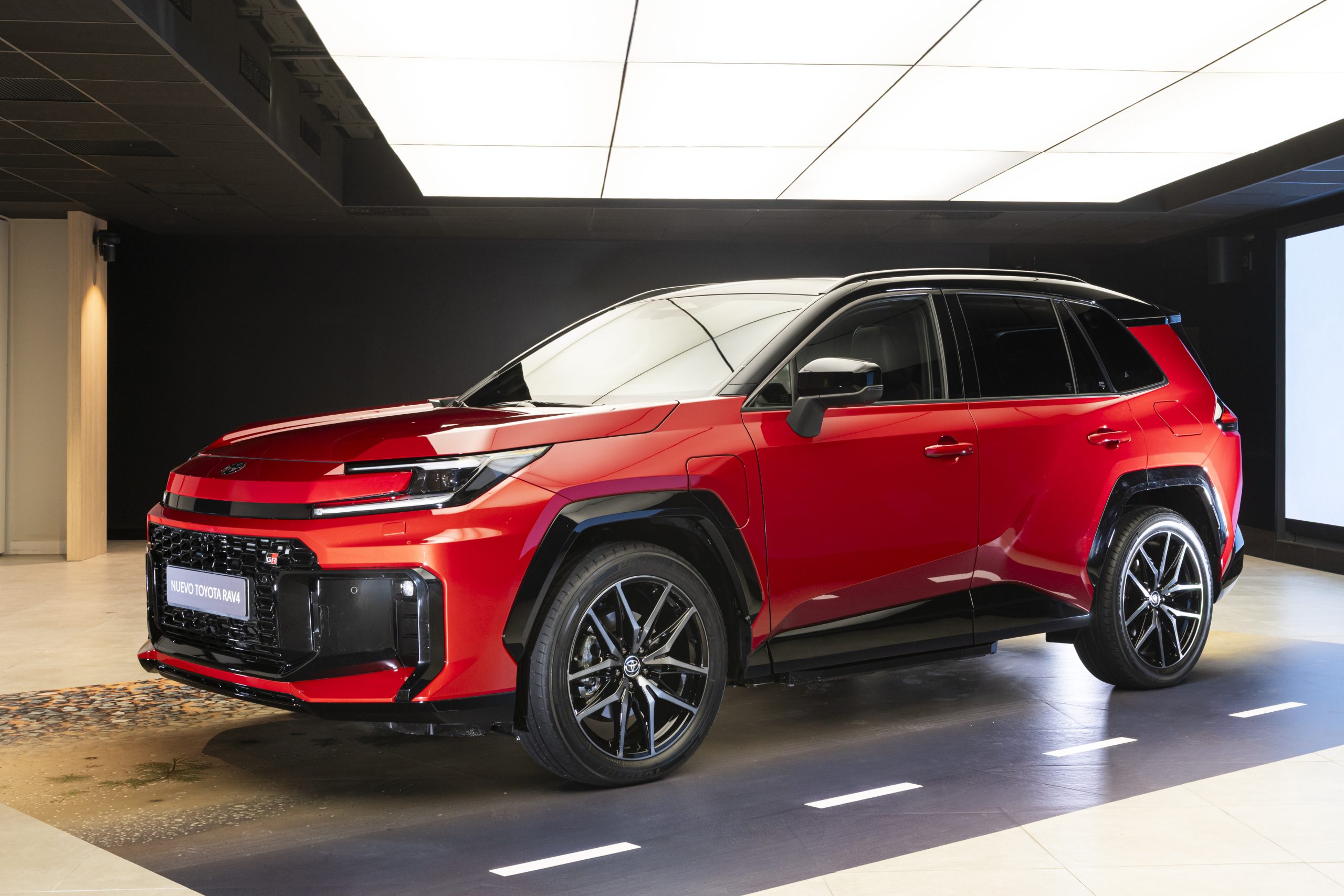
2026 comparison of family hybrid SUVs on sale in Spain with three verifiable KPIs: real range, consumption at 120 km/h and total cost over 4 years
Buying a family hybrid SUV in 2026 is no longer about choosing the one that sounds best at the dealership. It’s about numbers. And numbers you can check, not the homologation figure nobody reproduces on the road. This guide is built on three specific indicators: how many kilometres the fuel tank plus electric assistance actually deliver, what the car consumes at a sustained 120 km/h (the scenario where the conventional hybrid loses its advantage over diesel), and how much it costs to own the car for four years, with everything included.
What we mean by a family hybrid SUV in 2026
We are talking about segment C-D models, without a plug, designed for a family of four with a boot of more than 500 litres and mixed city-road use. PHEVs, which deserve their own analysis, and compact urban SUVs are excluded. Here we include the Toyota RAV4, Hyundai Tucson, Kia Sportage, Renault Austral, Nissan X-Trail e-Power, Honda CR-V and Ford Kuga, the seven family hybrids that you can really buy today at a Spanish dealership.
Real hybrid range: what to look at beyond WLTP
The range that matters is not electric (these cars don’t have any meaningful electric range), but the total: fuel tank plus the intelligent management of the hybrid system. Here the Toyota RAV4 still sets the pace, with tanks that, combined with its low consumption, allow it to approach 1,000 km without refuelling in moderate road use. The Nissan X-Trail e-Power, on the other hand, being a series hybrid (the combustion engine only generates electricity and never drives the wheels), behaves differently: it shines in town, but on long motorway runs its range suffers more than the brochure promises.
Motorway consumption at 120 km/h: the test that really matters
This is where the wheat is separated from the chaff. A conventional hybrid reduces its advantage over diesel when the battery can barely intervene, because at constant speed the electric system hardly comes into play. The Renault Austral E-Tech full hybrid and the Kia Sportage HEV are the ones that best hold up in this scenario, with consumption that doesn’t climb as much as that of a heavier hybrid such as the Honda CR-V. That said, all of them, without exception, consume considerably more at 120 km/h than on the urban cycle: the difference can exceed 30%.
Total cost of ownership over 4 years: the KPI that decides the purchase
The sticker price is deceptive. What really counts is adding up depreciation, maintenance, insurance and fuel over four years and 60,000 km. On that basis, the Kia Sportage and the Hyundai Tucson come out strengthened thanks to their seven-year warranty, which better sustains residual value against rivals with shorter warranties. The Ford Kuga, on the other hand, starts from an attractive price, but its depreciation tends to be somewhat more aggressive in the Spanish used-car market.
2026 comparison: family hybrid SUVs on sale in Spain
Toyota RAV4 — from 44,575 €
The RAV4 Hybrid has been the reference for reliability in its segment for a decade. Its naturally aspirated 2.5 engine with e-CVT is not the most entertaining to drive, but it is the most predictable in real-world consumption.
| Power (kW) | Power (CV) | Consumption | Label | Fuel |
|---|---|---|---|---|
| 136 | 185 | 5.0 l/100 km | ECO | Hybrid |
Hyundai Tucson — from 41,045 €
The Tucson Hybrid 1.6 T-GDI combines a design that ages well with one of the best warranties on the market, seven years, an argument that weighs heavily in total cost of ownership.
| Power (kW) | Power (CV) | Consumption | Label | Fuel |
|---|---|---|---|---|
| 176 | 239 | 5.3 l/100 km | ECO | Hybrid |
Kia Sportage — from 27,770 €
It shares its platform and mechanics with the Tucson, but usually arrives with a somewhat more competitive entry price. It is probably the one that best balances price and four-year cost of ownership.
| Power (kW) | Power (CV) | Consumption | Label | Fuel |
|---|---|---|---|---|
| 176 | 239 | 5.5 l/100 km | ECO | Hybrid |
Renault Austral — from 35,990 €
The 200 CV E-Tech full hybrid is, of the seven, the one that behaves best at sustained motorway speeds. Its multimode gearbox without a conventional clutch is a pleasant surprise once you get the hang of it.
| Power (kW) | Power (CV) | Consumption | Label | Fuel |
|---|---|---|---|---|
| 146 | 200 | 4.7 l/100 km | ECO | Hybrid |
Nissan X-Trail e-Power — from 34,300 €
Its architecture, combustion engine as generator and always-electric traction, makes it unique in this comparison. In town it is a delight of smoothness; on long motorway runs, consumption climbs more than expected. We already analysed this approach in detail in our X-Trail versus Mitsubishi Outlander duel.
| Power (kW) | Power (CV) | Consumption | Label | Fuel |
|---|---|---|---|---|
| 150 | 204 | 5.9 l/100 km | ECO | Hybrid |
Honda CR-V — from 46,745 €
The Japanese e:HEV follows a similar operating logic to the X-Trail in town, but with a more premium interior finish. It is the most expensive of the seven at entry level, something that penalises its total cost unless offset by a good residual value.
| Power (kW) | Power (CV) | Consumption | Label | Fuel |
|---|---|---|---|---|
| 135 | 184 | 5.6 l/100 km | ECO | Hybrid |
Ford Kuga — from 31,076 €
The Ford FHEV is, of the seven, the one that goes most unnoticed in conversation, and not for lack of merit. Its 2.5 Duratec performs solidly both in town and on the road, although its depreciation is the least convincing of the whole comparison.
| Power (kW) | Power (CV) | Consumption | Label | Fuel |
|---|---|---|---|---|
| 132 | 180 | 5.3 l/100 km | ECO | Hybrid |
Summary comparison table: range, consumption and total cost
| Model | From | Motorway consumption | Total cost score | Overall score |
|---|---|---|---|---|
| Toyota RAV4 | 44,575 € | 5.0 l/100 km | 8 | 8.5 |
| Hyundai Tucson | 41,045 € | 5.3 l/100 km | 8.5 | 8.3 |
| Kia Sportage | 27,770 € | 5.5 l/100 km | 9 | 8.4 |
| Renault Austral | 35,990 € | 4.7 l/100 km | 7.5 | 8.0 |
| Nissan X-Trail e-Power | 34,300 € | 5.9 l/100 km | 6.5 | 7.2 |
| Honda CR-V | 46,745 € | 5.6 l/100 km | 6.8 | 7.5 |
| Ford Kuga | 31,076 € | 5.3 l/100 km | 6.5 | 7.1 |
Government purchase aid: Plan Auto+
Some of these models may benefit from the Plan Auto+, the current framework of state aid for buying efficient vehicles in Spain. Amounts and requirements change frequently, so always check the official plan website before making definitive calculations on the final price.
Verdict: which family hybrid SUV to buy according to your use
If your use is mainly on highways and motorways, the Toyota RAV4 and the Renault Austral are the ones that best sustain consumption. If budget comes first and a long warranty is valued, the Kia Sportage is hard to beat. And if the family lives in the city and makes few long trips, the Nissan X-Trail e-Power behaves more convincingly than its motorway figures suggest. For those who want to explore alternatives below 38,000 euros with a different approach to space, our guide to family SUVs for less than 38,000 euros complements this comparison well.
Frequently asked questions
Which family hybrid SUV has the best real range in 2026?
The Toyota RAV4 still offers the most kilometres on a full tank, thanks to its moderate consumption and proven mechanical reliability.
Do hybrids consume much more on the motorway than in town?
Yes. All the models in this comparison increase their consumption by between 25% and 35% when driven at a sustained 120 km/h, compared with their urban figures.
Which family hybrid SUV has the best total cost of ownership over 4 years?
The Kia Sportage and the Hyundai Tucson stand out thanks to their seven-year warranty, which helps sustain residual value and reduces total cost compared with rivals with shorter warranties.
Is an e-Power hybrid such as the Nissan X-Trail worth it compared with a conventional hybrid?
It depends on use. In town it performs excellently, but on long motorway journeys its consumption gets closer to that of a heavy conventional hybrid than to that of the most efficient models on this list.
Technical specifications of the cars in this article

 Kia offers an electric range of 10 models, 50 versions and 400 possible combinations
 The seven finalists for the 2027 European Car of the Year (COTY) are exclusively electric
 Peugeot E-208 GTi: a battery-powered toy that revives the spirit of the 1980s sports cars
Deja un comentario