Captur Honda Hyundai Kona Renault S-Cross Suzuki Toyota Vitara Yaris Yaris Cross ZR-V Hybrid Cars Tests Rankings
2026 ranking: the 5 best-consuming real-world hybrid compact SUVs in urban driving tests
 Dani Montesinos
13 November 2026
5 min.
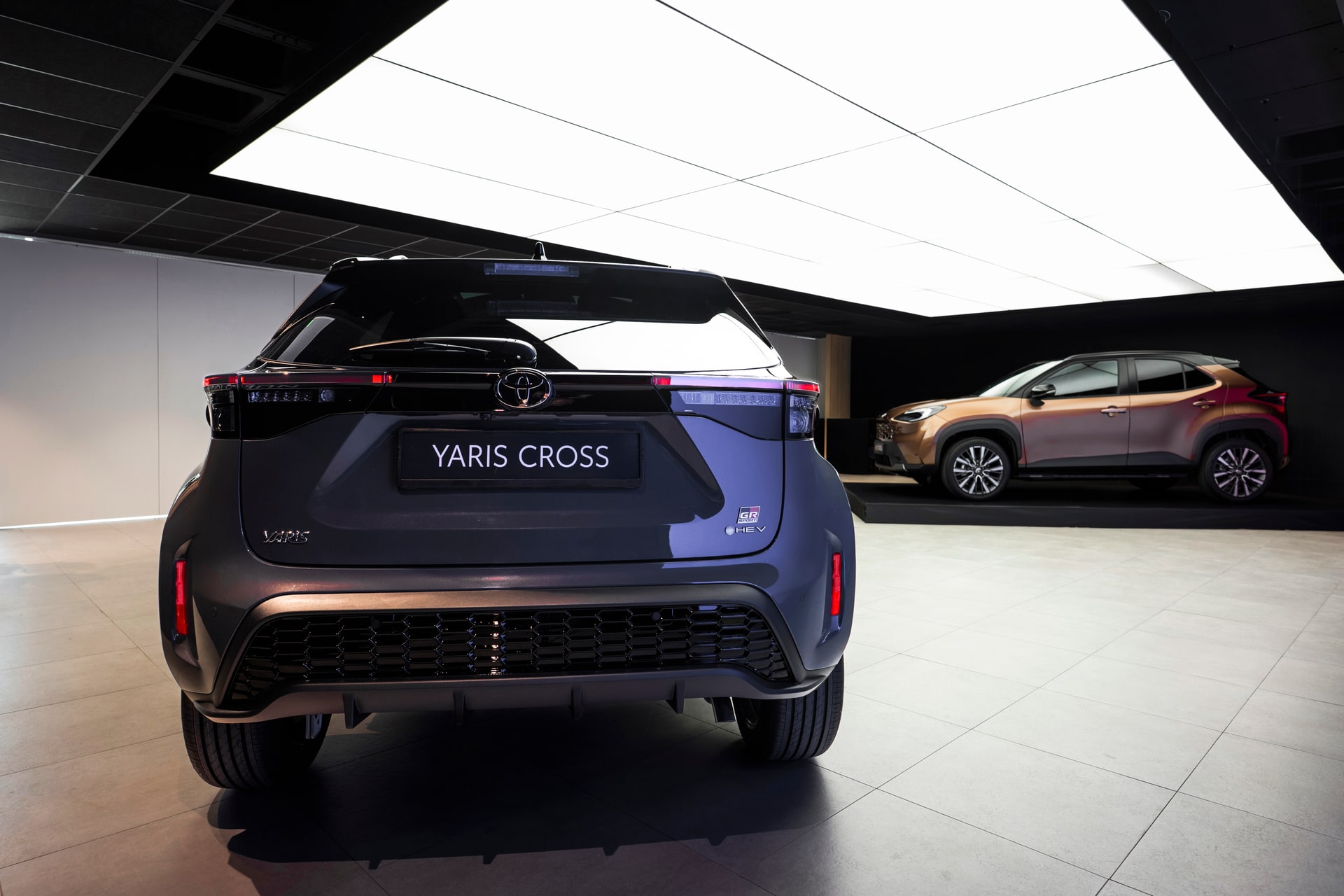
We measured the real city consumption of the best-selling hybrid compact SUVs in Spain and compared the results with their official WLTP figures
WLTP is useful for comparing cars with each other, but it has little to do with what the on-board computer shows after a week of traffic jams, traffic lights and parking in tight spaces. That is why at Highmotor we have spent months putting the most relevant hybrid compact SUVs on the Spanish market through a fixed urban route: 38 kilometres through dense traffic, roundabouts and 50 km/h stretches, repeated at different times of day. The result is this 2026 ranking, with five models that show full hybrid remains the most honest technology for getting around town without depending on a plug.
What “real consumption” means and why WLTP falls short
The WLTP cycle blends urban, extra-urban and motorway phases into a single figure. A hybrid SUV can show an attractive combined number and yet behave very differently when 90% of the journey happens below 40 km/h. This is where the HEV system gains an advantage: the battery recharges on every braking event and the electric motor takes on much of the pulling away, something barely noticeable on the motorway. That is why a consumption figure measured exclusively in town is more useful for someone living in Madrid, Barcelona or Valencia than the WLTP average in the catalogue.
Methodology: how we measure real urban consumption
Each car completed the same route three times, with different drivers and automatic climate control, averaging the litres per 100 km shown on the instrument cluster after resetting the trip computer. It is not a laboratory, but it is a reproducible method that can be compared across models, which is exactly what we wanted: a fixed snapshot of how these cars perform day to day, not under exam conditions.
The ranking: the 5 most efficient hybrid compact SUVs in the city
1. Toyota Yaris Cross — from 27,325 €
The Yaris Cross remains the reference in the segment and our tests confirm it: 4.1 l/100 km real in town, practically identical to its WLTP figure. Its fourth-generation HEV system switches to pure electric mode far more often than its rivals, even at sustained speeds of 45-50 km/h.
| Power (kW) | Power (CV) | Real urban consumption | Label | Fuel |
|---|---|---|---|---|
| 95 kW | 130 CV | 4.1 l/100 km | ECO | Hybrid |
Hyundai Kona2. Hyundai Kona Hybrid — from 34,350 €
The Kona Hybrid arrives with 138 CV and a consumption that, according to real figures, hovers around 4.4 l/100 km. A notable point: more power does not translate into more consumption when the gearbox management is well calibrated, and here it is. We already analysed it in depth in our review of the Hyundai Kona Hybrid, where this efficiency was already showing promise.
| Power (kW) | Power (CV) | Real urban consumption | Label | Fuel |
|---|---|---|---|---|
| 101 kW | 138 CV | 4.4 l/100 km | ECO | Hybrid |
3. Renault Captur E-Tech full hybrid — from 28,105 €
The French contender stands out for its distinctive architecture: a high-power electric motor and a clutchless gearbox that almost always prioritises electric traction. In town it records 4.6 l/100 km, a figure that rises considerably less than expected when traffic gets congested. It can be read in more detail in our analysis of the Renault Captur E-Tech full hybrid.
| Power (kW) | Power (CV) | Real urban consumption | Label | Fuel |
|---|---|---|---|---|
| 116 kW | 160 CV | 4.6 l/100 km | ECO | Hybrid |
Suzuki S-Cross4. Suzuki S-Cross — from 27,222 €
The S-Cross, with its 110 CV full hybrid system, does not stand out for spectacular figures but for consistency: 5.8 l/100 km across our three runs, with minimal variation between drivers. That consistency counts for a great deal for anyone who tracks running costs month by month.
| Power (kW) | Power (CV) | Real urban consumption | Label | Fuel |
|---|---|---|---|---|
| 81 kW | 110 CV | 5.5 l/100 km | ECO | Hybrid |
Honda ZR-V5. Honda ZR-V e:HEV — from 38,850 €
The most expensive and most powerful of the group, with 184 CV, closes the ranking with 5.2 l/100 km real. Not a bad figure for an SUV with that level of performance, but it makes clear that gaining horsepower carries a cost in urban consumption, although the gap to the leader is only about a litre.
| Power (kW) | Power (CV) | Real urban consumption | Label | Fuel |
|---|---|---|---|---|
| 135 kW | 184 CV | 5.2 l/100 km | ECO | Hybrid |
Summary table: the 5 hybrid compact SUVs compared
| Model | Power | Real city consumption | Price from | Score |
|---|---|---|---|---|
| Toyota Yaris Cross | 130 CV | 4.1 l/100 km | 27,325 € | 9.4 |
| Hyundai Kona Hybrid | 138 CV | 4.4 l/100 km | 34,350 € | 9.0 |
| Renault Captur E-Tech full hybrid | 160 CV | 4.6 l/100 km | 28,105 € | 8.7 |
| Suzuki S-Cross | 110 CV | 5.8 l/100 km | 27,222 € | 8.4 |
| Honda ZR-V | 184 CV | 5.2 l/100 km | 38,850 € | 7.9 |
Which model makes sense for real use
If 90% of your kilometres are urban, the Yaris Cross is hard to argue with: it deviates least from its official figure. For those who want more power without overstretching their budget, the Kona Hybrid is the smartest middle ground. And if you are looking for something different from Toyota, with more electric character in town, the Captur deserves a test drive before you decide, which is also worth checking against the Suzuki S-Cross versus the Vitara if you are torn between the two B-segment SUVs from the Japanese brand.
Frequently asked questions
Which hybrid compact SUV has the lowest real city consumption in 2026?
The Toyota Yaris Cross, with 4.1 l/100 km measured in urban traffic, is the most efficient in this ranking and the one that deviates least from its official WLTP figure.
Why does real consumption differ from WLTP in hybrid SUVs?
Because the WLTP cycle combines urban, extra-urban and motorway phases, whereas in town the electric motor of an HEV works far longer, which usually lowers consumption compared with the combined average.
Are there public subsidies for buying these hybrid SUVs?
Yes, through the Plan Auto+, although it is worth checking the official website for current amounts and conditions, as they vary by autonomous community and income.
Does a more powerful hybrid SUV always consume more in town?
Not necessarily, but this ranking does show some correlation: the Honda ZR-V, the most powerful at 184 CV, is also the one that closes the classification for urban consumption.
Technical specifications of the cars in this article


 Kia offers an electric range of 10 models, 50 versions and 400 possible combinations
 The seven finalists for the 2027 European Car of the Year (COTY) are exclusively electric
 Peugeot E-208 GTi: a battery-powered toy that revives the spirit of the 1980s sports cars
Deja un comentario