Hybrid Cars Comparisons Family
How to Choose a Family Hybrid SUV in 2026: Space, Real-World Consumption and Equipment That Makes the Difference
 Dani Montesinos
31 July 2026
6 min.
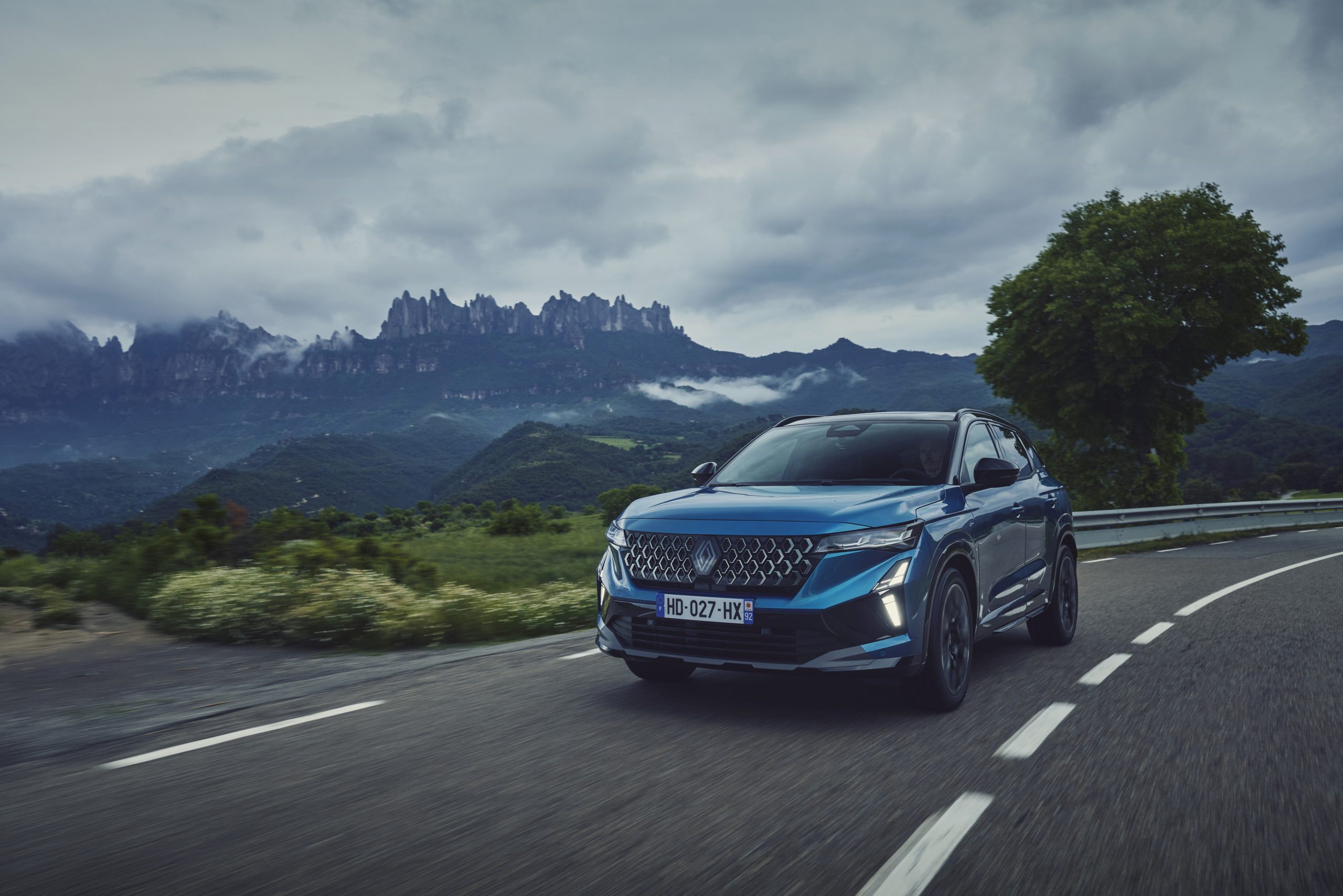
Technical Guide to Choosing a Family Hybrid SUV in 2026: Types of Hybridisation, Real-World Consumption, Boot Space in Litres and the ADAS Equipment That Really Matters
Choosing a family hybrid SUV in 2026 has become a more demanding exercise than it might seem. The range has multiplied, the terminology overlaps (HEV, MHEV, PHEV, series hybrid…), and the consumption claims of the WLTP cycle still don’t quite match what the on-board computer shows on a long journey. Add to this a very Spanish reality: families who want a car for everyday urban use but who, in August, load it to the roof to cover 900 kilometres of motorway. That dual use shapes the decision more than any brochure does.
What defines a family hybrid SUV today
We are talking about a vehicle with at least five usable seats—six or seven if the use requires it—a medium or large SUV body and a hybrid system capable of genuinely recovering energy, not just in a token way. The DGT ECO label is almost a minimum; the ZERO label is reserved for PHEVs with a sufficient homologated electric range.
Types of hybridisation: HEV, MHEV and PHEV
The HEV (full hybrid) is the one that works best in town and on short trips without needing to be plugged in. The MHEV (48 V mild hybrid) barely reduces consumption: it extends the life of the combustion engine and smooths out take-offs, little more. The PHEV is the logical choice if you have a charging point at home and a daily commute below 50–60 km; without a plug, it carries the weight of the battery with no advantage.
Real-world consumption vs. WLTP: what to expect on the road
In a large HEV, the mixed WLTP figure usually hovers around 5.5–6.0 l/100 km. In practice, with a family, a roof rack and cruising at 120 km/h, the real figure rises to 6.5–7.5 l/100 km. PHEVs are more treacherous: if you travel with an empty battery, consumption often climbs above 7 l/100 km. It is wise to be realistic before signing.
Interior space and modularity: the litres that really count
A 500-litre boot sounds good on paper, but what makes the difference is the geometry: a low load sill, a square opening and rear seatbacks that fold in a 40/20/40 split. For families with young children, three ISOFIX anchorages in the second row are almost compulsory. If there is a third row, measure before buying: not all seven-seaters are alike.
Standard ADAS: the minimum acceptable in 2026
Automatic emergency braking with pedestrian and cyclist detection, adaptive cruise control with Stop&Go, active lane keeping, blind-spot detection and a 360° camera. Any family SUV that does not include this package as standard—or at least available for less than €1,500 as an option—arrives late to the market. We covered something similar in our guide to ADAS-equipped suites under €60,000, and the conclusions also apply to the family segment.
Toyota RAV4 — from €44,250
The inevitable benchmark. The hybrid RAV4 remains the yardstick against which all others are measured: very restrained real-world consumption in town, proven reliability and an after-sales network few rivals can match. Its interior, however, feels a step behind what the Koreans offer in terms of touch and perceived quality.
| Power kW | Power CV | Top speed | Range | Consumption | Label | Fuel |
|---|---|---|---|---|---|---|
| 136 | 185 | 180 km/h | ~950 km | 5.2 l/100 km | ECO | Hybrid |
Kia Sorento — from €50,540
For those who genuinely need seven seats. The Sorento HEV combines a turbocharged four-cylinder with an electric motor and offers 813 litres of boot space with the third row folded. Perceived quality is notable and the 7-year warranty weighs heavily in the final decision.
| Power kW | Power CV | Top speed | Range | Consumption | Label | Fuel |
|---|---|---|---|---|---|---|
| 158 | 215 | 193 km/h | ~850 km | 6.4 l/100 km | ECO | Hybrid |
Hyundai Santa Fe — from €48,920
Redesigned from top to bottom, with a formal, angular design language that people either love or dislike. What is not in dispute is the interior space: the second row is among the most generous in the segment, and the dashboard ergonomics are a success.
| Power kW | Power CV | Top speed | Range | Consumption | Label | Fuel |
|---|---|---|---|---|---|---|
| 176 | 239 | 196 km/h | ~820 km | 6.3 l/100 km | ECO | Hybrid |
Honda CR-V — from €46,645
The Honda e:HEV system works as a series hybrid for most of the time: the electric motor drives the wheels and the combustion engine acts almost always as a generator. The result is very smooth driving and an urban consumption figure that is hard to beat.
| Power kW | Power CV | Top speed | Range | Consumption | Label | Fuel |
|---|---|---|---|---|---|---|
| 135 | 184 | 187 km/h | ~900 km | 6.0 l/100 km | ECO | Hybrid |
Nissan X-Trail e-Power — from €34,550
A concept similar to the Honda: a combustion engine acting as a generator, with 100% electric traction. On the motorway it loses some efficiency compared with the Toyota, but in town it drives like an electric car. It offers seven seats as an option, although the last two are more of an emergency measure than anything else.
| Power kW | Power CV | Top speed | Range | Consumption | Label | Fuel |
|---|---|---|---|---|---|---|
| 150 | 204 | 170 km/h | ~800 km | 5.7 l/100 km | ECO | Hybrid |
Renault Austral E-Tech — from €36,909
Smaller than the previous ones, yet a family fits in without real sacrifices. The E-Tech full hybrid system with dog-clutch gearbox is unusual and very efficient in town. Good standard technology equipment and a restrained price.
| Power kW | Power CV | Top speed | Range | Consumption | Label | Fuel |
|---|---|---|---|---|---|---|
| 146 | 200 | 175 km/h | ~900 km | 4.7 l/100 km | ECO | Hybrid |
MG HS Hybrid+ — from €32,840
The quintessential cheap family hybrid SUV. It does not shine in terms of touch or refinement, but for less than €30,000 it offers a 4.67-metre car, a large boot and generous equipment. As a first family car it makes sense; for those who cover serious distances, there are more polished options.
| Power kW | Power CV | Top speed | Range | Consumption | Label | Fuel |
|---|---|---|---|---|---|---|
| 165 | 224 | 190 km/h | ~750 km | 5.6 l/100 km | ECO | Hybrid |
Geely Starray EM-i — from €30,490
A PHEV designed to be used daily like an electric car, with an EV-mode range that comfortably exceeds 80 real kilometres. Surprising interior and balanced handling, as we verified in the Madrid–Cuenca road test of the Starray EM-i.
| Power kW | Power CV | Top speed | Range | Consumption | Label | Fuel |
|---|---|---|---|---|---|---|
| 150 | 204 | 180 km/h | ~1,055 km | 1.0 l/100 km | ZERO | PHEV |
Comparison and score
| Model | Price from | Real consumption | Space | ADAS | Score /10 |
|---|---|---|---|---|---|
| Toyota RAV4 | €44,250 | 5.2 l | 580 l | Very complete | 8.8 |
| Kia Sorento | €50,540 | 6.4 l | 813 l (7 seats) | Very complete | 8.7 |
| Hyundai Santa Fe | €48,920 | 6.3 l | 725 l | Complete | 8.5 |
| Honda CR-V | €46,645 | 6.0 l | 579 l | Complete | 8.4 |
| Nissan X-Trail | €34,550 | 5.7 l | 575 l | Complete | 8.2 |
| Renault Austral | €36,909 | 4.7 l | 500 l | Complete | 8.3 |
| MG HS | €32,840 | 5.6 l | 507 l | Adequate | 7.6 |
| Geely Starray EM-i | €30,490 | 1.5 l (PHEV) | 560 l | Very complete | 8.6 |
FAQ
Which family hybrid SUV has the lowest real-world consumption?
Among the HEVs, the Renault Austral E-Tech and the Toyota RAV4 are the most efficient in real mixed use, with figures between 5.4 and 6.2 l/100 km. If you can charge it daily, a PHEV such as the Geely Starray EM-i drops below 2 real l/100 km on urban trips.
Is a PHEV worth it if I don’t have a charging point at home?
No. Without regular charging, the PHEV carries extra weight and complexity without taking advantage of its main benefit. In that scenario, a conventional HEV is more efficient and cheaper.
Which 7-seat family hybrid SUV is the best choice?
The Kia Sorento HEV is the benchmark for real third-row space, overall quality and a 7-year warranty. The Santa Fe is very close behind.
How much should I budget for a well-equipped family hybrid SUV in 2026?
Between €32,000 and €40,000 for a C–D segment HEV with complete ADAS and a mid-to-high trim level. Seven-seaters start at around €45,000 in reasonable configurations.


 Kia offers an electric range of 10 models, 50 versions and 400 possible combinations
 The seven finalists for the 2027 European Car of the Year (COTY) are exclusively electric
 Peugeot E-208 GTi: a battery-powered toy that revives the spirit of the 1980s sports cars
Deja un comentario