Captur Hyundai KIA Kona Niro Renault Toyota Yaris Yaris Cross Hybrid Cars Comparisons Urban
How to Choose a Hybrid Car for Short Trips in 2026: Why the Urban Cycle Favours the Full Hybrid
 Iván Navarro
9 November 2026
6 min.
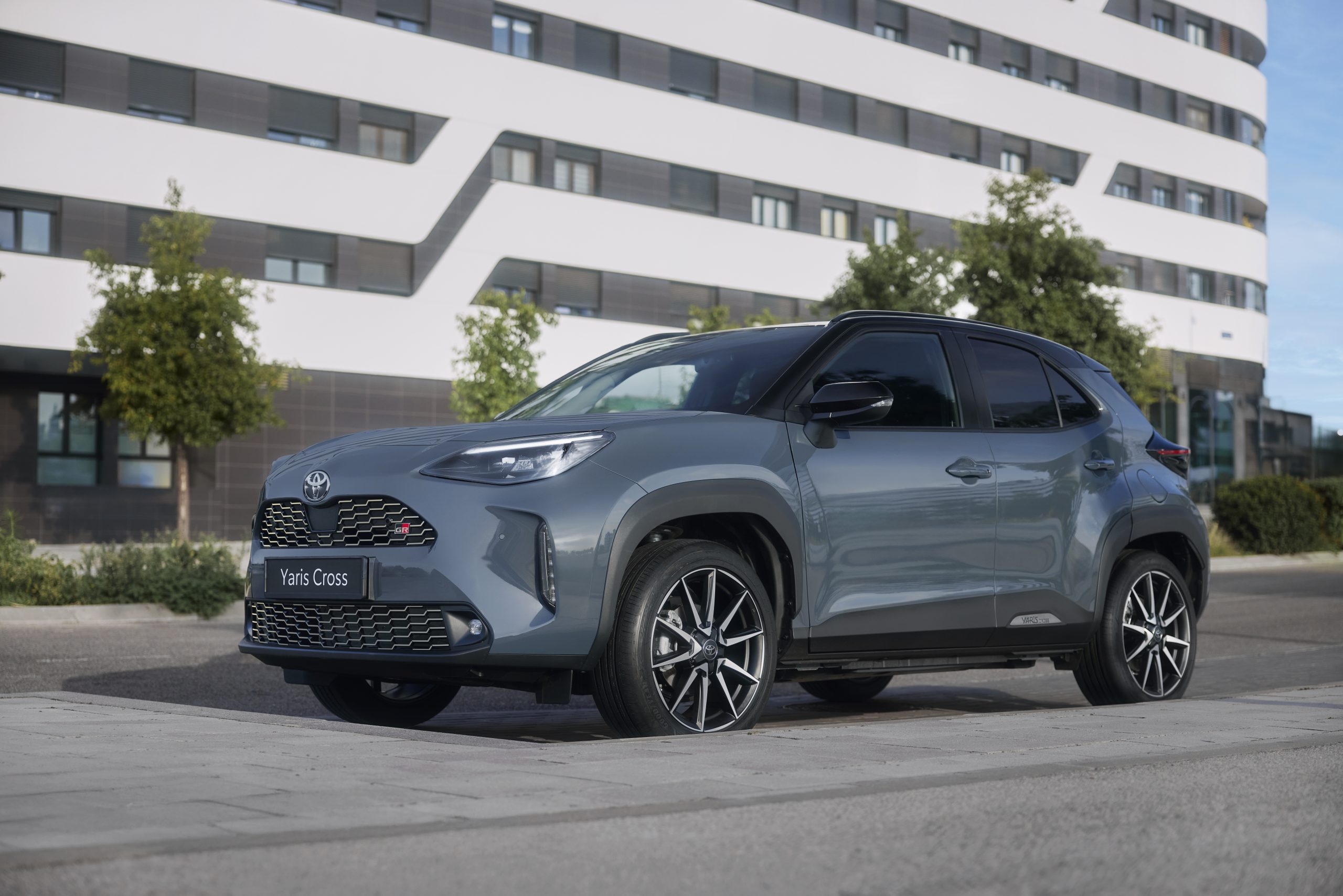
There is one figure almost nobody looks at when buying a car and which, for urban use, matters more than power or design: how long the electric motor runs on its own, without help from the combustion engine. On trips of less than 15 kilometres —the typical profile of someone who gets around the city— that figure makes the difference between burning 4 litres and burning 6.5. And that is where the full hybrid, the conventional hybrid of always, clearly comes out on top.
Why the urban cycle favours the full hybrid
A combustion engine performs worse the colder it is and the more often it stops and starts. The city is precisely that: traffic lights, roundabouts, constant pulling away. A full hybrid turns that hostile scenario into its favourite terrain, because it has enough battery to move the car in pure electric mode for the first metres and in low-speed stretches, which in the city are the majority.
The result, with WLTP-certified data, is usually an urban consumption between 30% and 40% lower than that of the same bodywork in conventional petrol. It is no magic: it is that the combustion engine literally switches off many times during the journey.
Full hybrid vs mild hybrid in the city: the difference lies in the electric motor
Here it is worth not mixing things up. A mild hybrid carries a small 48V electric motor that assists starting and recovers some energy when braking, but it cannot move the car on its own. The combustion engine never switches off completely. It is an aid, not an alternative.
A full hybrid, on the other hand, incorporates a larger battery —usually lithium-ion or nickel-metal hydride, between 1 and 1.5 kWh— and an electric motor with enough power to propel the vehicle alone for several minutes in a row. The difference in real consumption between the two, in the city, can be around 20-25% in favour of the full hybrid. On country roads or motorways that advantage almost completely disappears.
How long a full hybrid can run in electric mode
In real-use tests in congested urban environments, today’s full hybrids —Toyota, Kia, Hyundai, Honda and Renault among them— manage to run in pure electric mode between 40% and 60% of the total journey time. It is not homologated electric range as in a PHEV, but it is constant, silent use of the motor that makes all the difference at the fuel tank.
Regenerative braking, the great ally of urban traffic
Every braking event in the city —and there are many— recharges the battery instead of dissipating that energy as heat in the discs. On a journey with frequent stops, that constant recovery is what allows the system to maintain enough charge to keep drawing electricity without depending on a plug. It is, in our view, the technical piece that best explains why a conventional urban hybrid needs no charger and still performs so well in the city.
Diesel in the city: why it loses out on short trips
Diesel needs working temperature to be efficient, and on short trips it almost never reaches it. The result is real consumption worse than expected and an exhaust aftertreatment system (particulate filter, AdBlue) that suffers more the more cold starts it endures. For someone who drives 8 or 10 km a day, diesel is, quite simply, the worst possible combustion option.
The best conventional hybrids for the city in 2026
Toyota Yaris Cross — from 23,750 €
The Japanese B-SUV remains the benchmark for real consumption in its segment, something we already analysed in depth in our review of the Yaris Cross. It is probably the most convincing cheap urban hybrid car on the Spanish market right now.
| Power (kW) | Power (CV) | Consumption | Label | Fuel |
|---|---|---|---|---|
| 85 kW | 116 CV | 4.3 l/100 km | ECO | Hybrid |
Kia Niro HEV — from 29,900 €
More space than the Yaris Cross and a somewhat more generous battery, which translates into longer electric stretches in dense traffic.
| Power (kW) | Power (CV) | Consumption | Label | Fuel |
|---|---|---|---|---|
| 104 kW | 141 CV | 4.4 l/100 km | ECO | Hybrid |
Hyundai Kona HEV — from 29,500 €
It shares its mechanics with the Niro, but with a somewhat more dynamic approach. In the city it behaves in a very similar way.
| Power (kW) | Power (CV) | Consumption | Label | Fuel |
|---|---|---|---|---|
| 104 kW | 141 CV | 4.3 l/100 km | ECO | Hybrid |
Honda HR-V e:HEV — from 29,900 €
Honda relies on a proprietary system in which the electric motor carries almost all the propulsion load, even at moderate road speeds. In the city, it is one of the quietest in the group.
| Power (kW) | Power (CV) | Consumption | Label | Fuel |
|---|---|---|---|---|
| 96 kW | 131 CV | 4.8 l/100 km | ECO | Hybrid |
Renault Captur E-Tech full hybrid — from 27,900 €
The E-Tech system of Renault uses a clutchless gearbox with multiple ratios that prioritises electric mode when pulling away, something that is especially noticeable in stop-start traffic such as the city centre of any Spanish capital.
| Power (kW) | Power (CV) | Consumption | Label | Fuel |
|---|---|---|---|---|
| 105 kW | 143 CV | 4.3 l/100 km | ECO | Hybrid |
Summary table: comparison of urban hybrids 2026
| Model | Price from | Urban consumption | Label | City score (1-10) |
|---|---|---|---|---|
| Toyota Yaris Cross | 23,750 € | 4.3 l/100 km | ECO | 9.2 |
| Kia Niro HEV | 29,900 € | 4.4 l/100 km | ECO | 8.8 |
| Hyundai Kona HEV | 29,500 € | 4.3 l/100 km | ECO | 8.7 |
| Honda HR-V e:HEV | 29,900 € | 4.8 l/100 km | ECO | 8.3 |
| Renault Captur E-Tech | 27,900 € | 4.3 l/100 km | ECO | 8.9 |
The score weighs urban consumption, entry price and behaviour in stop-start traffic. The Yaris Cross remains, in our view, the most rounded balance of the group, although the Captur E-Tech is hot on its heels with a slightly more complete equipment package.
Incentives and real cost of ownership in the city
All the models on this list carry an ECO label, which in practice means unrestricted access to the low-emission zones of Spain’s main cities, something that is no longer a minor detail in Madrid or Barcelona. If you are considering the leap to more advanced electrification, it is worth checking the current conditions of the Plan Auto+ on the official website, since the amounts and requirements change fairly often and we prefer not to venture figures that may be out of date. For those who also want SUV bodywork with the same mechanical approach, our ranking of urban SUV hybrids with ECO label extends the comparison to models with somewhat larger bodywork.
Frequently asked questions
Is a hybrid car for short trips worth it compared with a petrol one?
On urban journeys below 15 km, yes: the full hybrid’s higher initial cost is usually recovered in fuel savings within 2-4 years, depending on annual mileage and fuel prices.
Full hybrid vs mild hybrid for the city, which makes more sense?
The full hybrid, without question, for intensive urban use. The mild hybrid performs reasonably well on the road but does not reduce consumption as much in the city because it cannot run in pure electric mode.
What urban hybrid consumption can reasonably be expected in 2026?
Between 4.3 and 4.8 l/100 km WLTP-certified for the full hybrid models of the B and B-SUV segments analysed, with real values somewhat higher in winter or with intensive air conditioning.
Is there a cheap urban hybrid car below 25,000 euros?
The Toyota Yaris Cross, from 23,750 €, is currently the most affordable full hybrid option with an ECO label on the Spanish market.
Technical specifications of the cars in this article


 Kia offers an electric range of 10 models, 50 versions and 400 possible combinations
 The seven finalists for the 2027 European Car of the Year (COTY) are exclusively electric
 Peugeot E-208 GTi: a battery-powered toy that revives the spirit of the 1980s sports cars
Deja un comentario