How to Choose a Hybrid Compact SUV for the City in 2026: Real-World Consumption, Boot Space and Ride Comfort
 Eduardo Molina
6 August 2026
6 min.
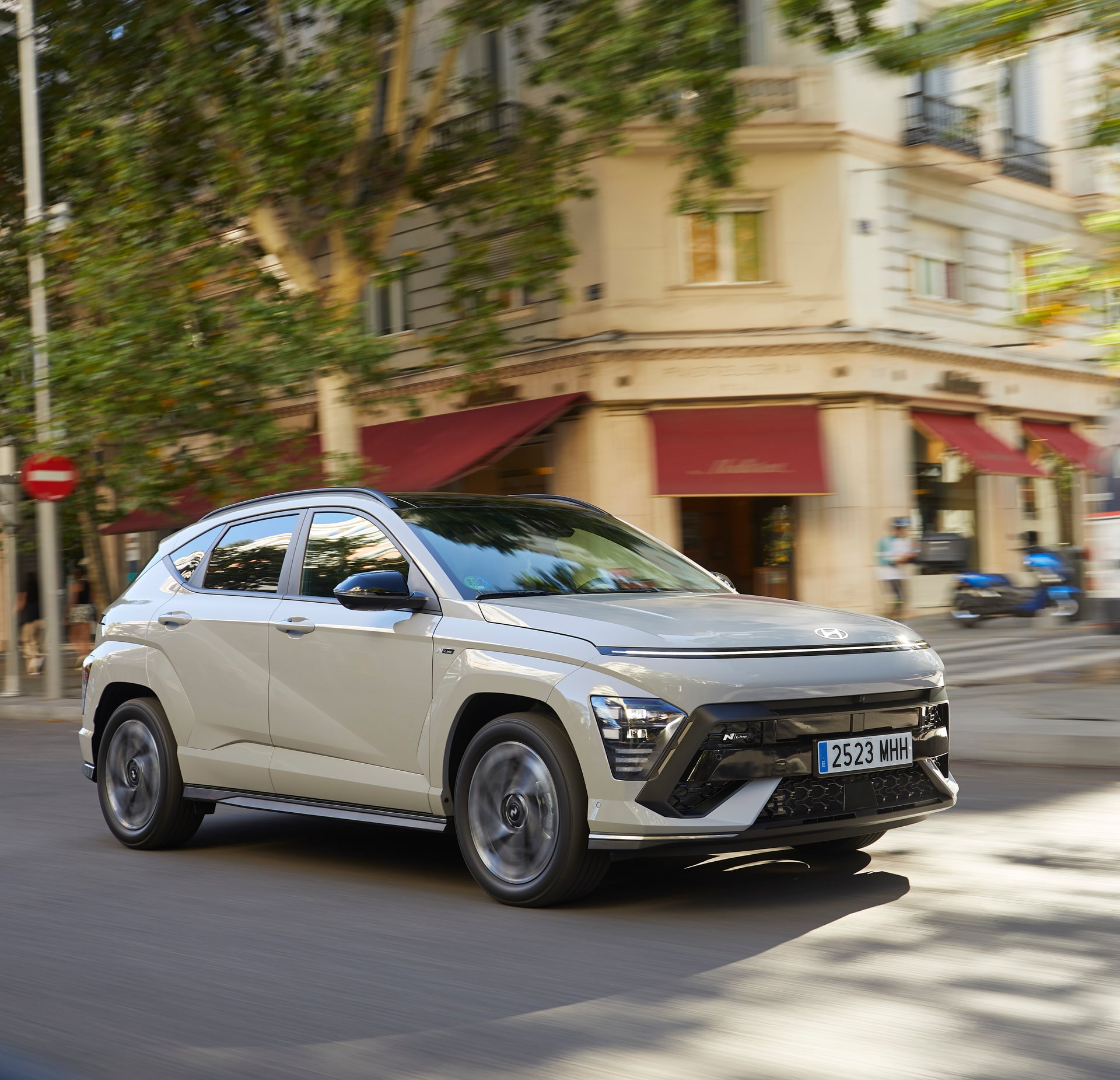
A practical guide to choosing a hybrid compact SUV for the city in Spain in 2026: we compare real-world consumption, boot space and ride comfort across seven key models on the market.
The hybrid compact SUV has become the default urban car in Spain. There is no need to plug it in, the ECO label gets you into the ZBEs in Madrid and Barcelona without any hassle, and real-world city consumption is around figures that ten years ago would have sounded like science fiction for a petrol car. But not all of them perform equally. And choosing badly can be expensive.
What to expect from a hybrid compact SUV for the city in 2026
The segment has matured. Most offerings are now serious self-charging hybrids — not disguised mild hybrids — with combined outputs of 116 to 145 CV, eCVT or multimode gearboxes, and WLTP consumption figures ranging between 4.5 and 5.5 l/100 km. In real urban use, with dense traffic and short trips, the best ones drop below 5 l without effort. The worst approach 6.5 l when the thermostat kicks in.
In our view, the key is not the horsepower. It lies in how the system manages the cold start, how long it stays in electric mode between traffic lights, and whether the combustion engine cuts in abruptly or unnoticed.
Real consumption vs. WLTP: which figures to look at
The WLTP is a starting point, not a promise. In practice, a serious hybrid cuts consumption by up to 30% compared with an equivalent petrol car in the city, but loses its advantage on sustained motorway driving at 120 km/h. If your life involves 40 km a day between home, office and school, look at the WLTP urban cycle and add 10–15%. If you regularly make long journeys, this guide falls short for you — a well-chosen PHEV will interest you more.
Boot space, seats and family life
Here the differences are huge. A Kia Niro comes close to 450 litres. A C-HR stays below 400. And with two ISOFIX seats in the back, the width between the wheel arches matters as much as the gross litres.
Ride comfort on urban journeys
Comfort in town isn’t a matter of expensive suspension. It’s low-speed acoustic insulation, the feel of regenerative braking — hybrids often have a spongy pedal for the first few metres — and visibility at junctions. Thick A-pillars remain the sin of many SUVs.
Toyota C-HR 140H — from €32,900
The aesthetic benchmark of the segment. The fifth-generation hybrid system in the Toyota works with the smoothness of a glove: invisible transitions, immediate response in traffic and urban consumption that drops below 4.8 l/100 km without tricks. The boot is limited, though, and rear visibility is compromised.
| Power kW | Power CV | Top speed | Range | Consumption | Label | Fuel |
|---|---|---|---|---|---|---|
| 103 kW | 140 CV | 170 km/h | ~950 km | 4.9 l/100 km | ECO | Hybrid |
Hyundai Kona HEV — from €28,500
Less radical than the C-HR, more practical in almost everything. Interior spacious for its size, a well-integrated dual screen and a hybrid system that, although it doesn’t reach the refinement of the Toyota, offers very competent consumption figures. In town it ranges between 5.0 and 5.4 l/100 km in real use. The dual-clutch gearbox gives it a feel that is more “like a normal car” than the Japanese eCVTs — some will prefer it.
| Power kW | Power CV | Top speed | Range | Consumption | Label | Fuel |
|---|---|---|---|---|---|---|
| 104 kW | 141 CV | 160 km/h | ~900 km | 5.1 l/100 km | ECO | Hybrid |
Kia Niro HEV — from €29,900
The boot-space king in its segment and one of the most rational options on the market. 451 litres, rear seats usable by adults and excellent efficiency. It doesn’t thrill behind the wheel, but for urban and family use it’s hard to fault. It shares its platform with the Kona but favours more space at the expense of style.
| Power kW | Power CV | Top speed | Range | Consumption | Label | Fuel |
|---|---|---|---|---|---|---|
| 104 kW | 141 CV | 165 km/h | ~1,000 km | 4.8 l/100 km | ECO | Hybrid |
Honda HR-V e:HEV — from €31,500
The e:HEV system in the Honda is, technically, a series-parallel hybrid with a very particular approach: the combustion engine almost always acts as a generator and traction is electric except on the motorway. The result? An electric-car feel at low speeds, remarkable quietness and urban consumption below 5 l. On the motorway it loses some punch and the boot is modest.
| Power kW | Power CV | Top speed | Range | Consumption | Label | Fuel |
|---|---|---|---|---|---|---|
| 96 kW | 131 CV | 170 km/h | ~900 km | 5.2 l/100 km | ECO | Hybrid |
Renault Captur E-Tech Full Hybrid — from €27,900
The most affordable proposal in the group and, to my taste, one of the most interesting in the city. The E-Tech system with its claw clutch always starts in electric mode and chains together urban kilometres with the combustion engine switched off for longer than one would expect. Better finished interior than the previous Captur, although the multimedia software still needs a bit more work.
| Power kW | Power CV | Top speed | Range | Consumption | Label | Fuel |
|---|---|---|---|---|---|---|
| 105 kW | 145 CV | 170 km/h | ~950 km | 4.7 l/100 km | ECO | Hybrid |
Nissan Juke Hybrid — from €28,400
It inherits much of the E-Tech technology of the Renault, but with its own tuning and styling. The Juke remains a very personal-looking car and somewhat tight in the rear, although the hybrid system behaves with notable efficiency in town. Design you either like or you don’t — there’s no middle ground.
| Power kW | Power CV | Top speed | Range | Consumption | Label | Fuel |
|---|---|---|---|---|---|---|
| 105 kW | 143 CV | 166 km/h | ~900 km | 4.9 l/100 km | ECO | Hybrid |
Summary table and urban ranking
Score from 1 to 10 weighing real consumption, boot space, urban comfort and standard equipment.
| Model | Power | Consumption | Boot | Label | From | Score |
|---|---|---|---|---|---|---|
| Toyota C-HR 140H | 140 CV | 4.9 l | 388 l | ECO | €32,900 | 8.6 |
| Hyundai Kona HEV | 141 CV | 5.1 l | 466 l | ECO | €28,500 | 8.4 |
| Kia Niro HEV | 141 CV | 4.8 l | 451 l | ECO | €29,900 | 8.8 |
| Honda HR-V e:HEV | 131 CV | 5.2 l | 319 l | ECO | €31,500 | 8.0 |
| Renault Captur E-Tech | 145 CV | 4.7 l | 422 l | ECO | €27,900 | 8.5 |
| Nissan Juke Hybrid | 143 CV | 4.9 l | 354 l | ECO | €28,400 | 7.9 |
Recommendations by driver profile
Purely urban driver with no family: Toyota C-HR or Honda HR-V e:HEV. Refinement and quietness above the average.
Family with two children and mixed journeys: Kia Niro HEV. It is the most rational of the group; the boot is king.
Tight budget without giving up ECO: Renault Captur E-Tech or Nissan Juke Hybrid. Good consumption, contained price, reasonable equipment.
If you’re looking for something with more seats that is also hybrid, you may want to check the guide to family hybrid SUVs, which moves up a size.
Frequently asked questions
Does a self-charging hybrid SUV need to be plugged in?
No. The system recharges the battery using the combustion engine and regenerative braking. It never needs to be connected to the mains — hence the name “self-charging”.
What real-world consumption can I expect in town with a hybrid SUV in 2026?
Between 4.5 and 5.5 l/100 km in typical urban traffic with normal driving. In winter and on very short trips (under 3 km) it can rise to 6–6.5 l because the engine starts cold more often.
Is a hybrid worth it if I mostly drive on the motorway?
The advantage shrinks. On sustained motorway driving at 120 km/h a hybrid consumes practically the same as a well-sized modern petrol car. If your use is 80% road, a diesel or a PHEV may be more cost-effective.
Does the ECO label allow entry into Madrid Central and Barcelona’s ZBE?
Yes. Self-charging hybrids with an ECO label are allowed into the Low Emission Zones of Madrid and Barcelona under the conditions in force in 2026, although they are not equivalent to the CERO label in terms of regulated parking.


 Peugeot E-208 GTi: a battery-powered toy that revives the spirit of the 1980s sports cars
 New Lexus ES: luxury grows and goes electric
 First contact with the Dacia Sandero Hybrid 155: power and efficiency from €19,890
Deja un comentario