2026 ranking: the 6 most comfortable premium SUVs for long family trips
 Eduardo Molina
6 August 2026
8 min.
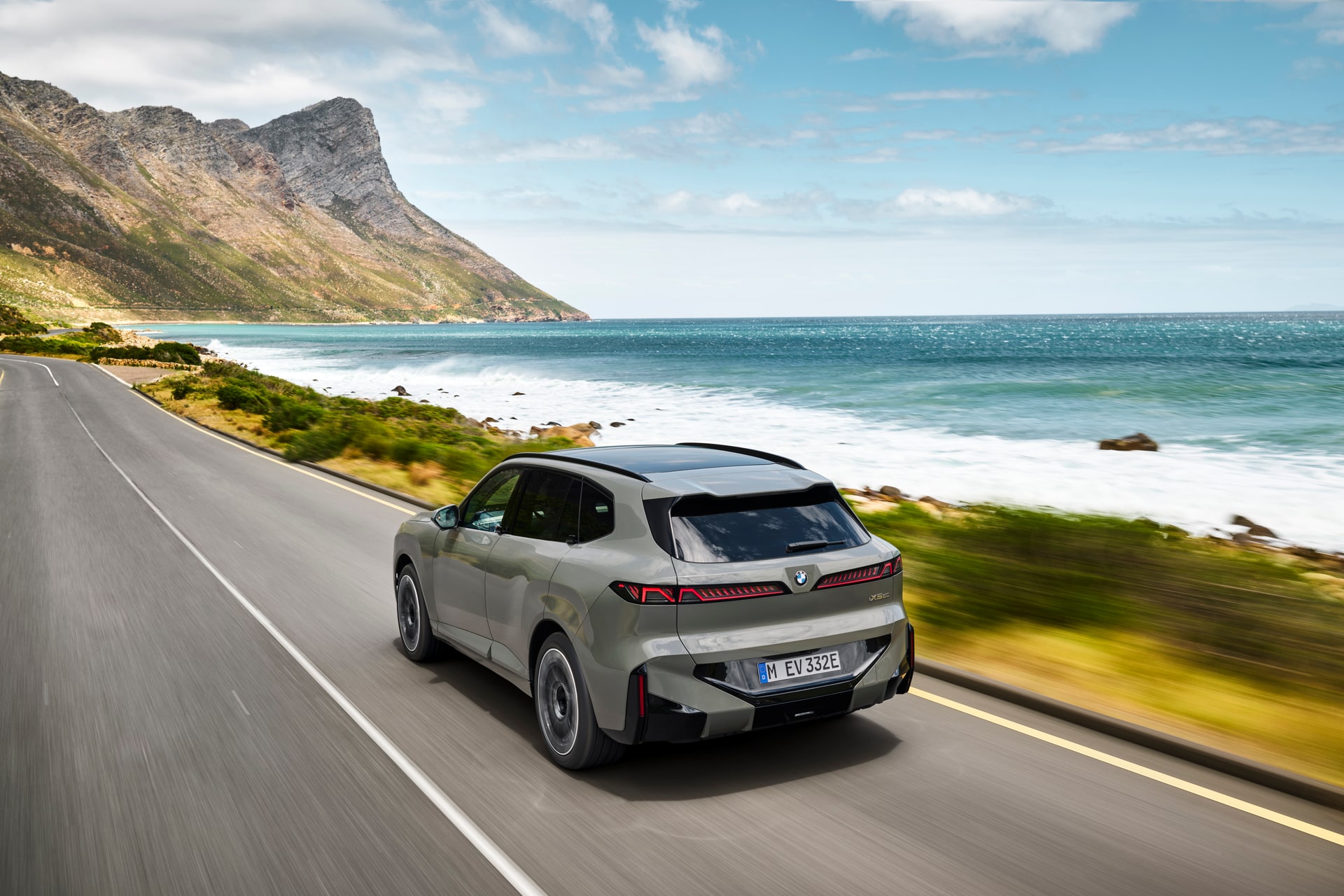
We analyse the six most comfortable premium SUVs for long family trips sold in Spain in 2026. Air suspension, sound insulation, seating and plug-in hybrid range under the spotlight.
Some cars are enjoyed on the bends, others are enjoyed at kilometre 600. Large premium SUVs belong, almost by definition, to the second group: that is where they justify their price, their weight and their consumption. But not all of them get the formula right to the same degree. And when the back seat is full —two children, a dog and the boot packed up to the parcel shelf— the differences between one and another become obvious very quickly.
This ranking is about exactly that. About which most comfortable premium SUVs for long trips you can buy today in Spain, with a current 2026 commercial registration, and why some get it more right than others once the journey goes past three hours.
What defines a comfortable premium SUV for long trips
It is not one single thing, it is several working together. Air suspension is probably the most decisive factor: it filters the expansion joints on the AP-7 just as it absorbs the potholes on the road into the village. Sound insulation weighs almost as much —laminated glass, double door seals, tyres with foam inserts— because passenger fatigue arrives through the ears before it arrives through the back.
Then there are the rear seats: reclining, with their own climate control, with real legroom and backrests that do not feel like a bench. The boot, obviously, has to swallow everything. And in 2026, plug-in hybrid range matters: if the car lets you do 80–100 km on electric before drawing on petrol, a weekend Madrid–Sierra de Gredos trip is practically done without refuelling.
On top of all that come long-distance ADAS, which on the motorway relieve the driver of the most monotonous part. And yes, perceived quality counts. A plastic that creaks at five hours is a plastic you will end up hating.
Methodology: how we scored
We have assessed six variables out of 10: ride comfort, sound insulation, rear seats/third row, boot, plug-in hybrid range and ADAS. All models are PHEV or hybrid versions currently on sale at Spanish dealerships. Prices are indicative, “from”, including VAT and taxes.
Mercedes-Benz GLE 450e — from €96,500
In our view the GLE remains the benchmark in the segment when the conversation is about pure comfort. The AIRMATIC air suspension, standard on the PHEV version, works wonders on Spanish asphalt, the kind that alternates perfect stretches with badly patched ones. The front seats with massage and ventilation functions are not a whim: on a non-stop Madrid–Málaga run, you notice them.
The PHEV is homologated at around 110 km electric WLTP, which in practice translates to roughly 85–90 km real-world. Enough for a week of urban journeys without starting the combustion engine. The third row exists as an option, although it is more of an emergency seat than a daily one —that is what the GLS is for, but that is another price bracket altogether.
| Power kW | Power CV | Top speed | Electric range | Consumption | Label | Fuel |
|---|---|---|---|---|---|---|
| 280 | 381 | 250 km/h | 110 km | 0.8 l/100 km | ZERO | PHEV |
BMW X5 xDrive50e — from €92,900
The X5 plays a different card. It is still a car with dynamic character —you can tell Munich has not quite let go of that heritage— but the move to the PHEV with a 25.7 kWh usable battery has reshuffled priorities. Homologated electric range of around 100 km, noticeably improved sound insulation compared with the previous generation, and a driving position that is enjoyable.
That said, the full air suspension remains optional on some packs. Ask for it. Without it, the X5 is still enjoyable, but it no longer competes in the same comfort league as the GLE. With it, the gap narrows considerably. Good space in seats 2 and 3, although the X5’s third row is not among the best in the group.
| Power kW | Power CV | Top speed | Electric range | Consumption | Label | Fuel |
|---|---|---|---|---|---|---|
| 360 | 489 | 250 km/h | 100 km | 1.0 l/100 km | ZERO | PHEV |
Audi Q7 60 TFSI e — from €94,200
The Q7 is probably the best real seven-seat SUV in the group. Its third row is usable by adults on short trips and by children without complaint on long ones. The boot, with all seven seats in use, remains practical —something not everyone can say. Interior of very solid quality, top-tier sound insulation and adaptive air suspension as standard on the PHEV version.
It is starting to show its age next to the renewed GLE, yes. And the MMI interface is not the most agile on the market. But as a seven-seat family car for travelling, it remains a serious argument.
| Power kW | Power CV | Top speed | Electric range | Consumption | Label | Fuel |
|---|---|---|---|---|---|---|
| 340 | 462 | 240 km/h | 85 km | 1.9 l/100 km | ZERO | PHEV |
Volvo XC90 T8 Recharge — from €87,500
The Swedish one is something else. Nordic seat philosophy, warm materials, passenger orientation. The XC90’s third row is one of the best designed in the segment: decent access and acceptable backrest support. Very good sound insulation and a calm driving style that suits the spirit of the car. The new Volvo EX90 and the developments hinted at by the EX60 will mark the 100% electric route, but for family travel the plug-in hybrid XC90 still makes a lot of sense.
Electric range somewhat tighter than the GLE or X5 —around 75 km WLTP— and the starting price is the most competitive in the group. Debatable whether it compensates against the German rivals in pure dynamic response; for family comfort, it does not need to.
| Power kW | Power CV | Top speed | Electric range | Consumption | Label | Fuel |
|---|---|---|---|---|---|---|
| 335 | 455 | 180 km/h | 75 km | 1.3 l/100 km | ZERO | PHEV |
Range Rover Sport P550e — from €118,700
A different price scale and a different degree of isolation from the outside world. The Sport is the car in the group with the most pronounced “capsule” feeling. Outstanding sound insulation, air suspension with active roll control, front seats that feel tailor-made. The high, clear driving position helps a great deal on long journeys.
The PHEV reaches 113 km electric WLTP, a leading figure for the segment. Trade-offs: it is five-seat —forget the third row—, the boot is generous but not titanic, and the brand’s British after-sales service remains its outstanding weakness.
| Power kW | Power CV | Top speed | Electric range | Consumption | Label | Fuel |
|---|---|---|---|---|---|---|
| 404 | 550 | 240 km/h | 113 km | 0.8 l/100 km | ZERO | PHEV |
Porsche Cayenne E-Hybrid — from €104,400
The Cayenne is the sportiest in the group. It is also surprisingly comfortable when fitted with adaptive air suspension —optional, but almost mandatory for family use. Renewed interior with dual screens and very high quality. Five seats, no seven-seat option.
As a long-distance car it works very well; as a family car with school-age children and a dog, it falls half a step behind the Q7 or XC90 in versatility. But if you are looking for a premium for two adults and two teenagers that can enjoy the mountain pass as much as the motorway, it has few rivals.
| Power kW | Power CV | Top speed | Electric range | Consumption | Label | Fuel |
|---|---|---|---|---|---|---|
| 346 | 470 | 254 km/h | 90 km | 1.5 l/100 km | ZERO | PHEV |
Comparison table and final score
| Model | Comfort | Insulation | Seats | Boot | PHEV range | ADAS | Total /10 |
|---|---|---|---|---|---|---|---|
| Mercedes GLE 450e | 9.5 | 9 | 8 | 8.5 | 9 | 9 | 8.8 |
| Range Rover Sport P550e | 9.5 | 9.5 | 7 | 8 | 9.5 | 8.5 | 8.7 |
| Audi Q7 60 TFSI e | 8.5 | 9 | 9.5 | 9.5 | 7.5 | 8.5 | 8.7 |
| BMW X5 xDrive50e | 8.5 | 8.5 | 8 | 8 | 9 | 9 | 8.5 |
| Porsche Cayenne E-Hybrid | 8.5 | 8.5 | 7 | 7.5 | 8 | 8.5 | 8.0 |
| Volvo XC90 T8 | 8 | 9 | 9 | 9 | 7 | 8.5 | 8.4 |
Verdict by user profile
For a large family with seven real seats: Audi Q7 60 TFSI e. Nothing in the group handles the third-row-plus-boot equation better.
For maximum motorway comfort: Mercedes GLE 450e. AIRMATIC as standard, reference-level seats and a maturity you feel on every kilometre.
For a tighter budget within premium: Volvo XC90 T8. It is the most affordable, and its cabin philosophy still holds up.
For those who want to feel isolated from the world: Range Rover Sport P550e. A different dimension of isolation, although its price is too.
For those who do not give up driving enjoyment: Porsche Cayenne E-Hybrid.
For the dynamic-comfort middle ground: BMW X5 xDrive50e, especially with full air suspension.
Frequently asked questions
Which is the most comfortable premium SUV for long family trips in 2026?
The Mercedes-Benz GLE 450e, thanks to standard AIRMATIC air suspension, its massage and ventilated seats, and a benchmark-level sound insulation in the segment. The Range Rover Sport P550e challenges it on acoustic isolation, but costs considerably more.
Which premium SUV offers the best third row for travelling with seven people?
The Audi Q7 has the most usable third row in the group, with real space for adults on short trips and children on long ones. The Volvo XC90 is the more logical alternative if seat design and accessibility are the priority.
What real electric range do large premium PHEVs offer in 2026?
WLTP homologated figures range from 75 to 113 km, with real-world values between 60 and 90 km depending on driving style, temperature and climate control use. The Range Rover Sport P550e and the Mercedes GLE 450e lead on the homologated figure.
Is the extra cost of air suspension on these SUVs worth it?
If the use is mainly long family trips, yes, clearly. The difference from a conventional spring is noticeable from the first kilometres on the motorway and on uneven surfaces. On the BMW and Porsche it is usually optional; on the Mercedes and Audi PHEV, standard or almost so.
 The seven finalists for the 2027 European Car of the Year (COTY) are exclusively electric
 Peugeot E-208 GTi: a battery-powered toy that revives the spirit of the 1980s sports cars
 New Lexus ES: luxury grows and goes electric
Deja un comentario