Ranking 2026: the 6 family SUVs with the best EuroNCAP score and the most complete standard ADAS
 Eduardo Molina
6 August 2026
7 min.
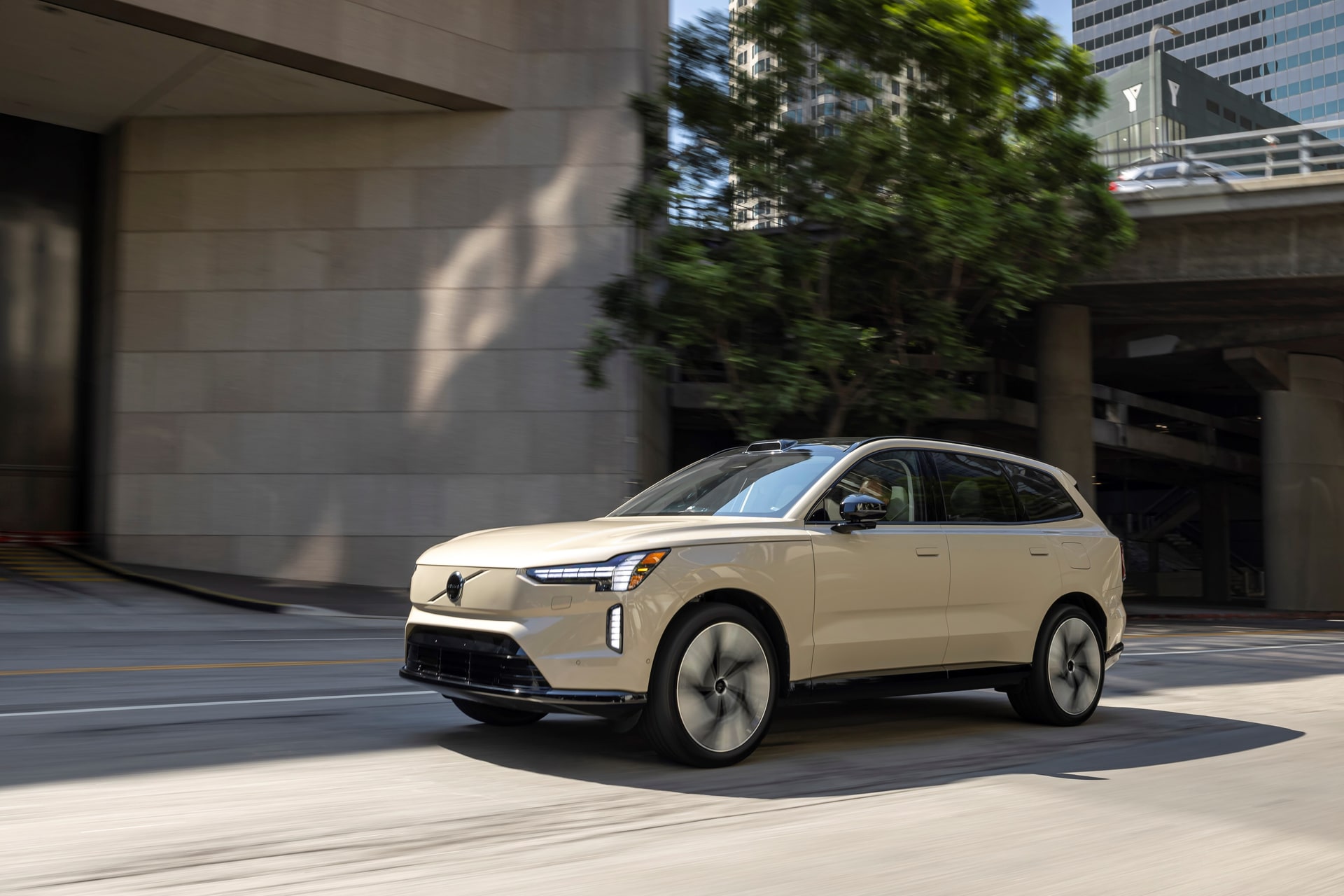
We analyse the six family SUVs with the best EuroNCAP 2026 rating and the most complete standard ADAS equipment. An editorial ranking designed for those who prioritise active safety without paying extras.
Buying a family SUV in 2026 has little to do with what it was five years ago. The GSR2 regulation has raised the minimum bar for mandatory assistance systems, EuroNCAP has tightened its protocols —it now penalises ADAS systems that switch off on their own or work only partially— and brands stake their reputation on every test. But there is a nuance almost nobody mentions: five stars are not enough. What separates a family SUV that is truly safe from one that only seems to be is the standard ADAS equipment, not an optional 2,400-euro premium pack.
This ranking focuses on exactly that. Official EuroNCAP score cross-referenced with the level of assistance included in the entry trim. No tricks.
How we built the ranking: EuroNCAP + standard ADAS
We weighted four variables: the overall EuroNCAP score (under the current 2023-2025 protocol), the breakdown by category —adult occupant, child occupant, pedestrian, safety assist—, the standard ADAS equipment on the base trim, and the consistency between what the system promises and what it does on real roads. Because a lane-keeping assistant that bounces between lines does not count as an assistant, whatever the brand says.
The six models that follow are on sale in Spain today, with official specifications and real availability at dealerships.
1. Volvo EX90 — from €96,500
This was to be expected. Volvo has spent decades building its story around safety, and with the EX90 it has set the bar where no one else reaches: five stars with very high scores for adult occupant and child protection, and —the detail that makes the difference— LiDAR as standard on every version. Not just the top trim. Every version.
The Pilot Assist package, automatic emergency braking with cyclist and pedestrian detection at junctions, lane change assist, 360° camera and an interior camera driver attention monitor come at no extra cost. Behind the wheel it feels like a car that watches over you without fussing, something —in my view— very few rivals manage.
| Power kW | Power CV | Top speed | Range | Consumption | Label | Fuel |
|---|---|---|---|---|---|---|
| 300 kW | 408 CV | 180 km/h | 614 km | 19.9 kWh/100 km | ZERO | Electric |
2. Hyundai Santa Fe — from €48,900
The 2026 Santa Fe with its disruptive design has impressed in crash testing. The reinforced structure and seven airbags —including the central one between the front seats— earned it a very high child protection score, relevant for a seven-seat family vehicle.
Hyundai SmartSense comes fully equipped as standard: adaptive cruise control with Stop & Go, level 2 motorway driving assistant, rear cross-traffic detection with braking, safe exit assist for passengers and blind-spot monitoring with display in the instrument cluster. The remote parking assistant for tight spaces remains optional, though. A minor detail.
| Power kW | Power CV | Top speed | Range | Consumption | Label | Fuel |
|---|---|---|---|---|---|---|
| 158 kW | 215 CV | 190 km/h | 800 km (tank) | 6.4 l/100 km | ECO | Hybrid |
3. Kia EV9 — from €73,550
The Santa Fe’s electric cousin plays in a different league in size and presence, but shares a great deal of its technological base. EuroNCAP awarded it five stars with an especially high safety-assist breakdown. Highway Driving Assist 2 —automatic lane change just by indicating— comes as standard from the Earth trim.
Remote parking, a high-resolution peripheral view camera, seven airbags and a frontal collision warning system that recognises motorcycles —not all rivals do— complete an equipment list that, on paper, is among the most rounded on the market. In practice, HDA2 is cautious on tight bends, which you appreciate in a family vehicle weighing 2.5 tonnes.
| Power kW | Power CV | Top speed | Range | Consumption | Label | Fuel |
|---|---|---|---|---|---|---|
| 150 kW | 204 CV | 185 km/h | 563 km | 20.2 kWh/100 km | ZERO | Electric |
4. Toyota RAV4 — from €39,900
The RAV4 is the pragmatic one of the group. Five EuroNCAP stars, third-generation Toyota Safety Sense that has become noticeably more refined and —the point that puts it in this ranking— absolutely everything as standard from the most modest trim. Automatic emergency braking with daytime and night-time pedestrian detection, cyclists, active lane-keeping assist, road sign recognition, predictive adaptive cruise control that reads bends and speed limits.
Is it the most sophisticated? No. The RAV4’s lane assist feels a step behind Hyundai on long motorway runs. But for what it costs, the package is hard to beat. The details of this comparison are expanded in our analysis against the Honda CR-V.
| Power kW | Power CV | Top speed | Range | Consumption | Label | Fuel |
|---|---|---|---|---|---|---|
| 160 kW | 218 CV | 180 km/h | 950 km (tank) | 5.8 l/100 km | ECO | Hybrid |
5. Mercedes-Benz GLC — from €66,500
The new-generation GLC combines a body with highly engineered energy absorption and the Driving Assistance package as standard on most Spanish trims. Improved automatic emergency braking, active steering assist, active lane change assist and exit warning. Driving Assistance Plus —with predictive cruise control and traffic assist— remains optional, and here Mercedes loses some ground against Kia or Hyundai.
Even so, the Pre-Safe Impulse Side system, which moves the occupant toward the centre of the cabin ahead of an imminent side impact, is one of those technologies that only Mercedes offers in this segment.
| Power kW | Power CV | Top speed | Range | Consumption | Label | Fuel |
|---|---|---|---|---|---|---|
| 145 kW | 197 CV | 219 km/h | 100 km electric | 0.8 l/100 km | ZERO | PHEV |
6. BMW iX3 — from €68,900
The iX3 debuts the Neue Klasse platform and with it an electronic architecture rewritten from scratch. EuroNCAP awards it five stars with an especially high assistance score. Driving Assistant Professional comes as standard on the M Sport trim: motorway steering and guidance assistant, gaze-activated lane change —yes, with your eyes— and a manoeuvre assistant that memorises up to 200 metres of路径.
Is gaze-activated lane change essential? It is questionable whether it pays off day to day. But as an engineering exercise, it shows where the segment is heading.
| Power kW | Power CV | Top speed | Range | Consumption | Label | Fuel |
|---|---|---|---|---|---|---|
| 345 kW | 469 CV | 210 km/h | 805 km | 16.5 kWh/100 km | ZERO | Electric |
Ranking summary table
| Position | Model | EuroNCAP | Standard ADAS | Price from | Score /10 |
|---|---|---|---|---|---|
| Volvo EX90 | 5★ | 9.5 | €96,500 | 9.4 | |
| Hyundai Santa Fe | 5★ | 9.0 | €48,900 | 9.2 | |
| Kia EV9 | 5★ | 9.0 | €73,550 | 9.0 | |
| Toyota RAV4 | 5★ | 8.5 | €39,900 | 8.8 | |
| Mercedes GLC | 5★ | 8.0 | €66,500 | 8.6 | |
| BMW iX3 | 5★ | 8.5 | €68,900 | 8.5 |
What EuroNCAP looks at in 2026 that it did not before
The current protocol gives more weight to complex urban scenarios: junctions with cyclists, pedestrians stepping out between parked cars, right turns across oncoming traffic. It also penalises overly intrusive ADAS systems —those that beep at everything end up being switched off by the driver, and a switched-off ADAS saves no lives—. That is why manufacturers such as Volvo or Hyundai, which have spent years refining their calibration, come out ahead.
Frequently asked questions
Which is the safest family SUV in 2026 according to EuroNCAP?
The Volvo EX90 leads the combined ranking for its EuroNCAP score and for including LiDAR as standard on every version, something no direct competitor offers in Spain today.
Which family SUV has the most standard ADAS without paying extras?
The Toyota RAV4 is unbeatable on equipment-to-price ratio: the entire Safety Sense 3 package comes from the entry trim, including predictive adaptive cruise control and night-time pedestrian-recognition braking.
Is LiDAR essential to earn five EuroNCAP stars?
No. Most five-star SUVs use a combination of camera and radar. LiDAR adds precision in low-visibility conditions and detection of stationary objects, but it is not a requirement for the top rating.
Do Chinese SUVs such as MG or BYD feature in this ranking?
Some Chinese models reach five EuroNCAP stars, but when it comes to complete standard ADAS and full availability in Spain during 2026, they do not yet rival the six selected models. The picture will probably change in the coming years.
 Peugeot E-208 GTi: a battery-powered toy that revives the spirit of the 1980s sports cars
 New Lexus ES: luxury grows and goes electric
 First contact with the Dacia Sandero Hybrid 155: power and efficiency from €19,890
Deja un comentario