Hybrid Cars Family Buying Guides SUV
How to Choose a Premium Family Hybrid SUV Without Overpaying in 2026
 Dani Montesinos
23 June 2026
6 min.
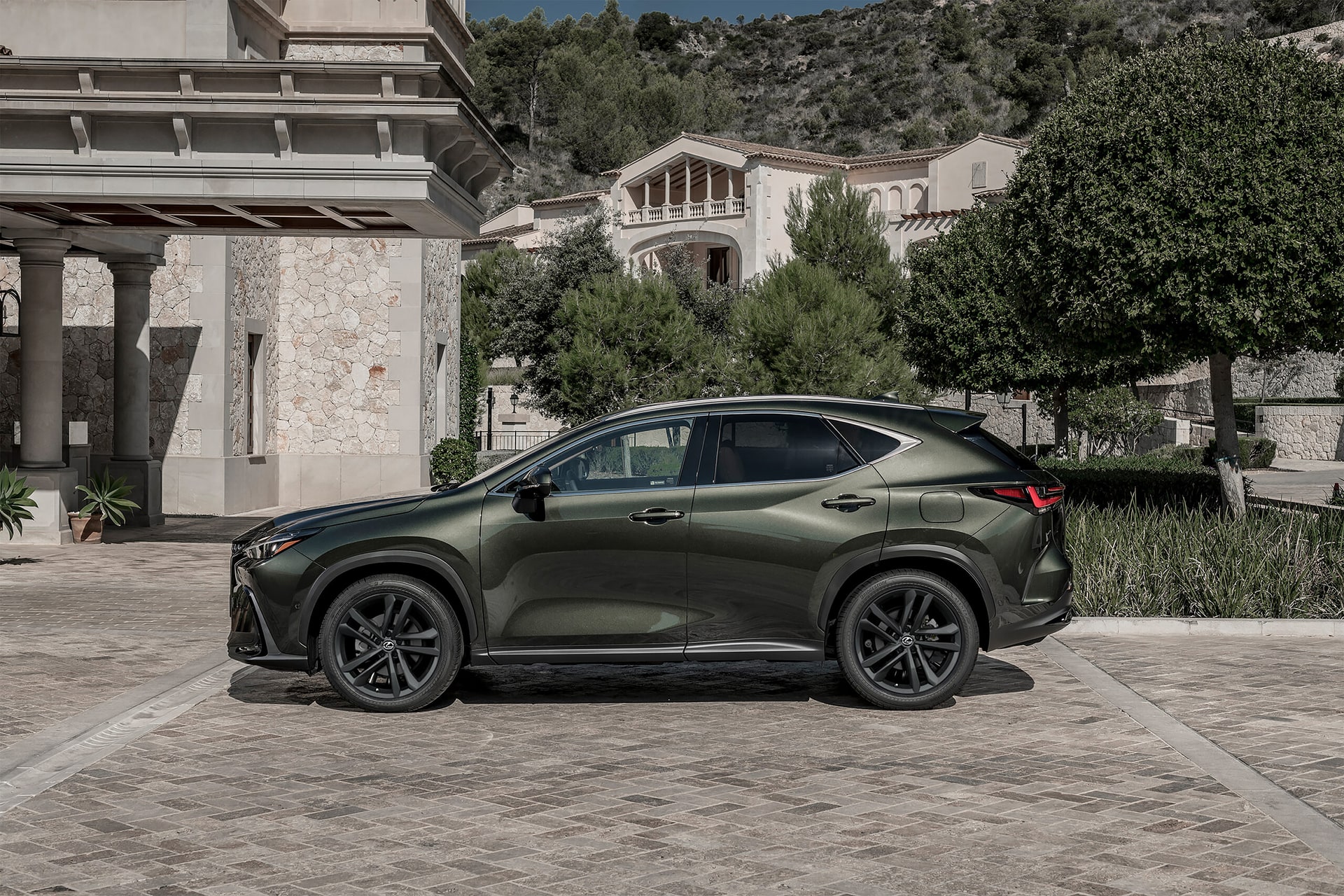
A guide to choosing the best premium family hybrid SUV in Spain in 2026: objective criteria, total cost over 5 years and recommended models.
The premium family hybrid SUV segment in 2026 is enjoying a level of technical and aesthetic maturity that seemed unlikely five years ago. Families who once looked to German flagship models now find offerings with a premium feel, serious electrification and moderate prices. In a saturated market, the key is knowing how to filter: not everything that shines is premium, and not everything premium is worth its premium price.
Why a premium family hybrid SUV is the best buy in 2026
The combination of an ECO or CERO label, refined powertrains and well-finished cabins makes the electrified SUV the most rational choice for a Spanish family covering between 15,000 and 25,000 km a year. The full hybrid (HEV) removes charging anxiety; the plug-in hybrid (PHEV) allows daily trips in pure electric mode and free access to ZBE low-emission zones. In both cases, the cost per kilometre drops noticeably compared with an equivalent diesel.
What today defines a hybrid SUV as “premium” without paying a premium
Affordable premium design is not measured by logos. It is measured by the quality of materials in touch areas, acoustic refinement, multi-link rear suspension, standard level 2 ADAS equipment, a multimedia system with OTA updates and solid after-sales service. An SUV at €45,000 with well-executed synthetic leather upholstery, a dual screen and a head-up display can offer a superior experience to a basic German car at €60,000.
Key technical criteria: WLTP consumption, combined power and electric range
For a family HEV, look for WLTP consumption below 6.5 l/100 km. For a family plug-in hybrid SUV, demand a real-world electric range above 60 km (homologated >70 km WLTP) and a usable battery of at least 13 kWh. Combined power should be between 180 and 310 CV to move 1,900–2,200 kg with five occupants and luggage comfortably.
Space, modularity and the question of 7 seats
If the third row is for occasional use (grandparents, school friends), an SUV of 4.80–4.90 m with a 5+2 configuration will do. If it will be used daily, a C/D-SUV of 4.90 m with a proper third row is advisable. The recommended minimum boot capacity with 5 seats: 580 litres.
Standard ADAS equipment: what it must have in 2026
Automatic emergency braking in urban and interurban settings, adaptive cruise control with Stop&Go, active lane keeping, blind-spot detection, 360º camera and traffic sign recognition. Below this list, the car is not premium no matter whether it costs €50,000.
Total cost of ownership over 5 years: the maths nobody tells you
Add up the purchase price, financing, comprehensive insurance, fuel/electricity, official maintenance, tyres and depreciation. A well-used PHEV (charged daily) can lower the TCO by 18–22% compared with an equivalent HEV in urban and peri-urban profiles. If it is never plugged in, the opposite happens.
MOVES III Plan and current aid in Spain
The MOVES III Plan remains active in 2026 with aid of up to €7,000 for PHEVs with scrappage, subject to a minimum electric range of 30 km WLTP and a price before taxes below €45,000. Adding the 15% personal income tax deduction in regions where it applies improves the case for the plug-in.
The most recommended premium family hybrid SUVs under €55,000
Toyota RAV4 Plug-in — from €46,500
The global HEV/PHEV benchmark. Impeccable mechanics, record reliability and a warranty of up to 10 years. Functional rather than spectacular interior, but flawless in use.
| Power kW | Power CV | Top speed | Electric range | WLTP consumption | Label | Fuel |
|---|---|---|---|---|---|---|
| 197 kW | 268 CV | 180 km/h | 75 km | 1.4 l/100 km | CERO | PHEV |
Lexus NX 350h — from €55,350
The entry point to the Japanese premium universe. Handcrafted finishes, outstanding quietness at cruising speed and the best after-sales service in the segment according to J.D. Power. Pure HEV, no plug, but real-world consumption of around 6 l/100 km.
| Power kW | Power CV | Top speed | Range | WLTP consumption | Label | Fuel |
|---|---|---|---|---|---|---|
| 179 kW | 243 CV | 190 km/h | 1,050 km | 5.7 l/100 km | ECO | Hybrid |
Kia Sorento PHEV — from €53,645
The reference 7-seat hybrid SUV with the best value for money. 4.81 m long, a usable third row, a 7-year warranty and a level of equipment that outclasses more expensive proposals.
| Power kW | Power CV | Top speed | Electric range | WLTP consumption | Label | Fuel |
|---|---|---|---|---|---|---|
| 195 kW | 265 CV | 193 km/h | 57 km | 1.6 l/100 km | CERO | PHEV |
Hyundai Santa Fe PHEV — from €49,910
Bold design, a premium lounge-style cabin with two curved screens and materials bordering on aspirational. Seven genuine seats and HTRAC all-wheel drive.
| Power kW | Power CV | Top speed | Electric range | WLTP consumption | Label | Fuel |
|---|---|---|---|---|---|---|
| 211 kW | 288 CV | 206 km/h | 54 km | 1.6 l/100 km | CERO | PHEV |
Mazda CX-60 PHEV — from €57,299
Rear-wheel drive, 2.5 naturally aspirated engine plus electric motor, interior with fine woods and nappa leather upholstery. The most driver-focused option in the group.
| Power kW | Power CV | Top speed | Electric range | WLTP consumption | Label | Fuel |
|---|---|---|---|---|---|---|
| 241 kW | 327 CV | 200 km/h | 63 km | 1.4 l/100 km | CERO | PHEV |
Skoda Kodiaq iV — from €51,800
The sensible European choice. 7 seats, MQB Evo platform, perceived German quality and the most intuitive infotainment system in the segment.
| Power kW | Power CV | Top speed | Electric range | WLTP consumption | Label | Fuel |
|---|---|---|---|---|---|---|
| 150 kW | 204 CV | 210 km/h | 117 km | 1.5 l/100 km | CERO | PHEV |
Family hybrid SUV comparison: summary table and score
| Model | Price from | CV | Electric range | Seats | Label | Warranty | Score /10 |
|---|---|---|---|---|---|---|---|
| Toyota RAV4 PHEV | €46,500 | 268 | 75 km | CERO | 10 years | 9.0 | |
| Lexus NX 350h | €55,350 | 244 | — | ECO | 10 years | 8.7 | |
| Kia Sorento PHEV | €53,645 | 265 | 57 km | 7 | CERO | 7 years | 9.1 |
| Hyundai Santa Fe PHEV | €49,910 | 288 | 54 km | 7 | CERO | 5 years | 8.9 |
| Mazda CX-60 PHEV | €57,299 | 327 | 63 km | CERO | 6 years | 8.5 | |
| Skoda Kodiaq iV | €51,800 | 204 | 117 km | 7 | CERO | 4 years | 9.2 |
Recommendations by family usage profile
- Urban family with a garage space and home charging: Skoda Kodiaq iV or Kia Sorento PHEV.
- Family that prioritises reliability and low maintenance: Toyota RAV4 PHEV or Lexus NX 350h.
- Family with a travelling spirit and seven seats: Hyundai Santa Fe PHEV.
- Demanding driver who does not need a third row: Mazda CX-60 PHEV.
Typical mistakes when choosing a premium family hybrid SUV
Buying a PHEV without a real possibility of plugging it in daily; paying for cosmetic finishes while skipping complete ADAS; ignoring the cost of 20- or 21-inch tyres; underestimating depreciation of brands with a weak dealer network.
Frequently asked questions
What is the best premium family hybrid SUV for value for money in Spain in 2026?
The Skoda Kodiaq iV, thanks to its 113 km electric range, seven seats and a starting price below €49,000, is the most balanced proposal. If reliability is the priority, the Toyota RAV4 PHEV is the most solid alternative.
Is a PHEV worth it if I can’t charge it at home?
No. Without regular charging, a PHEV consumes more than an equivalent HEV because of the extra weight of the battery. In that scenario, opt for an Lexus NX 350h or an Toyota RAV4 HEV.
Which MOVES III Plan aid applies in 2026?
Up to €7,000 with scrappage for PHEVs with more than 30 km of WLTP electric range and a price excluding VAT below €45,000. Some regions add extra aid.
How many years should a premium family hybrid SUV be kept to amortise it?
Between 5 and 7 years. Beyond that, depreciation and the cost of maintaining batteries and electronic components reduce its economic appeal compared with renewing it.


 Peugeot E-208 GTi: a battery-powered toy that revives the spirit of the 1980s sports cars
 New Lexus ES: luxury grows and goes electric
 First contact with the Dacia Sandero Hybrid 155: power and efficiency from €19,890
Deja un comentario