How to Choose a Compact PHEV SUV for Urban Use in 2026: Electric Range, AC Charging and Real-World Consumption
 Dani Montesinos
23 June 2026
7 min.
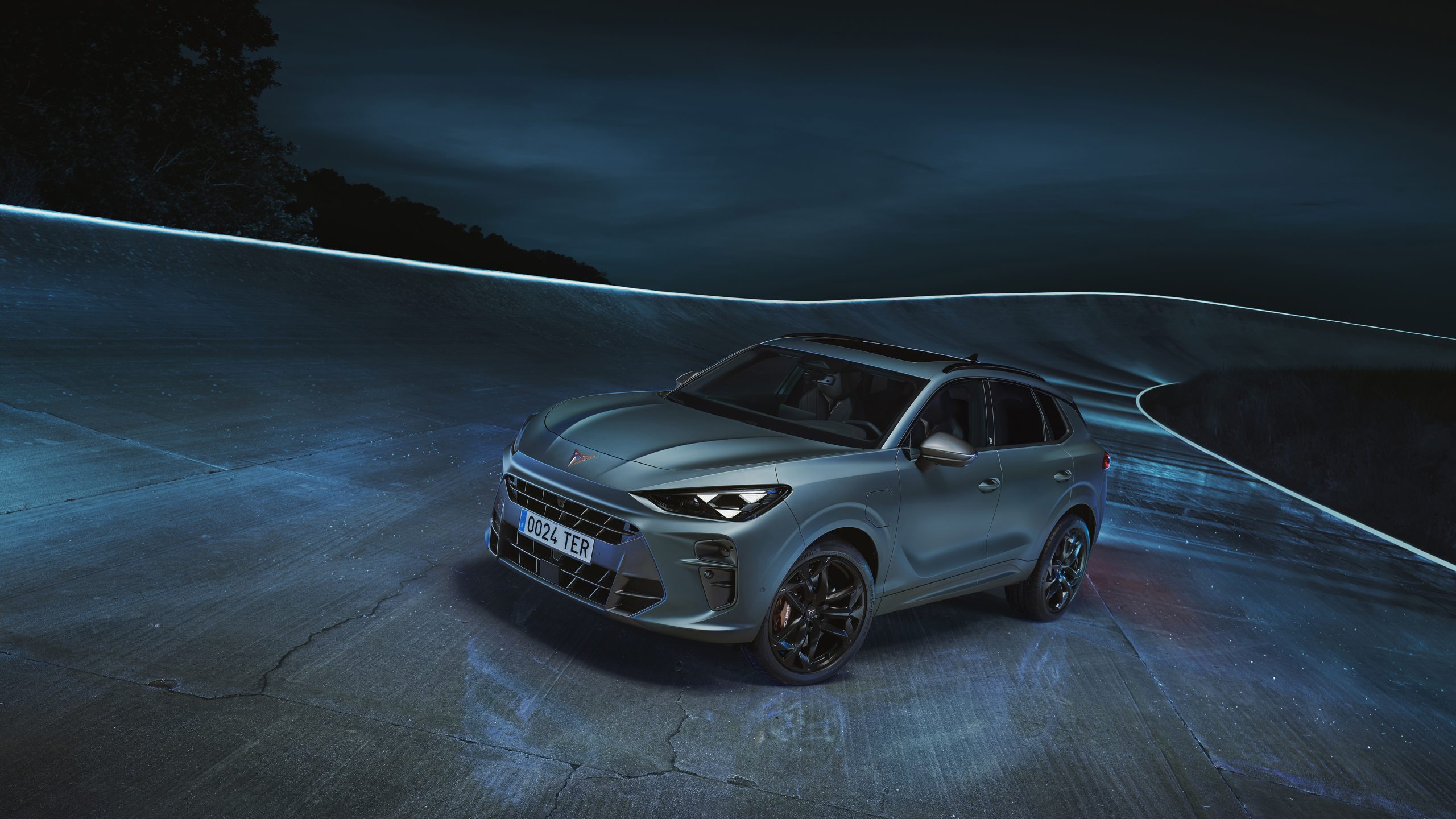
A guide to choosing the best urban compact PHEV SUV for 2026 in Spain, focusing on electric range, AC charging power and real-world consumption with the battery depleted.
In 2026 the compact PHEV SUV is enjoying its most interesting moment. The second generation of plug-in hybrid platforms has pushed batteries beyond 19-25 kWh usable, has made 11 kW on-board AC chargers the norm and has even begun to incorporate DC fast charging. For the Spanish urban driver —ZBE low-emission zones in Madrid or Barcelona, a daily commute of 30-50 km, a garage with a plug— the plug-in hybrid has stopped being a compromise and has become the most rational option between the combustion engine and the pure electric car.
This guide approaches the decision from three verifiable angles: real-world electric range (not just WLTP), AC charging power of the on-board charger and real consumption with the battery depleted. On these pillars we build the ranking of the best urban compact PHEV SUV for 2026 available in Spain.
Why a PHEV makes sense in the city in 2026
The urban plug-in hybrid SUV performs where a diesel struggles and where a pure electric car still requires planning. With 80-100 km of WLTP electric range (60-80 km effective in winter), most urban journeys are covered in zero-emission mode, without giving up weekend trips. CERO label from the DGT, free access to Madrid Central and to Barcelona’s ZBE, and a combined consumption that, well managed, drops below 2 l/100 km on an urban pattern.
The three technical axes that define a good urban PHEV
WLTP versus real electric range
The PHEV electric range homologated in 2026 ranges from 80 to 130 km WLTP. The practical rule: deduct 20-25% in mild mixed use and up to 35% in winter with heating. A PHEV rated at 100 km should deliver 70 real km in the city.
AC charging power of the on-board charger
The AC charging for plug-in SUVs makes the difference between charging in 2 h or in 6 h. The desirable standard in 2026 is 11 kW three-phase; the minimum acceptable is 7.4 kW single-phase. Below 3.7 kW —still present in some models— the car loses much of its sense.
Real consumption with the battery depleted
The real consumption of PHEV SUVs without battery is the Achilles’ heel of the segment. Reasonable figures are 6.5-7.5 l/100 km in mixed cycle; above 8.5 l/100 km the system is poorly sized or the car is too heavy for its combustion engine.
2026 ranking: the nine compact PHEV SUVs to consider
Cupra Terramar VZ e-Hybrid — from €52,210
The Terramar debuts the MQB Evo platform with a 25.7 kWh gross battery, offering up to 122 km WLTP electric and an 11 kW AC charger. In practice, 85-90 urban km. 50 kW DC charging as a differentiating argument. Consumption with empty battery: 6.8 l/100 km.
| Power kW | Power CV | Top speed | Electric range | Consumption | Label | Fuel |
|---|---|---|---|---|---|---|
| 200 | 272 | 215 km/h | 117 km WLTP | 1.7 l/100 km | CERO | PHEV |
Volkswagen Tiguan eHybrid — from €51,655
It shares its mechanics with the Terramar but with a more conservative approach. 19.7 kWh net, 120 km WLTP, 11 kW AC charger and 50 kW DC. Its consumption with the battery depleted (6.9 l/100 km) and its refinement make it the premium generalist benchmark.
| Power kW | Power CV | Top speed | Electric range | Consumption | Label | Fuel |
|---|---|---|---|---|---|---|
| 130 | 177 | 215 km/h | 119 km WLTP | 1.6 l/100 km | CERO | PHEV |
Peugeot 3008 Hybrid 4 — from €37,130
All-wheel drive, 225 CV and a design that remains the most daring in the segment. More modest battery (14.2 kWh net) and 7.4 kW AC charger. Real electric range close to 45 km, consumption with empty battery somewhat high (7.8 l/100 km).
| Power kW | Power CV | Top speed | Electric range | Consumption | Label | Fuel |
|---|---|---|---|---|---|---|
| 165 | 225 | 235 km/h | 65 km WLTP | 2.4 l/100 km | CERO | PHEV |
Kia Sportage PHEV — from €43,200
The Korean pairing remains one of the most balanced. 13.8 kWh, 70 km WLTP, 7.2 kW AC charger. Real consumption with empty battery held to 6.7 l/100 km thanks to the 1.6 T-GDi. Seven years of warranty as backing.
| Power kW | Power CV | Top speed | Electric range | Consumption | Label | Fuel |
|---|---|---|---|---|---|---|
| 183 | 245 | 191 km/h | 70 km WLTP | 1.1 l/100 km | CERO | PHEV |
Hyundai Tucson PHEV — from €33,465
It shares its mechanics with the Sportage, with a more sober approach. Same 13.8 kWh and 7.2 kW AC charger. In the city it delivers 50-55 real km in electric mode. Good equipment-to-price ratio.
| Power kW | Power CV | Top speed | Electric range | Consumption | Label | Fuel |
|---|---|---|---|---|---|---|
| 212 | 288 | 206 km/h | 70 km WLTP | 1.1 l/100 km | CERO | PHEV |
Mercedes-Benz GLA 250 e — from €56,013
The entry point to the premium compact PHEV. 15.6 kWh, up to 78 km WLTP and 22 kW DC charging (a useful rarity). AC limited to 7.4 kW. Real combined consumption at 6.5 l/100 km.
| Power kW | Power CV | Top speed | Electric range | Consumption | Label | Fuel |
|---|---|---|---|---|---|---|
| 160 | 218 | 210 km/h | 74 km WLTP | 2.9 l/100 km | CERO | PHEV |
BMW X1 xDrive30e — from €59,850
All-wheel drive, 326 CV and 7.4 kW AC charger. 14.2 kWh net battery for 83 km WLTP. Consumption with empty battery notably low for its performance: 6.8 l/100 km.
| Power kW | Power CV | Top speed | Electric range | Consumption | Label | Fuel |
|---|---|---|---|---|---|---|
| 240 | 326 | 211 km/h | 83 km WLTP | 2.4 l/100 km | CERO | PHEV |
Ford Kuga PHEV — from €33,542
The veteran of the segment. 14.4 kWh, 69 km WLTP and 3.7 kW AC charger —its great weakness—. Highly efficient e-CVT mechanics: 6.2 l/100 km real with empty battery, the lowest figure in the comparison.
| Power kW | Power CV | Top speed | Electric range | Consumption | Label | Fuel |
|---|---|---|---|---|---|---|
| 178 | 243 | 200 km/h | 69 km WLTP | 1.0 l/100 km | CERO | PHEV |
Mazda CX-60 PHEV — from €57,299
The largest of the group, with a rear-wheel-drive platform and 327 CV. 17.8 kWh and 7.2 kW AC charger. 63 km WLTP. High consumption with empty battery (7.9 l/100 km) due to weight and architecture.
| Power kW | Power CV | Top speed | Electric range | Consumption | Label | Fuel |
|---|---|---|---|---|---|---|
| 241 | 327 | 200 km/h | 63 km WLTP | 1.4 l/100 km | CERO | PHEV |
2026 compact PHEV SUV comparison: summary table and score
| Model | WLTP electric range | AC charging | Consumption with empty battery | Price from | Score /10 |
|---|---|---|---|---|---|
| Cupra Terramar e-Hybrid | 117 km | 11 kW | 6.8 l | €52,210 | 9.2 |
| Volkswagen Tiguan eHybrid | 119 km | 11 kW | 6.9 l | €51,655 | 9.0 |
| BMW X1 xDrive30e | 83 km | 7.4 kW | 6.8 l | €59,850 | 8.3 |
| Mercedes GLA 250 e | 74 km | 7.4 kW | 6.5 l | €56,013 | 8.1 |
| Kia Sportage PHEV | 70 km | 7.2 kW | 6.7 l | €43,200 | 8.0 |
| Hyundai Tucson PHEV | 70 km | 7.2 kW | 6.8 l | €33,465 | 7.8 |
| Ford Kuga PHEV | 69 km | 3.7 kW | 6.2 l | €33,542 | 7.4 |
| Peugeot 3008 Hybrid 4 | 65 km | 7.4 kW | 7.8 l | €37,130 | 7.2 |
| Mazda CX-60 PHEV | 63 km | 7.2 kW | 7.9 l | €57,299 | 7.0 |
Recommendations by usage profile
- Urban commute <40 km/day with wallbox: Sportage, Tucson or Kuga offer the best price-efficiency ratio.
- 50-80 km daily commute with regular ZBE access: Terramar and Tiguan are unbeatable for battery and fast charging.
- Premium use and frequent travel: BMW X1 and Mercedes GLA balance performance and consumption.
- No easy access to charging: reconsider the PHEV; a conventional hybrid will be more efficient.
Frequently asked questions
How much real electric range does a PHEV SUV offer in 2026?
Between 50 and 90 km in mild urban use, depending on the model. The most capable ones (Terramar, Tiguan) exceed 85 real km; those with smaller batteries range between 45-55 km.
Is an 11 kW AC charger worth it over 7.4 kW?
Yes, if you have a three-phase wallbox. It cuts full charging time from 4 h to just over 2 h, allowing two daily cycles and maximising electric use.
What real consumption can be expected with the battery depleted?
Between 6.2 and 7.9 l/100 km depending on weight and architecture. Models with e-CVT (Kuga) and Hyundai-Kia systems stand out; PHEVs above 300 CV with all-wheel drive rise above 7.5 l/100 km.
Does a PHEV have the CERO label in 2026?
Yes, all models in this guide keep the DGT CERO label by homologating more than 40 km of WLTP electric range, with full access to Spain’s ZBE zones.


 Kia offers an electric range of 10 models, 50 versions and 400 possible combinations
 The seven finalists for the 2027 European Car of the Year (COTY) are exclusively electric
 Peugeot E-208 GTi: a battery-powered toy that revives the spirit of the 1980s sports cars
Deja un comentario