Hybrid Cars Family Buying Guides SUV
How to Choose a Premium Family Plug-in Hybrid SUV in 2026: Key Equipment, Taxes and Real Cost
 Iván Navarro
24 July 2026
6 min.
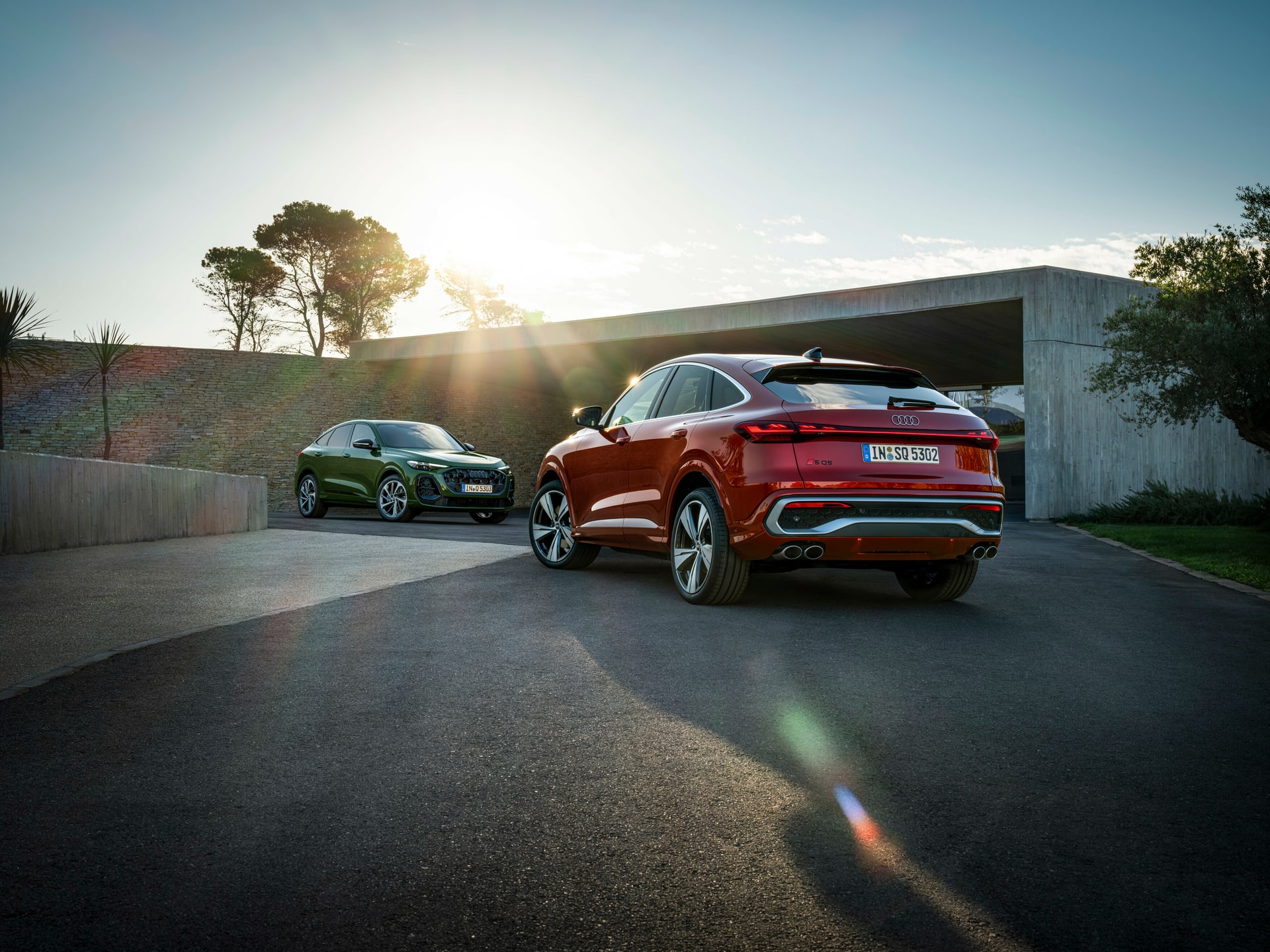
The definitive guide to choosing the best family premium plug-in hybrid SUV in Spain in 2026: equipment, DGT CERO label, taxes and real 4-year running cost.
The premium plug-in hybrid SUV has established itself as the most rational choice for families who don’t want to give up long-distance travel on holidays but want electric silence day to day. In 2026, with the CERO label still valid for PHEVs with more than 40 km of homologated electric range and a market in full transition, choosing well means weighing three factors: useful equipment (not just the catalogue), Spanish taxation and real cost over four years. This guide puts things in order.
Why a premium family plug-in hybrid SUV makes sense in 2026
Plug-in hybridisation solves the dilemma of the premium user with a garage space and intercity journeys. It covers 80-100 km a day in electric mode, keeps the DGT CERO label (access to the Madrid ZBE, Barcelona, Valencia) and retains the backup of the combustion engine for long trips. Compared with diesel, it wins on taxes and city centres; compared with the 100% electric, it wins on versatility of use.
What defines a premium family plug-in hybrid SUV today
A minimum wheelbase of 3.06 metres, a boot above 500 litres with the batteries already integrated, a WLTP electric range over 80 km, AC charging of at least 7.4 kW and, increasingly, DC fast charging between 50 and 60 kW. Add to this all-wheel drive, genuine level 2 driver assistance and an interior with materials consistent with its price tag.
DGT CERO label: which premium PHEV SUVs keep it
To carry the CERO label, a PHEV must homologate more than 40 km of WLTP electric range. All the models we will look at comfortably comply, lying between 90 and 130 km. This guarantees access to Low Emission Zones, discounts on SER and tax advantages in much of the country.
Plug-in hybrid SUV taxation in Spain: key points for 2026
The premium family PHEV sits in the higher brackets of IVTM, but it is offset by: municipal rebates for the CERO label (up to 75% in some councils), exemption or reduction in the registration tax when emitting less than 120 g/km of WLTP CO₂, and 30% income-tax deductions as a company vehicle in mixed use. Renting remains the most tax-efficient channel for self-employed workers and companies.
BMW X5 xDrive50e — from 92,000 €
The benchmark of the segment. It combines a 3.0 inline six-cylinder with an electric motor integrated into the gearbox for 489 CV combined and a commanding torque output. Its 29.5 kWh usable battery allows it to reach around 100 km of real WLTP range. 500-litre boot, discreet luxury and outstanding dynamics for 2.5 tonnes.
| Power kW | Power CV | Top speed | Electric range | Consumption | Label | Fuel |
|---|---|---|---|---|---|---|
| 360 kW | 489 CV | 250 km/h | 94-110 km WLTP | 1.2 l/100 km | CERO | PHEV |
Mercedes-Benz GLE 400e 4MATIC — from 95,500 €
The GLE 400e is the most comfortable of the group. A 2.0 turbo plus electric motor for 381 CV, a 31.2 kWh battery and the key differentiator: DC fast charging up to 60 kW, something many rivals still do not offer. MBUX dual-screen interior and optional air suspension with notable composure.
| Power kW | Power CV | Top speed | Electric range | Consumption | Label | Fuel |
|---|---|---|---|---|---|---|
| 280 kW | 381 CV | 210 km/h | 95-115 km WLTP | 1.1 l/100 km | CERO | PHEV |
Audi Q5 TFSI e — from 72,000 €
The most compact option in size and price without losing premium pedigree. 2.0 TFSI and electric motor for 299 CV, quattro all-wheel drive and a very well-achieved mechanical balance. Less electric range than its larger siblings, but offset by a notably lower purchase cost and better real-world mixed consumption.
| Power kW | Power CV | Top speed | Electric range | Consumption | Label | Fuel |
|---|---|---|---|---|---|---|
| 220 kW | 299 CV | 239 km/h | 80-90 km WLTP | 1.4 l/100 km | CERO | PHEV |
Volvo XC90 T8 Recharge — from 89,500 €
The seven-seater of the guide. 455 CV combined, honest electric range and the most serene cabin on the market. Sustainable materials, benchmark seats and a drive focused on comfort. For large families, it is the logical answer.
| Power kW | Power CV | Top speed | Electric range | Consumption | Label | Fuel |
|---|---|---|---|---|---|---|
| 335 kW | 455 CV | 180 km/h | 70-77 km WLTP | 1.5 l/100 km | CERO | PHEV |
Range Rover Sport P460e — from 108,000 €
The most capable off-road and the most charismatic. 3.0 inline six-cylinder plus electric motor for 460 CV and a 38.2 kWh usable battery delivering electric ranges close to 110 km in real use. DC charging at 50 kW. British luxury with the modern MLA platform.
| Power kW | Power CV | Top speed | Electric range | Consumption | Label | Fuel |
|---|---|---|---|---|---|---|
| 338 kW | 460 CV | 225 km/h | 110-121 km WLTP | 1.0 l/100 km | CERO | PHEV |
Lexus NX 450h+ — from 68,000 €
The Japanese alternative, reliable to the point of boredom. 309 CV combined, e-CVT and the Lexus network with very competitive maintenance plans. Fewer outright performance figures, but the four-year TCO is usually the lowest in the premium category.
| Power kW | Power CV | Top speed | Electric range | Consumption | Label | Fuel |
|---|---|---|---|---|---|---|
| 227 kW | 309 CV | 200 km/h | 69-76 km WLTP | 1.3 l/100 km | CERO | PHEV |
Real 4-year cost: TCO compared
At 20,000 km a year with 70% electric driving and domestic charging, a premium PHEV runs at between 0.42 and 0.55 €/km of total cost (depreciation + insurance + maintenance + energy + taxes). The Lexus NX 450h+ and the Audi Q5 TFSI e compete for the lowest TCO; the Range Rover Sport and the GLE carry greater depreciation risk but hold their brand value better on the used market.
Premium hybrid SUV comparison: summary table with scoring
| Model | CV | Electric range | Price from | Boot | 4-year TCO | Score /10 |
|---|---|---|---|---|---|---|
| BMW X5 xDrive50e | 489 | ~100 km | 92,000 € | 500 l | Medium-high | 9.1 |
| Mercedes GLE 400e | 381 | ~105 km | 95,500 € | 490 l | Medium-high | 9.0 |
| Audi Q5 TFSI e | 299 | ~85 km | 72,000 € | 465 l | Medium | 8.5 |
| Volvo XC90 T8 | 455 | ~73 km | 89,500 € | 640 l (5 seats) | Medium | 8.7 |
| Range Rover Sport P460e | 460 | ~115 km | 108,000 € | 647 l | High | 9.2 |
| Lexus NX 450h+ | 309 | ~72 km | 68,000 € | 520 l | Low | 8.6 |
Verdict: which premium family plug-in hybrid SUV to buy in 2026
If you prioritise dynamics and technology, BMW X5 xDrive50e. If you seek comfort and DC fast charging, Mercedes GLE 400e. If you value seven seats and serenity, Volvo XC90 T8. For maximum off-road capability and record electric range, Range Rover Sport P460e. And if TCO is what matters, Lexus NX 450h+ or Audi Q5 TFSI e.
Frequently asked questions
Will a premium PHEV SUV keep the CERO label after 2026?
Yes, current DGT regulations keep the CERO label for PHEVs with more than 40 km WLTP. No revision is confirmed before 2027, although progressive tightening is expected.
How much does it cost to charge a family plug-in hybrid SUV at home?
With a usable battery of 25-30 kWh and an off-peak tariff of 0.10 €/kWh, a full charge comes to roughly 2.50-3.00 €, enough for 80-100 electric km.
Is a PHEV worth it if I don’t have a garage?
Only partially. Without overnight domestic charging, the cost per electric km rises sharply and the extra battery weight penalises combustion consumption. In that scenario, a full hybrid is more efficient.
Which premium hybrid SUV has the highest real electric range in 2026?
The Range Rover Sport P460e leads with 110-121 km WLTP, followed by the Mercedes GLE 400e and the BMW X5 xDrive50e, both around 100 km homologated.


 Kia offers an electric range of 10 models, 50 versions and 400 possible combinations
 The seven finalists for the 2027 European Car of the Year (COTY) are exclusively electric
 Peugeot E-208 GTi: a battery-powered toy that revives the spirit of the 1980s sports cars
Deja un comentario