Top 5 compact PHEV SUVs with the most refined electric-to-combustion transition in the city
 Carlos Romero
24 July 2026
5 min.
Expert ranking of the compact PHEV SUVs that best mask the combustion engine start in urban driving. Technical analysis of NVH, transmission and EV range.
The quality of a PHEV is not measured solely by its homologated electric kilometres or WLTP consumption figures. In the city, where the combustion engine wakes up and goes back to sleep dozens of times on the same journey, the real test is something else: can you feel that change? Is there a jolt, a dull hum, a vibration through the steering wheel that breaks the electric magic? At Highmotor we have focused on that nuance — NVH refinement during the transition — to rank five compact plug-in SUVs that can be bought in Spain today.
Why the electric-to-combustion transition defines urban comfort
The average PHEV user spends most of their urban time in electric mode. The problem appears when power demand, catalyst temperature or a low battery level force the petrol engine to start. That is where the wheat is separated from the chaff: management software, hydraulic mounts, acoustic insulation and, above all, the type of transmission make the difference between a premium experience and a clumsy engagement.
Ranking criteria: NVH, EV range and transmission
We assessed three areas: the smoothness of the electric-to-petrol engine transition in PHEVs (measured in real urban tests, with the combustion engine start triggered by kickdown and progressive battery discharge), the useful electric range (not the homologated one) and the behaviour of the gearbox. A well-calibrated torque converter or dual-clutch transmission hides engine start far better than a poorly tuned CVT.
1. Mercedes-Benz GLC 300 e — from €67,500
The GLC 300 e is, by a wide margin, the most refined compact PHEV SUV on the market for urban use. Its system combines a 2.0 turbo petrol engine with a 100 kW electric motor integrated into the 9G-TRONIC gearbox, allowing combustion engine starts that are virtually imperceptible. The 31.2 kWh gross battery offers more than 110 real-world km in the city, and the cabin’s acoustic insulation absorbs any residual vibration.
| Power kW | Power CV | Top speed | EV range | Consumption | Label | Fuel |
|---|---|---|---|---|---|---|
| 230 | 313 | 218 km/h | 130 km WLTP | 0.5 l/100 km | ZERO | PHEV |
2. BMW X1 xDrive30e — from €53,900
The X1 xDrive30e impresses with the refinement of its seven-speed Steptronic dual-clutch gearbox. The electric motor, integrated into the rear axle, enables starts of the 1.5 three-cylinder engine that barely betray themselves with a slight change in sound. BMW has worked hard on active engine mounts to minimise vibrations at standstill, a common weak point of three-cylinder engines.
| Power kW | Power CV | Top speed | EV range | Consumption | Label | Fuel |
|---|---|---|---|---|---|---|
| 240 | 326 | 206 km/h | 89 km WLTP | 0.8 l/100 km | ZERO | PHEV |
3. Volvo XC40 Recharge T5 — from €49,200
The XC40 Recharge T5 relies on a seven-speed DCT gearbox which, together with the excellent soundproofing characteristic of the Swedish brand, delivers very well-managed transitions. Its 1.5 three-cylinder may be a little more noticeable when starting from cold than the BMW unit, but the calibration prioritises electric mode up to high speeds, reducing the frequency of engine starts.
| Power kW | Power CV | Top speed | EV range | Consumption | Label | Fuel |
|---|---|---|---|---|---|---|
| 192 | 262 | 205 km/h | 50 km WLTP | 1.0 l/100 km | ZERO | PHEV |
4. Lexus NX 450h+ — from €64,500
The NX 450h+ plays in a different conceptual league: it uses a hybrid system with an e-CVT transmission and a 2.5 Atkinson-cycle naturally aspirated engine. This means the transition is, by design, imperceptible — there are no gear changes to reveal the engine start — but the drawback is the well-known “drone” effect when power is demanded. In the city, with smooth driving, it is one of the quietest in the segment.
| Power kW | Power CV | Top speed | EV range | Consumption | Label | Fuel |
|---|---|---|---|---|---|---|
| 227 | 309 | 200 km/h | 76 km WLTP | 1.2 l/100 km | ZERO | PHEV |
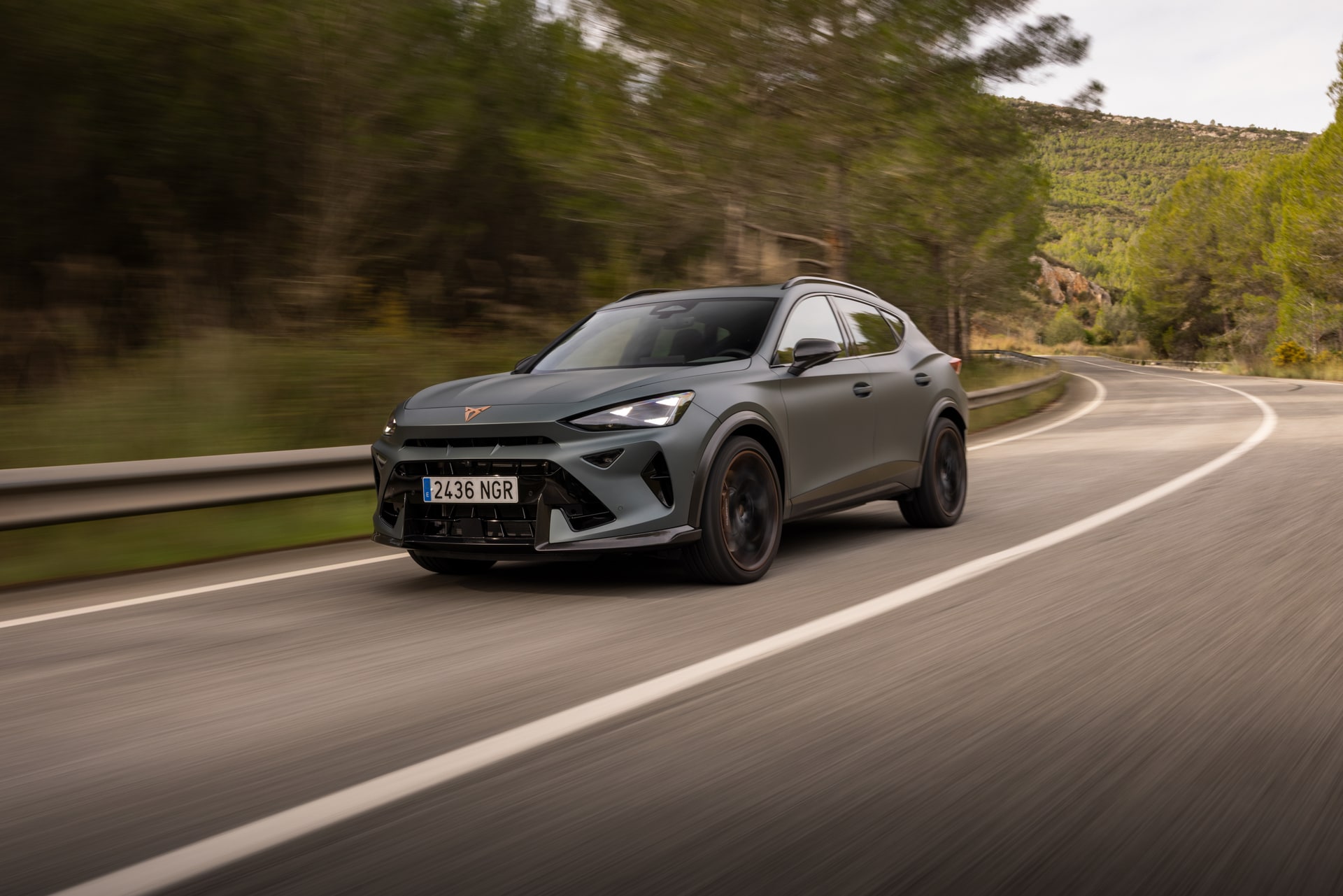
5. Cupra Formentor e-Hybrid — from €44,500
The Formentor e-Hybrid closes the ranking with a sportier proposition. Its six-speed DSG is quick and precise, but the transition is noticeable a bit more than in the premium rivals, especially when the system decides to start the 1.5 TSI to recharge the battery. It makes up for this with price and dynamism, although pure refinement sits one step behind.
| Power kW | Power CV | Top speed | EV range | Consumption | Label | Fuel |
|---|---|---|---|---|---|---|
| 200 | 272 | 210 km/h | 62 km WLTP | 1.2 l/100 km | ZERO | PHEV |
Compact plug-in SUV comparison: summary table
| Model | CV | EV range | Transmission | NVH refinement (1-10) | Overall rating (1-10) |
|---|---|---|---|---|---|
| Mercedes GLC 300 e | 313 | 130 km | 9G-TRONIC | 9.5 | 9.3 |
| BMW X1 xDrive30e | 326 | 89 km | DCT 7 | 8.8 | 8.9 |
| Volvo XC40 T5 | 262 | 50 km | DCT 7 | 8.4 | 8.2 |
| Lexus NX 450h+ | 309 | 76 km | e-CVT | 9.0 | 8.7 |
| Cupra Formentor e-Hybrid | 272 | 62 km | DSG 6 | 7.8 | 8.0 |
Conclusion: which PHEV SUV to choose according to your urban priority
If you are looking for maximum refinement, the GLC 300 e sets the benchmark. If you want dynamism without giving up a smooth transition, the X1 xDrive30e is the rational choice. The Lexus NX 450h+ is unbeatable for absolute silence at low speed, while the XC40 and Formentor offer more affordable options among the best plug-in hybrid SUVs 2024.
Frequently asked questions
Which PHEV SUV offers the smoothest electric-to-combustion transition in the city?
The Mercedes-Benz GLC 300 e, thanks to its electric motor integration in the 9G-TRONIC gearbox and outstanding NVH work.
How much real electric range do these PHEV SUVs offer in urban use?
Between 40 and 110 real km depending on the model. The GLC 300 e leads comfortably; the XC40 T5 is the most limited of the group.
Are e-CVT gearboxes worse than dual-clutch ones in a PHEV?
They are not worse, just different. In the city they offer smoother transitions by design, but they penalise the sense of response during strong acceleration.
Is it worth buying a PHEV just for urban driving?
Yes, provided it can be charged daily. With 50-100 km of EV range, most urban journeys are covered without starting the combustion engine.


 Peugeot E-208 GTi: a battery-powered toy that revives the spirit of the 1980s sports cars
 New Lexus ES: luxury grows and goes electric
 First contact with the Dacia Sandero Hybrid 155: power and efficiency from €19,890
Deja un comentario