Hyundai i20 vs OMODA 3: Competitors in the city car segment with petrol engines
 Iván Navarro
26 March 2026
8 min.
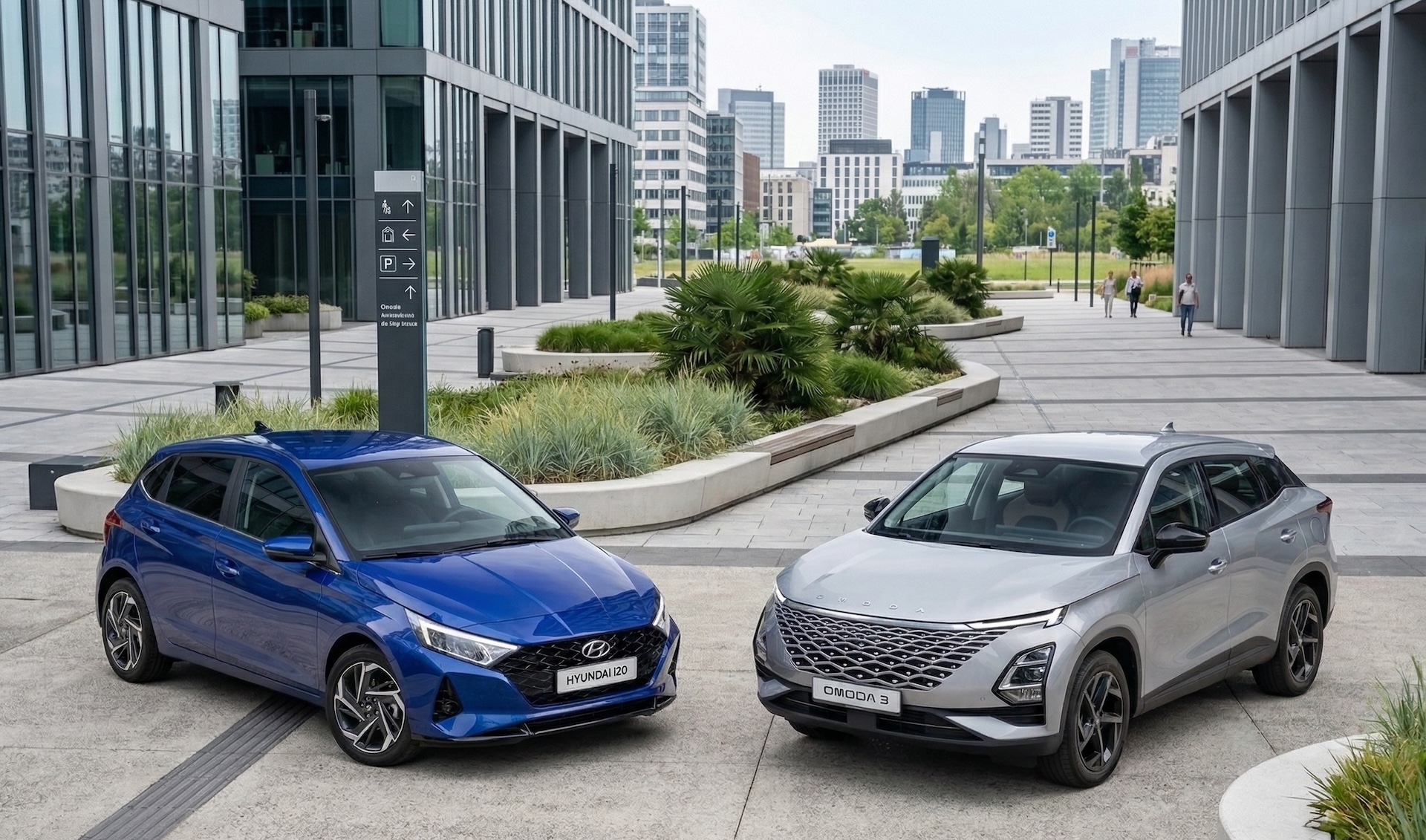
In this article we analyse two petrol-powered city cars that have particularly caught our attention. They are the Hyundai i20 and the Omoda 3.
At the intersection of design, practicality and running costs, two proposals compete head to head in the petrol compact city car niche: on one side the Hyundai i20, a veteran with a balanced and proven offer; on the other, the OMODA 3, a recent arrival that aims to attract buyers with eye-catching design and more equipment for the same price. This showdown sums up the priorities of the urban buyer: usable space, low consumption, equipment and an attractive starting price that makes everyday driving viable without surprises.
The compact petrol city car segment remains one of the most sought-after options in Spain, especially for drivers who combine city driving with periurban journeys. Buyers look for cars that are easy to park, with low consumption in mixed driving and a useful boot; in response, brands offer connectivity solutions, driver assistance systems and tuned petrol versions to achieve realistic consumption figures under WLTP.
In the following analysis we compare what each car offers in terms of dynamics, efficiency, equipment and cost, to help decide which option fits the use and real budget of the buyer.
The best-balanced models in the segment in 2026
Our editorial criterion for comparison focuses on balance: the relationship between real-world consumption and performance, effective interior space, starting price of the entry version, and the quality of the safety and connectivity equipment. Both cars compete by offering the best combination of these factors, but with different approaches: the i20 bets on reliability, low consumption and practicality; the OMODA 3 aims to win on presence, equipment and a greater sense of substance.
Hyundai i20
The Hyundai i20 remains one of the most sensible choices in the petrol compact city car segment. Its strong point is the driving experience: well-balanced steering, suspension designed for the city and a 1.0 turbo engine that combines decent response with contained consumption in real use. Rear space and boot capacity place the i20 in a comfortable position for small families and users who prioritise practicality.
In terms of equipment, the entry configuration is reasonable, with connectivity and assistance features that cover everyday needs without grand gestures. Compared with rivals such as the Ford Fiesta or the SEAT Ibiza, the i20 offers a set-up geared towards comfort and a safety package that is competitive within its price range.
Version recommendation: opt for the mid-range version, which includes active safety elements and an infotainment screen of sufficient size; it best balances spending and functionality for mixed city/road use.
Performance and consumption: the 1.0 turbo engine delivers enough power for urban use and occasional overtaking on the road, while consumption in real conditions tends to be moderate if aggressive driving is avoided. As for price, the starting price of the range places the i20 in a competitive bracket against alternatives in the same segment.
The best
• Balanced driving experience and comfort in the city.
• Contained consumption in mixed use.
• Practical boot and acceptable interior space.
Room for improvement
• Less daring design than recent rivals.
• In the best-equipped versions it loses its price advantage over Asian alternatives with more equipment.
Which petrol city car consumes least in real use?
The Hyundai i20 stands out for its low real-world consumption and ease of driving in urban environments, making it a logical option for those seeking economy and everyday comfort.
| Feature | Data | Score |
|---|---|---|
| power | ~100 CV (1.0 T) | 8 |
| Range | — (tank and mixed consumption) | 7 |
| Top speed | approx. 180 km/h | 7 |
| Boot | 352 litres | 8 |
| starting price | From approx. €16,500 | 8.5 |
score out of 10 based on the criteria analysed in this article
OMODA 3
The OMODA 3 enters the segment with a visually bolder proposal and equipment that, in many cases, exceeds that of traditional rivals. Its approach is to attract the urban buyer who values design, large screens and a broad technology package at a sensible cost. Mechanically, the petrol offer is usually based on a 1.5 turbo engine that aims to deliver more punch than the more common 1.0 engines, with slightly higher consumption but livelier performance.
The OMODA 3 stands out for its image, road presence and a slightly greater feeling of interior space in the front seats; on the downside, its tuning tends to prioritise a sense of solidity over soft comfort. Compared with models such as the Renault Clio or the Peugeot 208, the OMODA 3 seeks to position itself as an alternative with a better equipment-to-price ratio, especially in the mid-range versions.
Version recommendation: choose the version that includes driver assistance systems and a broad connectivity package; it is in those configurations that the OMODA 3 offers greater perceived value compared with the i20.
Performance and consumption: the greater power of the 1.5 turbo engine provides a sportier feel when overtaking and on fast stretches, but at the cost of higher consumption than the i20’s 1.0. For users who value dynamism and technological equipment, the OMODA 3 may prove more appealing.
The best
• Eye-catching exterior design and road presence.
• Good equipment and technology for the price.
• A greater sense of substance on the move.
Room for improvement
• Slightly higher consumption in mixed use.
• Service network and brand perception still in consolidation.
Which petrol city car offers the most equipment for the price?
The OMODA 3 stands out for its value for money in technological equipment, making it the choice for those who value screens, assistants and design over maximum running economy.
| Feature | Data | Score |
|---|---|---|
| power | ~150 CV (1.5 T) | 8.5 |
| Range | — (tank and mixed consumption) | 7 |
| Top speed | approx. 200 km/h | 8 |
| Boot | ~400 litres | 8 |
| starting price | From approx. €21,990 | 8 |
score out of 10 based on the criteria analysed in this article
Quick technical comparison
In technical terms, both models offer different arguments: the i20 focuses on efficiency and good urban use; the OMODA 3 bets on performance and equipment. If the starting price and real-world consumption take priority, the i20 keeps the advantage; if the criterion is equipment and driving sensations, the OMODA 3 raises the bar. The choice depends on the priority between running economy and perceived value.
| Model | Power | Mixed consumption (WLTP) | Price | Score |
|---|---|---|---|---|
| Hyundai i20 | ~100 CV | ~5–5.5 l/100 km | From ~€16,500 | 8.4 |
| OMODA 3 | ~150 CV | ~6–7 l/100 km | From ~€21,990 | 8.2 |
score out of 10 based on the criteria analysed in this article
Which car to buy according to your profile
If you do a lot of city driving
Choose the Hyundai i20: its 1.0 engine and tuning prioritise low consumption, manoeuvrability and comfort in urban traffic, with a starting price that favours the total cost of ownership.
If you travel frequently
Choose the OMODA 3 for its more energetic engine and greater sense of comfort on fast stretches; its set-up is more comfortable for long journeys, although it implies higher consumption.
If you are looking for the best price
The Hyundai i20 offers the most affordable alternative and a lower real-world running cost, especially in town and on short journeys.
If you prioritise technology
The OMODA 3 usually includes more generous screens and assistants in its mid-range versions, making it the choice for those who value connectivity and electronic equipment.
Frequently asked questions
Which of the two offers the lower cost per kilometre?
In mixed and urban use, the Hyundai i20 usually offers lower real-world consumption, which translates into a lower cost per kilometre.
What are the implications of choosing a 1.5 engine over a 1.0?
The 1.5 provides more power and better performance on the road, but usually entails higher consumption; the 1.0 is sufficient for the city and everyday use, with lower consumption.
Is a mid-range version recommended for its equipment?
Yes. In both models, the mid-range versions balance price, safety and connectivity, and are the most recommendable for the average buyer.
How does the service network influence the decision?
The dealer and after-sales service network is a factor to consider: established brands offer greater coverage and speed in servicing and repairs.
Which alternatives should I consider in this segment?
Models such as the Ford Fiesta, SEAT Ibiza or even compact crossover options such as the Hyundai Kona or the Renault Captur may be interesting alternatives depending on design and equipment priorities.
Expert opinion
Beyond the figures on the spec sheet, the choice between the Hyundai i20 and the OMODA 3 depends on real use and personal priorities. For those who do many urban journeys, prioritise running costs and want a practical solution without complications, the i20 remains a rational proposal: contained consumption, comfortable tuning and habitability that covers the essentials.
On the other hand, if the emotional factor, technological equipment and a sense of greater presence on the road weigh more, the OMODA 3 presents an attractive alternative; its technological and aesthetic offer offsets the higher consumption and greater upfront outlay.
Depending on annual mileage, if you drive few kilometres and value equipment, the OMODA 3 may prove more satisfying; if you cover urban kilometres daily and seek to minimise operating costs, the i20 wins on pragmatism. In any case, it is advisable to test both units in real conditions and check what the chosen version includes in terms of safety and connectivity, because much of the real value the buyer will perceive lies there.
Models such as the Hyundai Kona or the Kia Niro are also among the alternatives worth reviewing before deciding, especially if a compact crossover better fits your needs for interior space and driving position.
Technical specifications of this car


 Peugeot E-208 GTi: a battery-powered toy that revives the spirit of the 1980s sports cars
 New Lexus ES: luxury grows and goes electric
 First contact with the Dacia Sandero Hybrid 155: power and efficiency from €19,890
Deja un comentario