EV6 Hyundai IONIQ Ioniq 5 IONIQ 6 KIA Sedans Electric Cars Comparisons Tests
Hyundai IONIQ 6 vs Polestar 2: electric saloon showdown under 55,000 euros
 Iván Navarro
20 August 2026
5 min.
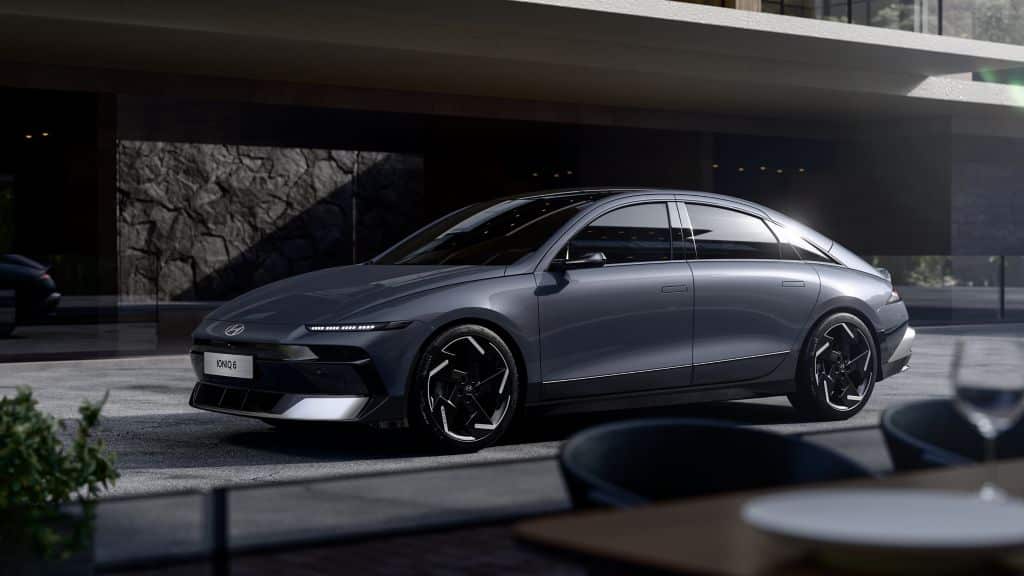
We compare the Hyundai IONIQ 6 and the Polestar 2 as premium electric saloons: Korean efficiency versus Scandinavian design for under 55,000 euros in Spain.
The premium electric saloon segment has become surprisingly narrow. Outside the Tesla universe, only a handful of models aim to convince buyers looking for a zero-emission three-box car without crossing the psychological barrier of 55,000 euros. Two of those proposals sit at the centre of the debate today: the Hyundai IONIQ 6, with its record-breaking aerodynamics and an efficiency that puts much more expensive rivals on the back foot, and the Polestar 2, the Scandinavian model with a minimalist signature that plays the card of character and brand.
From the initial list of candidates we have ruled out the proposal from BYD in this segment: in our view, the Chinese brand still sits one step below these two references in perceived cabin quality and dynamic tuning, attributes that in this class weigh as much as the technical specification sheet. With that clarified, let’s move on to the ones that do make the cut.
Hyundai IONIQ 6 from 44,700 €: aerodynamics turned into a saloon
The IONIQ 6 is probably the most efficient electric car you can buy today for less than 45,000 euros in Spain. Its 0.21 Cx is not a brochure figure: on the motorway, where air stops being free, it translates into a consumption that surprises even those coming from an IONIQ 5.
The entry version, with 170 CV and a 63 kWh battery, is homologated at around 520 km. On a real Madrid-Valencia journey at a real 120 km/h, the figure you will see will hover around 380-410 km, depending on temperature and wind. It is not the one with the most range on paper, but it is one of the ones that makes the best use of it.
| Power kW | Power CV | Top speed | Range | Consumption | Label | Fuel |
|---|---|---|---|---|---|---|
| 125 kW | 170 CV | 185 km/h | ≈520 km | ≈14 kWh/100 km | ZERO | Electric |
Design and aerodynamics: when form follows efficiency
The IONIQ 6’s profile divides opinion. Some see a streamliner silhouette paying homage to the Stout Scarab and the Saab 96; others see a wet bar of soap. To my taste, it ages better than it looked at its presentation. And what is undeniable: every millimetre of that bodywork is there for a reason measurable in kWh.
Interior and technology: space, with nuances
Inside it inherits the philosophy of the IONIQ 5, with two 12.3-inch screens, recycled materials and generous rear space thanks to the E-GMP platform. That said, the roofline drops towards the rear and passengers above 1.85 m will brush their heads. It is the price paid for the aerodynamic coefficient.
Range and charging: 800 V that make the difference
Here is the secret weapon. The 800-volt architecture allows charging from 10 to 80% in about 18 minutes on a 350 kW charger. On a weekend Madrid-Cádiz trip, a coffee stop is enough. Few cars below 55,000 euros offer this.
Polestar 2 from 65,400 €: outside the budget, within the debate
Here we must be honest. The Polestar 2 that the Swedish brand positions as a direct rival —the Long Range Dual Motor with 476 CV and 82 kWh— starts at around 65,400 euros. It is outside the target stated in the title of this comparison, and it is worth saying so before going on. The relevant question is another: is the extra cost worth it?
| Power kW | Power CV | Top speed | Range | Consumption | Label | Fuel |
|---|---|---|---|---|---|---|
| 350 kW | 476 CV | 205 km/h | ≈570 km | ≈17 kWh/100 km | ZERO | Electric |
Scandinavian signature and perceived quality
The Polestar 2’s cabin feels a step above in materials — the feel of the upper plastics, the firmness of the adjustments, the WeaveTech vegan upholstery. It is an interior that breathes Volvo, and that is no coincidence. The vertical screen with natively integrated Google remains a benchmark in the segment.
Dynamics: 480 CV that you can really feel
With the Performance AWD version, 0-100 is dispatched in 4.2 seconds. Adjustable Öhlins suspension, Brembo brakes, forged wheels. It is a saloon that is enjoyed when the road twists, something we also saw in the analysis of the Kia EV6 GT and its platform siblings in high-performance configurations.
Head-to-head: what pays off according to your profile
If the criterion is pure value for money, the IONIQ 6 wins clearly. It offers competitive real-world range, the best fast charging in the segment and a price that places it 20,000 euros below the Polestar compared here.
If the criterion is character, finish quality and performance, the Polestar 2 justifies its premium — although you must be willing to pay it, and accept that it goes beyond the 55,000 euro threshold that gives this article its title.
The prices quoted are the manufacturer’s recommended retail prices (RRP), without dealer discounts, occasional campaigns or Plan Auto+ aid applicable to private buyers.
Summary table and editorial score
| Model | Price from | Range | Power | Efficiency | Fast charging | Interior quality | Overall value |
|---|---|---|---|---|---|---|---|
| Hyundai IONIQ 6 | ≈44,700 € | 9/10 | 7/10 | 10/10 | 10/10 | 8/10 | 9/10 |
| Polestar 2 | ≈65,400 € | 9/10 | 10/10 | 7/10 | 7/10 | 9/10 | 7.5/10 |
Frequently asked questions
Which electric saloon should you buy for less than 55,000 euros in Spain in 2024?
Within the strict 55,000 € range, the Hyundai IONIQ 6 in its 170 CV, 63 kWh Light version is today the most balanced option: real efficiency, 800 V charging and range around 520 km. The Polestar 2 in its Performance version falls outside that budget.
How much does the Hyundai IONIQ 6 really consume?
In real mixed use, the IONIQ 6 ranges between 14 and 16 kWh/100 km. On the motorway at a real 120 km/h it rises to 17-18 kWh; in town and on secondary roads it can drop below 13. It is among the most efficient electric saloons on the European market.
Is the extra cost of the Polestar 2 over the IONIQ 6 worth it?
It depends on your profile. If you value perceived interior quality, dynamic character and performance, the Polestar 2 has its arguments. If what you are after is pure value for money and efficiency, the IONIQ 6 wins clearly — the price difference buys many kilometres of charging.
What advantage does the IONIQ 6’s 800-volt architecture bring?
It allows charging from 10 to 80% in about 18 minutes on 350 kW chargers, compared with 30-35 minutes for 400 V architectures with equivalent power. On long trips, this roughly halves the number of stops.
Technical specifications of the cars in this article
 Peugeot E-208 GTi: a battery-powered toy that revives the spirit of the 1980s sports cars
 New Lexus ES: luxury grows and goes electric
 First contact with the Dacia Sandero Hybrid 155: power and efficiency from €19,890
Deja un comentario