Hyundai KIA Santa Fe Sorento Comparisons Tests SUV
Hyundai Santa Fe vs KIA Sorento: the battle between the two most complete seven-seat family SUVs under 55,000 euros
 Iván Navarro
4 August 2026
6 min.
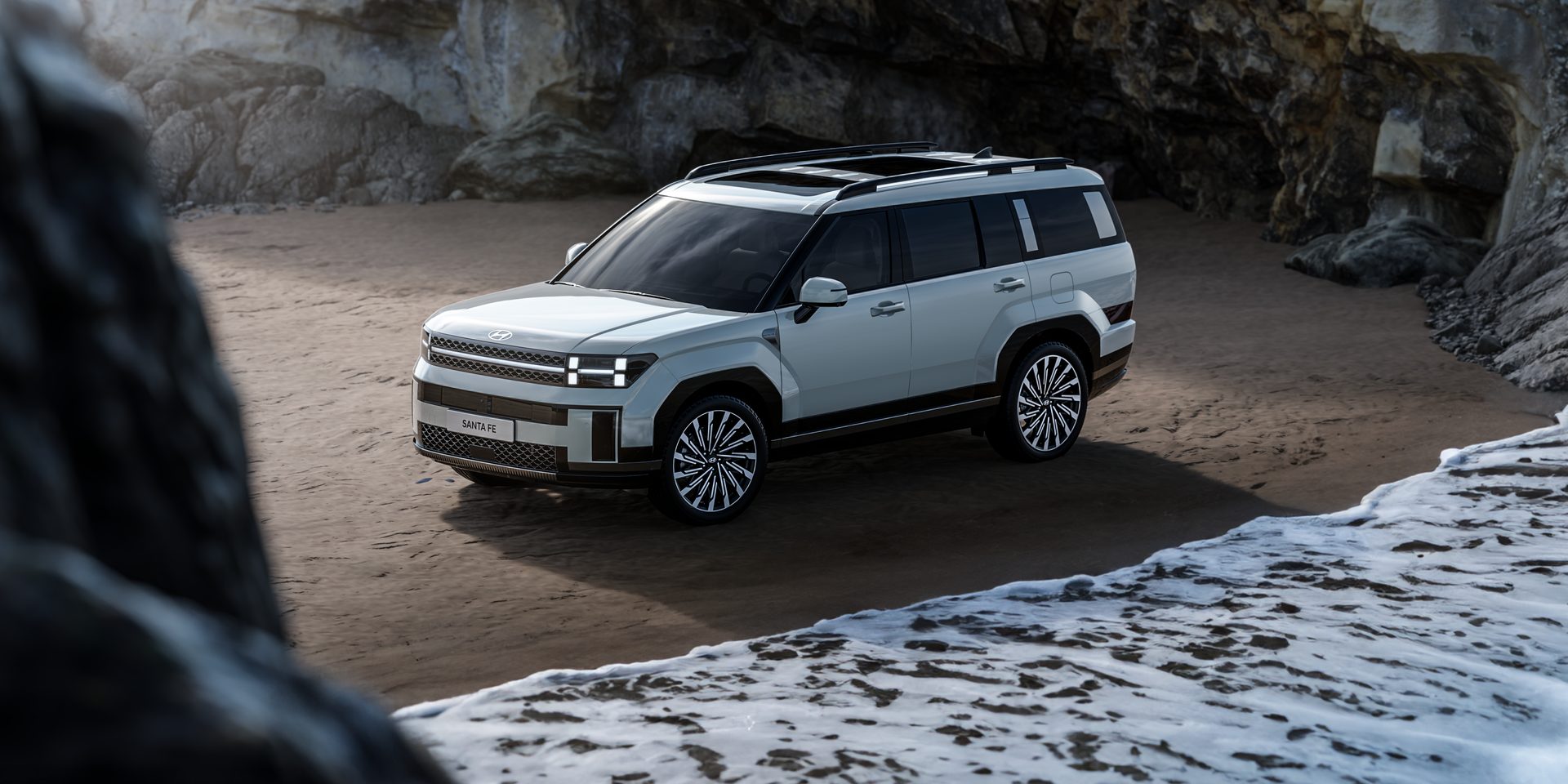
We compare the Hyundai Santa Fe HEV and the KIA Sorento PHEV, the two most complete seven-seat Korean SUVs on the Spanish market. Conventional hybrid versus plug-in, with technical data and a recommendation by usage profile.
The two most ambitious family SUVs in the Hyundai-Kia group share a platform, a philosophy and a purpose: seven genuine seats, technology in abundance and a leap in category compared with what they offered only a generation ago. But that is where the similarities end. One bets on the pure, full hybrid. The other on the plug-in with the ZERO label. And that difference changes everything.
In our view, there are no two Korean SUVs that look so alike on the scales and diverge so much in their approach to use. Let’s take a look.
Why do the Santa Fe and Sorento set the standard for the Korean family SUV?
We are talking about two cars that measure around 4.80 metres, with very wide bodywork, a usable third row —not the appendix for children that some rivals offer— and a level of standard equipment that makes more than one German premium brand wobble. On paper they are first cousins. In practice, each one is positioned differently within the group itself.
A warning before we continue: the prices we quote are the manufacturer’s recommended RRP, without discounts, campaigns or purchase aid. At the dealership, the real story is usually different.
Hyundai Santa Fe HEV: from approximately 56,000 €
The new Santa Fe broke the mould with that boxy design, almost Land Rover, which divides opinion. I like it, and a lot: for the first time a Korean SUV has a visual identity that does not depend on the grille. Inside, a panoramic double screen, materials well above expectations and a habitability that is exploited to the last cubic centimetre thanks to that very square body.
The mechanics are a hybrid based on the 1.6 T-GDi engine. No plugs. You refuel with petrol, drive off and that’s it. For anyone without a garage with a socket —which in Spain is the majority— this weighs more than it seems.
| Power kW | Power CV | Top speed | Electric range | Consumption | Label | Fuel |
|---|---|---|---|---|---|---|
| ≈180 kW | ≈240 CV | ≈200 km/h | N/A | ≈6.5 l/100 km | ECO | Petrol/electric hybrid |
KIA Sorento PHEV: from approximately 61,400 €
The Sorento plays in a different tax league. Being a plug-in with more than 40 km of homologated electric range, it carries the coveted ZERO label, and in Madrid or Barcelona that is no minor detail: it is the difference between entering the ZBE without restrictions or being shut out within two years. Aesthetically it is more restrained than the Santa Fe, more “classic SUV”, and inside it retains a slightly more conservative feel. Nothing wrong with that — it depends on taste.
Its great asset is the ≈14 kWh battery, which allows daily journeys in pure electric mode. The typical home–office–school–gym route is made without using a drop of petrol if you plug it in every night. If you don’t plug it in… well, there is the eternal PHEV debate.
Design and brand perception: two paths, one group
The Santa Fe demands attention. The Sorento whispers elegance. In the real world, the former turns more heads in the school car park; the latter goes unnoticed with class. To my taste,
Hyundai has won the battle of character in this generation, although the Sorento will probably age better.
Interior, seats and boot: the third row matters
Both offer seven real seats. The Santa Fe, thanks to its body geometry, has a third row that is somewhat more usable for teenagers on medium journeys. The Sorento gives up a few centimetres because of the battery space under the floor — though with the advantage of a slightly higher driving position. With seven seats in use, boot space is tight on both: for the weekend with the grandparents, the essentials fit and little more.
Environmental label and ZBE: the great divider
There is no technical debate here. The ZERO label beats ECO every time we talk about cities with ZBE. If you live inside the M-30 or in the Eixample, and plan to keep the car for seven years, the Sorento PHEV buys regulatory peace of mind. If you live in a municipality without restrictions and mostly drive on open road, the ECO label of the Santa Fe HEV is more than sufficient. A complementary analysis on
how to choose a family hybrid SUV in 2026 goes deeper into real consumption by usage pattern.
Real consumption: the eternal HEV vs PHEV debate
The Santa Fe HEV is homologated at ≈6.5 l/100 km and in practice hovers around 7–7.5 in real mixed use. Steady, predictable, no surprises.
The Sorento PHEV is homologated at ≈1.5 l/100 km, but that figure depends entirely on whether you plug it in. A driver who charges it daily and does 40 km a day can see real consumption below 2 l/100 on a weekly basis. One who never plugs it in — yes, such drivers exist — can exceed 8 l/100 while hauling the extra weight of the battery. It is questionable whether that justifies the extra cost without charging infrastructure at home.
Price, equipment and value: do 5,400 € of difference justify the jump?
Between the two there is roughly 5,400 € of RRP in top versions.
Is it worth it? It depends. The ZERO label, the Moves aid —when active— and the real fuel savings with daily charging can tip the balance within three or four years. Without a plug, the sums don’t add up.
Summary table and score
Our recommendation by usage profile
Urban family with a garage space and a socket, intensive city use within a ZBE:
KIA Sorento PHEV, no question. Peri-urban or rural family, high mileage on the open road, without comfortable charging infrastructure: Hyundai Santa Fe HEV, cheaper to get into and without dependence on the cable. If you want to refine your criteria further, this guide to compact family PHEV SUVs offers interesting nuances.
Frequently asked questions
Which has the better third row, the Santa Fe or the Sorento? The Santa Fe, thanks to its more upright body geometry, offers a third row that is somewhat more usable for teenagers. The Sorento gives up a few centimetres because of the battery space.
Is it worth paying the extra 5,400 € for the Sorento PHEV?Only if you plan to charge it daily and live in a ZBE zone. Without a home charger, the extra cost is not amortised and the extra weight penalises real consumption.
Which SUV has the better environmental label?The KIA Sorento PHEV carries the ZERO label thanks to its ≈60 km of electric range. The Hyundai Santa Fe HEV stays at ECO as it is not pluggable.
Which is more efficient on the open road?The Santa Fe HEV, paradoxically. On the motorway without battery, the Sorento PHEV carries extra weight and its real consumption rises; the Santa Fe’s pure hybrid stays steady at around 7 l/100 km.
Technical specifications of the cars in this article

 Kia offers an electric range of 10 models, 50 versions and 400 possible combinations
 The seven finalists for the 2027 European Car of the Year (COTY) are exclusively electric
 Peugeot E-208 GTi: a battery-powered toy that revives the spirit of the 1980s sports cars
Deja un comentario