Hyundai RAV4 Toyota Tucson Hybrid Cars Comparisons Tests SUV
Hyundai Tucson vs Toyota RAV4: which hybrid SUV-C offers more real value for under €40,000?
 Iván Navarro
16 August 2026
6 min.
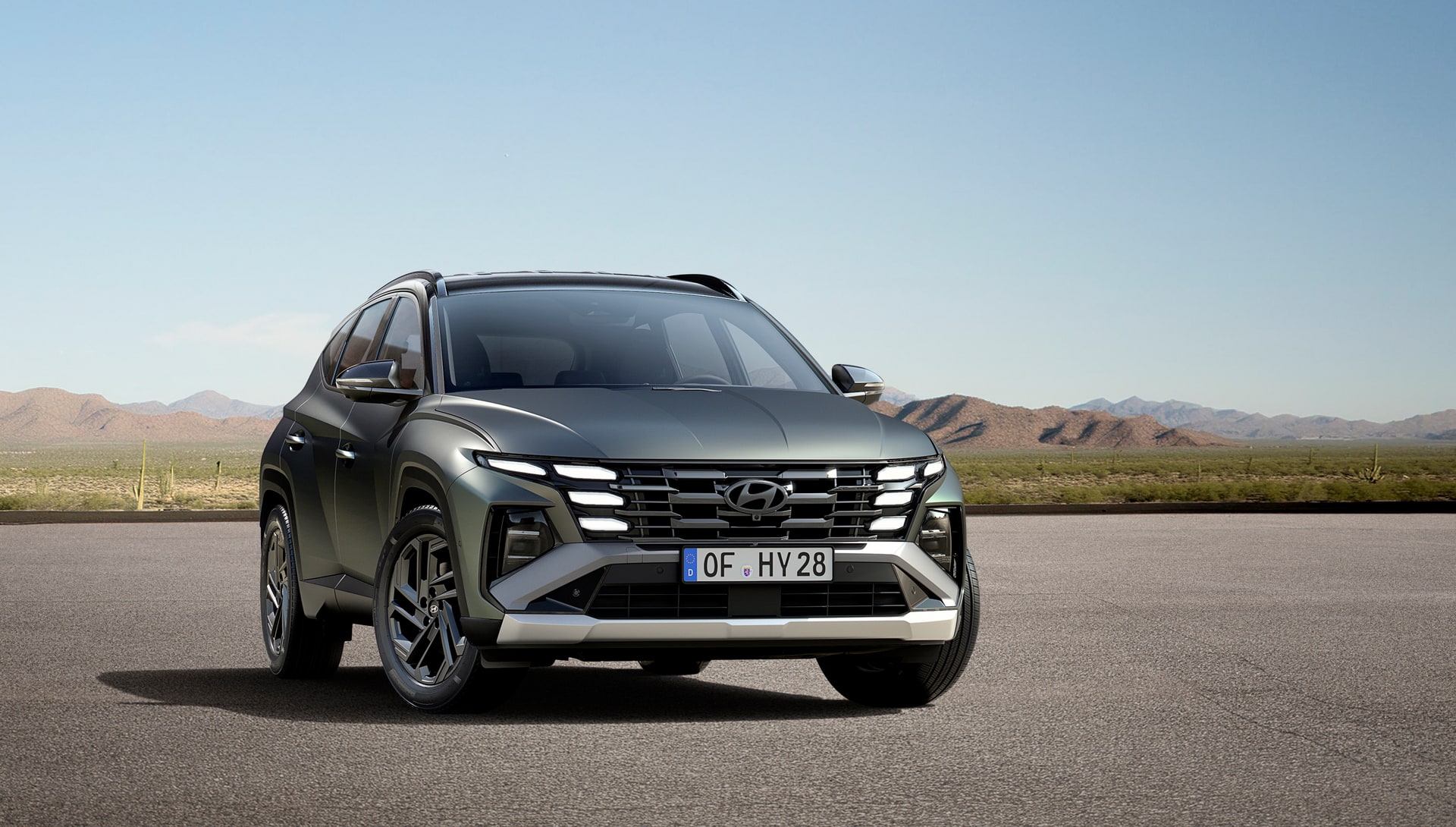
We compare the Hyundai Tucson 1.6 TGDi and the Toyota RAV4 Plug-in Hybrid to answer the key question: which offers better real value for under €40,000. A verdict conditioned by price and the type of electrification.
The SUV-C hybrid is, today, the most contested segment in the Spanish market. Families switching from diesel, urban drivers looking to avoid the ZBE, buyers seeking a versatile car without giving up the ECO or CERO label. And there, two names keep appearing on any short list: Hyundai Tucson and Toyota RAV4. We put them face to face with a very specific filter — €40,000 — to see what each one offers when the budget is the deciding factor.
Why does the Hyundai Tucson vs Toyota RAV4 hybrid duel matter in Spain?
They are the two SUV-Cs buyers mention most when asked about a family hybrid. The Tucson has been among the country’s best-sellers for years. The RAV4 has been the technical benchmark for the Toyota hybrid for over a decade. That both coexist in the same mental garage of buyers is no coincidence: they offer size, versatility and a promise of efficiency that fits real use — daily trips of 30-50 km, the occasional weekend getaway, the one-off move of the kids’ flat.
That said, the word “hybrid” in this duel hides important nuances that are worth clarifying before looking at the price.
What do we mean here by “SUV-C hybrid under €40,000”?
Segment C, around 4.5 metres long, five spacious seats, a boot above 550 litres and some kind of electrification under the bonnet. We set the €40,000 threshold as a reasonable ceiling for an average family that wants a new car without entering premium territory. A warning from the start: the prices we quote are the manufacturer’s recommended retail price (RRP), without dealer discounts, one-off campaigns or purchase aid such as the Plan Auto+. In practice, the final ticket usually comes down.
Hyundai Tucson 1.6 TGDi 150 CV Klass — from ≈€35,500
The Tucson’s entry version fits the budget with room to spare. 1.6 turbo petrol engine with 150 CV, manual gearbox, front-wheel drive. It is neither a plug-in hybrid nor a pure conventional car — it is a petrol with light mild-hybrid assistance on the upper trims, but the entry Klass version is simply combustion. That is the key nuance: it fits the budget, yes, but it does not meet the label that someone looking for a true hybrid is aiming for. Label C, not ECO.
In return, the Tucson offers an interior that, to my taste, feels a step above what its price asks for. Panoramic dual screen, well-finished materials, an exterior design that still turns heads three years after its launch. In real-world consumption, expecting between 7 and 8 l/100 km in mixed use is reasonable — not spectacular, but honest.
| Power kW | Power CV | Top speed | Range | Consumption | Label | Fuel |
|---|---|---|---|---|---|---|
| ≈110 kW | ≈150 CV | 196 km/h | data not available | ≈7 l/100 km | C | Petrol |
Toyota RAV4 Plug-in Hybrid 300 Advance — from ≈€50,500
Here the approach is radically different. The RAV4 Plug-in Hybrid combines the naturally aspirated 2.5 Toyota with two electric motors and a 22.7 kWh battery that offers around 110 km of homologated electric range. Combined output of 270 CV, all-electric all-wheel drive (the rear axle is driven by its own motor) and CERO label. On paper, a much more ambitious car.
The problem is obvious: it starts at around €50,500. It exceeds the €40,000 threshold by more than ten thousand. No reasonable discount or public aid squeezes it into the budget we have set. And that weighs on the verdict — because comparing real value requires comparing under the same rules.
That said, if the budget stretches, what it offers in return is serious: homologated consumption of 1.5 l/100 km if charged daily, the ability to cover the 40 km home-to-office commute in pure electric mode without burning a drop of petrol, and free access to any ZBE in the country. A sensible mixed use can yield real consumption of 3-4 l/100 km if the driver sticks to the discipline of charging.
| Power kW | Power CV | Top speed | Range | Consumption | Label | Fuel |
|---|---|---|---|---|---|---|
| ≈200 kW | ≈272 CV | ≈180 km/h | ≈110 km electric | ≈1.5 l/100 km | CERO | PHEV |
Real running cost and consumption: what the driver will find
This is where the analysis gets more complicated. A 150 CV petrol Tucson runs at around 7-8 l/100 km in real use. At €1.55/litre and 15,000 km/year, we are talking about €1,700-1,850 a year in fuel. The Plug-in RAV4, with disciplined overnight charging and much of the urban use in electric mode, can come down to €500-700 a year of petrol plus another €300-400 of household electricity. The annual difference is around €700-900.
Does it offset the purchase price gap? With a €15,000 difference in RRP, we are talking more than 15 years to amortise. In practice, the pure economic argument does not hold. The arguments of the CERO label, the ZBE and the comfort of electric driving do. It comes down to what each buyer values.
For anyone who wants to go deeper into the criteria for choosing between electric and hybrid in urban use, this earlier analysis breaks down the key points.
Summary table and rating
| Model | Starting price | Power | Label | Real consumption | Fits <€40,000 | Rating |
|---|---|---|---|---|---|---|
| Hyundai Tucson 1.6 TGDi 150 Klass | ≈€35,500 | 150 CV | C | ≈7-8 l/100 km | Yes | 7/10 |
| Toyota RAV4 Plug-in Hybrid 300 Advance | ≈€50,500 | 270 CV | CERO | ≈3-4 l/100 km (charged) | No | 8/10 |
Verdict: who wins under the €40,000 threshold
Under the strict filter of “SUV-C hybrid for less than €40,000”, the verdict is uncomfortable: neither meets both criteria at once. The Tucson fits the price but is not a hybrid in its entry version. The RAV4 is a textbook plug-in hybrid, but goes well over budget.
In our view, if the ceiling is a firm €40,000, the Tucson is the rational purchase: it fits comfortably, offers a very well-developed product and leaves room for extras or for stepping down to an intermediate version with mild hybrid assistance. If the buyer can stretch to €50,000 and values the CERO label, the RAV4 Plug-in Hybrid is the serious hybrid that the entry-level Tucson does not quite become.
Put another way: there is no clean winner. There are two good cars competing in different leagues that marketing, perhaps with too much enthusiasm, placed in the same drawer.
Frequently asked questions
Does the Hyundai Tucson have a hybrid version under €40,000?
The hybrid Tucson (HEV) starts above €37,000 in entry trims and can come within the threshold depending on equipment. The entry version (1.6 TGDi 150 CV) is petrol with label C, not hybrid.
What real electric range does the Toyota RAV4 Plug-in Hybrid offer?
The homologated figure is around 140 km. In real use, we are talking about 90-110 km depending on temperature and driving style — enough to cover most daily trips without starting the petrol engine.
Which is better for family use of 15,000 km/year?
If the use is mostly urban and peri-urban with the option of charging at home, the RAV4 Plug-in pays off in comfort and running cost despite the high RRP. If the use is motorway and there is no home charging, the Tucson makes more economic sense.
Do the prices include aid or discounts?
No. The figures are the manufacturer’s RRP, without campaigns, dealer discounts or public aid such as the Plan Auto+. The actual purchase price usually ends up lower, especially for the RAV4 Plug-in, which can access subsidies as a plug-in vehicle.
Technical specifications of the cars in this article

 Peugeot E-208 GTi: a battery-powered toy that revives the spirit of the 1980s sports cars
 New Lexus ES: luxury grows and goes electric
 First contact with the Dacia Sandero Hybrid 155: power and efficiency from €19,890
Deja un comentario