If you're thinking about buying a hybrid car, we explain the difference between the various types available on the market
 Victor Alós Yus @sepelaci
19 January 2019
5 min.
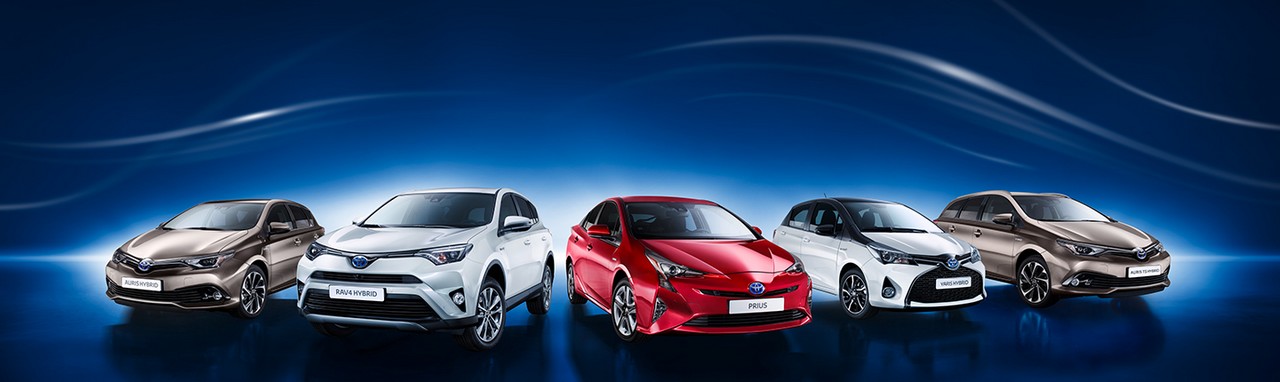
Electrified cars are gaining more and more prominence, and we’re going to explain the differences between the various types of hybrid cars on the market
We’ve been hearing about hybrid cars for years. We have a general idea of what they really are: vehicles that use two engines with different complementary fuels. There are several types of hybrid vehicles, which have different ways of operating and delivering the performance needed at each moment. In this article we are going to show you what types of hybrid vehicles exist on the market and what their differences are.
To begin with, within electric hybrids we can find the micro-hybrid, the mild hybrids or mild-hybrid, full hybrids and plug-in hybrids. Apart from these are cars that use other alternative fuels, such as Liquefied Petroleum Gas (LPG) or Compressed Natural Gas (CNG), but these do not fall under what we consider hybrids, even though their engines are designed to run on either petrol or gas.
Micro-hybrids
This type of hybrid uses a larger-than-normal battery. It does not use the extra energy to add traction to the car; instead, it uses it to stop and restart the engine in situations where it does not need to be running, acting as a Stop&Start system. The battery’s electricity is used for the extra effort of restarting the engine, and it leaves the alternator to power the rest of the electrical components.
Mild Hybrid
Cars Mild-Hybrid that use a 48-volt electricity generator optimise the use of the combustion engine to move the car, while the rest of the car’s electrical components are powered by another source, usually a generator that supplies that extra electrical energy so the combustion engine does not have to generate it. In this way, the engine provides only the energy needed for traction, which considerably reduces its consumption. Lighting, the climate control system, the infotainment system and the other electrical components receive their electricity from another source. These vehicles are becoming increasingly common and, although they do not provide traction to the car, they do avoid fuel consumption to generate electricity.
Full hybrid
Hybrid cars have as their main feature the use of one or more electric motors that assist the combustion engine in situations where greater torque is required. The battery is charged through the use of the combustion engine, regenerative braking and other systems that capture kinetic energy and convert it into electricity, which is stored in the battery. These hybrids can run in purely electric mode, but with a very limited range, because they have little capacity, and their use is mainly to assist the combustion engine when it needs an extra boost.
Plug-in hybrid (PHEV)
Plug-in hybrids are vehicles that have one or more electric motors together with a combustion engine. The difference between hybrids and plug-in hybrids is that the latter have an external battery charging system. That is, they connect to the mains electricity supply through a charger to recover the battery’s charge and have electricity to run the electric motors.
Plug-in hybrid cars can run in 100% electric mode with a longer range than hybrids and offer greater performance than them. They are the closest to 100% electric cars and offer good fuel savings and considerably reduce emissions of toxic gases and particulates.
Other fuels
There are vehicles that use engines capable of running on other fuels, such as Compressed Natural Gas (CNG) or Liquefied Petroleum Gases (LPG). These models can run on either of these fuels or petrol. Technically they are hybrids, but in practice they are not considered as such. They are cars that also reduce the environmental impact of running the car.
Is it worth buying a hybrid car?
A hybrid car has a combined propulsion system: one part produces the emissions corresponding to its fuel type, and the other produces no polluting emissions at all. The cost is lower than a fully electric car, since it is not based entirely on electric mobility, but it is still more expensive than a car with a conventional engine. Nevertheless, this type of vehicle has advantages, especially if you live in a city such as Madrid, which restricts traffic of polluting vehicles in the city centre.
The higher cost of a hybrid car is offset by the advantages it brings in cities like this, so it could be a good option for city driving. The reduction in polluting emissions is worthwhile, although it does not eliminate them completely. Hybrid cars and plug-in hybrids can run in electric mode in certain situations, which helps reduce polluting emissions.


 Peugeot E-208 GTi: a battery-powered toy that revives the spirit of the 1980s sports cars
 New Lexus ES: luxury grows and goes electric
 First contact with the Dacia Sandero Hybrid 155: power and efficiency from €19,890
Deja un comentario