C10 Leapmotor Hybrid Cars Comparisons Tests SUV
Leapmotor C10 vs Jaecoo 7: which Chinese compact SUV offers the best value for money under 32,000 euros
 Iván Navarro
19 August 2026
7 min.
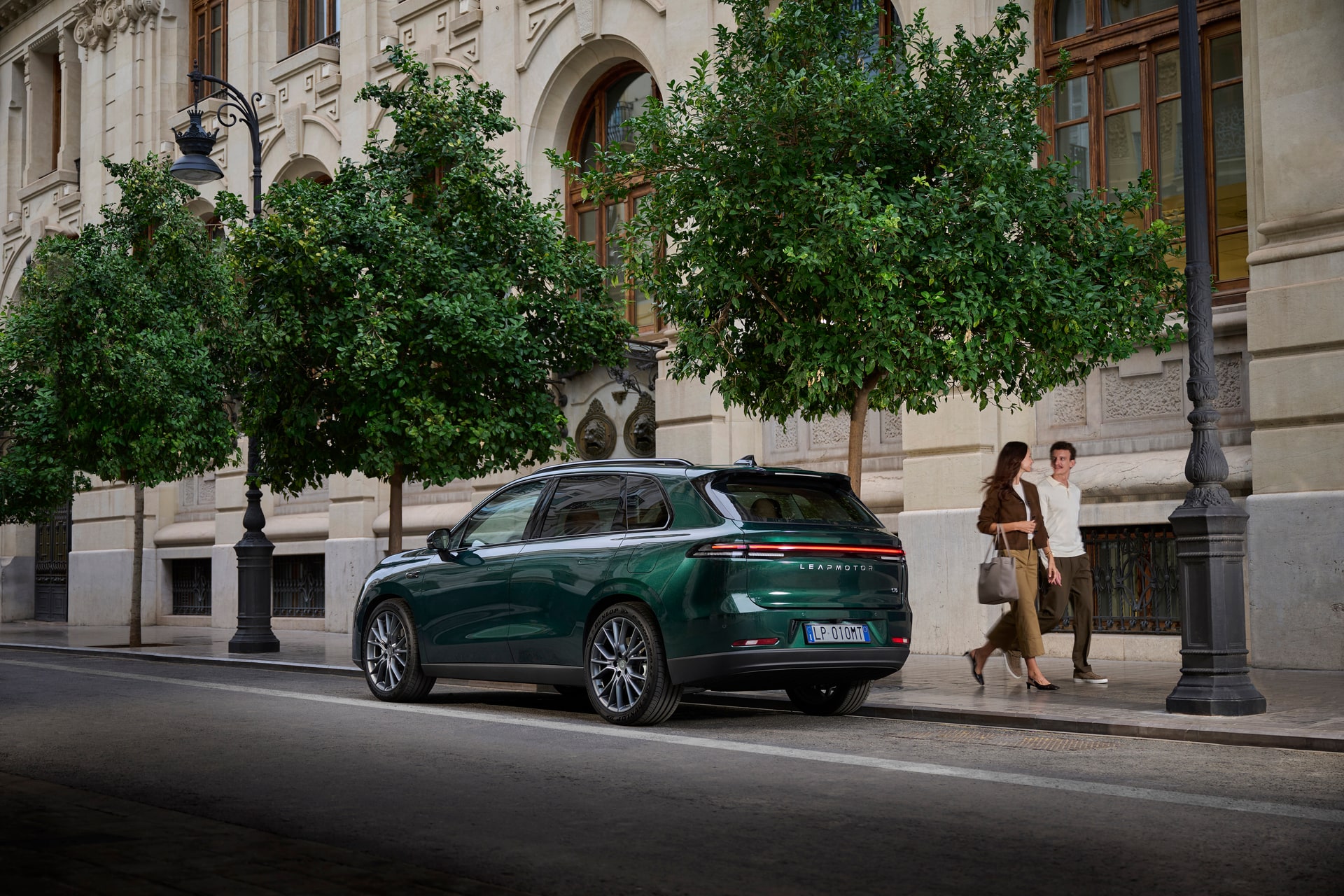
We compare the Leapmotor C10 REEV with ZERO emissions label against the Jaecoo 7 petrol with C label: two opposing philosophies of Chinese compact SUV under 37,000 euros in Spain.
The Chinese offensive in the compact SUV segment is no longer a promise: it is a reality filling dealerships and registration charts. Two names stand out for the noise they are making in Spain during 2025: the Leapmotor C10 and the Jaecoo 7. Both target the same buyer—young family, tight budget, eager to get a well-equipped SUV—but from very different trenches. One bets on the ZERO label and a REEV powertrain that still puzzles half of Spain. The other clings to the classic formula: turbo petrol, automatic gearbox and a low entry price.
Before we get into the details, a note for the reader: the prices we quote are the manufacturer’s recommended retail price (PVP), without dealer discounts, one-off campaigns or Plan Auto+ aid. On the street, almost everything moves.
Why are we comparing these two Chinese compact SUVs right now?
Because they embody two opposing ways of understanding the same segment and the same budget. A compact SUV buyer under 40,000 euros no longer has to choose between a basic Qashqai and an expensive Sportage: they can pay less and get a giant screen, synthetic leather and ADAS as standard. The real question is which powertrain fits their real life.
Opposing philosophies: plug-in hybrid with range extender versus pure turbo petrol
The Leapmotor C10 in its REEV version is a plug-in with a series architecture: the 1.5 petrol engine does not drive the wheels, it acts as a generator for the 28.4 kWh battery. In practice, you always drive in electric mode. The Jaecoo 7 entry version, on the other hand, mounts a 1.6 TGDI with 147 CV and a seven-speed DCT gearbox. No battery to plug in, no charger to install, no range anxiety. Petrol, and that’s it.
Which is better? It depends. And this is where the analysis gets interesting.
Leapmotor C10 REEV from ≈36,800 €: the plug-in that drives like an electric car
The C10 REEV is probably the most disruptive proposal from Leapmotor in Europe. Its 145 km of homologated electric range lets most urban drivers go weeks without visiting a petrol station—the average daily journey in Spain is around 30 km, so charging from Tuesday to Thursday is enough. When the battery runs low, the combustion engine starts as a generator and the homologated consumption rises to very modest figures if you are carrying a charge; if not, it goes up. In my view, this is where the formula loses some of its shine: on a long trip with a depleted battery, the REEV is not as efficient as a well-engineered conventional plug-in hybrid.
That said, the ZERO label is pure gold for anyone living in Madrid, Barcelona or any city with a tightened ZBE (low-emission zone). And the C10’s interior—14.6-inch central screen, faux-leather upholstery, panoramic roof—has a finish that feels a step above what was expected from a Chinese car three years ago.
| Power kW | Power CV | Top speed | Electric range | Consumption | Label | Fuel |
|---|---|---|---|---|---|---|
| ≈158 kW | ≈215 CV | ≈170 km/h | ≈145 km | ≈0.4 l/100 | ZERO | PHEV (REEV) |
Jaecoo 7 1.6 TGDI from ≈33,900 €: the petrol that asks no questions
The Jaecoo 7 plays a different game. Its 1.6 turbo delivers 147 CV, moves the car with ease and pairs with a seven-speed DCT that works well on open roads. In town, the gearbox shows the typical quirks of a cheap dual-clutch: some hesitation in slow manoeuvres. Nothing dramatic, but noticeable.
What it offers in return is simplicity. No cable, no planning charging stops, no wondering whether your communal garage space will ever have a plug. And an exterior design that, honestly, is among the most eye-catching in the segment—that vertical grille wrapped in chrome has more presence than many European SUVs costing ten thousand euros more. The interior, without matching the C10’s screens, has carefully considered details: faux-leather upholstery, dual-zone climate control, a 13.2-inch floating screen.
| Power kW | Power CV | Top speed | Range | Consumption | Label | Fuel |
|---|---|---|---|---|---|---|
| ≈108 kW | ≈147 CV | ≈180 km/h | — | ≈7.5 l/100 | C | Petrol |
Really under 32,000 euros? What the small print says
Here we must be honest. Neither of the two drops below 32,000 € in official PVP. The Jaecoo 7 starts around 33,900 €, the Leapmotor C10 REEV around 36,800 €. With aggressive dealer campaigns, brand financing and—in the case of the C10—the current Plan Auto+ aid for plug-ins, the final price may approach the psychological 32,000 barrier. But we don’t take that for granted: check updated conditions before signing.
Real running cost: home charging versus conventional refuelling
With a domestic socket and night-time tariff, running the C10 in electric mode costs around 2 euros per 100 km. The Jaecoo 7, with 95-octane petrol at 2025 prices, costs about 12–13 euros for the same 100 km. The difference, over 15,000 km a year, exceeds 1,500 euros. However, if you have no private plug and depend on the public network, the C10’s advantage evaporates quickly. In fact, in scenarios without home charging, the Jaecoo may turn out more cost-effective.
Taxes, ZBE and resale value: the label factor
The C10’s ZERO label opens ZBE zones, allows free parking in many cities and grants tax benefits. The C label of the Jaecoo, on the other hand, will be excluded from tightened ZBE zones in the coming years. It is a factor that will weigh on the resale value three or four years from now, especially if you buy the car intending to sell it soon.
Standard equipment and technology: screens, ADAS and comfort
Both are generously equipped as standard: complete ADAS package, large screens, 360° camera, dual-zone climate control, keyless entry. The C10 leans more towards Tesla-style minimalism—almost everything is managed through the screen, which is not always a virtue. The Jaecoo keeps some physical controls and more conventional ergonomics, easier to master on day one.
Space and practicality: family, boot and long journeys
Both measure around 4.7 metres in length, with boots above 500 litres and generous rear seats. The C10 wins on quietness at cruising speed—logical, since it runs on electric power—and the Jaecoo on real-world range on long trips without relying on recharging.
Summary table and editorial score
| Model | Price from | CV | Label | Consumption | Ideal use | Highmotor score |
|---|---|---|---|---|---|---|
| Leapmotor C10 REEV | ≈36,800 € | 215 | ZERO | ≈0.4 l/100 (charged) | Urban + garage with plug | 8.3 |
| Jaecoo 7 1.6 TGDI | ≈33,900 € | 147 | C | ≈7.5 l/100 | No plug, long trips | 7.6 |
Our editorial recommendation: which to choose according to your profile
If you have a garage space with a plug, live in a big city and drive under 100 km a day, the Leapmotor C10 REEV is a well-rounded purchase—ZERO label, very low cost per kilometre and a product that feels modern. If your daily life is on the highway, you have nowhere to plug in and you want to pay less upfront without complications, the Jaecoo 7 offers an honest package for less money. Neither is a panacea. But both, each in its own way, show that the Chinese industry is no longer playing only on price.
Frequently asked questions
Does the Leapmotor C10 REEV ever work without plugging in?
Yes, technically it can run using only the petrol engine as a generator, but it loses its raison d’être: consumption rises sharply and you waste the ZERO label. It is designed to be plugged in regularly.
Does the Jaecoo 7 come as a plug-in hybrid in Spain?
Yes, the Jaecoo 7 SHS plug-in hybrid variant exists, with ZERO label and a higher price. The version we analyse here is the 1.6 TGDI petrol, the most accessible in the range.
What warranty do these Chinese SUVs offer?
Both operate with competitive factory warranties covering several years or mileage—check updated conditions with each brand, as they usually include an extended battery warranty in the case of the C10.
Which depreciates less over three years?
It is still early for solid resale data, but the C10’s ZERO label should hold its value better as ZBE zones tighten. A petrol with a C label starts at a structural disadvantage on that front.
Technical specifications of this car


 Kia offers an electric range of 10 models, 50 versions and 400 possible combinations
 The seven finalists for the 2027 European Car of the Year (COTY) are exclusively electric
 Peugeot E-208 GTi: a battery-powered toy that revives the spirit of the 1980s sports cars
Deja un comentario