Level crossings: how should they be crossed safely?
 Mónica Redondo @MonicaRedondoD
17 June 2021
3 min.
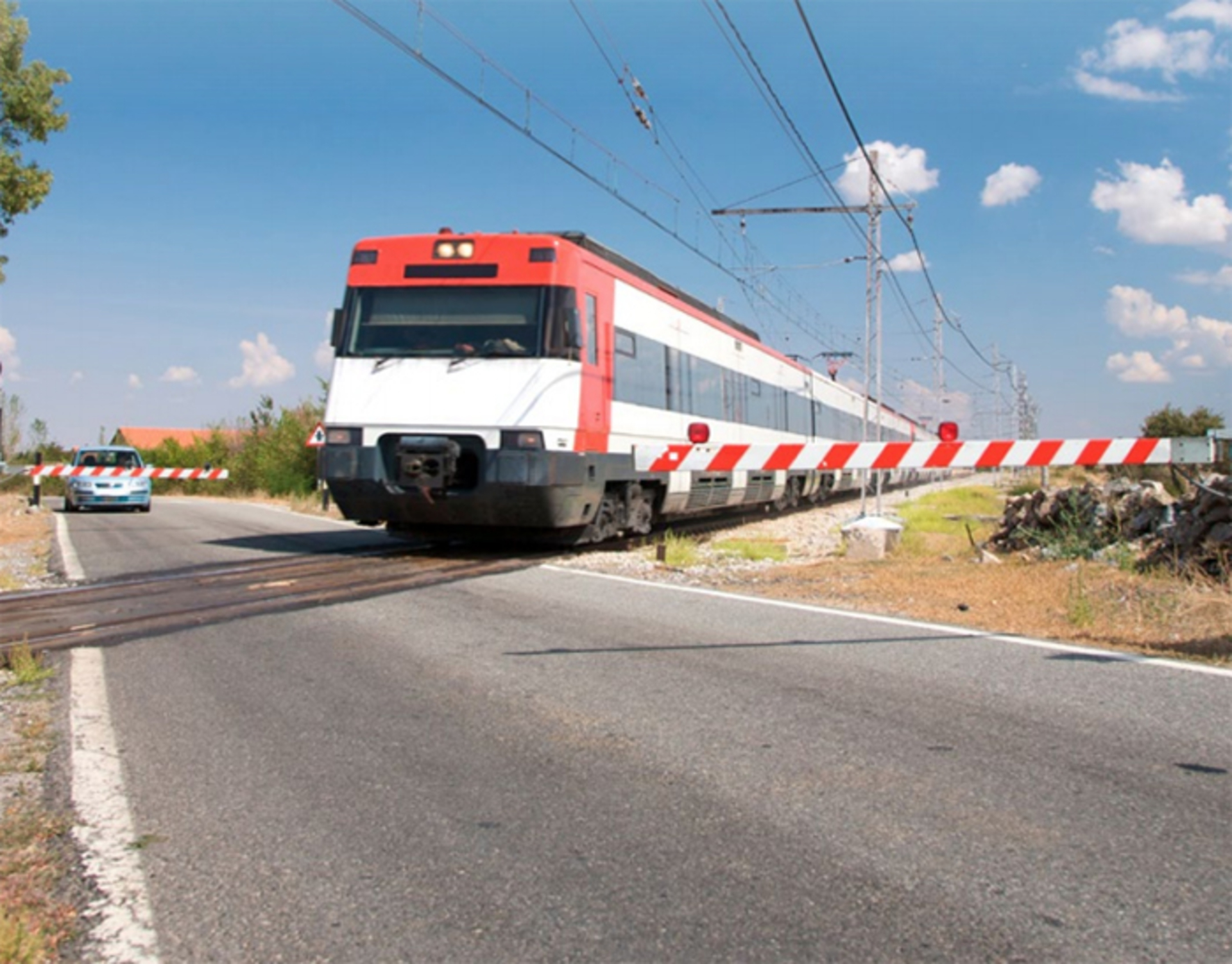
How should a level crossing be crossed safely? The Directorate-General for Traffic (DGT) explains it to us.
Level crossings in Spain are tending to disappear, either because the railway tracks have been put underground or because the road alignment has been changed. Nevertheless, level crossings still exist in our country. As fewer and fewer of them remain, the Directorate-General for Traffic has wanted to raise drivers’ awareness and sets out how a level crossing should be crossed safely.
The Directorate-General for Traffic, in collaboration with the Ministry of Transport, Mobility and Urban Agenda, has drawn up a guide called ‘Cruzar las vías‘ (Crossing the tracks) with the aim of raising awareness among drivers and pedestrians of the most appropriate and safe behaviours to adopt when we are near a railway line. It also seeks to reduce fatal accidents at these very critical points.
How should a level crossing be crossed safely?
Regardless of whether the level crossing has barriers or not, caution must always prevail. You should always stop in the lane you are travelling in, wait for the light to turn green and cross without delay. Also, when you are about to make the manoeuvre, keep very much in mind the risk of becoming stuck. To reach more drivers, the DGT produced a video and published it on its social media profiles.
At a level crossing, with or without barriers, exercise extreme caution and ALWAYS obey the rules. Stop in your lane, wait until you are signalled that you may proceed, and cross without delay and only when there is no risk of becoming stuck. Don’t take any risks! pic.twitter.com/2skb2LYIJ7
— Dir. Gral. Tráfico (@DGTes) May 28, 2018
In addition to following these instructions, the guide ‘Cruzar las vías’ has been created, made up of nine manuals dealing with safety at these points. They are adapted to all ages, from the youngest children to the elderly. Sergio Vázquez, Secretary General of Infrastructure and president of the State Railway Safety Agency (AESF), has stated that “users of the train must be made aware of the dangers their behaviour may pose, taking into account their age, habits and the society in which they live today. Some trains can weigh 320 tonnes, which is equivalent to 43 elephants, and take as long to stop as ten football pitches”.
This reminder comes after the proliferation of dangerous behaviour by young people for subsequent posting on social media. According to the Directorate-General for Traffic itself, these manuals have been presented to the Education departments of the Autonomous Communities to raise awareness about safety on railway tracks.
However, the Ministry of Transport has sent more than 1,000 letters to the town councils of municipalities that still have some level crossing. The Secretary General of Infrastructure and president of the State Railway Safety Agency himself wished to add that “the greatest risk of suffering a railway accident is when you are outside, not inside the train”.
Currently, there are 3,144 level crossings in Spain. Between 2018 and 2020, 82 have been closed and another eleven have been protected.


 Peugeot E-208 GTi: a battery-powered toy that revives the spirit of the 1980s sports cars
 New Lexus ES: luxury grows and goes electric
 First contact with the Dacia Sandero Hybrid 155: power and efficiency from €19,890
Deja un comentario