Caravelle Clase V EQV Mercedes Volkswagen Electric Cars Hybrid Cars Comparisons Minivans
Mercedes-Benz Clase V vs. Mercedes-Benz EQV: the premium diesel versus the 8-seat electric duel
 Iván Navarro
21 November 2026
6 min.
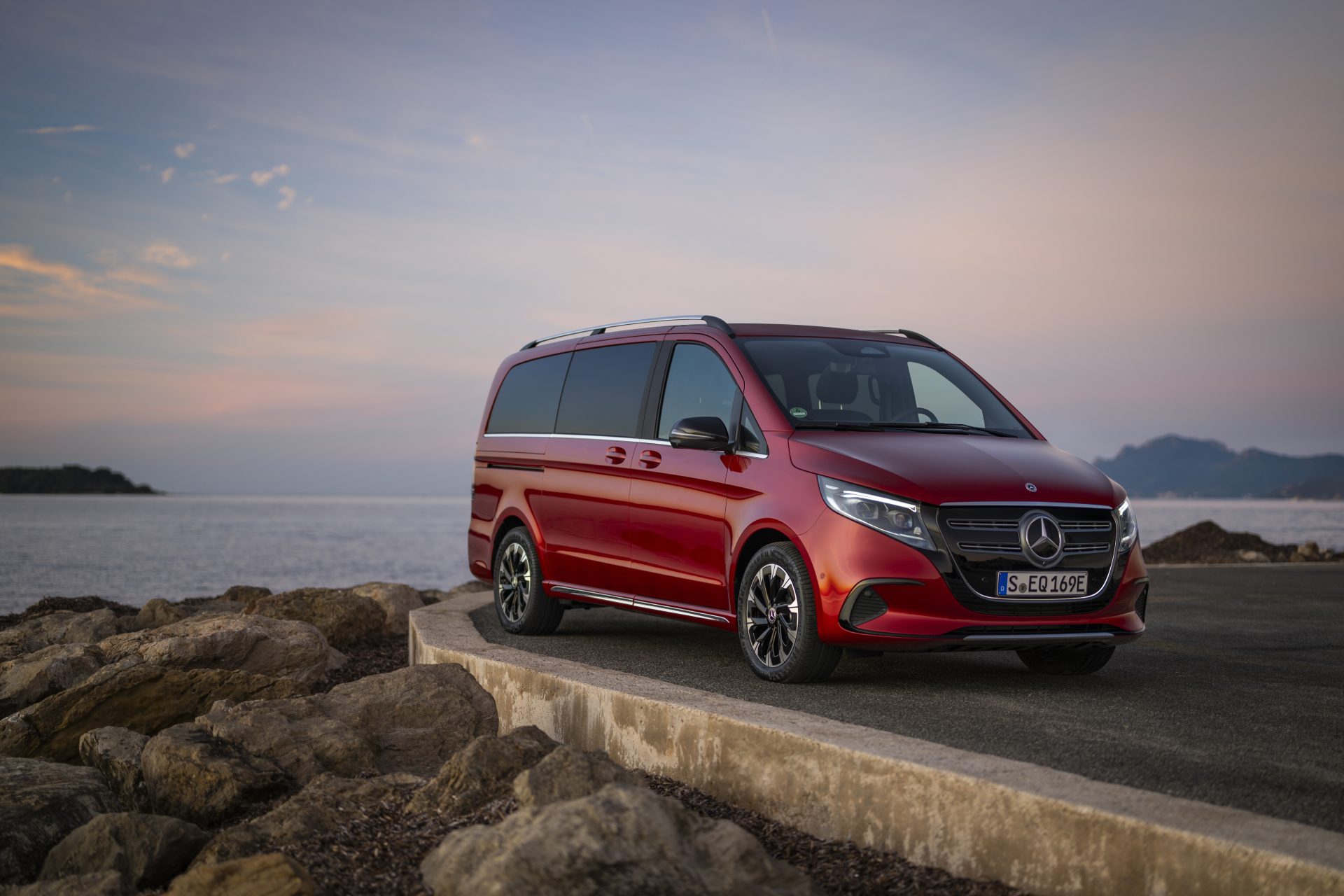
We compare the Mercedes-Benz Clase V 220 d and the EQV 250 electric, two premium 8-seat MPVs with opposing philosophies. We analyse range, indicative price and real-world use to help you decide which one fits your day-to-day life.
Few purchasing decisions create as much doubt as this one. Same chassis, same body, same purpose of carrying up to eight people in what looks like a mobile office. Yet two completely different philosophies coexist under the same commercial name. The Mercedes-Benz Clase V champions the traditional diesel, the one that has been handling long journeys without fuss for decades. The EQV offers an electric proposal that promises silence, instant torque and zero local emissions. Which one makes more sense in 2026 for a Spanish family or a transfer company? We will break it down with official figures, leaving no room for speculation.
Mercedes-Benz Clase V 220 d: the diesel that refuses to stop being the benchmark (from €76,200)
The Clase V 220 d uses a 163 hp (120 kW) diesel engine coupled to a 9G-Tronic nine-speed automatic gearbox. It is not a rocket, nor does it need to be: its appeal lies in its low-rev torque (380 Nm) and a range that turns any Madrid–Valencia trip into a stress-free run without refuelling stops. The homologated WLTP consumption is around 7.0 l/100 km, a figure that rises slightly on motorways with a full load, as is typical of MPVs of this size and aerodynamics.
| Model | Power | Top speed | Consumption | CO₂ emissions | Fuel |
|---|---|---|---|---|---|
| Mercedes-Benz Clase V 220 d | 120 kW / 163 hp | 195 km/h | 7.0 l/100 km | 184 g/km | Diesel |
The starting RRP is around €76,200, indicative and subject to the chosen configuration: wheelbase, trim level and seat package can easily shift that figure. It is worth remembering that these are manufacturer’s recommended retail prices, without dealer discounts or the one-off promotions that typically appear in the real market.
Mercedes-Benz EQV 250: the 8-seat electric MPV (from €90,300)
The EQV 250 Long changes the whole conversation. It features an electric motor producing 204 hp (150 kW), a 66 kWh gross battery (60 kWh usable) and an official WLTP range of around 230 km depending on the equipment of the long-wheelbase model. This is a solid figure for everyday use and urban transfers, but it requires planning fast-charging stops (accepting up to 80 kW DC) if the intended use includes long motorway journeys.
| Model | Power | Top speed | Range | Battery | Fuel |
|---|---|---|---|---|---|
| Mercedes-Benz EQV 250 Long | 150 kW / 204 hp | 140 km/h | 230 km | 60 kWh usable (66 kWh gross) | Electric |
The entry price starts at around €90,300, again as an indicative manufacturer’s RRP. That is a difference of more than €14,000 over the diesel, a gap that not every buyer is willing to accept just for the quiet ride and the DGT Zero label.
Real-world range: the point where everything is decided
There is no contest here. The Clase V can cover more than 800 km on a full tank (70 litres) without a second thought. The EQV 250, with its 230 km homologated WLTP range (which on the motorway at 120 km/h will realistically be around 170–180 km), is designed for moving within a city, its metropolitan area or short inter-urban trips. For an airport transfer fleet in Madrid or Barcelona it is more than sufficient. For a family travelling from one end of the peninsula to the other every summer without wanting to depend on chargers, it remains a demanding compromise.
Price and versions: the gap imposed by electric
A difference of more than €14,000 in starting RRP is a lot of money, and you must add the cost of installing a home charging point if you opt for the EQV. The Clase V, on the other hand, relies on the existing petrol station network, with no additional investment or dependence on infrastructure. Anyone considering the Plan Auto+ as a purchase aid should check the plan’s official website for the current amount, which may reduce that gap somewhat for the electric option.
Interior space: eight seats, two ways of living with them
In seats and interior space both share an identical base: up to 8 seats, a generous boot and the feeling of a converted van cabin turned into a lounge. The difference lies in the atmosphere. The EQV adds the silence of the electric motor, something especially appreciated with children sleeping in the rear row. The Clase V, with its slight diesel vibration at idle, feels more “working”, although with the soundproofing one would expect from a Mercedes.
Maintenance and running costs
The electric wins here without discussion: fewer moving parts, no oil filters or timing belts to check. The diesel, despite its proven reliability, carries the usual maintenance of a combustion engine of this size. In the long run, if annual mileage is high and urban, the EQV can offset part of its higher initial price on the workshop bill.
Which one to choose depending on your use?
If your day-to-day combines road driving and long journeys, and you need to be completely independent of charging infrastructure, the Clase V 220 d remains the option with the fewest frictions. If your operation is urban or peri-urban, with daily trips below 180 km, and you can charge at home or at the company base, the EQV offers a more refined and quieter driving experience. There is no universal answer: there is a usage pattern that decides for you.
Final comparison table
| Model | Power | Range/Consumption | Price from | Long-distance score | Urban score |
|---|---|---|---|---|---|
| Mercedes-Benz Clase V 220 d | 163 hp | 7.0 l/100 km | €76,200 | 9 | 7 |
| Mercedes-Benz EQV 250 Long | 204 hp | 230 km range | €90,300 | 5 | 9 |
Those looking for alternatives within the premium MPV universe can find in the Volkswagen Caravelle a proposal with the same spirit of refined passenger transport, although with a more traditional mechanical philosophy than that of the EQV.
Frequently asked questions
Which is cheaper to maintain, the Clase V or the EQV?
The EQV tends to be more economical to maintain in the long run by dispensing with elements specific to the diesel engine, although its purchase price is noticeably higher.
Is the EQV suitable for long road trips?
With a homologated range of around 230 km (in the 250 version with 60 kWh usable), the EQV 250 is designed mainly for urban or medium inter-urban use; for long motorway journeys it requires planning recharging stops roughly every 150–180 km.
What is the indicative price of each model?
The Clase V 220 d starts at around €76,200 and the EQV 250 Long from around €90,300, both as manufacturer’s recommended RRP, without discounts or aid applied.
Are there public grants to buy the EQV?
Yes, the Plan Auto+ provides purchase aid for electric vehicles in Spain; it is advisable to check the plan’s official website for the current amount and updated requirements.
Technical specifications of this car


 Kia offers an electric range of 10 models, 50 versions and 400 possible combinations
 The seven finalists for the 2027 European Car of the Year (COTY) are exclusively electric
 Peugeot E-208 GTi: a battery-powered toy that revives the spirit of the 1980s sports cars
Deja un comentario