Nissan and Microsoft join forces through the Cortana virtual assistant
 David Lopez @espacionblanco
11 April 2017
2 min.
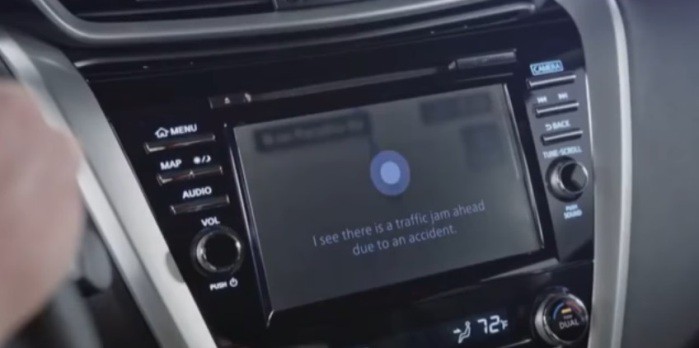
The Renault-Nissan alliance takes a step further by announcing its collaboration with Microsoft to develop Cortana as a virtual assistant in its vehicles
All brands dedicate part of their efforts to creating the most efficient and autonomous models possible, yes, autonomous, because whether we like it or not the day will come when the driver’s seat becomes that of just another passenger. A sign of this is that Nissan, which is the one we are concerned with at this moment, has teamed up with NASA to develop its autonomous driving systems.
While we wait for autonomous driving systems to become increasingly effective, vehicles incorporate and will incorporate safety systems and assistants that in a way bring them closer to that autonomous vehicle that will arrive in due course. As an example, we have the agreement reached between the Renault-Nissan alliance and Microsoft for the installation of the Cortana virtual assistant in Nissan models.
The introduction of the Cortana virtual assistant aims to make our driving as pleasant and efficient as possible. Its main mission will be to keep us from being caught in the much-unwanted traffic jams, whether on a day-to-day basis or during our holidays, and if we do the sums, in Spain we spend an average of 39.6 hours a year in traffic jams, which amounts to between 15% and 20% of the time we devote to driving.
With Cortana as an assistant to our driving this will not happen, or at least it will try to prevent it, since it will be able to detect traffic jams, and logically it will offer us an alternative depending on the traffic. But this will not be all, since once we have got past the jam and reached our destination, we will be able to tell Cortana to park the car for us.
Cortana will also be able to adapt to the person driving the car, that is, if we share it with someone else, since each user’s default settings will be used and activated when needed. In addition, we will be able to adjust the air conditioning or heating, access service intervals, carry out diagnostics or even access personalised information all of this remotely.
Another interesting feature of Cortana is voice analysis, a system made up of the voice recognition built into the vehicle and the intuitive human-machine interface, known by the English acronym HMI. In this way, communication between the driver and Cortana will be two-way, which means the system will be able to ask us questions based on our experience of use.
Below, you can watch a video showing how Cortana will be used in our day-to-day lives.
https://youtu.be/eQBXqTcUSDM
Source | Nissan


 Peugeot E-208 GTi: a battery-powered toy that revives the spirit of the 1980s sports cars
 New Lexus ES: luxury grows and goes electric
 First contact with the Dacia Sandero Hybrid 155: power and efficiency from €19,890
Deja un comentario