Porsche sets a date for the commercialisation of the synthetic fuel it produces
 Victor Alós Yus @sepelaci
8 March 2023
3 min.
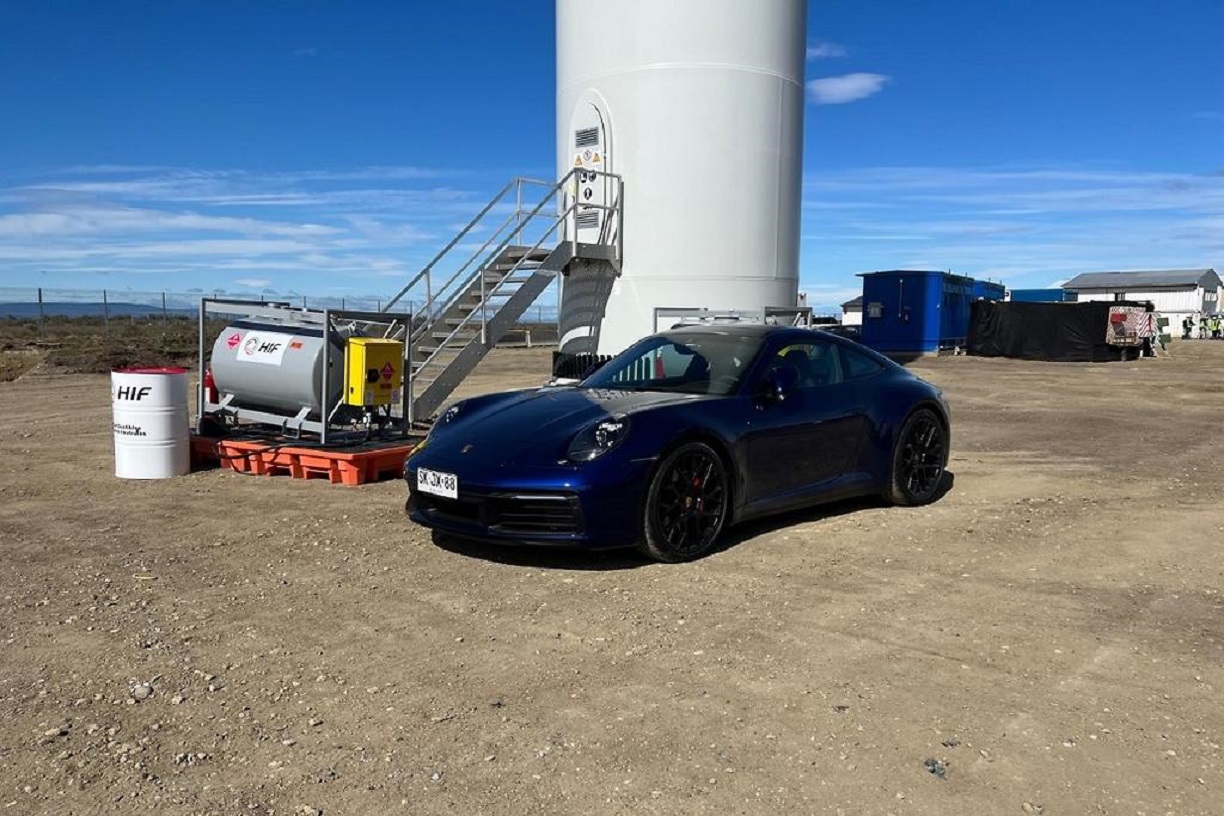
This brand of the Volkswagen Group has opened a synthetic fuel production plant in Chile and has set a date to begin marketing it.
We recently discussed how Germany wanted to propose several exceptions to the phase-out of combustion engines in 2035. One of the arguments this country wants to put forward is the use of synthetic fuels. This type of fuel does not have exactly zero emissions but, since it uses CO2 in its production, it turns out to be a fuel that is neutral for the atmosphere.
One of the main promoters of this type of fuel is the Volkswagen Group, which focuses its production on the Porsche brand. This brand is in charge of manufacturing and placing this type of fuel on the market. To that end, a few weeks ago it opened a first production plant in Chile, which has already started operating and producing this fuel. But it will not be the only one, so the use of combustion engines may need to be rethought.
A neutral fuel
Synthetic fuel is made with a process that combines hydrogen with CO2. This means that to produce it, CO2 is captured from the atmosphere, so it is removed from the environment. The hydrogen, for its part, is obtained from water. Using a catalyst, the hydrogen is separated from the oxygen thanks to energy from renewable sources. So even the hydrogen is obtained with sustainable energy.
The Haru Oni plant has a large wind turbine that produces the energy needed to separate the oxygen and the hydrogen. The fuel obtained has been used to run several cars, mainly Porsche, but it could also be used to power aircraft engines, ships and other vehicles around the world.
For the moment, only this plant in Chile is operating, but Porsche wants to open two more production plants, one in Texas and another in Australia. With all three plants running, it will be possible to begin marketing this fuel on a mass scale. And that is good news, because it has several advantages.
Advantages of synthetic fuel
It is important to point out that synthetic fuel does emit polluting gases. But that CO2 was removed from the atmosphere for its production, so it adds no more. This is what makes it, as we have already said, completely neutral. Another advantage is that it can run in any engine without the need for modifications. It can also be supplied by any petrol station, so no new infrastructure is needed.
Can it replace electric vehicles? No, and in fact it is being considered as a complement to them. The transition to electric cars will allow polluting emissions to be reduced, but the use of synthetic fuels will keep levels from increasing.
If we go by the forecasts of Porsche, it will be in 2027 that full commercialisation of this fuel can be spoken of. By then the other two plants will be open and mass marketing will be possible. The price per litre would be below 2 dollars, that is, 1.90 euros. That said, this is an estimate and until production starts on this scale, it will not be known.
Although it will not eliminate the transition to electric cars, the use of synthetic fuels will allow combustion engines to continue to exist beyond 2035, although perhaps only in certain cases. Time will tell whether it is a good idea and a real option for avoiding releasing more CO2 into the atmosphere.


 Kia offers an electric range of 10 models, 50 versions and 400 possible combinations
 The seven finalists for the 2027 European Car of the Year (COTY) are exclusively electric
 Peugeot E-208 GTi: a battery-powered toy that revives the spirit of the 1980s sports cars
Deja un comentario