Range Rover Evoque PHEV vs. Volvo XC60 T6 Recharge: the premium compact plug-in hybrid SUV showdown
 Iván Navarro
16 July 2026
6 min.
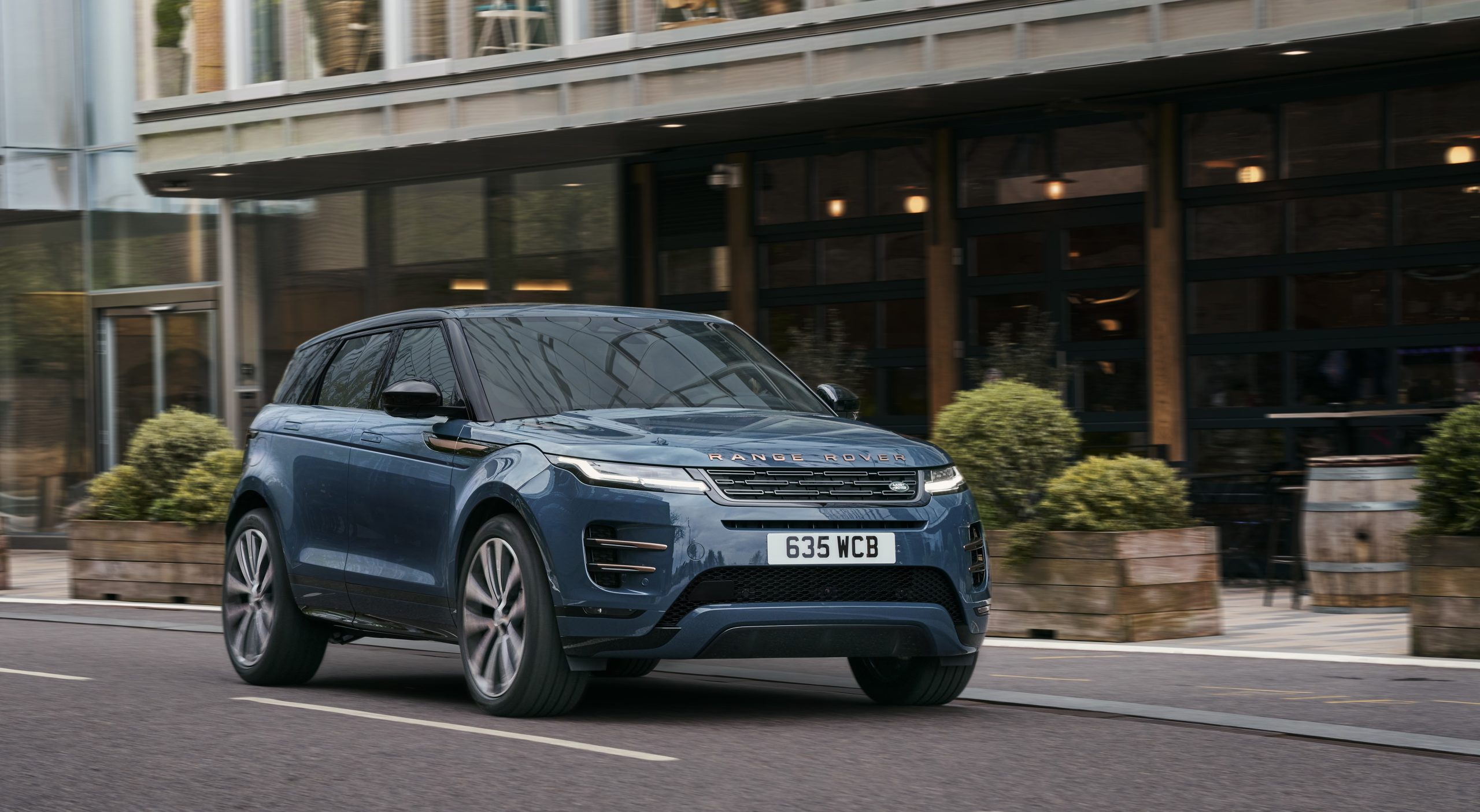
We compare two benchmarks of the premium plug-in hybrid SUV in Spain: the British Range Rover Evoque PHEV and the Swedish Volvo XC60 T6 Recharge. Electric range, power, price and brand philosophy head to head.
There are comfortable comparisons and uncomfortable ones. This one belongs to the second group. Pitting the Range Rover Evoque PHEV against the Volvo XC60 T6 Recharge means crossing two very different ways of understanding the premium compact plug-in hybrid SUV: British luxury with off-road ambitions versus Scandinavian restraint obsessed with safety and efficiency. Neither wants to be the other. And that’s where it gets interesting.
Before getting into it, a note on method. We have left BYD and, by extension, the rest of the Chinese proposals in this segment out of this analysis. This is not a judgement on their quality—there are very solid products—but an editorial decision: in our view, other brands offer a mechanical setup and refinement somewhat closer to European taste in this range, with torque curves and engine responses that better match what the premium buyer in Spain expects. It is the publication’s criterion, not a technical verdict.
The prices shown below are manufacturer’s recommended retail prices (PVP), without dealer discounts, one-off campaigns or purchase incentives. Treat them as a rough guide.
Context: why the premium compact PHEV SUV still makes sense in Spain
The PHEV is going through a strange moment. It is accused of being a bridge to nowhere, but the numbers on the dealer floor say otherwise: for mixed use—short daily urban trips, occasional long journeys—it remains the most rational solution for those not yet ready to make the leap to full electric. ZERO-emission label, access to low-emission zones, the ability to drive Madrid to Guadalajara without using a drop of petrol and, when the time comes to head down to Cádiz for a weekend, no dependence on the charging network.
In the premium compact segment, two names dominate the conversation today: Evoque and XC60. Each with its own DNA.
Range Rover Evoque PHEV from ≈60,600 €: the Briton that insists on off-roading
The Evoque PHEV combines a 1.5 three-cylinder turbo with an electric motor on the rear axle, delivering around 270 CV and 540 Nm. The battery, with roughly 15 kWh usable, is rated at close to 70 km in electric mode —a WLTP figure; in practice, and in cold weather, it is better to expect about 15% less, as with any PHEV.
What is interesting about the Evoque is not the spec sheet. It is the attitude. It remains a Land Rover: Terrain Response, decent approach angles for a premium compact, rated wading depth. How many owners will take it down a dirt track? Few. Does it matter? It depends on what you are buying a Range Rover for. The interior keeps the brand’s ceremonial touch—the materials, the feel of the controls, the floating screen—although the infotainment ergonomics don’t quite convince me. The touch response is slow compared with what the German competition offers or, yes, the Swedish one.
On paper it is quick—0-100 in around 6.5 s—but it isn’t enjoyed like a sports car: the three-cylinder makes itself heard once the battery runs out. That said, with a full charge and in pure electric mode, the cabin silence is in a different category.
| Power kW | Power CV | Top speed | Electric range | Consumption | Label | Fuel |
|---|---|---|---|---|---|---|
| ≈200 kW | ≈270 CV | ≈210 km/h | ≈70 km | ≈1.5 l/100 km | ZERO | PHEV |
Volvo XC60 T6 Recharge: the quiet strength of the north
The XC60 T6 Recharge plays in a different power league. Its 2.0 turbo combined with the electric motor delivers around 350 CV and 710 Nm, with 0-100 in about 5.5 s. The battery, roughly 19 kWh, gives around 80 km of rated electric range. More muscle and more electric cushion than the Evoque. On paper, the Swede clearly wins.
But the XC60 is not about numbers, it is about feel. The smoothness of the ride, the insulation, seats that are a benchmark in the segment—Volvo has been doing this better than almost anyone for decades. The interior exudes calm: a vertical screen with integrated Google, honest materials, zero theatrics. For tastes like mine, the interior design ages better than the Evoque’s, although the Briton has more “presence” in the hotel car park.
One caveat: top speed is limited to 180 km/h by brand policy. Volvo cares about safety to that extent. Debatable, but consistent with its message.
| Power kW | Power CV | Top speed | Electric range | Consumption | Label | Fuel |
|---|---|---|---|---|---|---|
| ≈260 kW | ≈350 CV | ≈180 km/h | ≈80 km | data not available | ZERO | PHEV |
Head to head: where each one wins
In outright performance, the XC60 T6 Recharge wins without contest: 80 CV more, half a second quicker to 100 and 10 km more electric range. In interior space and boot capacity too: the Swede is 32 cm longer, and that shows both in rear seat room and in payload for a four-adult trip with luggage.
The Evoque hits back in a different way. It is easier to handle in town—those 4.37 metres are appreciated in a central Madrid car park—it offers real off-road capability that the Volvo doesn’t even attempt, and it has an image factor that still carries weight in this segment. Arriving in a Range Rover is not the same as arriving in anything else. And whoever buys one knows it.
Price: the Evoque PHEV starts at around 60,600 €. The XC60 T6 Recharge falls in a similar bracket depending on trim, though this must be confirmed on the official configurator because commercial campaigns shift. On paper, value for money, the Swede delivers more car.
Summary table and editorial score
| Model | Power | Electric range | 0-100 | Price from | Score /10 |
|---|---|---|---|---|---|
| Range Rover Evoque PHEV | ≈270 CV | ≈70 km | ≈6.5 s | ≈60,600 € | 7.8 |
| Volvo XC60 T6 Recharge | ≈350 CV | ≈80 km | ≈5.5 s | data not available | 8.4 |
Verdict
If you want performance, refinement and a driving experience consistent with real PHEV use—long journeys included—the XC60 T6 Recharge is the more rational choice. If what you want is a Range Rover, with everything that means in image, off-road capability and brand ritual, the Evoque has arguments the Volvo doesn’t even try to counter. It comes down to what you buy the car for, not which one is better.
Frequently asked questions
Which has more electric range, the Evoque PHEV or the XC60 Recharge?
The Volvo XC60 T6 Recharge, with around 80 rated km, beats the Range Rover Evoque PHEV, which claims close to 70 km. In real-world use, the gap remains in the Swede’s favour.
Which accelerates faster?
The XC60 T6 Recharge, with its ≈350 CV and ≈710 Nm, covers 0-100 in around 5.5 s versus the ≈6.5 s of the Evoque PHEV.
How much does a Range Rover Evoque PHEV cost in Spain?
The indicative PVP starts at approximately 60,600 €, without discounts or incentives. Final prices vary by trim, options and dealer campaigns.
Do both have the DGT ZERO label?
Yes. As plug-in hybrids with more than 40 km of rated electric range, both models qualify for low-emission zones, reduced-rate regulated parking and the tax benefits associated with the ZERO label.


 Peugeot E-208 GTi: a battery-powered toy that revives the spirit of the 1980s sports cars
 New Lexus ES: luxury grows and goes electric
 First contact with the Dacia Sandero Hybrid 155: power and efficiency from €19,890
Deja un comentario