Ranking 2026: the 7 most agile compact hybrid SUVs for parking and driving in the city
 Dani Montesinos
5 August 2026
7 min.
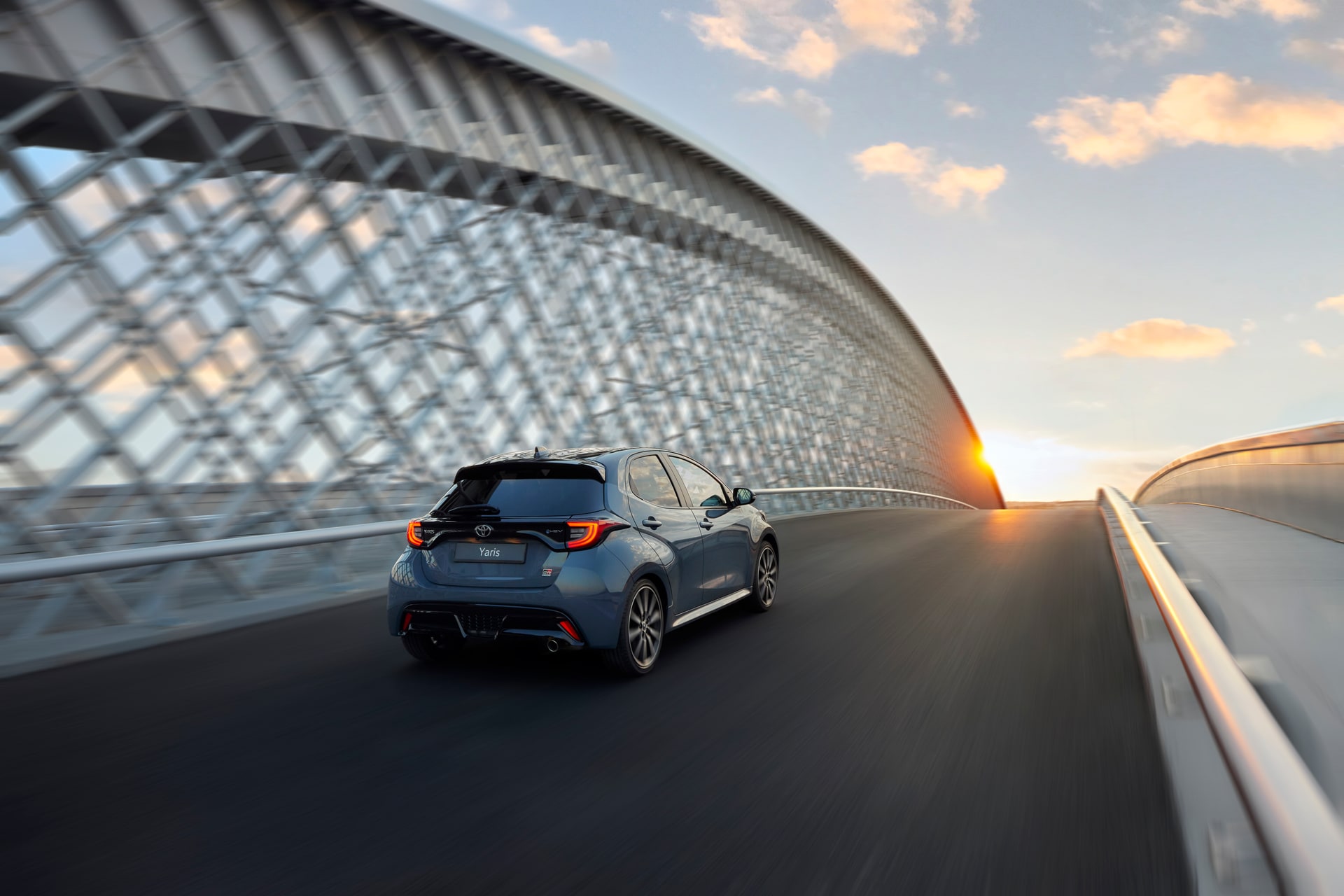
Seven compact hybrid SUVs sold in Spain in 2026, ranked by real urban agility: turning radius, length, visibility and urban WLTP consumption
Driving through central Madrid in a 4.60-metre SUV is not impossible. It’s just uncomfortable. And parking it parallel on a Tuesday at half past eight isn’t much of a plan either. That’s why this ranking steps away from the usual criteria—power, equipment, big screens—and focuses on what really matters when the car lives among roundabouts, low-emission zones and increasingly narrow parking spaces: length below 4.40 m, a tight turning circle, honest visibility and low urban consumption. All with self-charging hybrid powertrains, which perform best in pure urban cycles.
We have reviewed the range on sale in Spain in 2026 and filtered out the seven most agile compact hybrid SUVs in the city. No tricks: no disguised PHEVs, and no models that have not yet reached Spanish dealerships.
What makes a hybrid SUV agile in the city
An SUV feels agile when three things come together: a turning circle below 5.4 metres kerb to kerb, a contained length (4.20–4.35 m is the sweet spot), and well-calibrated power steering at low speeds. The hybrid system adds its share: electric pull-aways, instant response from standstill, and urban WLTP consumption around 4 l/100 km. That is what separates a genuine city car from a compact that is only called urban in the brochure.
1. Toyota Yaris Cross Hybrid 130 — from €27,500
The most agile in the ranking, and not by a small margin. With a length of 4.18 metres and a turning circle of 5.3 m, the Yaris Cross slips into spaces where others hesitate. The fourth generation of the Toyota hybrid, now with 130 hp combined, solves the one historic complaint—lack of pep when joining a fast road—without giving up efficiency. In town, between 3.8 and 4.2 l/100 km in real use. Frontal visibility, in my view, is among the best in the segment. 360º camera standard from the mid-level trim.
| Power kW | Power hp | Top speed | Range | Consumption | Label | Fuel |
|---|---|---|---|---|---|---|
| 96 kW | 130 hp | 170 km/h | ~900 km | 4.4 l/100 km | ECO | Hybrid |
2. Hyundai Kona Hybrid — from €26,240
The Kona grew in its new generation—up to 4.35 m—but keeps a turning circle of 5.3 m that surprises. The steering is a little lighter than the Yaris Cross’s, which is appreciated in walking-pace manoeuvres. The 141 hp hybrid system pairs a 1.6 GDI with a small electric motor and, in practice, works very smoothly in stop-and-go traffic. Homologated urban consumption of 4.3 l/100 km. The interior is noticeably more premium than the previous model’s.
| Power kW | Power hp | Top speed | Range | Consumption | Label | Fuel |
|---|---|---|---|---|---|---|
| 101 kW | 138 hp | 165 km/h | ~850 km | 4.7 l/100 km | ECO | Hybrid |
3. Renault Captur E-Tech Full Hybrid — from €27,110
The Captur measures 4.24 m and turns in 5.4 m. Nothing extraordinary on paper, but the E-Tech system has a trick: it always starts in electric mode and, according to Renault, it can run up to 80% of urban driving time without the combustion engine running. You can feel it. On neighbourhood journeys, consumption drops below 4.3 l/100 km effortlessly. The clutchless multimode gearbox is quirky—it sometimes pauses to think—but it works.
| Power kW | Power hp | Top speed | Range | Consumption | Label | Fuel |
|---|---|---|---|---|---|---|
| 116 kW | 160 hp | 180 km/h | ~900 km | 4.3 l/100 km | ECO | Hybrid |
4. Nissan Juke Hybrid — from €27,350
At 4.21 m and with a turning circle of 5.4 m, the Juke Hybrid shares its platform and philosophy with the Captur, but leans towards a more playful character. The steering is quick, almost nervous; some enjoy it, others will prefer something more neutral. In town it handles with ease, and the 145 hp hybrid delivers urban consumption close to 4.5 l/100 km. Rear visibility is limited by the window design—though the camera compensates.
| Power kW | Power hp | Top speed | Range | Consumption | Label | Fuel |
|---|---|---|---|---|---|---|
| 106 kW | 145 hp | 166 km/h | ~850 km | 4.7 l/100 km | ECO | Hybrid |
5. Honda HR-V e:HEV — from €31,460
The HR-V narrowly misses the length filter: 4.34 m. It makes up for it with a 5.3 m turning circle and, above all, what we consider the best hybrid system in the ranking. The e:HEV uses the combustion engine almost as a generator and offers clean electric response up to 80–90 km/h. In town, 4.5 l/100 km real without pushing. The price, however, sits noticeably above its rivals. If you are coming from the duel between the C-HR and the ZR-V, the HR-V positions itself one step below in size and urban agility.
| Power kW | Power hp | Top speed | Range | Consumption | Label | Fuel |
|---|---|---|---|---|---|---|
| 96 kW | 131 hp | 170 km/h | ~900 km | 5.3 l/100 km | ECO | Hybrid |
6. Kia Niro Hybrid — from €24,410
The Niro approaches 4.42 m—at the edge of what we consider a compact urban car—but keeps a 5.3 m turning circle and very good visibility thanks to its high seating position and slim pillars. The 1.6 GDI with electric motor delivers 141 hp combined. Urban consumption around 4.5 l/100 km. The 451-litre boot is one of the best in the ranking. The downside: steering that feels lighter than it should, and needs a bit more feel at medium speeds.
| Power kW | Power hp | Top speed | Range | Consumption | Label | Fuel |
|---|---|---|---|---|---|---|
| 101 kW | 138 hp | 165 km/h | ~900 km | 4.5 l/100 km | ECO | Hybrid |
7. Suzuki Vitara Hybrid — from €25,327
The Vitara is the second cheapest in the ranking but the most veteran in concept. It measures 4.17 m, turns in 5.2 m—the best figure in the group—and offers a mild hybrid that is more honest than spectacular. The combined 110 hp won’t impress anyone, but for pure urban use it does the job. Urban consumption around 5 l/100 km, somewhat worse than its full-hybrid rivals. In exchange, a contained price and proven mechanics.
| Power kW | Power hp | Top speed | Range | Consumption | Label | Fuel |
|---|---|---|---|---|---|---|
| 81 kW | 110 hp | 180 km/h | ~800 km | 5.3 l/100 km | ECO | Hybrid |
Ranking summary table
| Model | Length | Turning circle | hp | Urban consumption | From | Score /10 |
|---|---|---|---|---|---|---|
| Toyota Yaris Cross 130 | 4.18 m | 5.3 m | 130 | 4.2 l | €27,500 | 9.3 |
| Hyundai Kona Hybrid | 4.35 m | 5.3 m | 141 | 4.3 l | €26,240 | 8.8 |
| Renault Captur E-Tech | 4.24 m | 5.4 m | 145 | 4.5 l | €27,110 | 8.6 |
| Nissan Juke Hybrid | 4.21 m | 5.4 m | 143 | 4.5 l | €27,350 | 8.4 |
| Honda HR-V e:HEV | 4.34 m | 5.3 m | 131 | 4.7 l | €31,460 | 8.3 |
| Kia Niro Hybrid | 4.42 m | 5.3 m | 141 | 4.5 l | €24,410 | 8.1 |
| Suzuki Vitara Hybrid | 4.17 m | 5.2 m | 115 | 5.0 l | €25,327 | 7.7 |
If the criterion is purely urban—fitting in, turning, consuming little and not breaking the bank—the Yaris Cross takes the win. That said, anyone looking for the best balance between agility and refinement on board should test the Kona before signing anything. And if the budget is tight, the Vitara remains a worthy option. For those who want to move up a segment with a CERO label, it is also worth checking the comparison between the Kia EV3 and the Jeep electric Avenger.
Frequently asked questions
Which hybrid SUV is easiest to park in the city in 2026?
The Toyota Yaris Cross Hybrid 130. It combines a 4.18 m length, a 5.3 m turning circle and an optional 360º camera. In tight spaces and parallel parking it is the most manageable in its segment in Spain.
What is the ideal turning circle for an urban SUV?
Below 5.4 metres kerb to kerb. From 5.5 m onwards, any U-turn on a two-lane street forces you to correct. All seven models in the ranking are within the acceptable threshold, with the Suzuki Vitara posting the best figure (5.2 m).
Does a hybrid SUV use less fuel in town than on the motorway?
Yes, unlike a pure combustion car. In urban driving, the hybrid system recovers energy on every braking event and pulls away in electric mode. The full-hybrid models in the ranking come in around 4.2–4.7 l/100 km in real city use, compared with 5–5.5 l on the motorway.
Is a hybrid SUV better than a PHEV for urban-only use?
If you have no charging point at home or work, yes. The self-charging hybrid offers an ECO label, very low urban consumption and zero charging management. The PHEV only shines if you plug it in daily; without that, it carries the weight of the battery without making use of its advantages.


 Peugeot E-208 GTi: a battery-powered toy that revives the spirit of the 1980s sports cars
 New Lexus ES: luxury grows and goes electric
 First contact with the Dacia Sandero Hybrid 155: power and efficiency from €19,890
Deja un comentario