Buying Guides Tests Rankings SUV
Ranking 2026: the 7 most reliable family SUVs according to the latest quality studies
 Dani Montesinos
5 August 2026
7 min.
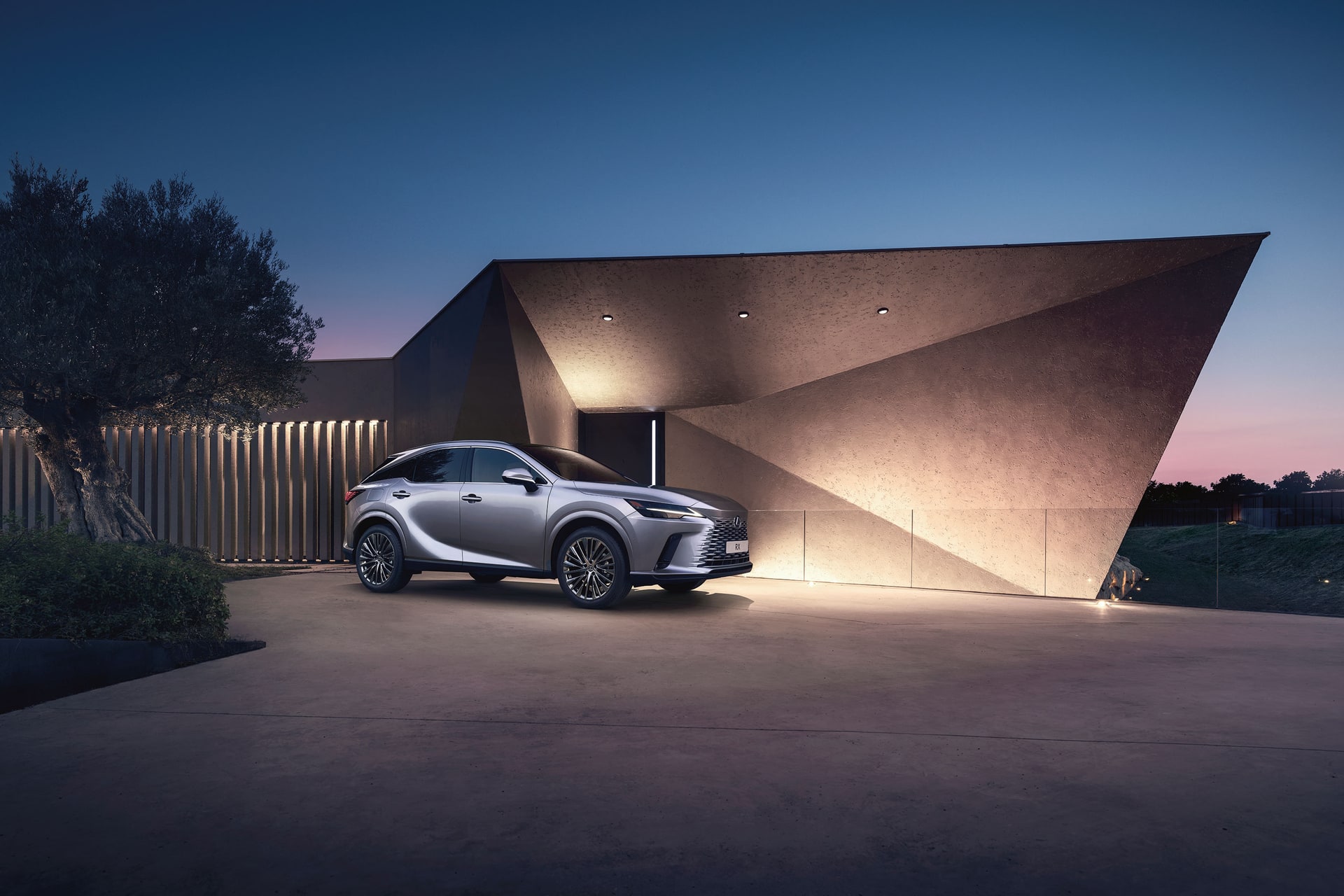
We analyse the seven most reliable family SUVs on the Spanish market in 2026 according to J.D. Power, Consumer Reports, TÜV and ADAC.
There is one fact every fleet manager knows by heart: reliability doesn’t sell on the showroom floor, but it decides whether a family SUV ends up costing 4,000 euros more or less after five years. The 2025 quality studies —J.D. Power VDS, Consumer Reports, the veteran German TÜV Report and the ADAC Pannenstatistik— once again agree on something that was already a trend: Japanese and Korean manufacturers dominate the ranking, while European premium brands pay dearly for the complexity of their new-generation hybrid powertrains.
This ranking focuses on models actually sold in Spain in 2026, with fault data per 100 vehicles, warranty policy and average cost of ownership over 5 years/100,000 km. No hype.
How SUV reliability is measured in 2026
The four studies that really matter
The J.D. Power Vehicle Dependability Study surveys owners of three-year-old cars and measures problems per 100 vehicles (PP100). The lower, the better. Consumer Reports combines subscriber surveys with its own tests and publishes a predicted reliability index. The German TÜV Report analyses millions of roadworthiness inspections and detects real failures in specific parts. And the ADAC Pannenstatistik counts breakdowns on the road —the ones that leave the driver stranded—, which is probably the most honest figure of all.
What the Spanish buyer looks at
Counting faults is not enough. In Spain, the dealer network, parts availability, the cost of scheduled maintenance and, increasingly, the manufacturer warranty all carry weight. Kia still offers seven years, Hyundai five, and Toyota stretches up to ten with its Relax plan if you keep the car in the official network. That changes the calculation when you sign.
The 7 most reliable family SUVs of 2026
1. Lexus RX — from €83,900
The RX has led reliability rankings for over a decade and in 2026 it shows no sign of slipping. J.D. Power’s VDS systematically places it below 130 PP100, when the premium segment average is around 190. The 450h+ PHEV version combines the 2.5 naturally aspirated engine with two electric motors and an e-CVT gearbox which, frankly, is one of the most dependable things you can fit to a family car. Boring to drive for some. Practically indestructible for almost everyone.
| Power kW | Power hp | Top speed | Range | Consumption | Label | Fuel |
|---|---|---|---|---|---|---|
| 230 | 313 | 210 km/h | 65 km electric + 800 km total | 3.3 l/100 km WLTP | ZERO | PHEV |
Toyota RAV42. Toyota RAV4 — from €44,250
The RAV4 is the reference in the non-premium segment for reliability. The HSD hybrid system, which Toyota has been refining since 1997, barely registers serious faults in the TÜV Report. A typical case: a fleet RAV4 with 180,000 km in four years that has only visited the workshop for scheduled maintenance and one rear brake pad. In 2026, that is almost science fiction. The Toyota Relax plan of up to 10 years adds peace of mind for buyers who plan to keep the car.
| Power kW | Power hp | Top speed | Range | Consumption | Label | Fuel |
|---|---|---|---|---|---|---|
| 136 | 185 | 180 km/h | 950 km | 5.2 l/100 km | ECO | Hybrid |
We already saw in the duel with the Honda CR-V that the RAV4 wins on consumption and proven mechanical durability.
3. Kia Sorento — from €52,853
Genuine seven seats, a seven-year warranty with no small print, and a reliability record that has climbed the VDS rankings to sit in the overall top 10. The Sorento HEV uses the 1.6 T-GDI with an electric motor and a six-speed automatic transmission —not a CVT—, something many drivers appreciate on the motorway. ADAC places it among the best in the D-SUV segment for fault rate from the third year onward.
| Power kW | Power hp | Top speed | Range | Consumption | Label | Fuel |
|---|---|---|---|---|---|---|
| 169 | 230 | 193 km/h | 820 km | 6.7 l/100 km | ECO | Hybrid |
4. Hyundai Santa Fe — from €49,520
The Sorento’s cousin shares its platform and powertrains, but with a more radical design and a digital interface that, to my taste, is a step ahead. Five years of warranty and unlimited mileage. In the latest ADAC Pannenstatistik, Hyundai as a brand sits in the upper half of the table, with the Santa Fe recording fewer than 5 faults per 1,000 vehicles in its second year.
| Power kW | Power hp | Top speed | Range | Consumption | Label | Fuel |
|---|---|---|---|---|---|---|
| 176 | 239 | 196 km/h | 800 km | 6.4 l/100 km | ECO | Hybrid |
5. Mazda CX-60 — from €57,616
Here there is a nuance. The CX-60 launched with mixed reviews over its suspension feel, but its mechanicals —both the 3.3 six-cylinder diesel and the PHEV— are showing very solid reliability figures in the early TÜV reports. Mazda is one of those brands that rarely make the headlines for mass recalls. That counts for something.
| Power kW | Power hp | Top speed | Range | Consumption | Label | Fuel |
|---|---|---|---|---|---|---|
| 241 | 327 | 200 km/h | 63 km electric + 700 km total | 1.5 l/100 km WLTP | ZERO | PHEV |
6. Honda CR-V — from €46,645
The CR-V e:HEV uses Honda’s series-parallel hybrid system, mechanically different from Toyota’s and notably refined. The brand consistently appears in the top five of the VDS. The interior feels a step below the Lexus, but at around €45,000 the offer holds its own. The PHEV version carries the ZERO label.
| Power kW | Power hp | Top speed | Range | Consumption | Label | Fuel |
|---|---|---|---|---|---|---|
| 135 | 184 | 187 km/h | 900 km | 6.0 l/100 km | ECO | Hybrid |
7. Subaru Forester — from €40,400
Subaru is a curious case: a modest market share in Spain, a small network, but mechanical reliability among the highest in the world. The naturally aspirated boxer and symmetrical all-wheel drive are nearly eternal if the oil is looked after. Consumer Reports has rated it above average on predicted reliability for years. Its drawback is consumption, not mechanics.
| Power kW | Power hp | Top speed | Range | Consumption | Label | Fuel |
|---|---|---|---|---|---|---|
| 112 | 153 | 188 km/h | 750 km | 8.1 l/100 km | ECO | Hybrid |
Summary table and editorial score
| Model | Price from | Fuel | Warranty | Reliability (studies) | 5-year running cost | Score /10 |
|---|---|---|---|---|---|---|
| Lexus RX 450h+ | €83,900 | PHEV | 3 years + 10 hybrid | Excellent | High but stable | 9.4 |
| Toyota RAV4 | €44,250 | Hybrid | 3 + Relax 10 years | Excellent | Low | 9.3 |
| Kia Sorento HEV | €52,853 | Hybrid | 7 years | Very good | Medium-low | 9.0 |
| Hyundai Santa Fe | €49,520 | Hybrid | 5 years | Very good | Medium | 8.8 |
| Mazda CX-60 PHEV | €57,616 | PHEV | 3 years | Good | Medium | 8.4 |
| Honda CR-V e:HEV | €46,645 | Hybrid | 3 years | Very good | Medium | 8.7 |
| Subaru Forester | €40,400 | Mild hybrid | 3 years | Very good | Medium-high (consumption) | 8.2 |
What the ranking reveals
Two patterns repeat across all four studies. One, mature hybrid systems —Toyota HSD, Honda e:HEV, the Korean HEV— remain more reliable than highly complex PHEVs and than many modern diesels with problematic particulate filters. And two, a long manufacturer warranty is not marketing: it correlates well with the manufacturer’s real confidence in its product. Kia and Toyota demonstrate this every year.
It remains to be seen whether the new Chinese hybrids beginning to populate the market —something already hinted at in the test of the Geely Starray— manage to break into these rankings within three years, when the first European owners start reporting faults to ADAC. For now, the club of the reliable still speaks Japanese and Korean.
Frequently asked questions
Which is the most reliable family SUV in 2026?
According to the latest J.D. Power VDS and Consumer Reports, the Lexus RX tops the global reliability ranking. If you’re after the best reliability-to-price balance, the Toyota RAV4 hybrid is the undisputed reference under €40,000.
Which 7-seat SUV has the fewest faults?
The Kia Sorento HEV is the seven-seat SUV with the best combined score across the four studies analysed, with fewer than 6 faults per 1,000 vehicles according to the ADAC Pannenstatistik in its second year and a 7-year manufacturer warranty.
Are hybrid SUVs more reliable than diesels today?
The 2025 studies confirm it: conventional hybrids with proven architecture (Toyota, Honda, Hyundai-Kia) record fewer serious faults than modern diesels, which are penalised by AdBlue, particulate filters and complex EGR systems.
Is it worth paying more for an Lexus RX over an Toyota RAV4 for reliability?
In pure mechanical reliability terms, no: both share the Toyota hybrid philosophy. You pay for finish, acoustic insulation, premium after-sales service and higher residual value. For a buyer focused solely on never visiting the workshop, the RAV4 delivers 95% of the result at half the price.

 Peugeot E-208 GTi: a battery-powered toy that revives the spirit of the 1980s sports cars
 New Lexus ES: luxury grows and goes electric
 First contact with the Dacia Sandero Hybrid 155: power and efficiency from €19,890
Deja un comentario