5 E-Tech Hyundai Inster Renault Electric Cars
Renault 5 e-tech vs Hyundai Inster: battle of urban electrics with retro and modern style
 Iván Navarro
12 March 2026
5 min.
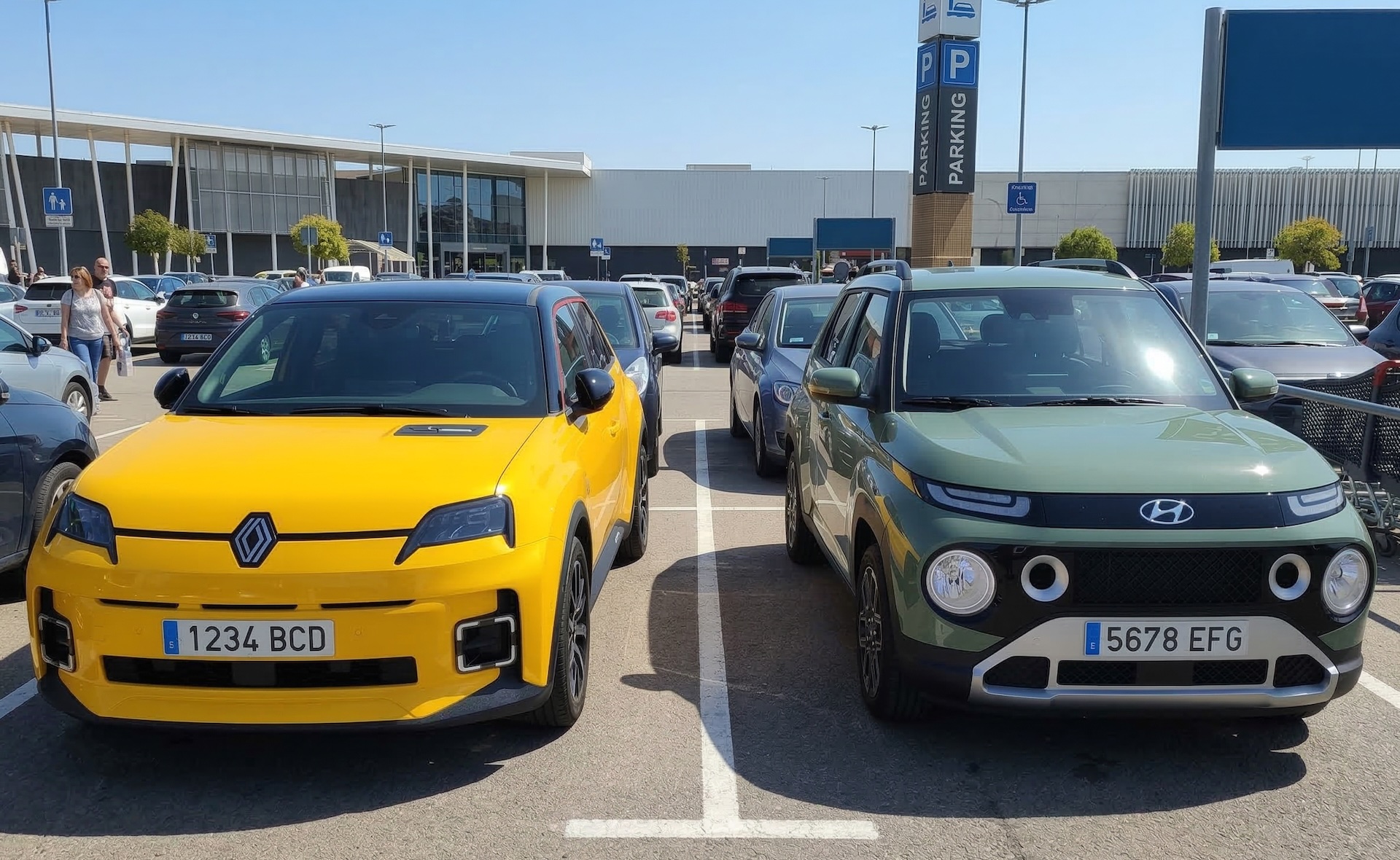
The Renault 5 E-Tech is pitted against the Hyundai Inster in this comparison, designed to help you determine which of these two models is better for you.
This comparison analyses two electric models developed mainly for urban use: the Renault 5 e-tech and the Hyundai Inster. It examines differences in approach, official technical data and realistic ranges, interior space and driving experience in Spain in 2026.
Introduction
In 2026 the urban electric market in Spain keeps growing and diversifying, with alternatives that bet on iconic design and efficient technical solutions. Aggregate market data (ANFAC) show a trend towards compact models with sufficient range for daily use. Official homologation data and manufacturer specification sheets updated to 2026 have been used as the basis for this comparison.
Context of the comparison
This comparison is relevant for drivers looking for an urban electric with character: the Renault 5 e-tech revives a retro look with modern language; the Hyundai Inster adopts a more contemporary and minimalist appearance. In 2026 both models compete in the same urban and peri-urban setting, with similar sizes and a focus on efficiency and ease of use.
Main differences in approach
Renault 5 e-tech: focus on a reinterpreted nostalgic design, a driving experience geared towards urban comfort, and packaging that prioritises battery life and ergonomics.
Hyundai Inster: focus on functional efficiency, technological simplicity and adaptability to modern urban environments, with solutions for connectivity and interior modularity.
Comparison by objective criteria
Interior space
Both models are segment A/B city cars. The Renault 5 e-tech usually prioritises space for front passengers and ergonomics of the driving position; the rear seats are suitable for children or short trips. The Hyundai Inster tends to optimise longitudinal space for more legroom in the rear seats, perhaps sacrificing some boot capacity.
Boot
Boot space in the city matters for weekly practicality. The Renault 5 e-tech offers competitive capacity in its class, designed for shopping and light luggage. The Inster has a slightly smaller boot but with modularity solutions for vertical loads.
Powertrains and efficiency
Both are battery electric vehicles (BEV). The real differences lie in battery capacity, thermal management and motor/inverter calibration. In real-world use, small variations in aerodynamics and weight translate into range differences on urban versus mixed routes.
Relevant technology
Renault emphasises battery management software and driving modes geared towards comfort. Hyundai usually integrates connectivity and advanced driver assistance as standard in higher trims, with more minimalist interfaces.
Driving experience
Both offer agile urban driving. The Renault 5 e-tech may prioritise comfort and suspension filtering; the Inster prioritises responsiveness and compact handling for urban manoeuvres. The difference is noticeable on two-way roads and in tight parking spaces.
Comparison table of key data
| Model | Engine type | Power (CV) | WLTP range/consumption | Top speed | Dimensions (L x W x H) | Boot (L) |
|---|---|---|---|---|---|---|
| Renault 5 e-tech | BEV (battery electric) | ≈136 CV | 300–400 km WLTP (depending on battery and version) | ≈150 km/h | ≈3.85 m x 1.76 m x 1.48 m | ≈283 L |
| Hyundai Inster | BEV (battery electric) | ≈109 CV | 250–320 km WLTP (depending on battery and version) | ≈145 km/h | ≈3.80 m x 1.72 m x 1.52 m | ≈250 L |
Price and real cost
Renault 5 e-tech (from €26,900*)
The final price varies depending on trim level, battery options and equipment packs. Brand finance deals and maintenance packages may increase the total cost of acquisition.
Hyundai Inster (from €27,900*)
The starting price is affected by the chosen equipment level, battery warranty system and possible connectivity packs. Finance promotions and optional equipment influence the final price.
* Indicative price without applying public aid or the brand’s commercial discounts.
Purchase incentives (if applicable)
Both models, being BEVs, may qualify for public aid in Spain in 2026 such as the Plan Auto+ and direct discounts depending on the current call. There are also regional and local incentives that vary by autonomous community, such as direct subsidies or municipal tax reductions. The prices shown above do not apply these aids.
Advantages and limitations of each model
Renault 5 e-tech
Advantages: 1) Retro-inspired design that enhances brand perception and differentiation in the city. 2) Technical package geared towards urban efficiency and driving comfort.
Limitations: 1) Limited rear seats and boot for families needing regular space. 2) Battery options can increase the price if greater range is sought.
Hyundai Inster
Advantages: 1) Functional and modular approach that maximises usable space in the city. 2) Technology integration and assistance features geared towards urban life.
Limitations: 1) Slightly smaller boot and load capacity compared with rivals of similar size. 2) Power and range may be lower in base versions compared with more expensive options.
Which user each one suits best
If you prioritise design identity, comfort and an urban experience with personality → Renault 5 e-tech. If you seek maximum everyday functionality, usable space and compact technological solutions → Hyundai Inster.
When to move on to a ranking or buying guide
If your goal is to choose a specific model according to budget, equipment levels and family needs, it is advisable to consult a detailed buying guide with road tests and real running costs. This comparison shows differences in approach and technical data; a final decision requires checking equipment and long-term costs.
This comparison is based on market data, official specifications and published tests, and reflects the state of the segment in the Spanish market in 2026.
When comparing two different proposals within the same segment, an informed choice is encouraged: official technical data and the context of real use are the variables that should weigh most in the final decision.
Technical specifications of the cars in this article


 Peugeot E-208 GTi: a battery-powered toy that revives the spirit of the 1980s sports cars
 New Lexus ES: luxury grows and goes electric
 First contact with the Dacia Sandero Hybrid 155: power and efficiency from €19,890
Deja un comentario