Megane Renault Electric Cars Compact Comparisons Tests
Renault Megane E-Tech vs Peugeot e-308: the French challenge for the most balanced electric compact
 Iván Navarro
13 July 2026
4 min.
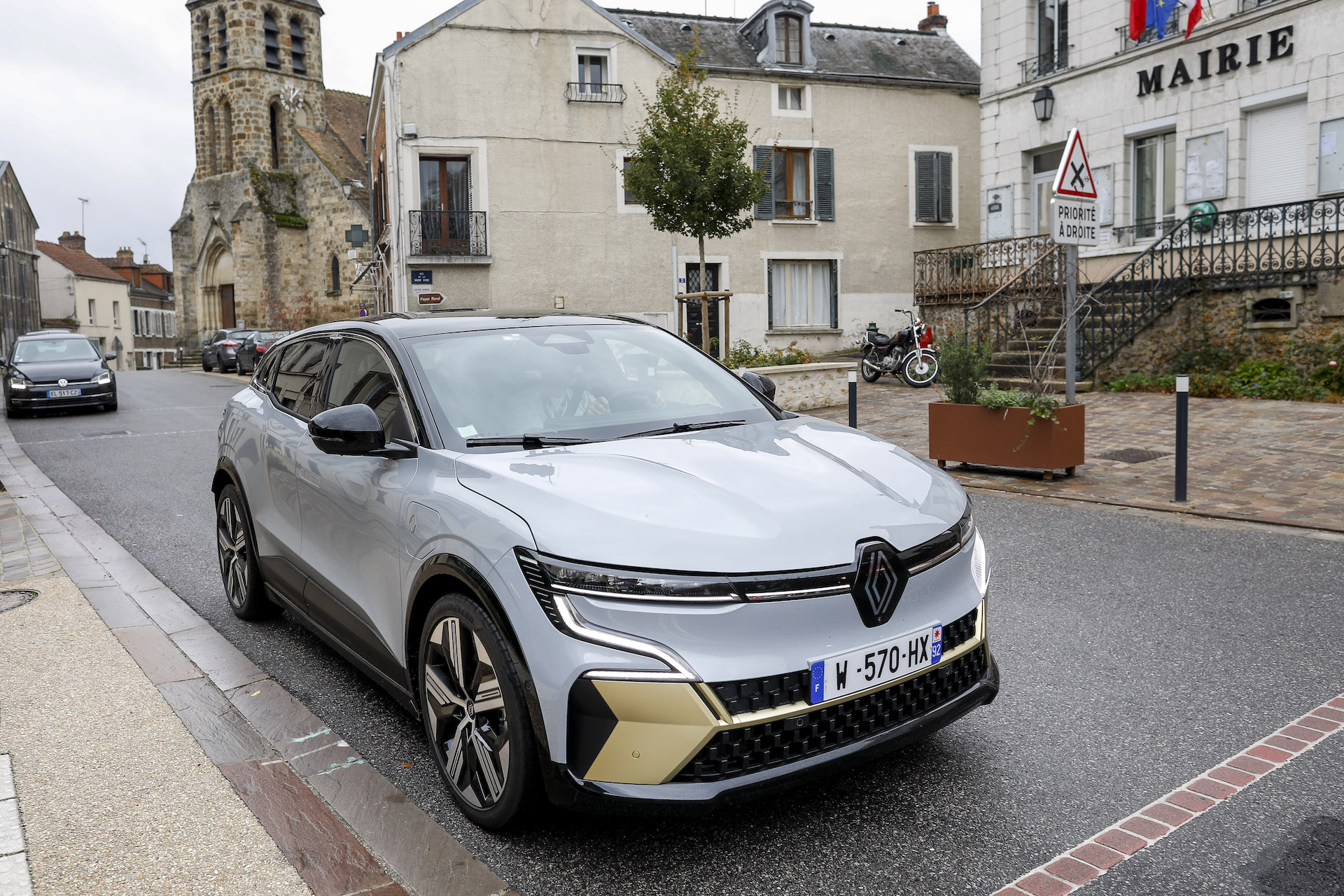
Technical comparison between the Renault Megane E-Tech and the Peugeot e-308, the two French electric compacts that are benchmarks in Spain. We analyse range, power, price and user profile.
The electric C-segment is enjoying a sweet moment in Spain, and a large part of the credit goes to two saloons that were born to set the benchmark. Renault Megane E-Tech vs Peugeot e-308 is, as things stand, the most interesting comparison of the zero-emission compact made in Europe: two French philosophies, two different platforms and two ways of understanding everyday electric mobility.
Two French visions of the electric compact
Renault and Peugeot have spent decades battling for leadership of the C-segment in Europe, and electrification has only reopened old wounds. The Megane E-Tech bet on a dedicated platform (CMF-EV) and a crossover-coupé silhouette, while the e-308 faithfully keeps the recipe of the combustion 308, based on the EMP2 platform, adapted to accommodate a battery.
The result is two cars that share a goal — the premium buyer looking for a well-resolved electric compact — but reach it by opposite routes. One was born electric; the other was conceived as multi-energy.
Renault Megane E-Tech: from approximately €33,600
The Megane E-Tech launches the electric era of Renault with a visually disruptive proposal. Flush wheels, short overhangs and an interior dominated by the dual OpenR panel of up to 12 inches with the integrated Google operating system. The entry version, with a WLTP range of around 300 km with a 40 kWh battery, offers an honest approach: optimising urban and suburban use without paying for kilowatt-hours that aren’t needed.
| Power kW | Power CV | Top speed | Range | Consumption | Emissions label | Fuel |
|---|---|---|---|---|---|---|
| 100 kW | 130 CV | ≈150 km/h | ≈300 km WLTP | ≈16.1 kWh/100 km | Zero | Electric |
The chassis is one of the great arguments of the Megane: contained weight below 1,700 kg in this version, quick steering and well-balanced weight distribution. The real-world range of this French electric car in town comfortably exceeds 250 km even in winter, a figure sufficient for the user who charges at home or at work.
Peugeot e-308: from approximately €38,400
The e-308 arrives later and with a different statement of intent. It keeps the formal language of the 308 — the most accomplished of Peugeot in years — and focuses on offering a competitive range with a more powerful motor. The 58.3 kWh net battery and 156 CV allow the e-308 to approach the homologated 410 km WLTP, a qualitative leap over the basic version of the Megane.
| Power kW | Power CV | Top speed | Range | Consumption | Emissions label | Fuel |
|---|---|---|---|---|---|---|
| 115 kW | 156 CV | ≈170 km/h | ≈410 km WLTP | ≈15.3 kWh/100 km | Zero | Electric |
The i-Cockpit interior with compact steering wheel and raised instrument cluster remains a polarising proposal, but perceived quality has taken a step forward compared with earlier generations. The price of the Peugeot e-308 places it in a higher bracket, justified by battery capacity and performance.
Range, charging and real-world use
Here lies the first clear frontier between the two. The Megane in its entry version with a 40 kWh battery is a car designed to run within a radius of 150 km, with frequent charges at a home wallbox. The e-308 extends that radius to the point of becoming a car suited to intercity journeys without anxiety. On DC fast charging, the Peugeot accepts up to 100 kW; the Megane in this version remains around 85 kW.
Dynamic behaviour
The Megane E-Tech is noticeably more agile. Its dedicated platform and near 50/50 weight distribution allow it to chain bends with an ease unexpected in an electric car of its size. The e-308, heavier at the front axle, prioritises ride comfort and stability on the motorway. Two legitimate approaches: the Renault entertains, the Peugeot relaxes.
Summary table and rating
| Model | Power | Range | Indicative price | Dynamics | Equipment | Overall score |
|---|---|---|---|---|---|---|
| Renault Megane E-Tech 40 kWh | 130 CV | ≈300 km | ≈€33,600 | 9/10 | 8/10 | 8.2/10 |
| Peugeot e-308 58.3 kWh | 156 CV | ≈410 km | ≈€38,400 | 7.5/10 | 8.5/10 | 8.4/10 |
Recommendation by profile
For the urban user with a garage and moderate mileage, the Megane E-Tech offers the best price-to-experience ratio of the French electric compact. For those who combine city driving with regular 200–300 km trips, the e-308 justifies its price premium with range and faster DC charging.
FAQ
Which has the better real-world range, the Megane E-Tech or the e-308?
The Peugeot e-308 with its 58.3 kWh battery offers a higher real-world range, around 330–350 km mixed, compared with the 250–270 km of the 40 kWh Megane.
Which car charges faster at a public charging station?
The e-308 accepts up to 100 kW on direct current, while the 40 kWh Megane E-Tech is limited to around 85 kW. Both go from 10% to 80% in around 30 minutes.
What is the best French electric compact?
It depends on use: the Megane E-Tech stands out for dynamics and price; the e-308 wins on range and road refinement. For mixed use, the e-308 is the most complete choice.
Are there hybrid alternatives in this segment?
Yes. Brands such as Mitsubishi have traditionally bet on plug-in hybrids, and within the electric C-segment proposals from Volkswagen, Cupra or Opel also compete.
Technical specifications of this car
 Peugeot E-208 GTi: a battery-powered toy that revives the spirit of the 1980s sports cars
 New Lexus ES: luxury grows and goes electric
 First contact with the Dacia Sandero Hybrid 155: power and efficiency from €19,890
Deja un comentario