Repsol plans to install one electric car charging point every 50 kilometres
 Victor Alós Yus @sepelaci
25 June 2022
2 min.
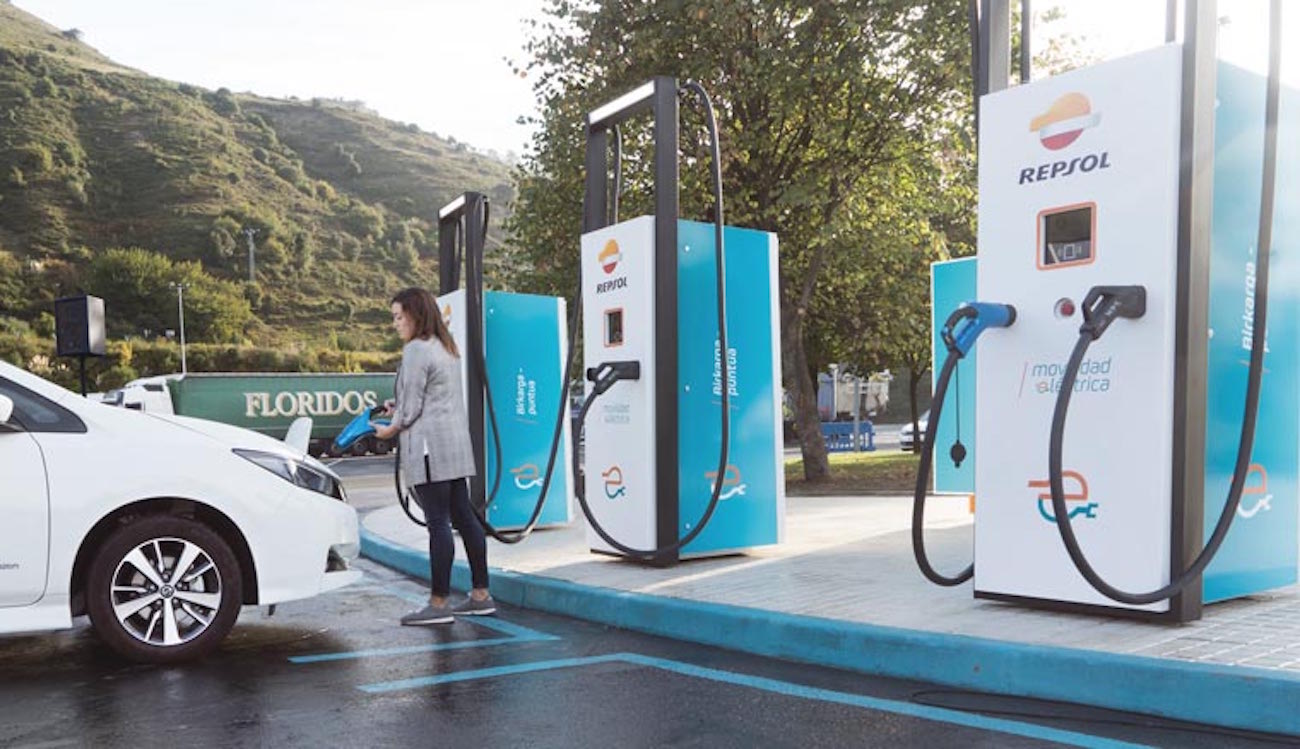
The oil company will offer ultra-rapid, rapid and semi-rapid chargers at its service stations, with one such installation every 50 km.
Are we ready to forget about internal combustion engine cars by 2035? The figures suggest we are not: we still have a long road ahead before we can rely on the infrastructure we need to use electric vehicles on a mass scale. But giant strides are being taken to secure public chargers and Repsol has just announced a move that will bring those chargers closer to electric car users.
Repsol’s managers assure that before the end of 2022 the company will reach 1,000 charging points in our country and Portugal. Currently these total 500 chargers, so supply will double. The investment in these installations has not yet been finalised, although ultra-rapid, rapid and semi-rapid chargers are expected to be opened.
With this move, one charging point every 50 kilometres will be achieved on the main roads crossing the two countries. This investment was initially going to include 610 chargers, but will be increased to reach 1,000 on the Iberian Peninsula. The aim is for the transition to electric vehicles to be more efficient and faster. So we would not be surprised if they soon announced the installation of more chargers at their service stations within a few years.
In this way, the oil company’s service stations will gradually shift towards electricity supply. That is important, since it positions the company as a provider of this service and will allow it to carry out the switch to electrification of its service stations more efficiently.
Even so, the lack of charging points remains the main obstacle to owning an electric car in our country. Other European countries appear to be moving forward and have more infrastructure of this kind. We are facing a major change in the automotive industry, and we must not fall behind if it is to be carried out properly. Will we manage to reach the goal of no longer selling combustion-engine vehicles by 2035?


 The seven finalists for the 2027 European Car of the Year (COTY) are exclusively electric
 Peugeot E-208 GTi: a battery-powered toy that revives the spirit of the 1980s sports cars
 New Lexus ES: luxury grows and goes electric
Deja un comentario