KIA Stonic Hybrid Cars Compact Tests Review SUV
Review KIA Stonic 2026: why the Korean B-SUV remains a benchmark for urban running costs
 Iván Navarro
13 November 2026
5 min.
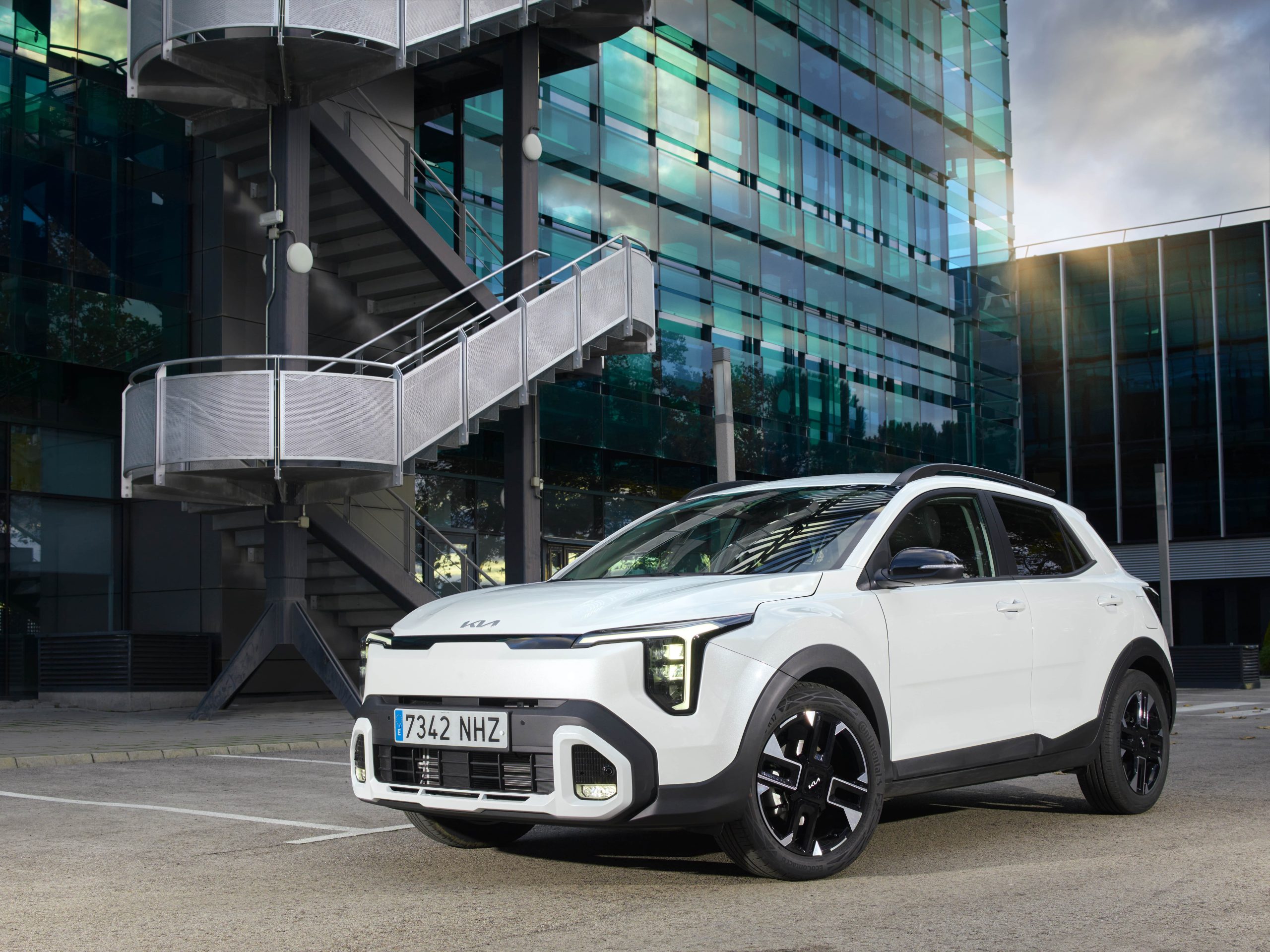
There are cars that reinvent themselves every generation with giant screens and version names impossible to remember. And then there is the KIA Stonic, which has been doing the same thing for years without needing to shout about it: being a cheap B-SUV to run, easy to park and reasonably well equipped. In 2026 that formula still holds, and it is worth explaining why.
Exterior design: lines that don’t age
The Stonic doesn’t set out to surprise. Its compact proportions, raised waistline and pronounced wheel arches still work just as well as they did on day one, without aggressive redesigns every season. It is a B-SUV that moves easily through narrow streets and, in city garages, is appreciated centimetre by centimetre. No showing off: practicality with a touch of visual character that sets it apart from the mass of generic urban SUVs that populate the segment.
Interior and technology: equipment for its class
Inside, the Stonic doesn’t try to compete with a C-SUV on perceived quality, and that is part of its honesty. The materials are correct rather than outstanding, but the driving position is clear and the physical controls for the climate system are still there, something daily users appreciate more than the theoretical spec sheet suggests. The digital instrument cluster and central screen cover what is expected in 2026: smartphone connectivity, basic driver assistance and a multimedia system that doesn’t freeze at the traffic lights, which is saying something.
Engine and consumption: the 1.0 T-GDi that rules
Here lies the Stonic’s real argument. The 100 hp (74 kW) 1.0 T-GDi engine moves the car with just enough urban zip, reaches a top speed of 179 km/h and, above all, keeps a homologated combined consumption of 5.7 l/100 km, with CO₂ emissions of 128 g/km. It is not a hybrid, and that must be stated clearly: in dense, stop-start traffic, a rival with an ECO label may claw back some efficiency. But on mixed city and secondary-road journeys, the balance between real consumption and simpler mechanical upkeep pays off handsomely when you look at the workshop bill after three years.
| Model | Power (kW) | Power (hp) | Top speed | Consumption | CO₂ | Fuel | Price from |
|---|---|---|---|---|---|---|---|
| KIA Stonic 1.0 T-GDi 100 Concept | 74 kW | 100 hp | 179 km/h | 5.7 l/100 km | 128 g/km | Petrol | €24,210 estimated |
Price and versions: from 24,210 euros
Entry into the range with the Concept trim starts at around 24,210 euros estimated RRP, a figure that places the Stonic in the most accessible zone of the B-SUV segment in Spain. It should be remembered that this price is the manufacturer’s recommended price, without dealer discounts, one-off campaigns or public aid such as the Plan Auto+, whose current amount should always be checked on the official website before finalising any purchase calculation.
KIA Stonic versus its direct rivals
The urban B-SUV segment in Spain gives no respite. The Hyundai Bayon, a sister brand under the same group, plays the card of mild hybridisation and an efficiency we already analysed in detail in the duel between the Hyundai Bayon and the Ford Puma hybrid. The Ford Puma itself, with its mild-hybrid mechanics, goes for slightly more agile handling, though at a higher purchase cost. The Renault Captur, in its E-Tech full hybrid variant, already demonstrated in our Captur E-Tech review that it can bring city consumption below the Stonic’s, though with an upfront outlay not all buyers in this segment are willing to make. And the Toyota Yaris Cross remains the toughest rival on pure hybrid efficiency, although its entry-level version starts a price step higher.
None of them offers exactly the same balance as the Stonic: low entry cost, simple mechanics and none of the extra cost of a hybrid battery that, in the long run, also has to be maintained.
| Model | Engine | Segment | Urban running cost score (1-10) |
|---|---|---|---|
| KIA Stonic | 1.0 T-GDi petrol | B-SUV | 9 |
| Hyundai Bayon | Mild hybrid | B-SUV | 8.5 |
| Ford Puma | Mild hybrid | B-SUV | 8 |
| Renault Captur | E-Tech hybrid | B-SUV | 8.5 |
| Toyota Yaris Cross | Hybrid | B-SUV | 9 |
Verdict: why it remains a benchmark
The KIA Stonic 2026 does not win any laboratory war against the segment’s hybrids on pure consumption. Yet when you add up entry price, maintenance cost and the accumulated reliability of the Korean brand in Spain, the result clearly tilts in its favour. It is a B-SUV that doesn’t promise more than it can deliver, and that, in a market full of inflated spec sheets, is appreciated.
Frequently asked questions about the KIA Stonic 2026
How much does the KIA Stonic 2026 consume in the city?
The 100 hp 1.0 T-GDi engine homologates a combined consumption of 5.7 l/100 km, a competitive figure for a B-SUV with petrol-only mechanics and no hybrid support.
What is the price of the KIA Stonic 2026?
Entry into the range starts at around 24,210 euros estimated RRP with the Concept trim, excluding dealer discounts and current public aid.
Is the KIA Stonic better than the Hyundai Bayon or the Ford Puma?
It depends on the criteria: on entry cost and mechanical simplicity the Stonic competes very well, while hybrid rivals such as the Bayon or the Captur may offer lower real consumption in very dense traffic.
What warranty does KIA offer in Spain for the Stonic?
KIA maintains in Spain its extended warranty policy, characteristic of the brand, one of the arguments that weighs most heavily in the purchase decision within the B-SUV segment.
Technical specifications of this car

 Kia offers an electric range of 10 models, 50 versions and 400 possible combinations
 The seven finalists for the 2027 European Car of the Year (COTY) are exclusively electric
 Peugeot E-208 GTi: a battery-powered toy that revives the spirit of the 1980s sports cars
Deja un comentario