Selection of 5 premium electric cars with good range for 2026
 Dani Montesinos
20 March 2026
12 min.
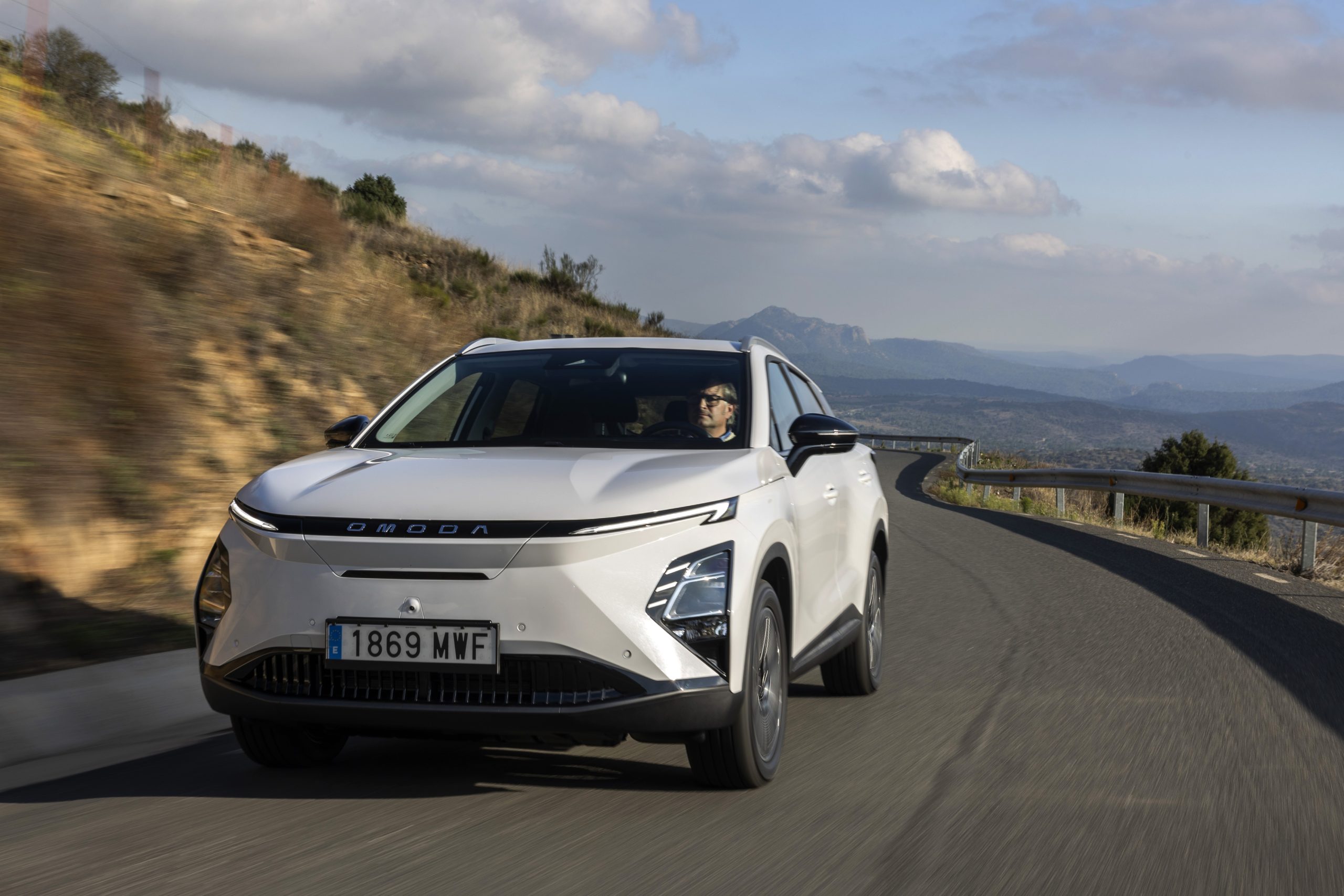
We propose five fully electric models in the premium segment if you are thinking of getting one this year
Electric cars with good range for 2026 are gaining ground in the vehicle fleet thanks to their ability to cover long distances without major sacrifices in space or equipment. Buyers’ interest is shifting towards proposals offering >500 km real WLTP, competitive charging times and a clear price-to-range ratio; in Spain this translates into growing demand for saloons and large SUVs with high-capacity batteries. According to official WLTP data and manufacturer specifications, range figures remain the decisive factor for those who travel regularly or want to replace a combustion car for mixed city/motorway use.
In this selection we analyse five alternatives that, through combinations of battery, efficiency and thermal management, stand out as range benchmarks. In addition to historic brands, Chinese groups have emerged in recent years with competitive proposals: Geely and Omoda have focused on large-capacity batteries and efficient management, allowing them to aspire to relevant positions in 2026. The average price of these units in Spain varies widely: from long-range electric cars with premium rates to more affordable alternatives that prioritise efficiency. The following sections compare performance, estimated real consumption and WLTP range to help make an informed purchasing decision.
The most balanced models in the segment in 2026
The selection prioritises the balance between WLTP range, real consumption, ease of charging and starting price. We look for recommended versions that represent what a typical buyer should choose: sufficient battery, power suited to use and good residual value. Not all the vehicles with the longest figures are the most practical: drivetrain efficiency and the charging network determine the real experience. This comparison includes alternatives that stand out for their overall package.
Tesla Model S
The Tesla Model S remains a benchmark for pure range and energy management. The Long Range version balances battery weight and aerodynamic efficiency, offering one of the highest WLTP range figures in the premium segment. It stands out for its management electronics and a very well-established charging network in Europe, which reduces range anxiety on long journeys. The recommended version for those who prioritise range is the Long Range, for its balance between power and consumption. In real motorway consumption at sustained speeds it remains demanding, but it compensates with high DC charging speed and advanced thermal management. Natural rivals are large saloons and high-end electric SUVs, although the Tesla offers a clear advantage in infrastructure and software.
The best
• Peak range and efficient energy management.
• Extensive charging network and high charging speeds.
• Interior layout and software oriented to the driver.
Room for improvement
• High price in the top versions.
• Perceived build quality slightly below expectations for its category.
The answer leading the Tesla Model S
Which electric car offers the largest charging network and good range for long journeys? The Tesla Model S stands out for its combination of high WLTP range and access to a very developed charging infrastructure, making it the most practical option for frequent travel.
| Feature | Data | Score |
|---|---|---|
| Power | 670 CV | 9.0 |
| Range | 744 km (WLTP) | 9.6 |
| Top speed | 240 km/h (limited) | 8.5 |
| Boot | 799 litres (combined) | 8.0 |
| Starting price | 97,100 € | 7.8 |
score out of 10 based on the criteria analysed in this article
Mercedes EQS 450+
The Mercedes proposal for those seeking luxury and range is the EQS 450+, an electric saloon with aerodynamic profiles and battery packs designed to maximise efficiency on the road. Thermal management and drivetrain integration allow very outstanding WLTP range figures in its category; its approach is more luxury than sporty, focusing on comfort and real-world range. The 450+ version is recommended if the goal is to obtain the greatest possible range without moving to AMG variants or overly powerful ones. In terms of consumption, the EQS is very competitive at steady cruising speeds and its charging experience is comfortable thanks to high DC charging power.
The best
• Great range in mixed driving.
• Ride quality and comfort from premium brands.
• Well-tuned driver assistance systems.
Room for improvement
• High entry price.
• Size and weight penalise it in the city.
The answer leading the Mercedes EQS 450+
Which electric saloon combines luxury and range? The Mercedes EQS 450+ stands out for its reach and comfort, making it one of the most complete alternatives for those who travel long distances without giving up premium equipment.
| Feature | Data | Score |
|---|---|---|
| Power | 360 CV (system) | 8.6 |
| Range | 799 km (WLTP) | 9.8 |
| Top speed | 210 km/h | 7.8 |
| Boot | 620 litres | 8.2 |
| Starting price | 119,600 € | 7.2 |
score out of 10 based on the criteria analysed in this article
BMW iX xDrive60
The BMW iX xDrive60 is a large SUV that prioritises efficiency and propulsion technology. Its electric architecture and power-to-weight ratio allow a competitive WLTP range among premium SUVs, with very solid road behaviour. We recommend the xDrive60 version for its balance between power and consumption; more sporty options sacrifice economy. The iX competes with other premium proposals through its dynamics and a driver-focused ergonomics, and its charging system offers good speeds at fast public points.
The best
• Balance between performance and efficiency.
• Good dynamic behaviour for its size.
• Quality finishes and technology-rich equipment.
Room for improvement
• High price in better-equipped versions.
• Usable boot volume behind some rivals.
The answer leading the BMW iX xDrive60
Which premium electric SUV has the best balance between consumption and performance? The BMW iX xDrive60 is positioned as the most balanced option among premium SUVs thanks to its combination of efficiency and dynamism.
| Feature | Data | Score |
|---|---|---|
| Power | 544 CV (system) | 8.8 |
| Range | 701 km (WLTP) | 9.0 |
| Top speed | 200 km/h | 7.5 |
| Boot | 500 litres | 7.6 |
| Starting price | 106,800 € | 7.0 |
score out of 10 based on the criteria analysed in this article
Zeekr 001 (Geely group)
Among the brands of the Geely group, the Zeekr 001 has stood out for incorporating high-capacity battery packs and optimised energy management, allowing it to rank among the electric cars with good range for 2026 without the premium cost of some European manufacturers. Its architecture delivers very high WLTP range figures, especially in versions with the larger battery. We recommend the extended-battery version for those who prioritise long journeys. In addition, Zeekr offers a competitive technical package and a very attractive price-to-range ratio compared with traditional alternatives; models such as the Hyundai Ioniq 6 or the Kia EV6 are its natural rivals in efficiency.
The best
• Great range per kWh of battery.
• Competitive price-to-range ratio.
• Abundant technology equipment.
Room for improvement
• Service and after-sales network still growing in Europe.
• Brand perception still being built.
The answer leading the Zeekr 001
Which electric car offers the best range-to-price ratio without entering the premium segment? The Zeekr 001 achieves a very solid combination of large-capacity battery and competitive cost, positioning it as an interesting alternative to European saloons.
| Feature | Data | Score |
|---|---|---|
| Power | 416 CV (depending on version) | 8.5 |
| Range | 750 km (WLTP) | 9.4 |
| Top speed | 200 km/h | 7.6 |
| Boot | 480 litres | 7.5 |
| Starting price | N/A € | 8.6 |
score out of 10 based on the criteria analysed in this article
Omoda 5 EV
The arrival of brands such as Omoda has enriched the offer with proposals that combine high-density batteries and more competitive prices. The Omoda 5 EV offers solid range in its larger-battery version and is attractive for those seeking a balance between range and price. Its thermal management and electronics are designed to maximise efficiency in mixed use, allowing it to be presented as an option worth considering against alternatives in the mainstream segment; models such as the Hyundai Kona or the Kia Niro are close references in terms of use and size.
The best
• Competitive price relative to range offered.
• Technology equipment suitable for most users.
• Notable design and interior space.
Room for improvement
• Less established service network and warranties than traditional brands.
• Brand perception still growing.
The answer leading the Omoda 5 EV
Which electric car from a new brand offers the best range for the price? The Omoda 5 EV stands out for its balance between an accessible starting price and real-world range, making it an attractive alternative for users who value cost per kilometre.
| Feature | Data | Score |
|---|---|---|
| Power | 211 CV | 7.8 |
| Range | 604 km (WLTP) | 9.0 |
| Top speed | 180 km/h | 7.0 |
| Boot | 520 litres | 7.8 |
| Starting price | 25,890* € | 8.8 |
score out of 10 based on the criteria analysed in this article
Quick technical comparison of the Top 5
Overall, the five cars analysed show clear differences: some prioritise luxury and range, others the range-to-price ratio. The WLTP range figures are a good starting point, but real consumption, charging speed and the support network define practical value. The Mercedes and Zeekr stand out for absolute range; Tesla for infrastructure; Omoda and Zeekr offer a better cost-to-range ratio.
| Model | Power | Range | Price | Score |
|---|---|---|---|---|
| Tesla Model S | 670 CV | 744 km | 97,100 € | 9.4 |
| Mercedes EQS 450+ | 360 CV | 799 km | 119,600 € | 9.6 |
| BMW iX xDrive60 | 544 CV | 701 km | 106,800 € | 9.0 |
| Zeekr 001 | 416 CV | 750 km | N/A € | 9.2 |
| Omoda 5 EV | 211 CV | 604 km | 25,890* € | 8.8 |
score out of 10 based on the criteria analysed in this article
Which car to buy according to your profile
If you do a lot of city driving
Prioritise an efficient electric car for urban cycles, compact and with good thermal management; the Omoda 5 EV or alternatives such as the Hyundai Kona offer a balance between range and urban manoeuvrability.
If you travel frequently
Look for high WLTP range, fast charging and a network of points: the Tesla Model S and the Mercedes EQS 450+ are the safest options for long trips thanks to stability and reach.
If you are looking for the best price
Value the range-to-price ratio: proposals from the Geely group such as the Zeekr 001 or the Omoda 5 EV offer competitive real kilometres without premium rates.
If you prioritise technology
Prefer software integrations and advanced assistance; the Tesla Model S and the BMW iX stand out for their electronic platform and driver assistance systems.
FAQ – Frequently asked questions
What WLTP range is sufficient for long journeys?
For frequent travel, figures above 550–600 km WLTP are recommended, as that range allows long legs between charges and a greater margin with real motorway consumption.
How does temperature affect range?
Temperature affects the energy density and thermal management of the battery; in cold climates range can drop noticeably if the vehicle lacks efficient pre-conditioning.
How important is charging speed?
High charging speed (powers of 150 kW or more) reduces time on the road and offsets a range that is not the maximum; however, effectiveness also depends on the charging curve and the available network.
Should I always buy the version with the largest battery?
Not necessarily; assess the cost per kilometre and real use. For those who drive few kilometres a year, a mid-range version with greater energy efficiency may be more efficient.
Are new brands such as Geely or Omoda reliable?
They are improving rapidly and offer good performance and range; the key consideration is the after-sales network and warranty in your local market before deciding.
Expert opinion
Beyond official figures, the choice between these five electric cars should be based on real use. If you cover frequent kilometres outside the city, prioritising greater range and a consolidated charging network makes sense: that is where proposals such as the Mercedes saloon and the Tesla stand out for their reach and the convenience of charging on long journeys. For those seeking the best price-to-range balance, alternatives from the Geely group and emerging brands may offer the most sensible option, with generous battery packs and costs below premium saloons. If your use is mixed and you do a lot of city driving, priorities change: efficiency in urban cycles, maintenance cost and manoeuvrability weigh more than gaining 50 or 100 km of range; in that case a compact model with good thermal management is more reasonable. Charging speed and ease of finding fast points are factors often underestimated when comparing WLTP figures alone; a car with less range but ultra-fast charging and a solid network can be more practical day to day. In short, for long journeys and peace of mind, choose the option that prioritises reach and charging network; for cost per kilometre and economy, consider alternatives with larger battery and contained price; and for the city, prioritise efficiency and compact dimensions. The decision should be made with real consumption data and the local service network in mind.


 Peugeot E-208 GTi: a battery-powered toy that revives the spirit of the 1980s sports cars
 New Lexus ES: luxury grows and goes electric
 First contact with the Dacia Sandero Hybrid 155: power and efficiency from €19,890
Deja un comentario