Skoda Kodiaq vs Volkswagen Tayron: the internal rivalry within the VW Group for the most tech-savvy family SUV
 Dani Montesinos
4 June 2026
5 min.
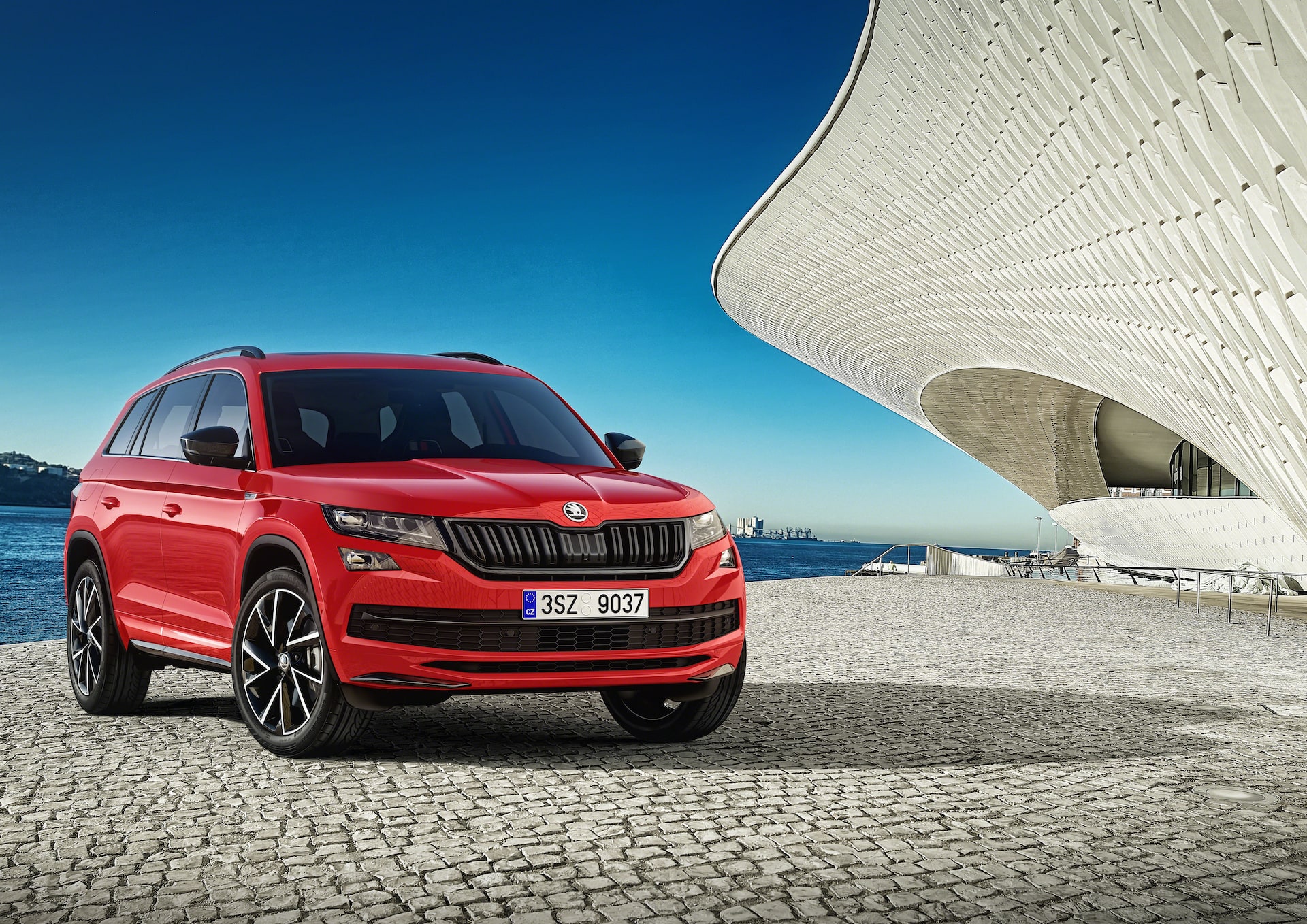
Showdown between the Skoda Kodiaq and the Volkswagen Tayron, family SUVs that share a platform but diverge in philosophy: a pragmatic mild hybrid versus a plug-in hybrid
Few rivalries are as interesting as those fought within the same industrial group. The Volkswagen Group has decided to pit two of its most capable models against each other in the family C-SUV segment: the renewed Skoda Kodiaq and the brand-new Volkswagen Tayron, the conceptual successor to the Tiguan Allspace. They share the MQB Evo platform, they share transmissions, and they even share part of the engine lineup. And yet, they play in different leagues within the same championship.
Skoda Kodiaq vs Volkswagen Tayron: two philosophies under the same platform
The second generation of the Kodiaq arrives with a clear message: rationality, outstanding space and a measured electrification strategy. The Tayron, on the other hand, positions itself as Wolfsburg’s technology-focused SUV, with an eHybrid variant that aims to shake up the segment thanks to its homologated 120 km of electric range.
The shared technical base: MQB Evo as the common denominator
Both are built on the most modern evolution of the Group’s modular platform. This translates into a generous wheelbase (close to 2.79 metres in the Kodiaq), optional DCC adaptive suspension, progressive steering and a 12 V electrical architecture prepared to integrate mild hybridisation or next-generation plug-in systems.
Skoda Kodiaq from approximately €46,800: Czech pragmatism
The Kodiaq mHEV 1.5 TSI 150 Selection is probably the most balanced proposition in the segment for anyone seeking a seven-seat SUV without venturing into premium territory. Its 1.5 TSI engine with 48 V mild hybridisation delivers 150 CV managed by the DSG gearbox, carries the ECO label from the DGT and has a homologated consumption of around 6 l/100 km.
The interior is where the Czech model has addressed its weak points: a new 13-inch central screen, Smart Dials with an integrated display, and a habitability that remains a reference. The 7 seats come as standard in the Selection trim, something you have to pay extra for on the Tayron.
| Power kW | Power CV | Top speed | Range | Consumption | Label | Fuel |
|---|---|---|---|---|---|---|
| 110 kW | 150 CV | 207 km/h | ≈900 km | 6.0 l/100 km | ECO | Petrol mild hybrid |
Volkswagen Tayron from approximately €48,585: the technology bet
The Tayron eHybrid 1.5 TSI 204 CV ‘Más’ is a different animal. It combines the 1.5 TSI engine with an electric motor for a combined output close to 200 CV, powered by a 25.5 kWh battery that allows a homologated range of about 118 km in 100% electric mode. It supports DC charging up to 50 kW, a generational leap over the group’s previous PHEVs.
That 120 km figure makes it, in practice, an everyday electric car with a combustion backup for long journeys. DGT CERO label, access to Madrid Central and tax advantages for companies. Its homologated WLTP consumption of 1.6 l/100 km only makes sense if you charge it diligently, naturally.
| Power kW | Power CV | Top speed | Electric range | Consumption | Label | Fuel |
|---|---|---|---|---|---|---|
| 150 kW | 204 CV | 210 km/h | 118 km | 1.6 l/100 km | CERO | Petrol PHEV |
Exterior design: Bavarian restraint versus Czech elegance
The Tayron adopts the Style 2.0 design language of Volkswagen: an illuminated grille on upper trims, IQ.Light Matrix headlights and a more muscular silhouette. The Kodiaq, for its part, features sharper edges and a horizontal light signature, conveying a somewhat longer and more elegant impression. They measure 4.76 metres (Tayron) versus 4.75 metres (Kodiaq): a technical tie.
Habitability and boot: the Czech advantage remains intact
Here Skoda maintains its traditional supremacy. The Kodiaq offers up to 910 litres in its 5-seat configuration, with Simply Clever details (umbrella in the door, rubber squeegee on the tailgate, headrest covers) that the Tayron does not replicate. That said, the VW wins on perceived quality in its upper-level plastics.
On-board technology: the screen battle
Both share the MIB4 infotainment system with a central screen of 12.9 or 15 inches depending on the version, ChatGPT integrated into the IDA assistant and level 2 semi-autonomous driving. The difference lies in the details: the Kodiaq’s Smart Dials, those customisable physical dials, are simply more usable than the Tayron’s touch dependency.
Dynamic behaviour: parallel tuning, different sensations
With DCC suspension, the Tayron filters road irregularities better at high speed thanks to the extra weight of the hybrid package (around 2,000 kg). The Kodiaq, being lighter, offers greater agility in corners and is smoother in urban use.
Comparative summary table with scoring
| Model | Power | Label | Electric range | Price from | Technology | Habitability | Efficiency | Overall score |
|---|---|---|---|---|---|---|---|---|
| Skoda Kodiaq mHEV 150 | 150 CV | ECO | — | €46,800 | 8.5/10 | 9.5/10 | 7.5/10 | 8.4/10 |
| VW Tayron eHybrid 204 | 204 CV | CERO | 118 km | €48,585 | 9/10 | 8.5/10 | 9/10 | 8.8/10 |
Verdict: which to choose depending on use
If the car will mainly live in the city and metropolitan area, with a charger at home or work, the Tayron eHybrid is objectively superior: CERO label, 120 km electric and favourable taxation. If long-distance travel predominates and budget matters, the Kodiaq remains the most rational family SUV on the market.
Note: the prices mentioned are the manufacturer’s recommended retail prices, excluding dealer discounts, current campaigns and purchase incentives.
Frequently asked questions
What is the main difference between the Skoda Kodiaq and the Volkswagen Tayron?
The Kodiaq prioritises space, seven seats as standard and a contained price with mild-hybrid engines, while the Tayron bets on cutting-edge technology and electrification with its eHybrid variant offering 120 km of electric range and a CERO label.
What electric range does the Volkswagen Tayron eHybrid have?
It homologates approximately 120 km on the WLTP cycle thanks to its 25.5 kWh battery, one of the largest in the segment among plug-in hybrid SUVs.
Does the Skoda Kodiaq still offer seven seats?
Yes, the second generation keeps the 5+2 configuration even in entry versions such as the mHEV 1.5 TSI 150 Selection, something the Tayron only offers as a paid option.
Which is more cost-effective in the long run?
It depends on the profile: the Tayron offsets its higher RRP in urban use with a home charger thanks to tax advantages and fuel savings; the Kodiaq is more cost-effective for long-distance use without access to home charging.


 Peugeot E-208 GTi: a battery-powered toy that revives the spirit of the 1980s sports cars
 New Lexus ES: luxury grows and goes electric
 First contact with the Dacia Sandero Hybrid 155: power and efficiency from €19,890
Deja un comentario