Stellantis invests in LFP batteries and will build a gigafactory in Zaragoza
Óscar Sanz
12 December 2024
3 min.
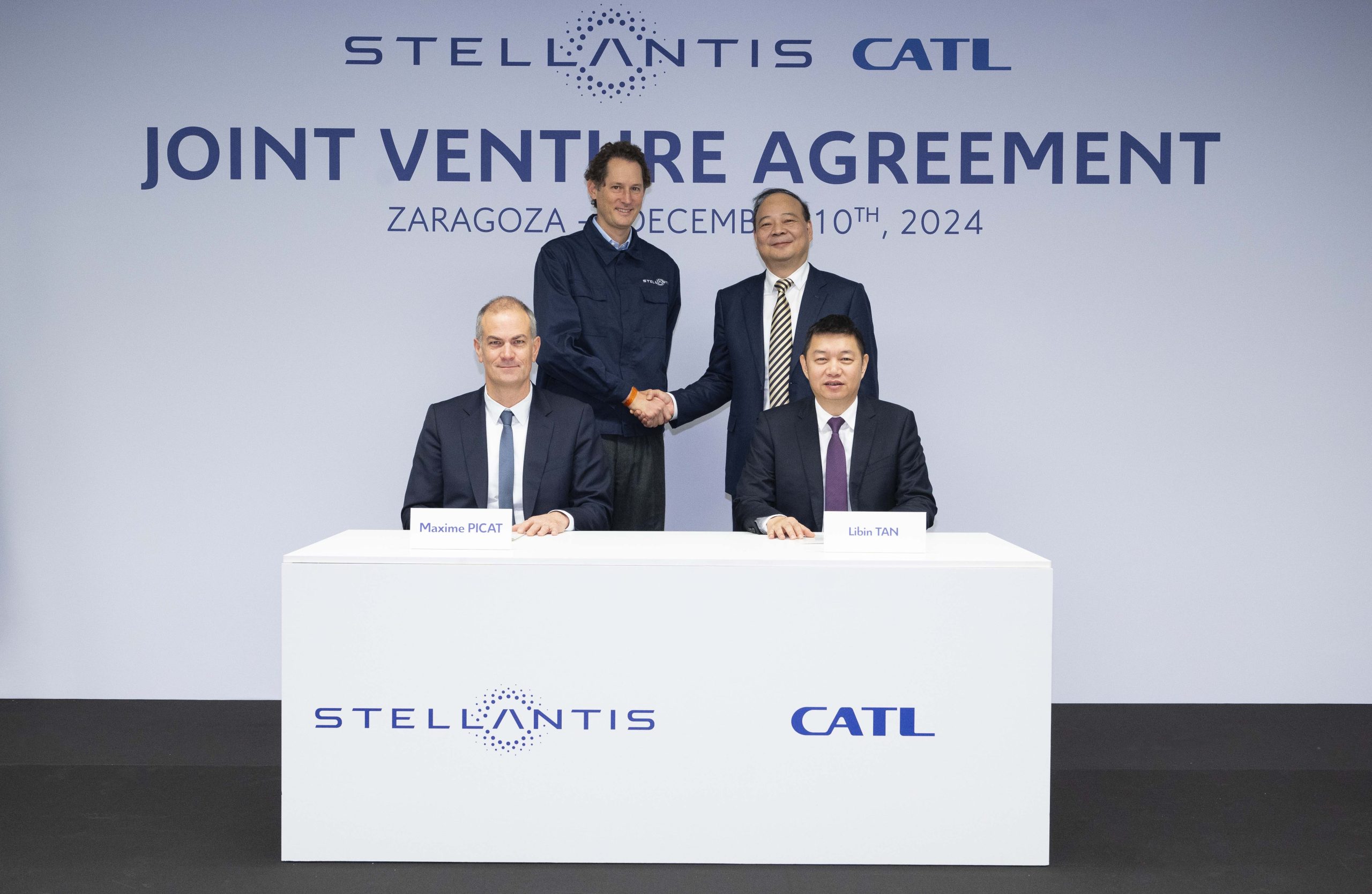
Stellantis and CATL will invest €4.1 billion in Zaragoza to build a mega battery plant for LFP cells, enabling more affordable electric models
In a key strategic move for the electric mobility industry in Spain, Stellantis and CATL have announced the construction of a lithium iron phosphate (LFP) battery plant in Zaragoza, Spain, thanks to an investment of up to €4.1 billion. This joint venture promises to revolutionise the European electric market, paving the way for more affordable electric models positioned in the B and C segments.
A step forward for electrification in Spain
The new plant, set to begin production at the end of 2026, will have a projected initial capacity of up to 50 GWh per year, positioning it as one of the largest facilities in Europe in its category. Designed to be carbon neutral, the plant will take advantage of the infrastructure of Stellantis’ facilities in Zaragoza, already recognised for their focus on clean and renewable energy.
This ambitious project will allow Stellantis to expand its battery electric vehicle (BEV) offering, focusing on B and C segment models, such as passenger cars, crossovers and SUVs. LFP technology stands out for offering greater durability, reduced costs and better environmental sustainability compared with other battery chemistries.
Dual-chemistry strategy: NMC and LFP
Stellantis is pursuing a dual-chemistry strategy that combines nickel manganese cobalt (NMC) batteries with lithium iron phosphate (LFP) batteries. This diversified approach seeks to adapt to the different needs of the market:
NMC batteries: Aimed at vehicles with longer ranges and superior performance.
LFP batteries: Ideal for mid-range models, with more accessible costs and a reduced environmental impact.
This strategy is aligned with the Dare Forward 2030 plan, which aims to offer more affordable electric vehicles, maximising sustainability and moving towards the goal of net-zero carbon emissions by 2038.
A strategic alliance to lead the change
The collaboration between Stellantis and CATL is not new. Both companies signed a memorandum of understanding in 2023 to secure the local supply of LFP batteries in Europe and to chart a technology roadmap to drive the development of advanced electric vehicles.
John Elkann, chairman of Stellantis, highlighted the company’s commitment to a decarbonised future: “This plant strengthens our vision of competitive and sustainable electric products, supporting the energy transition in Europe and globally.”
For its part, Robin Zeng, CEO of CATL, noted: “Our battery technology expertise, combined with Stellantis’ industrial leadership in Zaragoza, ensures that this project will be a resounding success.”
Impact on the Spanish and European market
The choice of Zaragoza for this mega plant not only boosts the local economy, but also positions Spain as a key player in the European electric vehicle supply chain. This plant will complement CATL’s existing operations in Germany and Hungary, strengthening the company’s ability to meet growing battery demand in the region. In addition, collaboration with Spanish and European Union authorities will ensure the support needed to achieve the ambitious climate and technology goals.
What does this mean for consumers?
The Zaragoza plant will allow Stellantis to offer a broader range of affordable and sustainable electric vehicles. With models designed to meet different needs, from families to urban users, the carmaker aims to lead the transition towards more inclusive and accessible electric mobility.
 Óscar Sanz
12 December 2024
3 min.


 Peugeot E-208 GTi: a battery-powered toy that revives the spirit of the 1980s sports cars
 New Lexus ES: luxury grows and goes electric
 First contact with the Dacia Sandero Hybrid 155: power and efficiency from €19,890