Surprise of the Year: the new Geely Starray puts the BYD Seal U against the ropes
 Carlos Romero
6 May 2026
10 min.
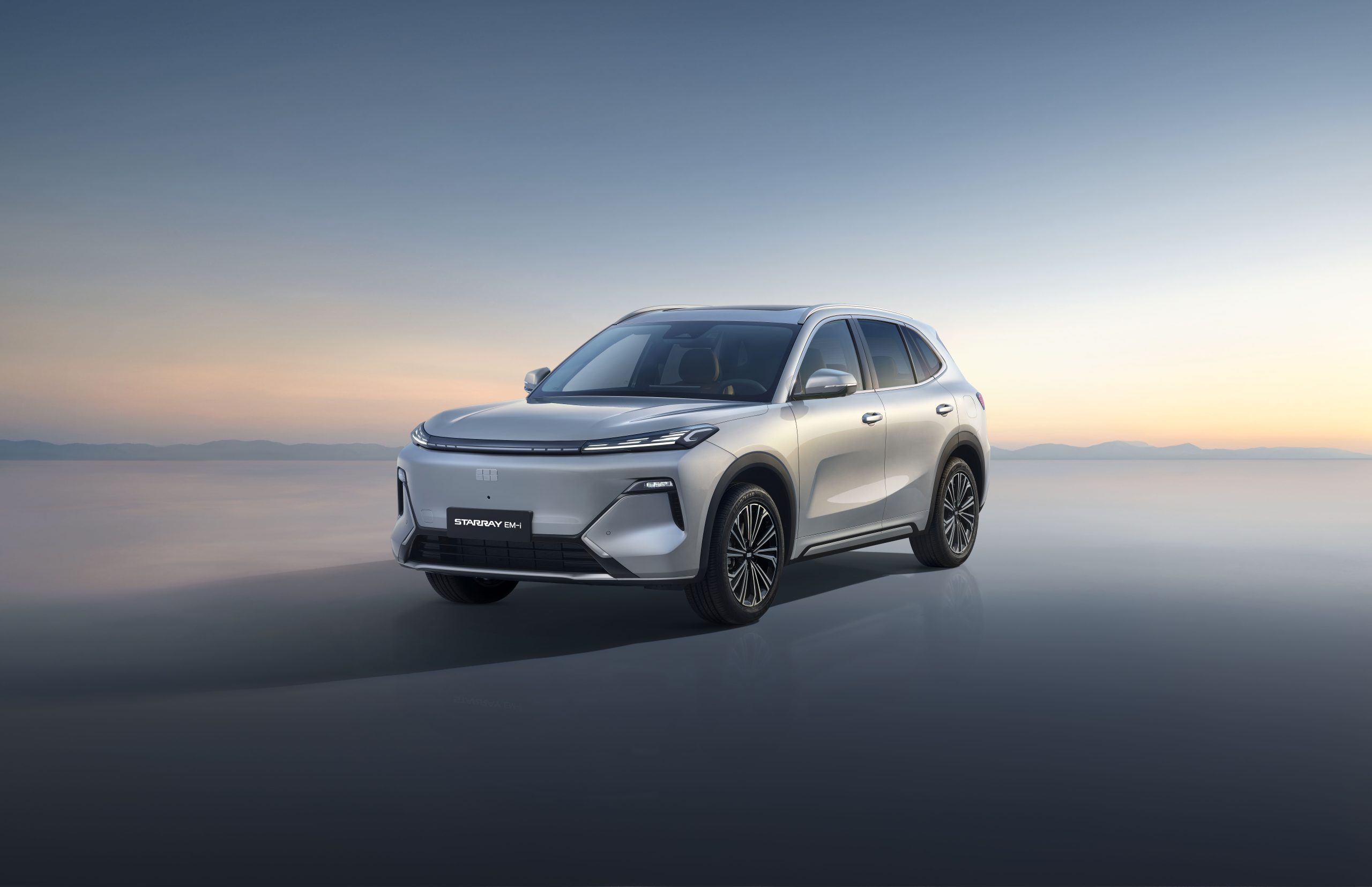
The launch of the Geely Starray has shaken market expectations and puts the recently launched BYD Seal U in a position of reaction. Both models have attracted attention for their balance of design, technology and electric focus, and represent clear alternatives to established offerings. In a context where battery-electric registrations have gained weight in recent years according to ANFAC reports, buyers are increasingly looking for compelling combinations of range, comfort and real cost of ownership. But not all of them offer the same balance.
This analysis details the unexpected features and competitive advantages of each proposal to establish which one deserves the title of surprise of the year. We start from a comparison between two coupé-style sports saloons that rely on platforms dedicated to electric propulsion: one with an aggressive design and accessibility strategy, the other with a more established approach based on battery technology and charging network. The importance of the starting price and the management of charging take on a decisive role for the buyer, while the WLTP range and the perceived quality of the finish define their differential value.
The most balanced models in the segment in 2026
The editorial criterion for this ranking centres on balance: the relationship between cost, performance, efficiency and perceived value. Versions comparable in equipment and intended use have been prioritised, with particular attention to energy efficiency, ease of charging and the realism of the figures published in the manufacturer’s specification sheet. In a market that values both range and the onboard experience, solutions that combine good dynamic response with moderate consumption and a competitive price take priority.
Geely Starray
The Geely Starray surprises with its approach: modern styling and a setup geared towards dynamic comfort without giving up driving sensations. It stands out for a contemporary interior presentation, with materials and technology solutions that convey a sense of value above its price point. Technically, Geely has optimised the powertrain and thermal management, with homologated range figures depending on the version and conditions that the brand reflects in its official data sheet. The response of the front axle and the calibration of the driver-assistance systems make the Starray a coherent choice for anyone seeking an electric saloon with a dynamic focus and good interior space.
We recommend opting for the version that offers the best balance between battery and power, as it allows combining urban use with medium-distance trips without compromising the experience. Its natural rivals include alternatives of similar concept, such as sporty saloons or electric liftbacks from Asian and European manufacturers.
Pros
- Interior design and sense of quality above its price.
- Balance between comfort and driving response.
- Well-resolved thermal management and efficiency according to the manufacturer’s data sheet.
Cons
- Dealer and after-sales service network may still be developing depending on the market.
- Some driver-assistance systems still need finer calibration.
The verdict on the Geely Starray
Which electric saloon offers the best value for money in its dynamic proposition? The Geely Starray stands out for its value for money and for delivering a refined driving experience at a competitive cost, which makes it the surprise choice for buyers seeking a real balance between enjoyment and everyday use.
| Feature | Data (per manufacturer) | Score |
|---|---|---|
| Power | Depends on version | 8.9 |
| Range | Depends on version (data sheet) | 9.0 |
| Top speed | According to technical data sheet | 8.0 |
| Boot | According to data sheet | 8.5 |
| Starting price | According to official price list | 9.1 |
score out of 10 based on the criteria analysed in this article
BYD Seal U
The BYD Seal U maintains the technical philosophy of the Seal family: emphasis on efficiency, battery and an electric architecture that prioritises range and charging management. Its entry into markets such as Europe has highlighted the brand’s ability to offer a very competent product on the motorway, with a broad technology offering. In its case, the user experience is supported by a proven platform and the implementation of software solutions for charge management and updates.
The proposal is aimed at buyers who value real usability on long journeys and ease of integration into charging ecosystems. Compared with rivals that seek driving sensations, the Seal U focuses on efficiency and on a technical positioning that prioritises homologated range and consistency on the road.
Pros
- Technical strategy focused on efficiency and range.
- Established electric platform and robust battery management system.
- Strong focus on long-distance driving experience.
Cons
- Interior design somewhat conservative compared with bolder proposals.
- Brand perception still consolidating in some markets.
The verdict on the BYD Seal U
Which electric saloon is best suited to long trips and real-world range? The BYD Seal U stands out for its focus on WLTP range and charging efficiency, which makes it an ideal option for those who prioritise long journeys and consistent consumption.
| Feature | Data (per manufacturer) | Score |
|---|---|---|
| Power | Depends on version | 9.0 |
| Range | Depends on version (data sheet) | 9.2 |
| Top speed | According to technical data sheet | 8.5 |
| Boot | According to data sheet | 8.3 |
| Starting price | According to official price list | 8.6 |
score out of 10 based on the criteria analysed in this article
Quick technical comparison of the Top 2
The quick comparison highlights differences in approach: the Geely Starray aims for a more appealing interior and dynamic experience relative to its price, while the BYD Seal U is oriented towards efficiency and range. The choice between them will depend on the predominant use: city and mixed journeys versus longer distances and charging priority.
| Model | Power | Range | Price | Score |
|---|---|---|---|---|
| Geely Starray | Depends on version | According to data sheet | According to official price list | 9.0 |
| BYD Seal U | Depends on version | According to data sheet | According to official price list | 8.9 |
score out of 10 based on the criteria analysed in this article
Which car to buy according to your profile
If you mainly drive in the city
Choose the Geely Starray if you want an architecture that is more comfortable in urban traffic and a nimble response in traffic jams; its setup prioritises comfort and manoeuvrability, which improves daily use and the driving experience in metropolitan environments.
If you travel frequently
The BYD Seal U is the natural choice if your journeys combine motorway and long trips: its battery management and efficiency let it perform better at sustained consumption and reduce range anxiety on intercity routes.
If you are looking for the best price
Consider the entry version of the Geely Starray: its equipment-to-price ratio usually offers a competitive proposition that maximises perceived value relative to the purchase cost, while keeping convincing technical solutions.
If you prioritise technology
The BYD Seal U incorporates software solutions and charging management with a clear orientation towards optimising the user experience and the charging network; if battery technology and connectivity are key, it is an option worth considering.
Frequently asked questions
Which of the two has the better real-world range?
Real-world range depends on the version and driving style; in relative terms, the BYD Seal U is oriented towards maximising efficiency on long journeys, while the Geely Starray seeks a practical balance between range and responsiveness.
What are the differences in interior quality?
The Geely Starray tends to be positioned with a slightly superior finish feel for its price, while the BYD Seal U focuses on durable materials and ergonomics designed for long journeys.
Which offers the better service and after-sales network?
Availability of technical service varies by market; BYD has an accelerated expansion in some countries, while the Geely network is consolidating and may offer local advantages depending on the dealer.
Are they comparable in dynamic performance?
Both proposals offer competitive performance in their best versions; the driving feel tends to differ: the Starray seeks more direct sensations, while the Seal U prioritises stability and efficiency.
Which has the better value for money?
For a buyer who prioritises a balance between equipment and cost, the Geely Starray stands out for its value for money, although the final decision depends on local promotions and the balance between range and habitual use.
Expert opinion
Beyond the official figures, the choice between the Geely Starray and the BYD Seal U comes down to real use and the driver’s priorities. If your daily life combines city driving with medium-distance trips and you value a carefully finished interior, the Starray is a pleasant surprise for its ability to offer driving sensations and finishes at a price that breaks the segment’s inertia. Conversely, if your routine includes frequent motorway trips or you want to minimise charging time and cost per kilometre, the Seal U appears to be a more pragmatic alternative thanks to its focus on efficiency and battery solutions. For those on a tight budget who still want equipment and modern design, the Starray usually delivers a greater perceived impact per euro spent; for those who prioritise stability, range and charging optimisation, the Seal U is the more sensible proposition. In both cases it is worth checking equivalent versions and reviewing the local service and warranty offer, as well as comparing real-world consumption figures under similar conditions. In the end, the real surprise of the year is not just one specific model but the confirmation that new entrants can rebalance entire segments: the Geely Starray has changed expectations and puts proposals such as the BYD Seal U against the ropes, forcing competitors to improve on price, efficiency and onboard experience.
Models such as the Hyundai Kona or the Kia Niro also form part of the conversation in terms of practical alternatives, while proposals such as the Tesla Model Y or the Hyundai Ioniq 5 set technical benchmarks that push the new saloons to raise their level. In short: the right choice depends on use, budget and annual mileage; both models deserve attention and each, in its own way, represents a compelling offer in today’s market.
Comparison table
| Concept / Specification | Geely Starray EM‑i MAX+ (PHEV) | BYD Seal U DM‑i Design AWD (PHEV) |
|---|---|---|
| Segment / Body | Plug-in hybrid SUV | Plug-in hybrid SUV |
| Total power | 262 hp / 193 kW (combined) | 324 hp / 238 kW (combined) |
| Petrol engine | 1.5 l, 99 CV | 1,497 cm³, 131 CV |
| Electric motor(s) | Integrated electric motor (part of the system) | Electric motorisation on both axles (AWD) |
| Drive | Front-wheel drive | All-wheel drive (AWD) |
| Transmission | Automatic | Automatic (CVT) |
| 0‑100 km/h | 8.2 s | 5.9 s |
| Top speed | 170 km/h | 180 km/h |
| WLTP consumption (combined) | 1.4 l/100 km | 1.2 l/100 km |
| WLTP CO₂ emissions | 32 g/km | 26 g/km |
| WLTP electric range | 136 km | 70 km |
| Battery (electric) | Approx. 29.8 kWh (similar capacities) (MOTORK) | 18.3 kWh Blade Battery (18.3 kWh gross) (km77) |
| DGT environmental label | Zero emissions | Zero emissions |
| Length | 4,740 mm | 4,775 mm |
| Width | 1,905 mm | 1,890 mm |
| Height | 1,685 mm | 1,670 mm |
| Wheelbase | 2,755 mm | 2,765 mm |
| Boot | 528 l | 425 l |
| Approximate weight | 1,890 kg | 2,175 kg |
| Drag coefficient (Cx) | 0.29 | 0.34 |
 Peugeot E-208 GTi: a battery-powered toy that revives the spirit of the 1980s sports cars
 New Lexus ES: luxury grows and goes electric
 First contact with the Dacia Sandero Hybrid 155: power and efficiency from €19,890
Deja un comentario